
People Are Dying, You Have to Help’: Guardiola Decries Wars in Sudan, Ukraine and Palestine
Football’s most powerful voices join calls to end humanitarian disasters Guardiola says silence is not an option as wars claim innocent lives Coach uses global platform to spotlight forgotten crises From the pitch to politics, Guardiola appeals for humanity over hatred Sport and conscience collide in emotional plea for peace Guardiola warns against selective empathy in times of war A call for unity as conflicts deepen in three regions 8

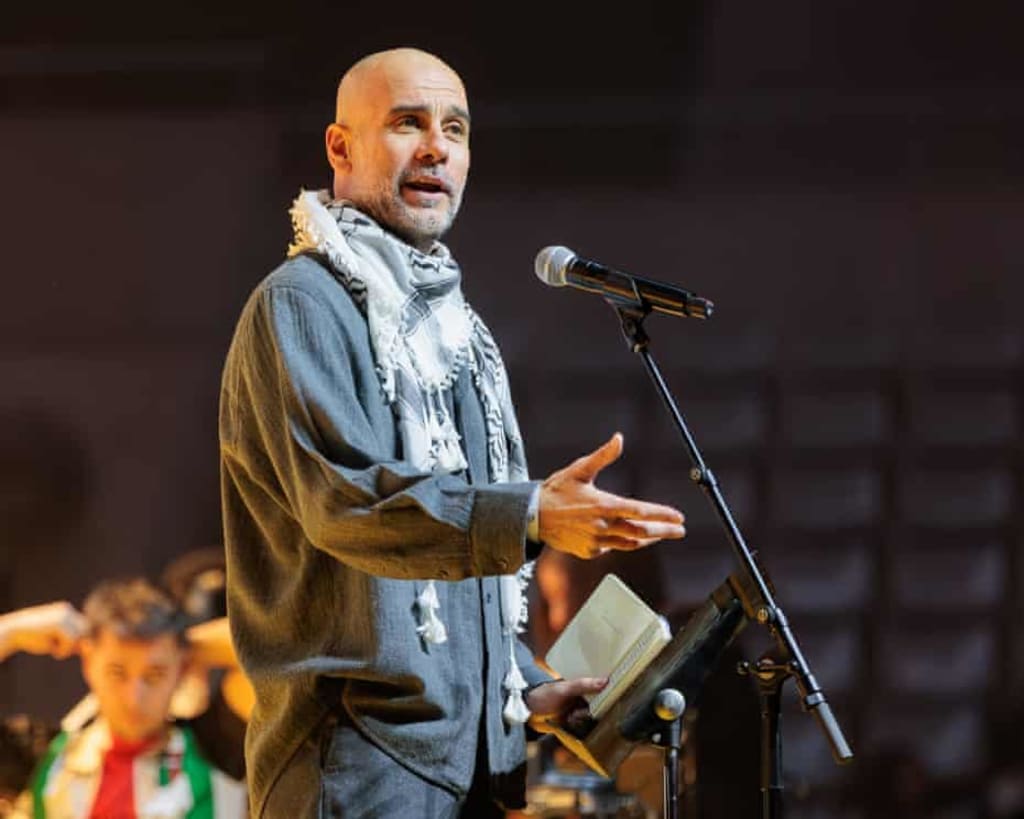
Manchester City manager Pep Guardiola has used his global platform to speak out against the ongoing wars in Sudan, Ukraine and Palestine, urging world leaders and ordinary citizens alike to do more to protect civilians and prevent further suffering.
Speaking at a press conference ahead of a domestic league fixture, Guardiola departed from football matters to address what he described as a “moral responsibility” to acknowledge human tragedy beyond the pitch. His remarks followed a question about the role of athletes and public figures in responding to international crises.
“People are dying every day,” Guardiola said. “Not soldiers only. Families, children, mothers, innocent people. You have to help. You cannot just look away because it’s not in your country.”
A Rare Political Intervention
Guardiola is known for occasionally addressing social and political issues, but his comments were unusually direct and wide-ranging. Referring to conflicts in three different regions, he stressed that humanitarian suffering should transcend political divisions.
“In Sudan, in Ukraine, in Palestine – it doesn’t matter where,” he said. “The pain is the same. A child who loses his home in Gaza feels the same fear as a child who loses his home in Kyiv or Khartoum.”
The Spanish coach made clear that his message was not aimed at assigning blame but at emphasizing compassion and action. “I’m not a politician. I’m not a general. I’m a football manager,” he said. “But I’m a human being. And as human beings, we cannot accept that this is normal.”
Spotlight on Forgotten Crises
Guardiola’s inclusion of Sudan alongside Ukraine and Palestine drew attention to a conflict that has received comparatively limited international coverage. Sudan’s civil war, which erupted in 2023 between rival military factions, has displaced millions and caused widespread famine and disease.
Aid agencies estimate that Sudan now faces one of the world’s worst humanitarian disasters, with entire cities cut off from food, clean water and medical care. Guardiola said he was particularly troubled by how quickly global attention shifts from one crisis to another.
“Some wars are on television every day. Others are invisible,” he said. “But for the people who live there, it is their whole life.”
War and the World of Football
Guardiola acknowledged that football exists in a bubble of wealth and entertainment, often disconnected from the realities faced by ordinary people in war zones. However, he argued that this privilege brings responsibility.
“We play games, we talk about tactics, about titles, about contracts,” he said. “Meanwhile, there are people who don’t know if they will eat tomorrow. That contrast is very hard to accept.”
The manager praised players who have used their platforms to raise funds for humanitarian causes and called on football institutions to do more to support relief efforts. “Football has power,” he said. “Millions listen. If even a small part of that helps save lives, then it is worth speaking.”
Mixed Reactions
Guardiola’s comments quickly spread across social media and news outlets, drawing praise from some and criticism from others. Supporters applauded him for highlighting humanitarian suffering and showing empathy beyond sport.
“More public figures should speak like this,” one fan wrote online. “It’s about humanity, not politics.”
Critics, however, accused him of oversimplifying complex conflicts or stepping outside his professional role. Some argued that football managers should avoid political statements altogether.
Asked about potential backlash, Guardiola remained calm. “I understand not everyone will agree,” he said. “But silence is also a choice. And I don’t want to choose silence when people are suffering.”
The Human Cost of Conflict
Guardiola referenced images of destroyed neighborhoods, hospitals under fire and families fleeing their homes. He said such scenes should challenge people everywhere to rethink their priorities.
“When you see a mother carrying her child with nothing but a bag, you ask yourself: what kind of world are we building?” he said. “We spend so much energy on hate and weapons. Imagine if we spent that energy on helping.”
He also emphasized that compassion should not be selective. “It cannot be only for one country or one people,” he said. “If you cry for Ukraine, you must cry for Palestine. If you cry for Palestine, you must cry for Sudan. Otherwise, it is not justice. It is politics.”
A Call for Action
While Guardiola did not propose specific policy solutions, he urged governments and international organizations to prioritize humanitarian corridors and ceasefires. He also encouraged individuals to support charities and remain informed.
“Helping does not always mean stopping a war,” he said. “Sometimes it means sending food, medicine, shelter. Sometimes it means raising your voice so the world does not forget.”
His remarks echo a growing trend of athletes and coaches engaging in global issues, reflecting the influence sports figures now hold beyond stadiums.
Beyond Football
As Guardiola returned to questions about his team’s next match, his earlier words lingered. For many, the sight of one of football’s most successful managers speaking emotionally about war underscored how deeply global conflicts resonate even in spaces designed for escape and entertainment.
“Football is beautiful,” Guardiola said in closing. “But life is more important. And right now, life is being destroyed in too many places.”
In an era when sports and politics often collide uneasily, Guardiola’s message was simple and human: suffering anywhere should concern people everywhere. Whether his plea will translate into greater awareness or action remains uncertain, but his voice added to a chorus calling for empathy in a fractured world.
About the Creator
Fiaz Ahmed
I am Fiaz Ahmed. I am a passionate writer. I love covering trending topics and breaking news. With a sharp eye for what’s happening around the world, and crafts timely and engaging stories that keep readers informed and updated.
Keep reading
More stories from Fiaz Ahmed and writers in The Swamp and other communities.
NSW Labor Politicians to Protest Israeli President Isaac Herzog’s Visit in Defiance of Premier
Several New South Wales Labor politicians have confirmed they will take part in protests against the visit of Israeli President Isaac Herzog, openly defying the state’s Labor premier and exposing deep divisions within the party over the war in Gaza and Australia’s diplomatic relationship with Israel.
By Fiaz Ahmed 3 days ago in The Swamp
Why Black History Matters in America?
The United States of America is celebrating their 250th anniversary in 2026. I'm proud to be an American and as someone who was born here, I wouldn't imagine myself living anywhere else. This is a country where opportunities are possible. Where anyone can be successful in anything they desire to do. Equality, community, and togetherness are the backbones of what America is and should be about. However, we have an administration who wants to erase and disregard those who have made positive, meaningful impacts in our country, specifically Black figures, such as Martin Luther King, Jr., Rosa Parks, and Maya Angelou. President Trump and his administration have been constantly complaining and fighting against what they call the "Woke agenda". They use this excuse as a distraction from other issues they refuse to address, such as the high cost of living, climate change, and inflation. That equality is dividing America, when in reality, it's bringing us together. Being woke is not tied to a specific political party. No matter where you stand on the political spectrum, you can still care about other people and their plights. Compassion and empathy for others isn't tied to a political party, either. We were taught as children to treat others the way we want to be treated and not judge others because they're different from us. Caring about others isn't a personal attack on your beliefs. It doesn't make you any less of a person. People who are easily offended over African American figures, past or present, or anything related to it, are grasping at straws. Current and future generations need to know who people like Harriet Tubman and Shirley Chisholm were, especially in the classroom. Black History is part of American History. It should be recognized, not hidden or forgotten. Besides, you can't shield children from everything, just because your feelings are easily hurt.
By Mark Wesley Pritchard 6 days ago in The Swamp



Comments
There are no comments for this story
Be the first to respond and start the conversation.