
Frank Gardner: Not Only Americans Risked Life and Limb to Serve in Afghanistan
A reminder that the war in Afghanistan was a multinational effort, paid for by allies and Afghans alike”
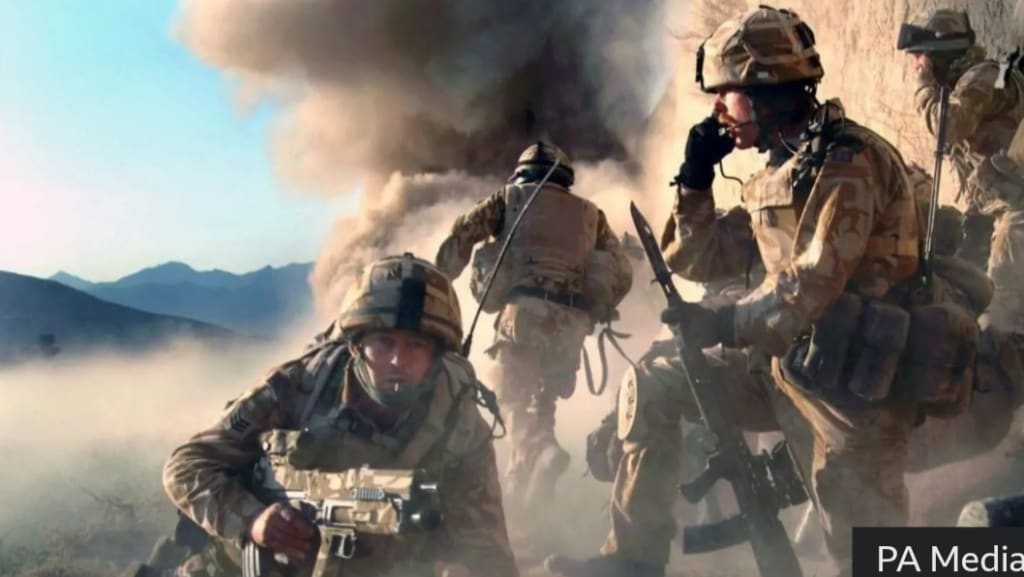
When discussions turn to the war in Afghanistan, the focus often rests heavily on the United States—its soldiers, its decisions, and its sacrifices. Yet as journalist and security correspondent Frank Gardner has repeatedly emphasized, Americans were far from the only ones who risked life and limb during the two-decade conflict. Thousands of service members from allied nations, alongside Afghan civilians and local forces, paid a profound price in a war that reshaped lives far beyond US borders.
A Coalition War, Not a Solo One
From the outset, the war in Afghanistan was a multinational effort. NATO invoked Article 5 for the first time in its history after the September 11 attacks, bringing together forces from across Europe, Canada, Australia, and beyond.
British troops, in particular, played a central role, with deployments in Helmand Province among the most dangerous of the entire conflict. Soldiers from Canada, Denmark, the Netherlands, and other allies also faced intense combat conditions.
Frank Gardner has often pointed out that focusing solely on American sacrifice risks erasing the experiences of these allied forces, many of whom operated in some of the most volatile regions of the country.
The Human Cost Beyond the Headlines
For every statistic recorded, there is a human story behind it. Thousands of non-American troops were killed or seriously wounded, while many more returned home carrying physical injuries or psychological trauma.
Gardner, himself a survivor of a terrorist attack, has written with deep empathy about veterans who struggle long after the fighting ends. He stresses that the cost of war does not stop at the battlefield—it follows soldiers home, affecting families, communities, and future generations.
Post-traumatic stress disorder, physical disabilities, and difficulties reintegrating into civilian life have been common challenges for veterans across coalition nations.
The Afghan Partners Who Paid the Highest Price
Perhaps the most overlooked group, Gardner argues, are Afghan soldiers, police officers, translators, and civilians who worked alongside international forces.
Afghan security personnel suffered casualties on a scale far exceeding those of foreign troops. Many were targeted precisely because of their cooperation with NATO forces. Interpreters and support staff faced threats not only during the war but also after international withdrawal.
For many Afghans, service was not a temporary deployment but a daily reality with no clear end—and often no safe exit.
Media Narratives and Selective Memory
Gardner has been critical of how public memory of Afghanistan has narrowed over time. Media narratives frequently simplify the conflict into a US-centric story, particularly during anniversaries of withdrawal or political debate.
While American losses were significant and deserve recognition, Gardner warns that selective remembrance distorts history. It can also strain relationships with allies who stood shoulder to shoulder for years, often at great political and human cost.
Recognition, he argues, is not about competition over sacrifice but about acknowledging shared responsibility and shared suffering.
Why Allied Sacrifice Still Matters
Understanding the multinational nature of the Afghanistan war matters for several reasons:
It honors those who served from all nations
It reinforces the reality of collective security
It helps future generations understand the true scale of modern conflict
Gardner notes that many allied countries faced domestic opposition to the war, yet their troops continued to serve under difficult conditions, often with fewer resources and less public attention.
Their contributions shaped operations, stabilized regions, trained Afghan forces, and supported humanitarian efforts.
Lessons for Future Conflicts
Gardner believes the Afghanistan experience holds important lessons for future international interventions. One of them is the need for honest accounting—not only of strategic failures but also of who bore the risks.
When sacrifices are unevenly acknowledged, public trust erodes. Veterans feel forgotten, and societies fail to fully process the consequences of war.
Shared recognition, on the other hand, can foster:
Greater accountability
Better veteran support systems
More informed public debate
The Personal Dimension
As someone who has spent decades covering conflict zones, Gardner’s perspective is shaped not just by analysis but by lived experience. He has met soldiers from multiple nations, often under fire, and witnessed firsthand the bonds formed across national lines.
He frequently describes Afghanistan as a place where nationality mattered less than mutual dependence—where survival often hinged on trust between people from vastly different backgrounds.
That reality, he argues, should shape how the war is remembered.
After the Withdrawal
The chaotic withdrawal from Afghanistan in 2021 reignited debates about whether the sacrifices were worth it. For many veterans and families, the sudden collapse of the Afghan government was deeply painful.
Gardner has urged caution against framing the war as meaningless simply because it ended badly. The service, courage, and losses of those involved remain real, regardless of political outcomes.
History, he suggests, must separate the value of individual sacrifice from the failures of leadership.
Conclusion
Frank Gardner’s reminder that not only Americans risked life and limb to serve in Afghanistan is more than a factual correction—it is a call for broader empathy and historical honesty.
The war was fought by a coalition, sustained by shared risk, and paid for in blood by people from many nations, including Afghans themselves. Remembering that truth does not diminish American sacrifice; it enriches the understanding of what the conflict truly was.
As time passes and headlines fade, the responsibility remains to honor all who served—and to learn from a war whose human cost reached far beyond any single flag.
About the Creator
Keep reading
More stories from Aarif Lashari and writers in The Swamp and other communities.
‘We Cannot Say for Sure These Wolves Come From Russia’: Finns Try to Fathom Cause of Record Reindeer Deaths
Finland is grappling with a troubling mystery after record numbers of reindeer deaths were reported across northern regions, sparking debate over predators, borders, climate pressures, and wildlife management. While some herders suspect wolves crossing from neighboring Russia, Finnish authorities and scientists caution that the situation is far more complex—and certainty remains elusive.
By Aarif Lashariabout 6 hours ago in The Swamp
2026 Oscar Nominations: The Complete List of Nominees
The annual celebration of cinematic achievement is upon us once again. On January 22, 2026, the 98th Academy Awards nominations were officially revealed, setting the stage for one of the most exciting Oscar seasons in recent memory. With record-breaking nods, surprise contenders, and an unusually diverse field of films and talents, the Academy Awards nominations have generated widespread conversation in Hollywood and around the world.
By Salaar Jamaliabout 3 hours ago in The Swamp
Vietnam’s Leader Returns With Bold Promises — Can He Deliver
Vietnam’s political landscape has entered a new chapter with the reappointment of General Secretary To Lam as the top leader of the Communist Party of Vietnam, a position that effectively makes him the most powerful figure in the one-party state. On January 23, 2026, Lam was unanimously confirmed by all 180 members of the Communist Party’s Central Committee during the 14th National Party Congress in Hanoi, securing his leadership for the next five years. His return comes with bold promises — from double-digit economic growth targets to sweeping reforms — but observers and analysts are now asking a pressing question: Can he deliver on his ambitious agenda? �
By Ayesha Lashariabout 13 hours ago in The Swamp
The Summer I Was Chosen by a Northern Mockingbird
During the long, suspended days of the pandemic, a wild mockingbird began visiting my driveway and chose me, again and again. What started as a strange encounter became a brief, meaningful connection that I still carry with me.
By Erica Roberts 4 days ago in Petlife


Comments
There are no comments for this story
Be the first to respond and start the conversation.