
Former Bangladesh PM Khaleda Zia’s Health “Very Critical”: A Nation Holds Its Breath
As the political icon battles life-threatening complications, Bangladesh faces a moment of uncertainty and reflection.

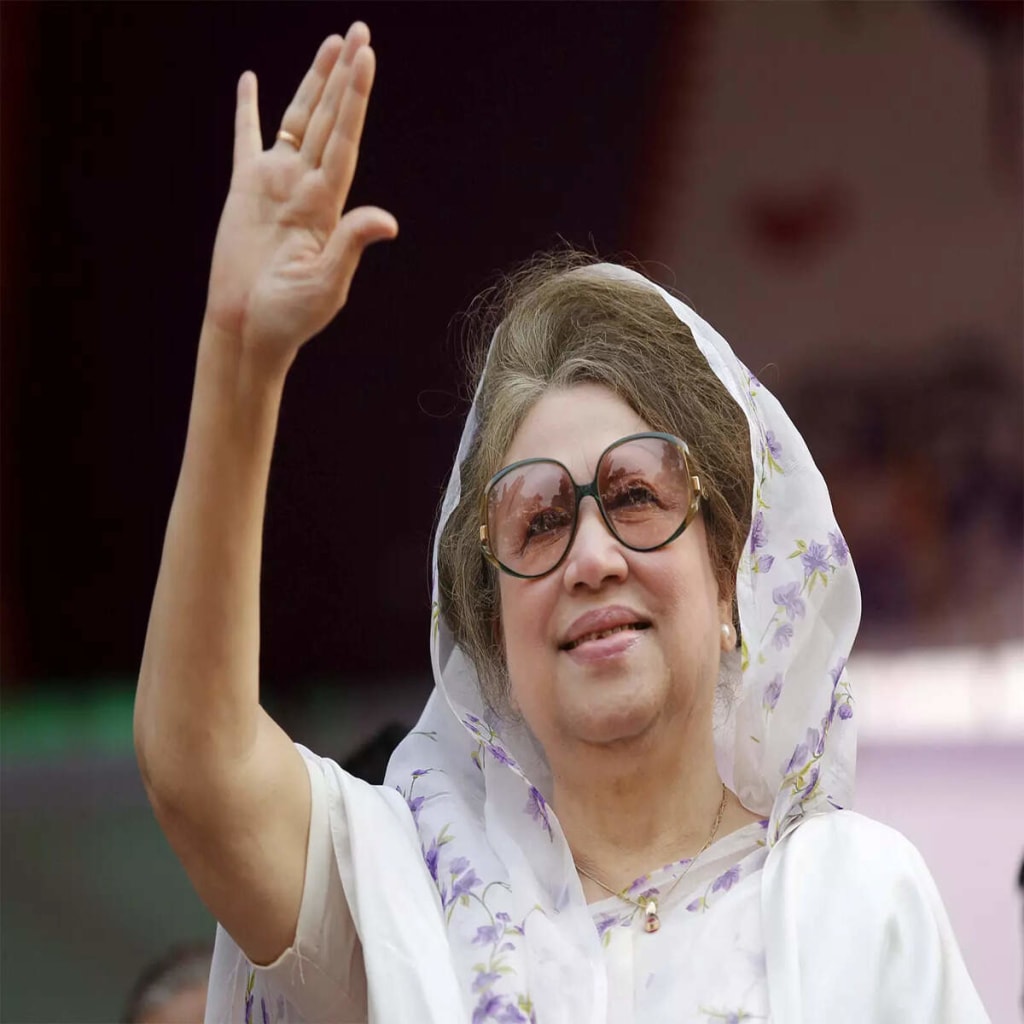
For decades, Khaleda Zia has been one of the most influential and polarizing figures in Bangladesh’s political history. A former prime minister, a longtime leader of the Bangladesh Nationalist Party (BNP), and a symbol of resistance for millions of her supporters, she has lived much of her life in the public eye. But today, the nation is watching her for a different reason — her health. According to her party leaders and medical team, Khaleda Zia’s condition is now “very critical,” sparking concern across the country and beyond.
The 79-year-old leader has been in and out of the hospital for several years due to chronic and worsening health issues. But this time, the situation is alarming. Multiple organs are failing, and doctors have admitted that her condition requires immediate and advanced interventions that are not available domestically. This has led to renewed calls from her party, her family, and human rights groups urging the government to allow her to travel abroad for treatment.
A Leader Between Life and Politics
Khaleda Zia’s life has been marked by extremes — from being the first woman to serve as prime minister of Bangladesh to spending years in prison on corruption charges that her party claims were politically motivated. Her supporters see her as a fighter who has survived both political storms and personal tragedies, including the loss of her husband, former President Ziaur Rahman.
But her health struggles have made the situation even more complex. Over the past few years, Khaleda has developed serious liver complications, respiratory problems, and other age-related medical conditions. Her doctors have repeatedly mentioned that she requires specialized care not available in Bangladesh.
The BNP has continued to pressure the government, arguing that preventing her from traveling abroad is both a humanitarian concern and a violation of her rights. But so far, the government has not granted permission, citing legal restrictions.
Fear, Hope, and Frustration Among Supporters
For her supporters, Khaleda Zia’s illness is not just a personal tragedy — it is a political moment filled with emotional weight. Large crowds gather outside the hospital, praying and waiting for updates. Social media is flooded with messages of solidarity, fear, and frustration.
Many feel helpless. They believe their leader, who spent decades working for the country, deserves proper medical care without political barriers. Some argue that allowing her to travel would be a gesture of humanity in a tense political climate. Others see her illness as a symbol of the shrinking space for political opposition in Bangladesh.
The atmosphere is tense and uncertain. With her condition worsening, people are asking difficult questions: What will happen to the BNP without her? How will her declining health shape the country’s political future? And why has a humanitarian issue become so deeply entangled with politics?
Doctors Confirm the Worst: A “Very Critical” Condition
Medical professionals treating Khaleda Zia have shared sobering details. Her liver is functioning at a dangerously low level, and her blood clotting capacity has deteriorated significantly. She has also faced recurrent infections and complications that make surgery too risky.
Doctors stress that the current situation is life-threatening. They warn that without immediate access to advanced treatment — including possible liver support technology or transplant-related care — her chances of recovery are slim.
Yet, despite these warnings, no breakthrough has been reached regarding permission for overseas treatment.
A Political Landscape in Flux
Khaleda Zia’s illness comes at a time when Bangladesh’s political environment is already deeply divided. The absence of her leadership in recent years has weakened the BNP, and her health crisis may further reshape the party’s future. Many young BNP leaders have stepped forward, but none carry her influence or emotional connection with long-time supporters.
Observers say that her passing — or even the prolonged uncertainty around her health — could widen the gap between the ruling party and the opposition. Some fear it could lead to large-scale protests or unrest. Others hope it could inspire a moment of national unity, though that remains uncertain.
A Nation Reflects
Regardless of political differences, Khaleda Zia’s role in Bangladesh’s history cannot be denied. She broke barriers as a woman in leadership, guided the country through significant challenges, and influenced generations of political thinkers.
Now, as she fights for her life, many Bangladeshis are reflecting on the fragility of political power and
About the Creator
Fiaz Ahmed Brohi
I am a passionate writer with a love for exploring and creating content on trending topics. Always curious, always sharing stories that engage and inspire.
Keep reading
More stories from Fiaz Ahmed Brohi and writers in The Swamp and other communities.
Zelenskyy Faces ‘Mini-Revolution’ as Andriy Yermak’s Fall Reshapes Ukraine’s Wartime Power System
The shockwaves from one dramatic event in Kyiv are now rippling across Ukraine’s political and wartime leadership. On November 28, 2025, President Volodymyr Zelenskyy accepted the resignation of his powerful chief of staff, Andriy Yermak — a figure widely regarded as the second-most influential person in the country since Russia’s full-scale invasion.
By Fiaz Ahmed Brohi2 months ago in The Swamp
Gold & Silver Prices Surge Toward Fresh Records as Safe-Haven Demand Meets Tight Supply
Global markets in early 2026 are witnessing a dramatic surge in precious metal prices, with both gold and silver pushing toward or breaking fresh all-time highs. This rally reflects a potent combination of intensifying safe-haven demand, persistent supply constraints, and ongoing geopolitical and macroeconomic uncertainties. Investors, traders, and analysts alike are closely monitoring these markets as the traditional roles of gold and silver evolve in the face of shifting global risk dynamics.
By Salaar Jamaliabout 6 hours ago in The Swamp
Smart phones, Humans and Aliens.
WARNING. I will be tapping into one of your favorite creative tensions: The absurdity of humans worshipping their glowing rectangles as if they were tiny oracles. There’s something deliciously poetic about that contradiction, and it lends itself beautifully to an instructive proviso.
By Novel Allen4 days ago in Poets


Comments
There are no comments for this story
Be the first to respond and start the conversation.