
Zelenskyy Faces ‘Mini-Revolution’ as Andriy Yermak’s Fall Reshapes Ukraine’s Wartime Power System
A dramatic shake-up at the top of Ukraine’s government threatens to redraw the lines of authority, diplomacy, and war strategy just as Kyiv enters a critical phase of peace talks and battlefield challenges.

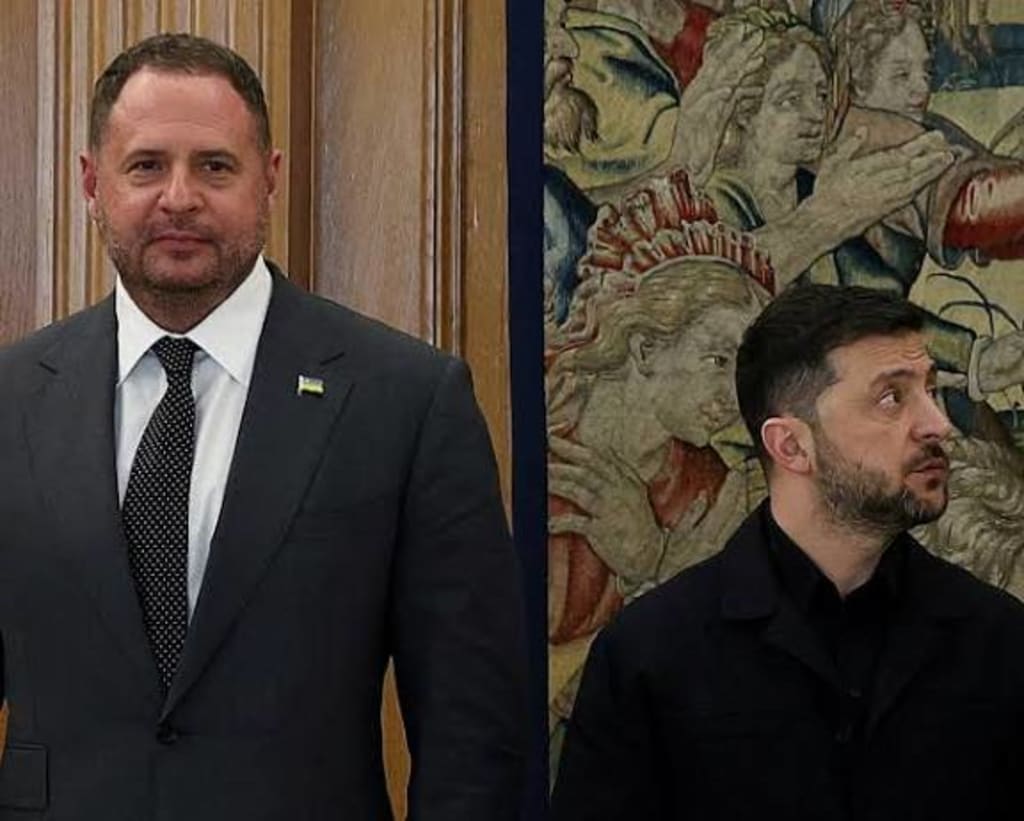
The shockwaves from one dramatic event in Kyiv are now rippling across Ukraine’s political and wartime leadership. On November 28, 2025, President Volodymyr Zelenskyy accepted the resignation of his powerful chief of staff, Andriy Yermak — a figure widely regarded as the second-most influential person in the country since Russia’s full-scale invasion.
Yermak’s departure came only hours after anti-corruption agents raided his home and office as part of a sweeping graft investigation involving the state’s energy sector. While no formal charges have been announced against him, the scale of the scandal — reportedly involving roughly $100 million in kickbacks — and the timing amid critical peace negotiations and war pressures have forced a dramatic re-ordering of Ukraine’s wartime governing architecture.
The result: a “mini-revolution” inside Ukraine’s executive power structure that could reshape how decisions are made, how diplomacy is handled, and how the war effort is managed.
Why Yermak's Exit Matters So Much
Since 2022, Yermak enjoyed a unique concentration of influence. As chief of staff, he controlled access to the president, directed critical foreign-policy decisions, supervised intelligence coordination, and led Ukraine’s delegation in peace talks. For many analysts, he functioned as a deeply powerful — unelected — “de facto vice-president.”
His political weight was controversial: while some credited him with providing swift, unified decision-making during wartime, others warned that such centralization undermined democratic balance, transparency, and accountability. Yet until now, his position remained undisputed — even as resentment quietly simmered among military figures, bureaucrats, and opposition politicians alike.
With his sudden exit, Ukraine loses not only a key bureaucratic gatekeeper but also a central node linking diplomacy, security, and internal administration. The void thus created opens space for institutional re-design — but also creates uncertainty at a critical moment.
The Timing: Peace Talks, War Fronts, and Political Pressure
Yermak’s resignation comes at a particularly sensitive juncture. Ukraine is negotiating with international partners — including the U.S. — over future security support, reconstruction aid, and a possible broader peace deal. The corruption scandal and ensuing shake-up risk undermining Kyiv’s credibility and leverage in these high-stakes talks.
On the home front, public anger over alleged corruption in the energy sector — especially as ordinary citizens endure Russia’s relentless strikes on critical infrastructure — has been growing. Many Ukrainians now demand transparency and accountability from their leaders. Yermak’s fall can be seen as a concession to those demands, but also a gamble on whether such changes will satisfy public frustration.
Even beyond internal politics, the change sends a signal to Western allies. With billions in promised aid and ongoing military cooperation, donors are watching closely. By reshuffling its top echelons, Kyiv may aim to renew confidence in governance, but it also risks instability at a moment when unity and steady leadership are vital.
---
What Happens Next? Reorganisation, New Faces — and Big Questions
President Zelenskyy has announced an immediate “reset” of the presidential office. He said consultations to appoint a new head are underway and emphasized that Ukraine must remain united, focused on defense, diplomacy, and resisting Russia’s attempt to sow chaos.
But insiders warn that no successor will immediately match Yermak’s reach or control. For now, authority is likely to be more fragmented — and decision-making, more distributed. That may ease fears of over-centralization, but it could also lead to slower coordination, especially when quick wartime decisions are needed.
Some analysts are optimistic: this shake-up could lead to more transparent governance, reduce corruption risks, and rebuild trust between government institutions, parliament, and civil society — across a population weary of scandals and war weariness.
Others fear the transition could drag, leading to confusion and power struggles among competing factions — especially at a time when both diplomacy and defense demand strong, unified leadership.
What This Means for Ukraine’s War Effort and Future
Diplomacy & Peace Talks: With Yermak gone, negotiations with foreign partners may lose momentum. Key relationships and leverage may need rebuilding under new leadership.
Military Strategy & Intelligence: Coordination between foreign policy, military command, and intelligence agencies may temporarily slow down — risky during heightened conflict.
Public Trust & Governance: If the new administration prioritizes transparency, this could reinvigorate confidence — but failure may deepen disillusionment.
Ukraine’s International Image: Western allies and global observers will be watching closely. Effective, honest leadership could strengthen support; chaos or mismanagement could weaken it.
President Zelenskyy’s decision to let go of his closest aide marks a turning point in Ukraine’s wartime governance. Whether this moment becomes a catalyst for reform and renewed unity — or a source of instability and fragmentation — likely depends on what comes next: the choices of new leaders, the strength of institutions, and the resilience of a nation under siege.
In a war defined by shifting battlelines and fragile alliances, internal power structure matters almost as much as weapons on the front. What happens in Kyiv in the coming days may shape not just Ukraine’s political future — but the outcome of the war itself.
About the Creator
Fiaz Ahmed Brohi
I am a passionate writer with a love for exploring and creating content on trending topics. Always curious, always sharing stories that engage and inspire.
Keep reading
More stories from Fiaz Ahmed Brohi and writers in The Swamp and other communities.
Ukraine Says It Hit Russian ‘Shadow Fleet’ Tankers With Underwater Drones in the Black Sea
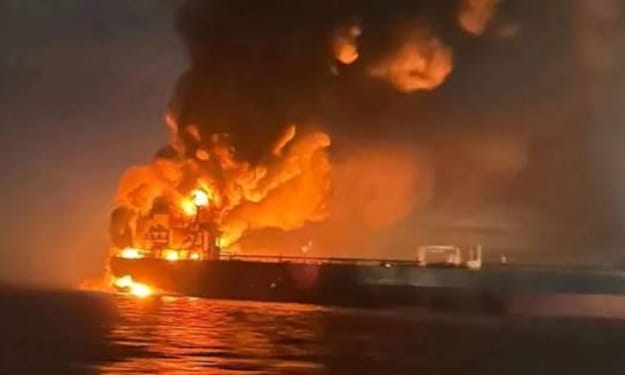
The Russia-Ukraine war has stretched across land, air, and cyberspace for nearly three years. But the Black Sea has quietly grown into one of the most important — and unpredictable — battlegrounds. This week, tensions surged again as Ukraine claimed responsibility for striking Russian “shadow fleet” oil tankers with underwater drones, signaling a major escalation in its maritime strategy.
By Fiaz Ahmed Brohi4 months ago in The Swamp
The Forsyth House Fire
Since 1851, Forsyth House has stood on the corner of Union Street and Gordon Street in the heart of Glasgow. Its iconic, or was... because on Sunday 8th of March, 2026, a fire broke out in a small, seemingly un-named shop in the building and tore all that history down. As I write, the rubble is still unsettled and the street is still blocked off. Central Station is quiet on the upper level, and around 30 small businesses have quite literally gone up in smoke.
By S. A. Crawford3 days ago in The Swamp
Donald Trump: America's Most Corrupt President - Crime History
Recently, the Epstein Files revealed that the super wealthy have engaged in gut churning sexual crimes on minors. Including the worst US President in American history, Donald J Trump. Who has also performed various other crimes for decades. Which seems to be a family tradition among the Trump's. After a bit of digging and research. Let's take a little trip back through time. Hopefully strike back at the Trump corruption. And rebuild a small measure of what was lost.
By Matthew Sposato2 days ago in The Swamp
A Transparent Look at Vocal Challenges and Top Stories
Almost three years ago, we shared a resource article that served as a place for people to suggest new challenge prompts. We thought it would be a good idea to refresh that thread, and take the opportunity to answer a few common questions about top stories, how challenges are judged and how submissions are reviewed.
By Vocal Curation Team4 days ago in Resources


Comments
There are no comments for this story
Be the first to respond and start the conversation.