
Finland Makes Progress in Cable Breach Investigation, Police Say
Unraveling a Mysterious Undersea Disruption: What Finland Has Uncovered So Far
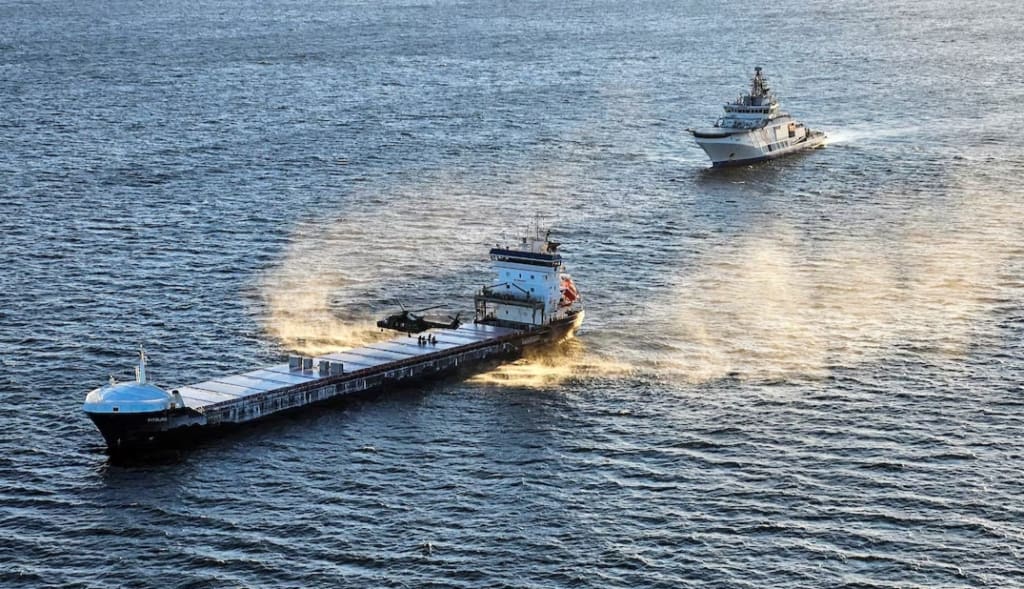
Finland’s law enforcement authorities have announced significant progress in the investigation of a major undersea telecommunications cable breach that disrupted critical infrastructure earlier this year. The incident, which drew global attention, involved damage to a key fibre‑optic communications link between Finland and neighbouring countries. Finnish police now say evidence is emerging, and the hunt for answers is intensifying.
As digital connectivity becomes the backbone of modern society, attacks on undersea cables — whether accidental or deliberate — are not just technical headaches but strategic challenges with far‑reaching implications. The Finnish investigation has underscored the vulnerabilities that even highly developed countries face in protecting critical infrastructure.
The Incident: A Breach Under the Baltic Sea
The breach was first detected when telecommunications providers noticed a sudden drop in data traffic across the region. Undersea cables carry vast amounts of internet traffic, business data, and communication signals; even small damage can ripple through multiple systems.
Initial investigations pointed to an irregular disturbance along the seabed in the Gulf of Finland, but the cause was unclear. Undersea cables are ruggedly engineered to withstand ocean currents, fishing activity, and maritime traffic, so when a breach occurs, it raises immediate suspicion. Was it an accident — a freighter dragging its anchor, for example — or something intentional?
Given the strategic importance of the Baltic Sea for both NATO and EU nations’ communications networks, the situation quickly shifted from a technical repair issue to a full‑scale security investigation.
Finland’s Rapid Response
From the moment the breach was detected, Finnish authorities deployed specialists from multiple agencies, including the police, border guard, and telecommunications regulators. The goal was to secure the area, collect forensic data, and determine whether any criminal act had occurred.
This wasn’t a simple matter of mapping a damaged cable section. The investigation involved:
Underwater surveys using sonar and remotely operated vehicles (ROVs)
Analysis of ship traffic logs in the area at the time of the breach
Forensic examination of cable fragments
Cooperation with foreign intelligence and maritime authorities
Officials emphasized that the breach was not merely a local technical fault but involved infrastructure vital to multiple countries.
Progress Announced by Police
In recent public briefings, Finnish police reported encouraging progress. According to investigators, patterns in the data suggest that the damage occurred during a specific time window, narrowing the list of possible causes.
Authorities confirmed they have identified at least one vessel that was in the vicinity at the critical moment. Although investigators stopped short of naming the ship, sources indicate that maritime traffic data are playing a key role in piecing together the sequence of events.
Police stated that while accidental damage — such as anchor dragging — remains a possibility, they have not ruled out other scenarios. This careful phrasing reflects the sensitivity of the investigation: jumping to conclusions could have diplomatic or security consequences.
Vessel Tracking and Forensic Clues
Investigators have spent weeks analysing official marine traffic records, satellite data, and Automatic Identification System (AIS) signals, which track ship movements. Cross‑referencing this information with the timeline of the breach has allowed authorities to focus their attention on a smaller group of vessels.
Undersea cable engineers also provided crucial expertise. They helped identify the angle, depth, and nature of the cable break, which can be distinctive depending on whether a cable was struck, cut, or stretched. This kind of forensic insight helps determine whether the breach was more consistent with an accidental contact — like an anchor — or something that suggests deliberate interference.
Police also worked with foreign counterparts. Because the Baltic Sea is shared by multiple countries, cooperation with Estonia, Sweden, and other nations has been essential.
Diplomacy and Regional Security Implications
The cable breach became more than a policing problem; it quickly entered the realm of regional security discourse. Undersea cables are critical infrastructure for modern states, and intentional damage to them carries strategic implications.
Communications between Nordic and Baltic states, financial data networks, and even military communications rely heavily on these underwater links. A deliberate attack on such infrastructure could be interpreted as an act of disruption or aggression, prompting diplomatic fallout.
Finland’s public handling of the investigation reflects a balance between transparency and caution. Officials have kept the public informed about progress without prematurely assigning blame — a sensitive approach given the geopolitical context of the Baltic region.
Expert Views: Why This Matters
Security experts have pointed out that undersea cables — often out of sight and out of mind — are among the most important pieces of infrastructure in the world. According to analysts, the breach in Finnish waters is a reminder that:
Undersea cables are vulnerable despite being heavily engineered
Hybrid and unconventional threats can target communication infrastructure
Cooperation between nations is essential for protection and detection
“As data flows increasingly underpin economies, any disruption — intentional or accidental — poses risks beyond local outages,” said one telecom security specialist. “These cables are part of a digital ecosystem that supports everything from banking to government communications.”
Public Impact and Business Concerns
While the breach did not plunge the region into chaos, its effects were noticeable. Some telecommunications services experienced temporary slowdowns, and businesses that rely on uninterrupted data flows reported concerns.
For consumers, the incident was a stark reminder of how fragile digital connectivity can be. Many people assume that the internet and data services are resilient by default, but undersea cables — usually out of sight — are a critical and vulnerable part of that network.
Retail and financial sectors, which depend on low‑latency connections and real‑time data transmission, also took the issue seriously. For them, the breach was not merely a technical glitch but a wake‑up call about infrastructure resilience.
What Happens Next?
Finnish police say the investigation is ongoing, but they are optimistic about reaching conclusions that can both explain what happened and guide future protections.
Officials are expected to continue:
Analysing satellite and maritime data
Interviewing maritime companies and crews
Consulting with foreign authorities
Securing underwater evidence
Authorities have also called for increased monitoring of undersea infrastructure and more robust international frameworks to protect it.
Looking Forward: Protection and Preparedness
The cable breach and Finland’s response have highlighted the need for greater infrastructure security in an increasingly interconnected world. Experts suggest that protecting undersea cables should involve:
Better vessel tracking and early warning systems
Increased international cooperation
Investment in deeper monitoring technologies
Legal frameworks to address both accidental and deliberate damage
As nations increasingly rely on digital communication, these undersea lifelines deserve more attention and proactive protection.
Final Thoughts
Finland’s progress in the cable breach investigation demonstrates both the complexity of modern infrastructure security and the importance of diligent, cooperative law enforcement. Whether the breach turns out to be accidental or intentional, the incident serves as a critical lesson: in a world driven by digital data, even the deepest cables are part of the front lines.
About the Creator
Keep reading
More stories from Aarif Lashari and writers in The Swamp and other communities.
Woman Felt ‘Dehumanised’ After Musk's Grok AI Used to Digitally Remove Her Clothes
A recent incident involving Elon Musk’s Grok AI has reignited debates about artificial intelligence ethics, privacy, and consent. A woman has come forward claiming she felt “dehumanised” after the AI was used to digitally remove her clothes in images generated without her consent. The case has sparked a wider discussion about the potential dangers of AI-driven technology and how society should regulate it.
By Aarif Lashari15 days ago in The Swamp
U.S. Pushes for Faster Action to Cut Reliance on China for Rare Earths
Rare Earths: Small Minerals, Massive Power Rare earth elements may sound obscure, but they sit at the heart of modern life. From smartphones and electric vehicles to fighter jets and missile systems, these minerals are essential to both civilian technology and national defense. That reality is why the United States is now pushing for quicker, more decisive action to reduce its dependence on China for rare earth supplies. For years, Washington talked about diversification. Now, it wants speed. The shift reflects growing concern that reliance on a geopolitical rival for critical materials is no longer sustainable in an era of strategic competition. Why China’s Dominance Worries Washington China controls roughly 60–70% of global rare earth mining and an even larger share of processing and refining. Even when rare earths are mined elsewhere, they are often shipped to China for processing. This gives Beijing enormous leverage over global supply chains. U.S. officials fear that in a moment of heightened tension—over Taiwan, trade disputes, or technology restrictions—China could restrict exports. Beijing has already hinted at this possibility in the past, using export controls as a diplomatic tool. From Washington’s perspective, this is not a hypothetical risk. It is a strategic vulnerability that touches everything from renewable energy goals to military readiness. Rare Earths and National Security Few issues unite Democrats and Republicans as strongly as national security. Rare earths fall squarely into that category. Advanced weapons systems rely on these materials for precision guidance, radar, and communications. A disrupted supply could delay production, weaken deterrence, and raise costs dramatically. Pentagon officials have repeatedly warned that dependence on China for defense-critical materials undermines U.S. security. As a result, rare earth supply chains are increasingly viewed through the same lens as energy independence once was. This framing explains the urgency behind Washington’s push for faster action. Why “Quicker Action” Matters Now The U.S. has discussed rare earth independence for over a decade, yet progress has been slow. Mining projects face environmental reviews, local opposition, and long development timelines. Processing facilities require heavy investment and technical expertise that has largely migrated to China. What has changed is the global context. Rising U.S.-China tensions, supply-chain disruptions during the pandemic, and growing demand for clean energy technologies have compressed timelines. Waiting another decade is no longer acceptable to policymakers. Quicker action now means fast-tracking permits, increasing federal funding, and working more aggressively with allies. The Role of Allies in Diversification The United States does not expect to solve the rare earth challenge alone. Instead, Washington is pushing for a “friend-shoring” strategy—building supply chains with trusted partners rather than relying on geopolitical rivals. Australia, Canada, Japan, and several European countries are key players in this effort. Australia already hosts significant rare earth mining operations, while Japan has invested heavily in reducing its own dependence on China after facing export restrictions in the past. By coordinating investment, sharing technology, and aligning regulations, the U.S. hopes to create an alternative ecosystem that can compete with China’s dominance. Environmental and Economic Tensions Rare earth mining is not clean. It involves toxic waste, radioactive byproducts, and significant environmental risks. Ironically, minerals essential for green technologies come with heavy environmental costs at the extraction stage. This creates a political dilemma. Americans want clean energy, but often oppose mining projects in their own communities. Faster action will require balancing environmental protections with strategic necessity—a challenge that has stalled projects in the past. The Biden administration, like administrations before it, faces pressure to prove that domestic mining can be done responsibly without undermining climate commitments. China’s Likely Response Beijing is watching these developments closely. While China has not yet weaponized rare earth exports on a large scale, it understands the leverage it holds. At the same time, China is moving up the value chain—focusing more on advanced manufacturing and less on raw material exports. If the U.S. accelerates diversification successfully, China may respond by tightening export controls in the short term while investing in higher-end technologies that keep it indispensable in other ways. This dynamic underscores that rare earths are not just a resource issue, but part of a broader strategic competition. Economic Implications Beyond Security Reducing reliance on China is not only about defense. It is also about economic resilience. Supply disruptions during the pandemic exposed how fragile global supply chains can be. Rare earth shortages could slow electric vehicle adoption, raise consumer prices, and delay infrastructure projects. By pushing for faster action, Washington hopes to stabilize future growth and protect key industries. Domestic production and allied partnerships could also create jobs and spur innovation, particularly in rural and industrial regions. However, building new supply chains will not be cheap. Consumers and taxpayers may face higher costs in the short term as alternatives to Chinese supplies come online. Challenges That Could Slow Progress Despite political momentum, obstacles remain. Mining projects take years to develop. Processing facilities require specialized knowledge. Workforce shortages, local resistance, and regulatory complexity all pose risks to rapid progress. There is also the danger of overpromising. Policymakers must manage expectations, making clear that reducing reliance on China is a long-term effort, even if action accelerates now. Failure to deliver tangible results could weaken public support and give critics ammunition. Final Thoughts The U.S. push for quicker action in reducing reliance on China for rare earths marks a turning point. What was once a niche policy issue has become a strategic priority at the highest levels of government. This is not about cutting China out of the global economy entirely. It is about ensuring that no single country can control materials essential to modern life and national defense. Speed, coordination, and political will will determine whether Washington succeeds. As competition intensifies, rare earths will remain a quiet but powerful force shaping the future of technology, security, and global influence. The race is no longer just about who has the minerals—but who controls the supply chains that define the 21st centur
By Muhammad Hassan5 days ago in The Swamp



Comments
There are no comments for this story
Be the first to respond and start the conversation.