
Ex-Pakistan PM Imran Khan left with 15% vision in right eye, court told
Medical report submitted to court confirms lasting eye damage from the 2022 assassination attempt, raising concerns over prison healthcare. Doctors warn the former prime minister faces permanent vision loss as legal proceedings over his medical treatment continue. Court hearing reveals long-term impact of rally shooting, renewing debate on political violence and detainee rights. Disclosure of impaired eyesight fuels calls for independent medical evaluation and special treatment in custody. The case highlights the enduring physical toll of Pakistan’s turbulent political conflicts.

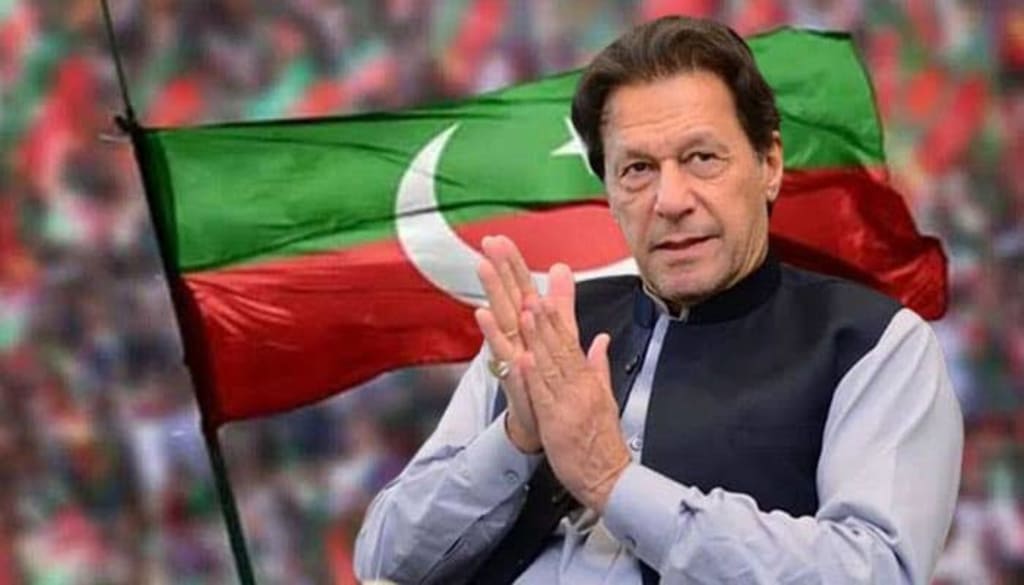
Medical report submitted to the court reveals lasting damage from the 2022 assassination attempt, renewing debate over prison healthcare and political violence in Pakistan.
A Pakistani court has been informed that former prime minister Imran Khan has suffered permanent damage to his right eye and is left with only 15% vision following the assassination attempt that injured him during a political rally in November 2022.
The disclosure came during legal proceedings concerning Khan’s medical condition and access to specialized treatment while in custody. According to medical documents presented before the court, doctors concluded that the firearm injury caused irreversible harm to the optic structures of his right eye, significantly reducing his eyesight and raising concerns about long-term complications.
Khan, who was shot while traveling in a convoy in Wazirabad, Punjab, had initially undergone emergency surgery and treatment at military and civilian hospitals. At the time, doctors said multiple pellets struck his leg and upper body, but later assessments revealed that one projectile or fragment had caused trauma near the eye area, leading to progressive vision loss.
The medical report stated that despite treatment and follow-up care, full recovery of vision in the affected eye is not possible. Physicians warned that prolonged strain, stress, or inadequate medical supervision could worsen his condition and potentially affect his remaining eyesight.
Defense lawyers told the court that Khan’s health has deteriorated in prison and that his limited vision now interferes with daily activities, including reading legal documents and attending lengthy hearings. They argued that his condition requires regular monitoring by ophthalmology specialists and access to diagnostic facilities that are not fully available inside detention centers.
Government representatives acknowledged the medical findings but maintained that Khan is receiving appropriate healthcare under prison rules. Officials said that arrangements have been made for periodic checkups and that he can be transferred to a hospital if doctors deem it necessary. They rejected claims of negligence, calling them politically motivated.
The revelation has revived memories of the 2022 shooting, which shocked the country and intensified political polarization. Khan had accused elements within the state of being involved in the attack, allegations that authorities denied. A suspect was arrested at the scene and investigations were launched, but the case remains a symbol of Pakistan’s volatile political climate.
Supporters of Khan’s Pakistan Tehreek-e-Insaf (PTI) party reacted strongly to the court disclosure, calling it proof that he continues to suffer because of political violence. Party leaders demanded that independent medical boards be allowed to examine him and that he be granted medical relief in line with constitutional rights.
“This is not just about one man’s eyesight,” a PTI spokesperson said. “It is about the safety and dignity of political leaders and the rule of law in Pakistan.”
Human rights groups have also weighed in, urging authorities to ensure transparency regarding Khan’s medical treatment. They noted that prisoners, regardless of political status, are entitled to healthcare consistent with international standards.
Legal analysts say the medical evidence could influence ongoing petitions seeking bail or temporary release on health grounds. However, they caution that Pakistani courts traditionally require clear proof that treatment cannot be provided within the prison system before granting such relief.
The case also highlights broader concerns over security at political gatherings and the risks faced by public figures in Pakistan. Attacks on politicians have historically altered the country’s political trajectory, and Khan’s injury remains a powerful reminder of those dangers.
As proceedings continue, the court is expected to review additional medical evaluations and determine whether special measures are needed to safeguard Khan’s health. For now, the confirmation that he retains only 15% vision in his right eye adds a new and sobering dimension to his legal and political struggles, underscoring the lasting personal cost of violence in Pakistan’s turbulent political arena.
About the Creator
Fiaz Ahmed
I am Fiaz Ahmed. I am a passionate writer. I love covering trending topics and breaking news. With a sharp eye for what’s happening around the world, and crafts timely and engaging stories that keep readers informed and updated.
Keep reading
More stories from Fiaz Ahmed and writers in The Swamp and other communities.
Iran Strengthening Defences Near Key Nuclear Site, New Satellite Image Shows
New high-resolution satellite imagery has revealed that Iran is intensifying defensive measures at one of its most sensitive nuclear facilities, a development that experts say reflects Tehran’s growing concern about the possibility of renewed military action against its nuclear infrastructure. Analysts assessing the imagery say the activity signals a concerted push to harden subterranean access points and fortify above-ground structures — moves that could complicate any potential strike planning by foreign powers amid simmering geopolitical tensions. The site at the centre of the imagery is the Isfahan nuclear complex, one of Iran’s major enrichment and conversion facilities. Recent satellite photos, taken earlier this month and analysed by independent watchdog groups, show that entrances to several large underground tunnels and passageways have been buried under earth and debris, making them difficult to detect and access. Additional defensive works — including the construction of new roofs over previously damaged buildings — were also visible around the site, indicating a broader effort to protect infrastructure and restrict the visibility of sensitive components. Satellite Evidence of Defensive Hardening According to imagery reviewed by analysts from the Institute for Science and International Security and other observers, Iran has backfilled both the central and southern tunnels at Isfahan with soil, rendering them “unrecognisable” from above. The northern entrance, while not fully obscured, also showed signs of defensive measures. These changes were marked by the absence of vehicle activity nearby, suggesting that access points were purposefully sealed rather than temporarily closed for maintenance. Experts interpreting the satellite data said the defensive steps likely serve multiple strategic purposes. By burying tunnel entrances and reinforcing buildings, Tehran may be seeking to protect crucial infrastructure from potential aerial strikes or commando raids, shield remnants of its nuclear work from visual surveillance, and slow any adversary’s ability to penetrate the site swiftly in a crisis. One veteran military intelligence analyst described the pattern as part of a broader Iranian doctrine of “passive defence,” in which critical facilities are hardened, concealed or physically obscured to reduce their vulnerability to attack. “Covering and fortifying these entry points makes them far harder targets for precision weapons or a rapid special operations incursion,” the analyst told Reuters, adding that such measures are relatively inexpensive compared to rebuilding after an attack. Context: Conflict and Diplomacy at a Critical Juncture Iran’s reinforcement of its nuclear facilities comes amid ongoing tension with the United States, Israel and other Western powers over Tehran’s nuclear programme and regional influence. Last year’s military confrontations — including airstrikes on Iranian nuclear and military targets by Israel and the United States — fractured diplomacy and heightened fears of further escalation. That conflict, which began with a series of strikes on Iran’s nuclear and missile infrastructure, underscored the vulnerability of above-ground and poorly protected assets to precision attacks. Since then, Tehran has pursued a mix of diplomatic engagements and strategic deterrence measures, even as it resists full resumption of international inspections at key sites. The defensive construction seen in the latest imagery may be interpreted as a precautionary signal that Iran anticipates the possibility of future military actions, particularly if negotiations with global powers over its nuclear programme falter. According to strategic analysts, burying key access points and reinforcing buildings improves survival prospects in the event of air attacks, while complicating foreign intelligence assessments of what remains intact underground. Implications for Regional Stability The defensive moves come at a time of active diplomatic engagement, including offers by Iran to allow broader verification of its nuclear facilities by international inspectors — a position emphasised by President Masoud Pezeshkian in recent remarks. However, Tehran’s insistence on verification without unfettered access has left many questions unresolved. For neighbouring states and Western capitals, the satellite imagery reinforces concerns that Iran is preparing for a dual-track approach: pursuing negotiation when possible, while hardening sites to mitigate the impact of any hostile campaign. Such a posture could make any future military strike considerably more complex, requiring deeper penetration or alternate tactics to neutralise underground infrastructure. The developments highlight a broader reality: in an era of advanced satellite surveillance and hardened underground facilities, the interplay between visible preparedness and strategic ambiguity is likely to shape future confrontation and diplomacy over Iran’s nuclear ambitions. As Tehran continues to adapt, analysts warn that any miscalculation could have far-reaching consequences for regional security and nuclear non-proliferation efforts.
By Fiaz Ahmed 3 days ago in The Swamp
The Saddest Thing - The Billionaires Who Rule America Aren't Even Enjoying Themselves
This single post says more about our ruling class than a thousand policy papers. The saddest thing about today's system is that the men robbing the rest of us - sabotaging our economic prospects, our pensions, our access to affordable healthcare - are not even happy.
By Scott Christenson🌴8 days ago in The Swamp
Island Gold Mine Set to Boost Production Beyond 500,000 Ounces by 2028
The Island Gold Mine is entering a transformative phase as plans to boost annual gold production to more than 500,000 ounces by 2028 take shape. This ambitious target reflects a broader trend in the global gold industry, where established assets are being expanded and modernized to meet rising demand, offset declining grades elsewhere, and capitalize on favorable long-term gold price dynamics. For Island Gold, the production leap represents not just a numerical milestone, but a strategic evolution that could redefine its standing among the world’s premier underground gold operations.
By Sadaqat Ali4 days ago in The Swamp
from death into life
Young Aldin of Wiloh had never contemplated death. It was almost strange — so many around him had the tendency to obsess over it, to clamor and claw almost desperately at their own perceptions of the end to know death as much as they could: when it would come, why it would come, where it would take them when it did.
By angela hepworth6 days ago in Fiction



Comments
There are no comments for this story
Be the first to respond and start the conversation.