
Europe Gives Cautious Welcome to Rubio’s Warmer Tone
European officials welcome Marco Rubio’s conciliatory rhetoric but say trust will depend on concrete U.S. commitments to NATO, Ukraine, and transatlantic cooperation.

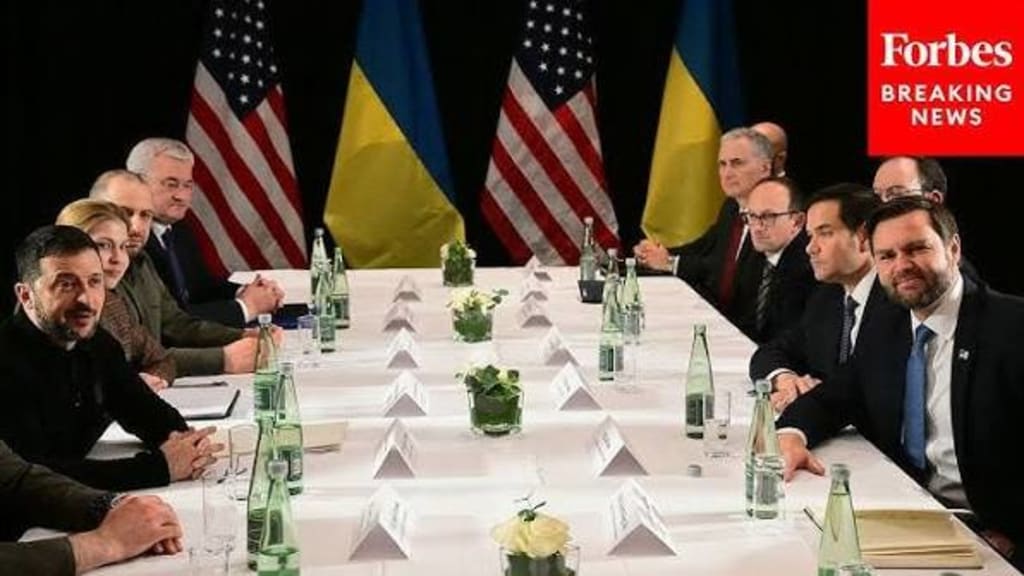
European leaders have reacted with guarded optimism to a shift in rhetoric from U.S. Senator Marco Rubio, who in recent weeks has adopted a more conciliatory tone toward transatlantic partners after years of blunt criticism over defense spending, trade imbalances, and China policy. While officials in Brussels and key European capitals say the change is encouraging, they stress that words alone will not repair strains that have built up between Washington and Europe over the past decade.
Rubio, a senior Republican voice on foreign affairs, used a recent address in Washington to emphasize the “indispensable role” of Europe in maintaining global stability and called for closer cooperation on Ukraine, the Middle East, and technological security. His remarks marked a noticeable departure from previous statements in which he accused European governments of relying too heavily on U.S. military protection and failing to confront authoritarian powers decisively.
Diplomats in the European Union welcomed the softer language but framed it as a first step rather than a breakthrough. “We appreciate the recognition of Europe as a strategic partner,” said one senior EU official, speaking on condition of anonymity. “But the real test will be whether this tone translates into consistent policy positions on defense, trade, and multilateral institutions.”
The response from Berlin and Paris was similarly measured. German officials noted that Rubio’s comments on NATO solidarity were “constructive,” especially at a time when Europe is increasing its military spending and support for Ukraine. French diplomats, however, pointed out that rhetoric from U.S. lawmakers often shifts with domestic political cycles. “We have seen warmer language before, followed by renewed pressure,” one French official said. “Stability in the relationship requires predictability.”
Rubio’s change in tone comes amid a broader debate in Washington over America’s global role. With election politics intensifying, Republicans and Democrats alike are reassessing how strongly the United States should commit to European security while facing challenges from China and instability in the Middle East. Analysts say Rubio’s recalibration may reflect an effort to appeal to moderate voters and international allies who are wary of isolationist signals.
European analysts also link the development to practical concerns, particularly over Ukraine. As Kyiv continues to rely heavily on Western military and financial aid, European governments fear that wavering U.S. support could undermine their own efforts. Rubio’s renewed emphasis on transatlantic unity has therefore been interpreted as reassurance—though one still hedged with political caution.
“There is relief that influential figures in Washington are once again speaking the language of partnership,” said Sophie Bernard, a Paris-based foreign policy analyst. “But Europe has learned to be careful. Warm words can cool quickly if domestic pressures in the United States change.”
Trade and technology remain sensitive areas. Rubio has previously criticized European digital regulations and called for tougher measures against Chinese companies operating in Western markets. In his latest remarks, he acknowledged differences with Europe but said disputes should be resolved “within the family of democracies, not through public confrontation.” EU officials welcomed this phrasing but emphasized that regulatory sovereignty would not be compromised.
Despite the cautious welcome, European leaders see an opportunity to reset the conversation. Several diplomats indicated that informal contacts with Rubio’s office have increased, focusing on coordination over sanctions policy and supply chain security. A senior Brussels official described the mood as “pragmatic optimism.”
Still, skepticism remains strong in parts of Eastern Europe, where officials worry that U.S. politics could swing sharply after the next election. “We listen carefully, but we plan for uncertainty,” said a Baltic diplomat. “Security guarantees must be built on actions, not speeches.”
For now, Europe appears ready to engage with Rubio’s warmer tone while keeping expectations in check. The prevailing view across the continent is that improved language is welcome, but trust will depend on consistent commitments to NATO, Ukraine, and the broader rules-based order. As one EU diplomat put it, “This is a positive signal—but only the opening chapter of a much longer story.”
About the Creator
Fiaz Ahmed
I am Fiaz Ahmed. I am a passionate writer. I love covering trending topics and breaking news. With a sharp eye for what’s happening around the world, and crafts timely and engaging stories that keep readers informed and updated.
Keep reading
More stories from Fiaz Ahmed and writers in The Swamp and other communities.
U.S. Deports Nine Migrants in Secret, Ignoring Legal Protections
The United States has quietly deported nine migrants in what human rights groups describe as a covert operation that bypassed established legal protections and due process. The deportations, carried out late at night and without prior notice to lawyers or family members, have raised alarm among immigration advocates and lawmakers who say the actions undermine both domestic law and international obligations. According to attorneys representing the migrants, the individuals were removed from U.S. custody despite having active legal claims, including pending asylum applications and appeals against deportation orders. Several of the migrants were reportedly transferred from detention facilities to an undisclosed location before being placed on a chartered flight out of the country. Their whereabouts were unknown for hours, prompting frantic efforts by legal teams to locate them. Officials from the Department of Homeland Security declined to provide detailed explanations, stating only that the deportations were conducted “in accordance with operational procedures and national security considerations.” However, civil rights groups argue that secrecy itself violated basic safeguards meant to ensure migrants have access to legal counsel and the courts. The American Civil Liberties Union said at least four of the nine migrants had court hearings scheduled in the coming weeks. “These removals appear designed to prevent judicial review,” said an ACLU attorney familiar with the case. “When the government acts in the dark, it deprives people of their most fundamental right — to challenge the decision before a judge.” Legal experts note that U.S. immigration law requires authorities to notify lawyers and provide time for appeals, particularly when individuals claim fear of persecution if returned to their home countries. International conventions, including refugee protection agreements, also prohibit deporting individuals to places where they may face torture or political repression. One migrant, a 27-year-old man from Central America, had reportedly cooperated with U.S. authorities in a criminal investigation and was granted temporary protection while his case was reviewed. His sudden deportation has raised questions about whether political or administrative pressure played a role. Family members learned of his removal only after receiving a brief message from detention officials stating that he was “no longer in U.S. custody.” Members of Congress from both parties have called for an inquiry. Senator Maria Lopez, a Democrat on the Senate Judiciary Committee, said the operation “sets a dangerous precedent.” “The rule of law does not disappear when it becomes inconvenient,” she said. “If this can happen to nine people today, it can happen to many more tomorrow.” Within the Biden administration, the episode highlights growing tension between border enforcement priorities and legal obligations. While officials face pressure to demonstrate control over migration flows, critics argue that shortcuts risk eroding trust in the immigration system. Former immigration judge Paul Hernandez said secrecy signals weakness rather than strength. “Transparency is the backbone of legitimacy. Without it, enforcement becomes arbitrary,” he said. The deportations also come amid renewed scrutiny of emergency powers used by previous administrations to fast-track removals. Advocacy groups fear that mechanisms intended for exceptional circumstances are becoming routine tools of policy. “This mirrors practices we challenged years ago,” said a spokesperson for Human Rights First. “We are seeing history repeat itself under a different justification.” For the deported migrants, the consequences may be immediate and severe. Lawyers say at least two were returned to countries where they had previously reported threats from gangs and political groups. Efforts are now underway to file emergency motions in federal court seeking explanations from the government and potentially ordering the return of those deported. The Supreme Court of the United States has previously ruled that migrants on U.S. soil are entitled to due process, regardless of their immigration status. Whether this latest episode violates those standards will likely become the subject of legal challenge. As details continue to emerge, the incident has reignited debate over how far the government can go in enforcing immigration law without sacrificing transparency and legal protections. For now, the secret deportation of nine migrants stands as a stark reminder of the fragile balance between security and justice — and of the human cost when that balance tilts too far in one direction.
By Fiaz Ahmed about 7 hours ago in The Swamp
The Saddest Thing - The Billionaires Who Rule America Aren't Even Enjoying Themselves
This single post says more about our ruling class than a thousand policy papers. The saddest thing about today's system is that the men robbing the rest of us - sabotaging our economic prospects, our pensions, our access to affordable healthcare - are not even happy.
By Scott Christenson🌴8 days ago in The Swamp
Aircraft Involved in ‘Serious Incident’ Cleared to Return to Service After Safety Review
An aircraft involved in a “serious incident” while operating for Aurigny Air Services is set to return to commercial flights after undergoing thorough safety checks and evaluations. The move reassures passengers and industry watchers that the airline and aviation authorities prioritize safety, even when dealing with minor or unexplained anomalies.
By Ayesha Lashari2 days ago in The Swamp




Comments
There are no comments for this story
Be the first to respond and start the conversation.