
Europe Electric Vehicle Market Size and Forecast 2025–2033
Europe Accelerates Toward a Clean Mobility Future as EV Market Surpasses US$ 422 Billion by 2033


Introduction: Europe’s Electric Moment Has Arrived
Europe is entering a defining decade for transportation. As climate goals intensify and governments tighten emission norms, the continent is rapidly transforming how people move, commute, and transport goods. Electric vehicles (EVs), once considered niche alternatives, are now at the center of Europe’s mobility strategy.
According to Renub Research, the Europe Electric Vehicle Market is expected to expand from US$ 169 billion in 2024 to US$ 422.27 billion by 2033, registering a robust CAGR of 10.80% from 2025 to 2033. This remarkable growth reflects more than just rising sales—it signals a fundamental shift in consumer behavior, policy direction, industrial investment, and technological innovation.
Driven by strong government incentives, tightening emission regulations, rapid battery advancements, and growing environmental consciousness, Europe’s EV ecosystem is evolving faster than any previous automotive transition.
Europe Electric Vehicle Market Overview
Unlike traditional internal combustion engine vehicles that rely on fossil fuels, electric vehicles are powered by electricity stored in rechargeable batteries. These batteries supply energy to electric motors that generate torque and motion without producing tailpipe emissions.
The environmental benefits are substantial. EVs significantly reduce carbon emissions, eliminate local air pollutants, and offer quieter urban mobility. As Europe faces increasing pressure to reduce pollution levels in cities, electric vehicles are emerging as a clean, practical, and scalable solution.
The improvement in EV accessibility has also boosted adoption. Charging infrastructure is expanding rapidly across urban areas and highways, while new models now offer longer driving ranges, faster charging, and improved performance. Combined with changing consumer attitudes and a growing sense of climate responsibility, EVs are becoming mainstream across Europe.
Moreover, EV integration into ride-hailing services, public transport fleets, and car-sharing programs is increasing visibility and familiarity, further accelerating adoption across diverse demographics.
Key Growth Drivers of the Europe Electric Vehicle Market
1. Stringent Emissions Regulations and Policy Support
Policy has been the strongest catalyst behind Europe’s EV growth. The European Union’s “Fit for 55” package aims to reduce greenhouse gas emissions by 55% by 2030. In a historic move, the EU has also committed to banning the sale of new internal combustion engine vehicles by 2035.
To meet these targets, national governments offer a wide range of incentives, including:
Purchase subsidies
Reduced registration fees
Tax exemptions
Free or discounted parking
Access to low-emission zones
These incentives have dramatically reduced the cost gap between EVs and traditional vehicles, making electric mobility financially attractive for consumers and fleets alike.
2. Advancements in Battery Technology
Battery technology is at the heart of the EV revolution. Over the past decade, improvements in lithium-ion battery chemistry have increased energy density while reducing cost per kilowatt-hour. At the same time, Europe is investing heavily in next-generation solid-state batteries, which promise faster charging, longer lifespan, and improved safety.
As battery prices continue to decline, EVs are becoming more affordable, reducing the primary barrier to adoption. Improved driving ranges and shorter charging times are also addressing consumer concerns around range anxiety and convenience.
European automakers, research institutions, and governments are collaborating to localize battery manufacturing, ensuring long-term competitiveness and supply security.
3. Expansion of Charging Infrastructure
Charging infrastructure expansion is one of the most visible indicators of Europe’s EV readiness. By December 2023, Europe had approximately 700,000 public charging points, representing a 35% year-on-year increase.
Major initiatives are accelerating deployment. For example, Volkswagen France launched the “Electrify France” network in September 2023, aiming to install 150 ultra-fast charging stations across dealerships by summer 2024. These stations are open 24/7 and accessible to all EV brands, supporting long-distance travel and urban charging needs.
Cross-border alliances such as Spark—which integrates 11,000 charging points across 25 countries—are also improving network reliability and user convenience, further strengthening EV adoption across Europe.
Challenges Facing the Europe Electric Vehicle Market
High Upfront Costs
Despite falling battery prices, EVs still carry higher initial costs compared to internal combustion vehicles. This price gap can deter cost-sensitive consumers, especially in regions where government subsidies are limited or inconsistent. Although EVs offer lower long-term operating costs, upfront affordability remains a challenge for mass adoption.
Supply Chain Limitations
Europe remains heavily dependent on imported raw materials such as lithium, cobalt, and nickel—key components of EV batteries. Geopolitical risks, supply shortages, and rising global competition have led to price volatility and production delays.
Without a resilient local supply chain, Europe’s EV ambitions remain exposed to global disruptions. Investments in domestic mining, recycling, and battery manufacturing will be crucial to securing long-term growth.
Country-Level Market Insights
Germany Electric Vehicle Market
Germany leads Europe’s EV transformation, supported by strong policy backing and world-class automakers like Volkswagen, BMW, and Mercedes-Benz. Government incentives, tax benefits, and widespread charging infrastructure have helped accelerate adoption.
While challenges such as high vehicle costs and raw material dependency persist, Germany remains committed to its 2030 electrification goals. Continued innovation and policy stability are expected to keep Germany at the forefront of Europe’s EV market.
France Electric Vehicle Market
France has emerged as a fast-growing EV hub, with electric vehicles accounting for 26% of new car sales in 2023. Government incentives, expanding charging networks, and affordable EV models are driving growth.
The launch of Volkswagen’s Electrify France network and France’s ambitious plan to manufacture over one million EVs by 2027 underline the country’s determination to lead Europe’s clean transport revolution.
United Kingdom Electric Vehicle Market
The UK is one of Europe’s most dynamic EV markets, driven by ambitious zero-emission targets. The government aims for 80% of new car sales to be zero-emission by 2030, rising to 100% by 2035.
While high electricity prices and consumer hesitation remain challenges, policy support—including subsidized loans and infrastructure investments—continues to push EV adoption forward at scale.
Europe Electric Vehicle Market Segmentation
By Product
Battery Electric Vehicles (BEV)
Hybrid Electric Vehicles (HEV)
Plug-in Hybrid Electric Vehicles (PHEV)
By Range
Up to 150 Miles
151–300 Miles
Above 300 Miles
By Vehicle Type
Two-Wheeler
Passenger Cars
Commercial Vehicles
By Vehicle Class
Low-Priced
Mid-Priced
Luxury
By Countries
France, Germany, Italy, Spain, United Kingdom, Belgium, Netherlands, Russia, Poland, Greece, Norway, Romania, Portugal, and Rest of Europe.
Company Analysis: Leading Players Driving the Market
Europe’s EV market is highly competitive, with global and regional automakers investing billions into electrification. Major companies covered in the report include:
Tesla, Inc.
BMW Group
BYD Company Ltd.
Mercedes-Benz Group AG
Ford Motor Company
Nissan Motor Co. Ltd.
Toyota Motor Corporation
Audi AG
Each company is analyzed from four key perspectives: overview, key leadership, recent developments, and financial insights—highlighting how they are positioning themselves for long-term EV dominance.
Final Thoughts: Europe’s Road to an Electric Future
Europe’s electric vehicle market is no longer in transition—it is in acceleration mode. With supportive policies, rapid technological progress, and growing public acceptance, EVs are becoming the default choice for future mobility.
The journey is not without challenges, particularly around cost and supply chain security, but Europe’s strategic investments and regulatory clarity provide a strong foundation for sustainable growth. As the market moves toward US$ 422.27 billion by 2033, electric vehicles will reshape cities, industries, and lifestyles across the continent.
About the Creator
Keep reading
More stories from Aaina Oberoi and writers in The Swamp and other communities.
Global Submersible Pumps Market Poised for Steady Growth as Water, Energy, and Infrastructure Demands Rise
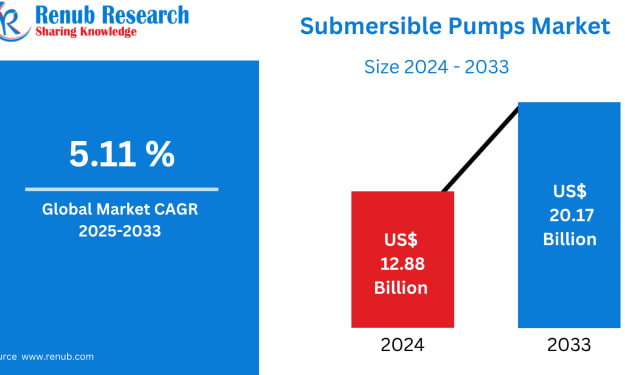
Global Submersible Pumps Market Outlook The Global Submersible Pumps Market is entering a decade of sustained growth, supported by rising global demand for water management, agricultural irrigation, and industrial dewatering solutions. According to Renub Research, the market is projected to grow from US$ 12.88 billion in 2024 to US$ 20.17 billion by 2033, expanding at a CAGR of 5.11% during 2025–2033.
By Aaina Oberoi4 days ago in The Swamp
Here’s Everything Investors Need to Know About the Historic Silver Rally in 10 Charts
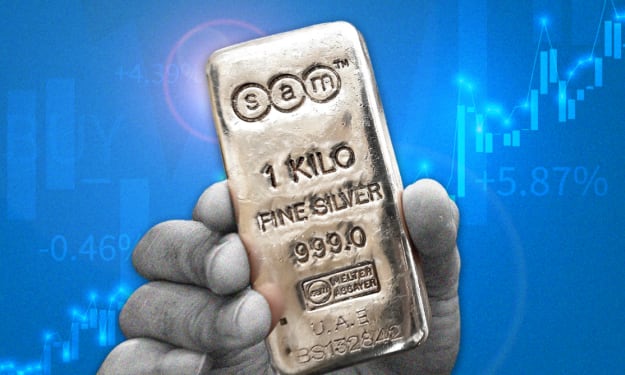
The precious metals market is experiencing an unusual surge, and silver is stealing the spotlight. After years of relatively muted performance compared to gold, silver prices have recently skyrocketed, attracting renewed attention from retail and institutional investors alike. Analysts describe the rally as historic, not just for its speed, but also for the market dynamics driving it. For anyone with exposure to precious metals—or considering entering the market—understanding what’s fueling the rally is critical. Investors are increasingly turning to visual data, such as charts, to make sense of trends, compare performance, and assess risks. In this article, we break down the silver surge and highlight the most important insights in 10 key charts that explain why this rally is capturing global attention. 1. Silver Price Over the Past Decade The first chart shows silver prices from 2016 to 2026. While the price remained relatively stable for much of the last decade, recent months have seen dramatic upward movement. This spike reflects a combination of increased industrial demand, investor interest, and macroeconomic uncertainty driving safe-haven buying. Key takeaway: Silver is breaking through historical resistance levels, hinting at a potential shift in market sentiment. 2. Gold-to-Silver Ratio Investors often watch the gold-to-silver ratio as a measure of relative value. Traditionally, silver trades at a lower price than gold, but the ratio can signal whether silver is undervalued. Recent charts show the ratio declining sharply, meaning silver is gaining faster than gold—a bullish signal for silver investors. Key takeaway: Historically, periods when the ratio drops have been followed by significant silver price gains. 3. Silver ETFs Inflows Exchange-traded funds (ETFs) are a major driver of precious metal investment. One chart highlights inflows into silver ETFs over the past two years. Surging inflows indicate strong investor demand, particularly from institutional players seeking exposure without owning physical silver. Key takeaway: Investor appetite is at a decade-high, contributing to upward price pressure. 4. Mining Production vs. Demand Supply constraints can fuel rallies. One chart compares global silver mining production to industrial and investment demand. Production has been relatively flat, while demand for electronics, solar panels, and silver bullion has increased. Key takeaway: Tight supply relative to demand is supporting prices and creating upward momentum. 5. Inflation Trends and Precious Metals Silver, like gold, is often considered a hedge against inflation. A chart comparing UK, US, and global inflation rates to silver prices shows a correlation: periods of rising inflation often coincide with rising silver prices. Key takeaway: Inflation fears are likely contributing to the current rally, as investors seek to preserve purchasing power. 6. Silver Futures Trading Volume Futures markets provide insight into investor sentiment and speculation. A chart showing trading volume in silver futures contracts reveals heightened activity in recent months, suggesting that both hedgers and speculators are positioning for further gains. Key takeaway: High futures volume indicates confidence—and volatility—can be expected in the near term. 7. Industrial Demand Segments Unlike gold, silver has major industrial uses in electronics, solar energy, and medical devices. One chart breaks down silver demand by sector, highlighting how growth in renewable energy and tech industries is boosting silver consumption. Key takeaway: Structural demand from technology and energy sectors underpins long-term bullish trends. 8. Retail Investor Interest Retail investors are flocking to silver as part of a broader alternative investment trend. A chart tracking online search interest, social media mentions, and retail trading platforms shows spikes during key market events. Key takeaway: Retail demand can amplify price movements, creating momentum-driven rallies. 9. Comparative Performance With Other Assets Another chart compares silver returns versus gold, equities, and bonds over the past 12 months. Silver has outperformed most traditional asset classes, particularly in periods of market volatility. Key takeaway: Silver’s recent outperformance positions it as a compelling diversification tool for investors. 10. Historical Price Surges Finally, a chart showing historic silver rallies places the current surge in context. While the rally is impressive, past cycles suggest that volatility can be significant, and sharp corrections are possible. Key takeaway: Investors should balance enthusiasm with caution, recognizing that silver’s historical price swings can be extreme. What This Means for Investors The historic silver rally is driven by a mix of macroeconomic, industrial, and speculative factors. Inflation concerns, tight supply, industrial demand, and strong retail and institutional interest have all converged to push silver to multi-year highs. However, like all commodities, silver is volatile, and investors need to consider: Timing and entry points for investment Portfolio diversification to manage risk Long-term versus short-term investment strategies Charts provide clarity, but they also highlight the unpredictable nature of commodities markets. Understanding trends, correlations, and historical patterns is essential for making informed decisions. Final Thoughts Silver is no longer just a “poor man’s gold.” Its historic rally in 2026 demonstrates its relevance as both an investment and an industrial commodity. For investors, the surge offers opportunity—but also risk. By examining these 10 charts, it becomes clear that while momentum is strong, careful research and a long-term perspective remain key. Whether you’re a seasoned investor or new to precious metals, understanding the forces behind the rally will help you make better-informed decisions. Silver’s story in 2026 is a reminder that commodities markets can surprise, reward, and challenge investors all at once.
By Muhammad Hassan6 days ago in The Swamp


Comments
There are no comments for this story
Be the first to respond and start the conversation.