
EU Executive Weighs Idea of Quick, but Limited Membership for Ukraine
Could this be a fast track to Europe for Kyiv?
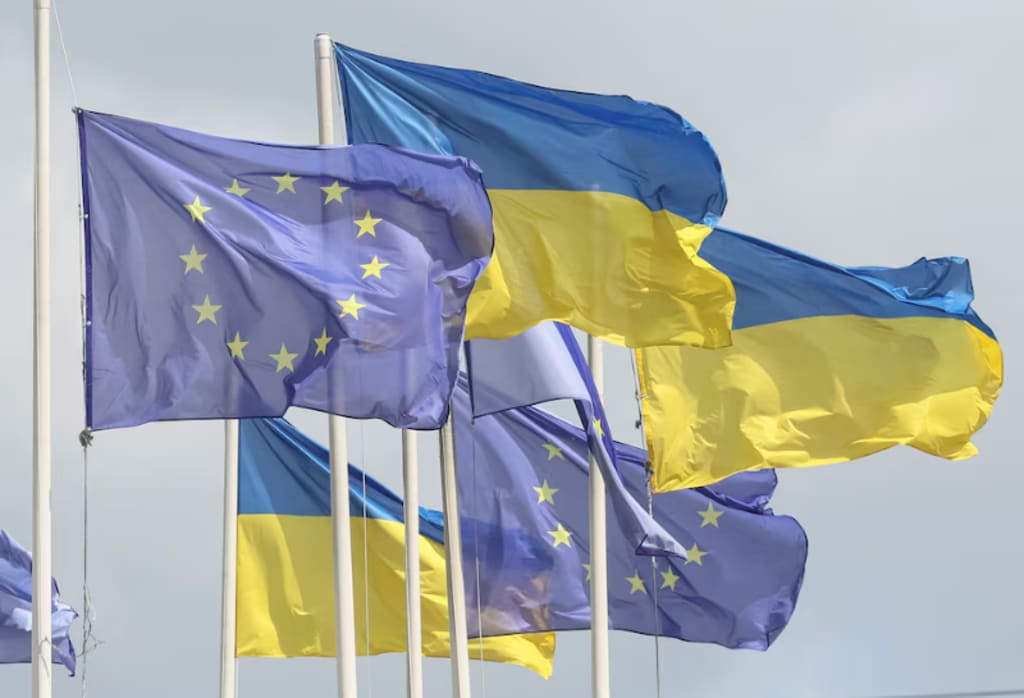
The European Union is considering an idea that could change the rules of the game for Ukraine’s EU ambitions: fast-tracking membership, but in a limited, staged way. This concept is still under discussion, but it highlights a big question for Europe — how to respond to geopolitical urgency while maintaining EU standards.
Why the EU Is Considering This
Ukraine’s path to EU membership has been fast-tracked in urgency, largely due to the war with Russia that began in 2022. Beyond the human and economic toll, the conflict has made Ukraine a strategic priority for Europe.
For Ukrainians, joining the EU isn’t just a political goal — it represents:
Security and stability
Economic integration with Europe
A symbol of alignment with Western values
A draft peace plan discussed by the U.S., Ukraine, and the European Commission even references Ukraine joining the EU as early as 2027. This shows how seriously Europe is thinking about anchoring Ukraine in the EU amid uncertain times.
What “Quick but Limited” Membership Means
Normally, EU accession is a long, demanding process. Countries must meet the Copenhagen Criteria, which require:
Stable democratic institutions
A functioning market economy
Capacity to adopt and enforce EU law
Poland, for example, spent a decade negotiating before joining the EU in 2004.
The new idea is different. Ukraine could join the EU faster, but with certain rights phased in over time:
Economic benefits like access to the single market could come first
Political rights, such as voting in EU institutions, might be delayed until reforms are completed
Think of it as a tiered or staged membership, bridging the gap between immediate integration and long-term readiness.
Challenges Ahead
Even a limited membership is far from straightforward. Here’s why:
1. Legal Hurdles
All 27 EU member states — and often their national parliaments — must approve any membership. This is no small feat.
2. Internal EU Skepticism
Many leaders are hesitant to set a fixed accession date, like 2027, without Ukraine meeting key standards first.
3. Concerns from Other Candidates
Countries like Montenegro and Albania may see this fast-track as unfair, threatening EU cohesion.
4. Ukraine’s Own Position
Kyiv has expressed that it wants full and equal membership, not a second-tier or temporary status. President Zelensky has emphasized the importance of being fully included in the EU.
Why It Could Still Work
Despite the challenges, the plan has strategic value:
Shows Ukraine that the EU is committed, boosting confidence
Encourages reforms by linking rights to benchmarks
Sends a symbolic signal of Western support, especially during peace negotiations
Some diplomats argue that “business as usual” accession rules may not suit wartime realities, and creative solutions are needed to maintain European unity while supporting Ukraine.
What It Means for Europe
If implemented, this approach would be the first major reform of EU enlargement in decades. It raises big questions:
Can the EU adapt its rules for exceptional cases?
How do you balance sovereignty, shared values, and geopolitical urgency?
Will creating staged memberships impact cohesion among member states?
Europe may be facing a new model of enlargement, shaped by strategic necessity rather than tradition.
Conclusion
The EU executive’s consideration of a quick, limited membership for Ukraine is more than a policy idea — it’s a reflection of Europe at a crossroads.
While there are hurdles, the discussion highlights the EU’s struggle to:
Support Ukraine amid war
Maintain standards and fairness for other candidates
Adapt its institutions for a changing geopolitical reality
Whether or not it happens, the debate itself signals that the future of Ukraine is firmly on Europe’s agenda, and that the EU is willing to explore innovative approaches in a time of crisis.
✅ Takeaway for readers:
Ukraine’s EU journey may not follow the old rules — a fast-track, limited membership could offer hope, stability, and reform incentives, even if it comes with compromises.
About the Creator
Keep reading
More stories from Aqib Hussain and writers in The Swamp and other communities.
US Says Canada Will Regret Decision to Allow Chinese EVs Into Their Market
The global electric vehicle (EV) race is heating up, and Canada has just made a move that has caught the attention — and criticism — of its closest ally. The United States has warned that Canada may “regret” its decision to allow Chinese-made electric vehicles into its domestic market, a statement that underscores rising trade tensions, geopolitical rivalry, and fears over the future of North America’s auto industry.
By Aqib Hussain2 days ago in The Swamp
Europe and China Take Step to Resolve Dispute on Electric vehicles
In a world where economic rivalries often dominate headlines, a fresh chapter of constructive dialogue has emerged between Europe and China over one of the most talked-about industries of the 21st century — electric vehicles (EVs). After years of friction, both sides have agreed on meaningful steps toward resolving their dispute over Chinese EV imports into the European Union, a move that could influence global EV markets and international trade standards for years to come. The Roots of the Dispute The tension didn’t start overnight. For several years, Chinese EV manufacturers — from BYD to Geely — have surged in global sales thanks to aggressive state support, large-scale production, and highly competitive pricing. European automakers, historically dominant in internal combustion vehicles, struggled to adapt quickly to the EV revolution. As Chinese EV imports to Europe increased dramatically, concerns over market fairness grew. In 2023, the EU launched an official anti-subsidy investigation, concluding that Chinese EV makers benefited from substantial government subsidies, giving them an unfair advantage. By late 2024, the European Commission imposed countervailing duties — tariffs ranging from roughly 8% to over 35% — on Chinese EV imports. While intended to protect European manufacturers, these measures also created political tension, as Beijing viewed them as unfair barriers to trade. Analysts warned that without resolution, this dispute could escalate, affecting investment in EV infrastructure and slowing Europe’s green transition goals. (ec.europa.eu) A New Path Forward: Price Undertakings and Dialogue On January 12, 2026, a breakthrough was announced. China and the EU agreed to pursue a cooperative solution instead of escalating tariffs and trade retaliation. The European Commission issued a guidance framework, allowing Chinese EV makers to submit price undertakings — formal proposals to sell vehicles at minimum prices designed to counteract alleged subsidies. If these proposals meet EU standards, they could replace existing tariffs and create a more predictable, stable trade environment. Key points of the framework include: Chinese exporters must propose pricing that offsets the effects of state support. Each offer will be assessed fairly, following World Trade Organization rules. Additional considerations, like future investments in European production, could strengthen proposals. Officials and experts hailed the initiative as a model of dialogue over confrontation, emphasizing that structured negotiation can resolve disputes without harming global markets. Implications for Europe, China, and the Global EV Market This compromise has far-reaching implications: 1. Stability for European Consumers and Makers European buyers can continue accessing competitively priced EVs, while local manufacturers are protected from being undercut by subsidized imports. For European automakers, the framework creates clarity and predictability, allowing them to plan investments in EV innovation and manufacturing without fearing abrupt trade shocks. 2. A Boost for China’s EV Ambitions China remains a global leader in EV production. A transparent price undertaking system allows Chinese brands to maintain market access in Europe without facing full tariffs, supporting their industrial strategy while aligning with international trade norms. 3. Encouraging Dialogue in Global Trade Perhaps most importantly, this step illustrates how major economies can resolve disputes in rapidly evolving industries through negotiation rather than confrontation. It may set a precedent for other sectors — like renewable energy technology, semiconductors, and high-tech manufacturing — where trade friction could otherwise escalate. The Bigger Picture: Green Transition and Economic Cooperation Electric vehicles are more than just cars — they symbolize the global green transition. Europe aims to reduce emissions and meet ambitious climate goals, while China seeks to expand clean technology exports. Resolving trade disputes in this sector helps both regions: Europe secures affordable EVs to accelerate adoption and infrastructure development. China demonstrates its commitment to fair trade practices while expanding global influence. Global markets benefit from reduced uncertainty, encouraging investment and innovation in EV technology. Analysts suggest that successful resolution could encourage other regions, such as the United States and Southeast Asia, to adopt similar frameworks, fostering cooperation over competition in climate-related industries. Looking Ahead It’s too early to say whether this framework will fully resolve the EU-China EV dispute or serve as a temporary truce. However, the shift from tariffs to cooperative pricing negotiations represents a thoughtful balance between economic interests and diplomacy. For Europe, it could mean a steady supply of EVs at fair prices. For China, it signals the importance of engaging constructively in global trade. In an era where electric vehicles are synonymous with innovation, climate action, and technological leadership, how Europe and China manage this dispute could shape not only global auto markets but also the broader trajectory of international trade and environmental progress.
By Muhammad Hassan6 days ago in The Swamp



Comments
There are no comments for this story
Be the first to respond and start the conversation.