
Endangered Whales Are Drowning in Record Numbers Because of the Fishing Industry in California
California’s endangered whales face mounting threats from fishing gear entanglements as numbers of accidental deaths reach unprecedented levels

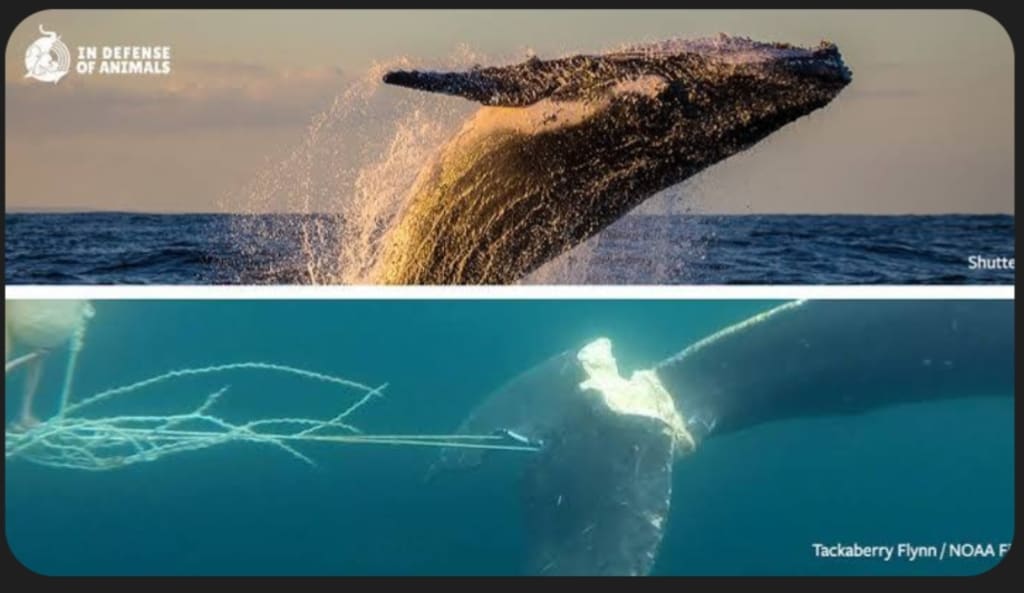
California’s iconic coastline, home to some of the world’s most majestic marine life, is witnessing a troubling surge in whale deaths. Endangered whales, including blue whales, humpbacks, and the critically endangered North Pacific right whale, are drowning at record rates — and experts point to the state’s fishing industry as a leading culprit.
Marine biologists and environmental groups are raising alarms over the scale of the crisis, highlighting how commercial fishing practices, combined with insufficient protections, are pushing already vulnerable whale populations closer to the brink.
---
Entanglement: The Silent Killer
The primary threat comes from fishing gear entanglement, particularly in ropes, nets, and crab or lobster traps. When whales become ensnared in these materials, they are unable to surface to breathe properly. Prolonged entanglement can lead to starvation, injury, infection, and eventually death by drowning.
Over the past several years, the number of whales reported dead or seriously injured along California’s coast has climbed sharply. Rescue operations often intervene too late, and even when whales are freed, the trauma can leave lasting health consequences.
Experts warn that the situation is exacerbated by the sheer density of fishing operations along California’s waters. The state is a hub for commercial fishing, including Dungeness crab, rockfish, and other species — and the gear used is lethal to large marine mammals if not carefully managed.
---
Record Numbers and Species at Risk
Recent reports show that entanglement-related deaths are hitting record highs. The National Oceanic and Atmospheric Administration (NOAA) has documented hundreds of incidents over the last decade, with spikes in certain years reaching levels that are unsustainable for endangered species.
The North Pacific right whale, for example, has fewer than 350 individuals left. Even a handful of deaths in a single season represents a significant proportion of the population, making recovery extremely difficult. Humpback whales, while more numerous, are also facing pressures that threaten localized populations, particularly mothers and calves.
The losses are not just numbers; they have broader ecological consequences. Whales play a crucial role in ocean health, including nutrient cycling and supporting marine food webs. The decline of whale populations can ripple through the ecosystem, affecting fish stocks, seabird populations, and overall marine biodiversity.
---
Fishing Practices Under Scrutiny
Environmental organizations and scientists are increasingly scrutinizing California’s fishing practices. Vertical lines connected to crab pots and traps are particularly dangerous, stretching hundreds of feet from the ocean surface to the seafloor. These lines can entangle whales even as they migrate or feed.
While some voluntary measures exist — including seasonal closures, line-reducing innovations, and whale-safe gear programs — critics argue they are insufficient. Many commercial fisheries are resistant to wide-scale changes due to the cost and logistical challenges of adopting new equipment.
According to conservation groups, stronger regulation, mandatory gear modifications, and stricter monitoring are essential to prevent further mass mortalities.
---
Climate Change and Whale Vulnerability
The problem is compounded by climate-driven changes in whale behavior. Shifts in water temperature, prey availability, and migration patterns can bring whales into closer contact with fishing zones. For example, warming waters have altered krill and sardine distributions, forcing endangered whales to feed in areas densely packed with fishing gear.
This intersection of environmental change and industrial activity creates a deadly combination: whales increasingly enter high-risk areas where entanglement is likely, amplifying human impacts on already fragile populations.
---
Efforts to Mitigate the Crisis
Despite the grim statistics, there are ongoing efforts to reduce whale deaths. NOAA and state agencies have launched rescue teams, which respond to entangled whales whenever possible. These teams remove ropes, track injured animals, and collect data to inform future protections.
Researchers are also testing new technologies, such as ropeless fishing gear, acoustic deterrents, and advanced tracking systems to alert fishers to whale presence. Community outreach programs aim to educate fishermen on safer practices and encourage voluntary compliance with conservation guidelines.
However, experts caution that voluntary measures alone will not be enough. Without robust enforcement and regulatory changes, the combination of heavy fishing pressure and environmental stressors is likely to continue causing record-level whale deaths.
---
Policy and Legal Pressure
Legal frameworks, including the Marine Mammal Protection Act (MMPA), offer some tools for holding industries accountable. Environmental groups are increasingly pursuing litigation to compel stronger protections, citing documented deaths as evidence that current measures are inadequate.
Policymakers are under growing pressure to balance economic interests with ecological stewardship. While fishing is an important economic driver in California, unchecked impacts on endangered species carry significant environmental and reputational risks, both nationally and internationally.
---
Why It Matters
The rise in whale mortalities is more than a conservation issue; it is a symptom of larger challenges in ocean management. Failure to act could have cascading effects on marine ecosystems, fisheries sustainability, and biodiversity.
Whales are not just charismatic megafauna; they are keystone species, vital to maintaining oceanic health. Their loss threatens the resilience of marine ecosystems and undermines the ecological services upon which humans depend, from fisheries productivity to carbon sequestration.
---
Moving Forward
The crisis along California’s coastline highlights the urgent need for coordinated action between fisheries, conservation groups, scientists, and policymakers. Solutions may include:
Mandatory adoption of ropeless or modified gear to prevent entanglement.
Seasonal or area closures to protect whales during migration and feeding periods.
Increased monitoring and rapid-response rescue teams.
Stronger enforcement of existing laws and new regulations where necessary.
Without immediate action, record-level whale deaths could become the new norm, pushing endangered populations toward irreversible decline.
California’s whales have survived centuries of natural challenges, but human-driven threats, especially from the fishing industry, now pose one of the gravest risks. Protecting them requires urgent, decisive measures — for the sake of biodiversity, ecosystem health, and the natural heritage of the state.
About the Creator
Keep reading
More stories from Salaar Jamali and writers in The Swamp and other communities.
Gold Continues to Surge: JPMorgan Sees a Scenario Where It Tops $8,000
Gold’s relentless rise has reignited one of the oldest debates in financial markets: how high can the world’s most trusted store of value really go? As prices continue to climb, analysts at JPMorgan have outlined an extreme but plausible long-term scenario in which gold could surge beyond $8,000 per ounce, a level that would once have seemed unthinkable.
By Salaar Jamalia day ago in The Swamp
France and Rafale Lose €3.2 Billion Deal After Last-Minute U-Turn
A sudden reversal shakes Europe’s defense industry and raises questions about trust, geopolitics, and competition in global arms markets France’s defense industry faced a sharp setback after a €3.2 billion Rafale fighter jet deal collapsed at the final stage, following a dramatic last-minute reversal by the purchasing country. The decision not only hit French defense manufacturer Dassault Aviation, but also sent ripples through Europe’s broader aerospace and security sector. The Rafale jet, long promoted as a symbol of French technological independence and military excellence, has enjoyed strong export success in recent years. However, this sudden U-turn highlights how defense contracts are rarely decided by technology alone. Politics, alliances, and shifting strategic interests often play a decisive role. What Was the Rafale Deal About? The now-cancelled agreement was expected to involve the sale of multiple Rafale multirole fighter jets, along with training, maintenance, weapons systems, and long-term support packages. Together, these elements pushed the deal’s value to €3.2 billion, making it one of France’s most significant defense exports in recent memory. For France, the contract promised: Thousands of high-skill jobs Long-term industrial activity Stronger diplomatic and military ties with the buyer For the purchasing country, the Rafale offered a combat-proven aircraft capable of air superiority, ground attack, reconnaissance, and nuclear deterrence missions. Yet despite months—or even years—of negotiations, the deal unraveled at the very end. Why the Last-Minute U-Turn Happened Officials have not publicly disclosed all the reasons behind the sudden reversal, but defense analysts point to several likely factors. 1. Political Pressure and Alliances Defense purchases often reflect geopolitical alignment. A country may face pressure from powerful allies to buy equipment from specific suppliers, especially when security partnerships or military aid are involved. 2. Competition from Rival Manufacturers The Rafale competes with major platforms such as: The US-made F-35 Eurofighter Typhoon Advanced systems from emerging defense exporters In some cases, rival offers include political incentives, financing options, or security guarantees that go beyond the aircraft itself. 3. Budget and Economic Concerns A change in government, economic outlook, or military priorities can force decision-makers to reassess major spending commitments, even at the last moment. Impact on France and Dassault Aviation The collapse of the €3.2 billion deal is a financial and reputational blow. Economic Consequences Loss of expected revenue Delays or adjustments in production schedules Pressure on subcontractors across France and Europe France’s defense industry supports tens of thousands of jobs, and major export contracts help keep unit costs lower for France’s own military. Strategic Setback France has long positioned the Rafale as a sovereign alternative to US defense systems. Losing such a high-profile deal raises concerns about Europe’s ability to compete independently in global arms markets. What This Means for the Global Arms Market The failed Rafale deal illustrates how volatile and political defense sales have become. Trust and Reliability Issues When a deal collapses at the final stage, it can: Make exporters more cautious Increase demands for guarantees Complicate future negotiations Rising Geopolitical Influence Arms sales are increasingly used as tools of diplomacy. Countries are not just buying aircraft—they are choosing long-term strategic partners. Growing Competition Defense manufacturers must now offer: Technology transfers Local production Training and industrial partnerships not just advanced weapons France’s Response and Next Steps French officials have sought to downplay the long-term damage, pointing to Rafale’s continued success in other regions. In recent years, the jet has secured major contracts in Asia, the Middle East, and Europe. France is expected to: Pursue new export opportunities Strengthen industrial cooperation with allies Continue upgrading Rafale systems to stay competitive Dassault Aviation has also emphasized that interest in the Rafale remains strong, despite the setback. A Broader Lesson for Europe Beyond France, the failed deal raises questions for Europe’s defense strategy as a whole. If European manufacturers cannot rely on political unity or stable partnerships, they may struggle to compete against larger defense exporters backed by massive military alliances. The episode underscores the need for: Stronger European defense cooperation Clearer export strategies Long-term political consistency Conclusion: More Than Just a Lost Contract The loss of the €3.2 billion Rafale deal is not simply a commercial disappointment. It is a reminder that modern defense agreements sit at the crossroads of politics, economics, and security. For France, the challenge now is to turn this setback into a lesson, reinforcing its role as a reliable defense partner while navigating an increasingly complex global landscape. As defense markets grow more competitive and politicized, even the most advanced aircraft can fall victim to forces far beyond the runway.
By Fiaz Ahmed 5 days ago in The Swamp
Chinese Whistleblower Granted U.S. Asylum After Exposing Human Rights Abuses
In a significant development that underscores the peril faced by human rights defenders worldwide, a U.S. immigration judge has granted asylum to a Chinese national, Guan Heng — a whistleblower who exposed alleged human rights abuses in China’s Xinjiang region. The ruling, delivered on January 28, 2026, marks a rare victory for asylum seekers in an era of increasingly stringent immigration policies and reflects growing international concern over the treatment of dissidents and minority populations in China. �
By Ayesha Lasharia day ago in The Swamp



Comments
There are no comments for this story
Be the first to respond and start the conversation.