
Elephant Kills Tourist at Thailand National Park: Third Fatality Linked to Same Animal
“Tragedy Strikes at Khao Yai National Park as a Bull Elephant Claims Its Third Human Victim, Highlighting the Growing Risk of Human-Wildlife Conflict in Thailand.”


Imagine stepping out of your tent at sunrise, surrounded by the peaceful sounds of a forest, only to face a life-threatening encounter with one of the planet’s largest land animals. This nightmare became reality for 65-year-old Jiratchai Jiraphatboonyathorn, a tourist at Khao Yai National Park in Thailand, who was tragically killed by a wild bull elephant on February 2. His wife, who was camping with him, narrowly escaped after park rangers intervened.
What makes this incident even more chilling? It’s the third known fatality linked to this very same elephant, a bull nicknamed Plai Oi Wan or Oyewan by locals.
A Peaceful Morning Turns Deadly
According to park officials, Jiratchai left his tent around 5:30 a.m. to enjoy the fresh morning air. Nearby campers watched in horror as the elephant suddenly approached, grabbed him with its trunk, and trampled him. Rescue teams confirmed he died on the spot from multiple severe injuries. His wife survived, but the trauma of witnessing the attack will undoubtedly stay with her forever.
Khao Yai is a popular destination for nature lovers, offering dense forests, waterfalls, and abundant wildlife. But for Jiratchai, a routine morning walk turned into a tragedy—a reminder of how unpredictable wild animals can be.
A Pattern of Dangerous Behavior
What’s unusual about this story is that this isn’t the first time this elephant has been linked to human fatalities. Authorities confirmed that this bull elephant was involved in at least two previous deaths. Experts suspect that the elephant’s aggressive behaviour may be linked to being in musth, a period in which male elephants experience a surge of testosterone, making them highly aggressive and unpredictable.
While fatal elephant encounters are not unheard of in Thailand, it’s rare for one individual animal to cause repeated incidents. Since 2012, over 220 people have reportedly been killed by elephants across Thailand, making human-elephant conflict a persistent problem.
Why Are Elephants Venturing Near Humans?
Thailand’s elephant population has grown in recent years, thanks to conservation efforts and stricter wildlife protections. Estimates suggest the wild population nearly doubled over the last decade, but this success comes with challenges.
As forests shrink and human settlements expand, elephants increasingly roam into areas used by people. The result? Crop raiding, property damage, and, tragically, fatal encounters like the one at Khao Yai.
This is a delicate balance: protecting these iconic creatures while keeping people safe. Experts emphasize that education, safety measures, and careful wildlife management are key to reducing these conflicts.
What Are Officials Doing About This Elephant?
After the recent fatality, authorities are under pressure to act. They are considering relocating the bull elephant away from tourist areas or attempting behavioural interventions.
At this time, euthanasia has been ruled out. Park officials stress the importance of a humane approach that safeguards both humans and wildlife. Relocation, combined with educating visitors on how to behave safely around elephants, is seen as the best solution for now.
The Human Side of the Tragedy
While policy debates and conservation discussions dominate the headlines, it’s important not to forget the victim. Friends and family of Jiratchai describe him as a nature enthusiast and devoted husband who loved visiting Khao Yai. The loss is a harsh reminder of how quickly a peaceful adventure can turn into a tragedy when humans and wildlife collide.
Staying Safe in Elephant Country
For anyone planning to visit Thailand’s national parks, there are a few key takeaways:
Keep your distance: Elephants may seem calm from afar, but they can become aggressive very quickly.
Follow park rules: Rangers post guidelines for a reason—they are based on years of observation and experience.
Avoid walking alone: Especially during early mornings or evenings, when elephants are more active.
Watch for warning signs: Signs like ear-flapping, trumpeting, or mock charges indicate stress or aggression.
Being aware of these precautions can save lives without diminishing the joy of experiencing Thailand’s incredible wildlife.
The Bigger Picture
This incident at Khao Yai highlights a broader challenge: human-wildlife coexistence. Thailand has done an admirable job in conserving its wild elephants, but as populations grow and habitats shrink, conflicts are becoming more frequent.
Finding a balance—protecting humans while ensuring the survival of these magnificent animals—is a challenge that will continue to shape Thailand’s conservation policies in the years ahead.
For now, the tragic story of Jiratchai and the notorious bull elephant serves as a sobering reminder: even in nature’s most serene places, caution and respect for wildlife are essential.
About the Creator
Sajida Sikandar
Hi, I’m Sajida Sikandar, a passionate blogger with 3 years of experience in crafting engaging and insightful content. Join me as I share my thoughts, stories, and ideas on a variety of topics that matter to you.
Keep reading
More stories from Sajida Sikandar and writers in The Swamp and other communities.
‘Superhuman’ Teen Swims Hours to Save Family Stranded Off Australian Coast
A 17-year-old Australian teenager is being hailed as a real-life hero after swimming for hours to rescue family members stranded off the coast of New South Wales. What started as a routine day at the beach quickly turned into a life-or-death situation, showcasing both the physical endurance and quick thinking of a young person in extraordinary circumstances.
By Sajida Sikandarabout 19 hours ago in The Swamp
Gold Sheds Rs61,050 per Tola in Two Days: What Triggered the Sharp Slide and What Comes Next
Gold prices in Pakistan have suffered a dramatic correction, shedding a massive Rs61,050 per tola over just two trading sessions, sending shockwaves through bullion markets, jewelry traders, and investors alike. The abrupt fall comes after weeks of heightened volatility, during which gold had surged to record highs on global uncertainty, geopolitical risks, and expectations of looser monetary policy in major economies.
By Salaar Jamali3 days ago in The Swamp
China Unveils ‘Flying Aircraft Carrier’ in Major Leap for Aerial Warfare Technology
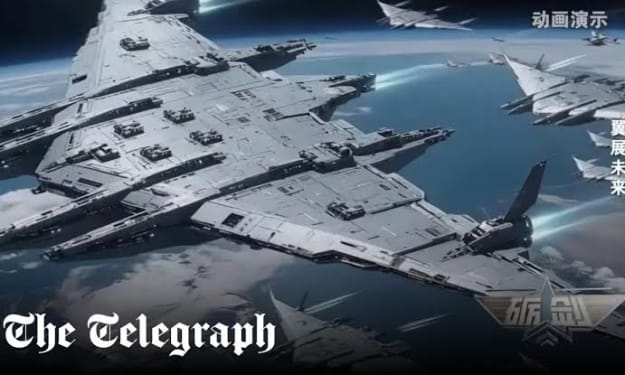
China has unveiled what it describes as a “flying aircraft carrier,” a large unmanned aerial vehicle capable of launching and controlling swarms of smaller drones in midair. The project represents a significant advance in military aviation and signals Beijing’s growing ambition to dominate next-generation warfare technologies. Defense analysts say the system could dramatically change how future air battles are fought by extending range, increasing surveillance capability, and overwhelming enemy defenses with coordinated drone attacks. The aircraft, officially presented by China’s state aerospace industry as a high-altitude long-endurance drone platform, is designed to act as a mobile command hub in the sky. Unlike traditional aircraft carriers that operate at sea, this airborne platform can deploy multiple drones directly from the air, allowing operations deep inside contested zones without relying on nearby bases. A New Concept in Air Power The “flying aircraft carrier” is reportedly capable of carrying dozens of small drones inside its fuselage and releasing them during flight. Once deployed, these drones can perform missions such as reconnaissance, electronic warfare, decoy operations, and potentially precision strikes. Chinese engineers say the system allows the mothership drone to remain at high altitude while its smaller drones spread out across a wide area. This reduces the risk to manned aircraft and complicates enemy air defenses, which must track and intercept multiple targets simultaneously. Military experts describe the design as part of a broader shift toward unmanned and networked combat systems. Rather than relying solely on fighter jets or bombers, future conflicts may involve swarms of autonomous or semi-autonomous drones working together under centralized command. Strategic Motivation China’s unveiling of the flying aircraft carrier comes amid intensifying competition with the United States and its allies over air and space superiority. Beijing has invested heavily in hypersonic weapons, stealth aircraft, and artificial intelligence-driven combat systems. The drone carrier concept fits into this strategy of developing asymmetric capabilities that can counter advanced Western militaries. Analysts believe the aircraft could be particularly useful in scenarios involving Taiwan or disputed areas of the South China Sea. By launching drones from high altitude, China could conduct surveillance or electronic interference without placing piloted aircraft directly in harm’s way. The system may also help overcome limitations in range. Smaller drones normally have restricted flight endurance, but being carried close to the operational zone by a larger aircraft extends their reach dramatically. Technological Features According to Chinese aerospace officials, the flying aircraft carrier uses advanced composite materials to remain lightweight while carrying heavy payloads. It reportedly has a long wingspan, allowing it to glide efficiently at high altitudes for extended periods. The aircraft is equipped with artificial intelligence systems to coordinate drone launches, manage flight paths, and process battlefield data in real time. This allows it to act as both a transport platform and a command-and-control center. Some reports suggest the system can integrate with satellite networks and ground stations, enabling remote operators to guide missions while relying on onboard AI for rapid decision-making. This blend of automation and human oversight reflects China’s growing investment in intelligent warfare. Global Reactions and Concerns The announcement has drawn attention from military analysts around the world. Many view it as another step in the rapid militarization of drone technology. Western defense experts warn that swarm-based systems could overwhelm existing missile defense and radar networks. Unlike traditional aircraft, drones are cheaper and easier to replace. A flying aircraft carrier capable of launching dozens at once could saturate enemy defenses and create confusion on the battlefield. Human rights organizations and arms control advocates have also raised concerns about the ethical implications of autonomous weapons. They argue that expanding drone swarms increases the risk of miscalculation and accidental escalation, especially if AI systems are allowed to operate with limited human supervision. Civil and Commercial Implications While the primary focus is military, Chinese engineers have hinted that similar technology could have civilian applications. Aerial drone carriers could be used for disaster response, delivering rescue drones over large areas after earthquakes or floods. They could also support environmental monitoring and long-distance communications. However, experts caution that military development is clearly the driving force behind the project. Any civilian use would likely be secondary and carefully controlled by the state. Part of a Broader Drone Strategy China is already the world’s largest producer and exporter of drones, both civilian and military. Its armed drones are used by several countries for surveillance and counterterrorism operations. The flying aircraft carrier concept builds on this dominance by introducing a new layer of complexity: drones that deploy other drones. This development mirrors similar research in the United States, where the Pentagon has tested systems that launch smaller drones from bombers or cargo planes. The difference is that China appears to be pushing the idea toward operational deployment more aggressively. Implications for Future Warfare The emergence of flying drone carriers suggests a future in which battles are fought increasingly by machines rather than pilots. Such systems reduce risks to human life on the attacking side but raise serious questions about accountability and control. They also blur the line between air and space warfare, as high-altitude drone platforms can remain aloft for long periods, gathering intelligence and directing operations across vast regions. Conclusion China’s unveiling of a flying aircraft carrier marks a significant milestone in the evolution of aerial warfare. By combining a high-altitude drone with a swarm of smaller unmanned aircraft, Beijing is signaling its intent to lead in autonomous military technology. While the system’s full capabilities remain unclear, its potential impact on regional security and global military balance is substantial. As nations race to develop similar technologies, the flying aircraft carrier could become a symbol of a new era in warfare—one defined by artificial intelligence, drone swarms, and battles fought increasingly in the skies without pilots onboard.
By Fiaz Ahmed about 16 hours ago in The Swamp
A Love Forboding
The chipped stone slope caused unbearable footing. I slid, skirting on my heels. I cast my shield, relinquishing my guard to stay upright. Left with my double-edge and a prayer to the maker, I skated toward my objective. The earthly stubble gave way to solid ground. I found myself restored, a trail of dust in my wake.
By James U. Rizzi4 days ago in Fiction



Comments
There are no comments for this story
Be the first to respond and start the conversation.