
Electric Scooter Market Trends & Summary
How Urban Mobility, Battery Innovations, and Green Policies Are Steering a US$ 55 Billion Industry by 2033

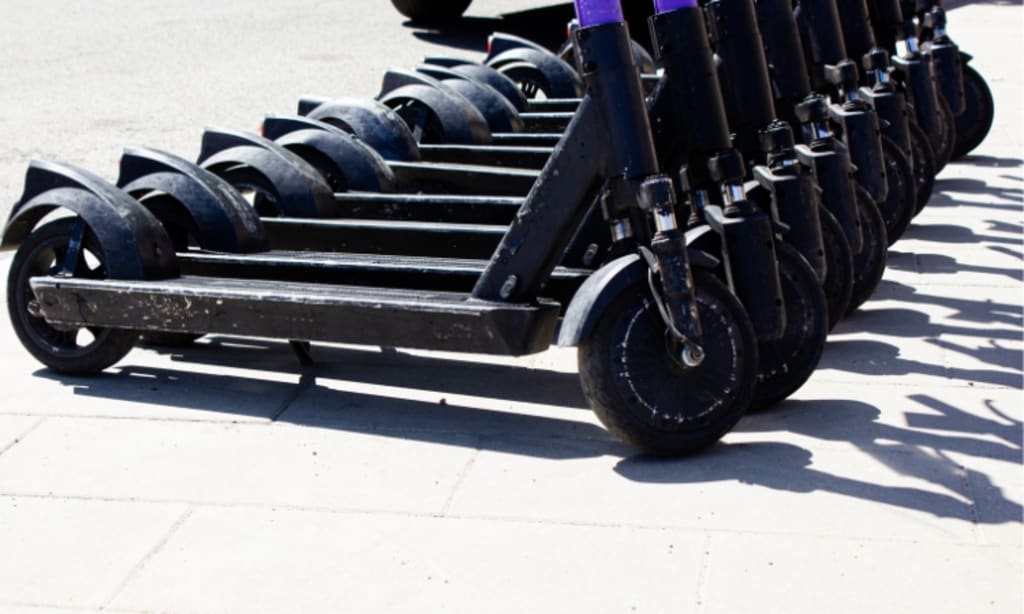
The global electric scooter market is accelerating at a pace that reflects the world’s growing urgency for sustainable and cost-effective mobility. According to Renub Research, the market is estimated at US$ 26.73 billion in 2024 and is expected to expand to US$ 55.01 billion by 2033, growing at a healthy CAGR of 8.35% from 2025 to 2033. This significant growth is being fueled by evolving urban transportation needs, stronger government incentives, advancements in battery technology, and rising consumer awareness about eco-friendly commuting.
The Electric Scooter Market & Forecast Report covers detailed segmentations by voltage (24V, 36V, 48V, >48V), product type (folding, standing/self-balancing, retro), battery type (Li-ion, lead-acid, others), end-use (personal and commercial), and market analysis across 25 global countries, backed by competitive insights for the top companies.
Electric Scooter Market Outlook
Electric scooters are compact, battery-powered two-wheelers designed specifically for convenient short-distance travel. They are engineered to replace petrol-powered scooters by offering cleaner, quieter, and smarter mobility. Popular features include regenerative braking, LED lighting, smartphone connectivity, app-based diagnostics, GPS navigation, and lightweight design architectures.
Their rapid rise globally can be attributed to three major factors:
Affordability compared to cars and motorcycles
Ease of use, especially in crowded urban settings
Sustainability, with zero tailpipe emissions
Across Asia, Europe, and the United States, electric scooters have become a centerpiece of urban mobility. They offer a practical solution for congested cities, shorter commutes, last-mile challenges, and the transition toward greener lifestyles. Governments, too, are pushing consumers toward electric transportation through incentives, tax cuts, and charging-infrastructure investments.
Electric Scooter Market Growth Drivers
1. Rising Environmental Awareness
As more countries struggle with growing air pollution and carbon emissions, the adoption of zero-emission vehicles (ZEVs) is surging. Electric scooters directly reduce fossil-fuel dependence and urban pollution.
Several governments are integrating EV subsidies, scrappage incentives, and reduced registration fees to encourage purchasing. Cities grappling with traffic and air-quality issues see these scooters as a clean and compact solution.
China, for example, aims for 40% of all vehicles to be NEVs by 2030, significantly up from its earlier target of 20% by 2025.
Indonesia is targeting 13 million electric two-wheelers by 2030, representing a quarter of total two-wheeler sales.
As environmental consciousness rises, electric scooters naturally emerge as the preferred alternative to petrol-driven two-wheelers.
2. Technological Advancements in Batteries
Battery technology is the backbone of the electric scooter revolution. Modern lithium-ion (Li-ion) batteries now offer:
Higher energy density
Faster charging
Lower weight
Longer operational life
Decreasing cost curve
Manufacturers are increasingly adopting high-capacity Li-ion batteries, enabling users to travel longer distances with improved performance. This technology also allows for stylish, compact designs that attract younger and tech-savvy consumers.
A notable example is Kinetic Green launching its high-speed e-scooter Zulu in 2023, featuring a unique battery subscription model that reduces upfront costs by over 35% and offers lower running expenses. Such models make e-scooters more affordable for the mass market.
3. Growth of Urban Mobility and Shared Services
As cities become more crowded, consumers are seeking flexible, efficient, and convenient mobility options. Electric scooters fit perfectly into this ecosystem. Their rise has been fueled by:
Increasing urban populations
Shared mobility platforms
Last-mile transportation needs
Adoption of micro-mobility solutions
Companies like Gogoro are revolutionizing the space with battery-swapping solutions. In 2023, they introduced battery swapping in India and launched the CrossOver GX250 made locally for the Indian market. Gogoro’s collaborations with Hero MotoCorp are further speeding up charging and swapping infrastructure.
Electric scooter sharing services such as Bird, Lime, and local Asian operators have made these vehicles more accessible, eliminating the need for ownership and boosting commercial adoption.
Market Challenges
1. High Initial Cost & Lack of Charging Infrastructure
Although electric scooters offer long-term cost savings, the high initial price, mainly due to battery costs, remains a barrier for price-sensitive buyers. In many developing regions, EV-friendly financing options are still limited.
Infrastructure challenges persist as well:
Insufficient public charging stations
Limited rural accessibility
Slow EV ecosystem development
These hurdles slow down mass adoption, especially in emerging markets.
2. Regulatory and Safety Concerns
The regulatory landscape surrounding electric scooters is inconsistent across countries. Variations in:
Speed limits
Licensing rules
Helmet regulations
Road access policies
…create confusion among users and manufacturers.
Safety concerns also remain, including road accidents, lack of proper cycling lanes, and inadequate protective gear among riders. Governments need to establish clearer guidelines, while companies must continue investing in safety technologies.
Key Market Segments
48V Electric Scooter Market
48V models occupy a dominant sweet spot, balancing speed, range, and affordability. They appeal particularly to:
Regular commuters
Mid-segment buyers
Consumers upgrading from entry-level models
These scooters offer enhanced performance while maintaining reasonable prices, making them a strong choice for both urban and suburban markets.
Folding Electric Scooter Market
These highly portable scooters have become a consumer favorite—especially among office-goers and urban travelers. Their key advantages include:
Space-saving foldable frames
Light weight
Easy carrying in cars, public transport, and small apartments
Perfect for last-mile connectivity
The increasing integration of smart features like IoT tracking and app-based controls is enhancing appeal among tech-forward buyers.
Li-ion Battery Electric Scooter Market
Li-ion batteries dominate due to their:
High energy density
Longer life
Environment-friendly characteristics
Light weight
As battery research continues to progress—especially with fast charging, improved thermal stability, and solid-state battery prototypes—the demand for Li-ion–powered electric scooters will continue rising.
Personal Electric Scooter Market
Personal-use scooters are ideal for individuals seeking:
Affordable transport
Eco-friendly commuting
Freedom from traffic and public transport delays
Many models today come with:
Foldability
GPS tracking
Mobile app support
Safety enhancements
This segment is expected to grow rapidly as urbanization expands and sustainability becomes a mainstream priority.
Country-Level Market Highlights
United States
The U.S. electric scooter market is booming due to:
Growing environmental awareness
Rising fuel costs
Expanding shared mobility platforms
Companies like Bird and Lime have transformed personal mobility in major cities. Additionally, government incentives are attracting younger consumers.
In January 2024, Flash Motors introduced the Infinity X Hyper Scooter at CES 2024, featuring proprietary AI technology that learns riding behavior and adjusts performance accordingly.
United Kingdom
The UK is witnessing strong growth as regulations evolve to support e-scooter usage. Environmental ambitions, urban congestion, and pilot shared mobility schemes are all contributing to adoption.
In April 2024, the Swifty GO GT500 became the UK’s first street-legal stand-on moped, marking a milestone in the regulatory landscape.
India
India’s electric scooter market is expanding rapidly due to:
Rising fuel prices
Environmental concerns
Attractive government incentives
Strong domestic manufacturing
Local companies like Ather Energy, Ola Electric, and Hero Electric are innovating aggressively. In 2022, Ather Energy raised US$ 50 million to scale production and research, signaling investor confidence in the market.
India’s urban centers are driving demand, but rural adoption is expected to rise as charging networks expand.
Saudi Arabia
Saudi Arabia’s electric scooter market is growing in alignment with Vision 2030’s sustainability goals. The country’s:
High disposable income
Economic diversification
Eco-friendly mobility focus
…are contributing to rising demand. Urban travelers increasingly prefer electric scooters for short-distance convenience.
Market Segmentation Overview
Voltage
24V
36V
48V
Greater than 48V
Product Type
Folding
Standing/Self-Balancing
Retro
Battery Type
Li-ion
Lead Acid
Others
End Use
Personal
Commercial
Countries Covered (25 Markets)
United States, Canada, France, Germany, Italy, Spain, UK, Belgium, Netherlands, Turkey, China, Japan, India, South Korea, Thailand, Malaysia, Indonesia, Australia, New Zealand, Brazil, Mexico, Argentina, Saudi Arabia, UAE, South Africa
Company Profiles
Yadea, Niu Technologies, Mahindra, Vmoto, Amper Vehicles, BMW Motorrad, Gogoro, Govecs, Hero Electric, Zhejiang Luyuan — covering revenue, recent developments, and product launches.
Final Thoughts
The global electric scooter market is on track to surpass US$ 55 billion by 2033, and its momentum is unlikely to slow anytime soon. Its growth is rooted in powerful shifts — environmental awareness, government support, battery breakthroughs, and the modernization of urban mobility. While challenges such as high costs and infrastructure limitations persist, rapid technological advancements and policy reforms are paving the way for mass adoption.
Electric scooters are not just a trend — they represent the future of clean, efficient, and smart mobility. With leading companies innovating rapidly and countries pushing sustainable agendas, the next decade will define an era of greener transportation worldwide.
About the Creator
Diya Dey
Market Analyst
Iran’s Khamenei Lashes Out as Tehran Struggles to Quell Protests
Iran is once again gripped by widespread unrest as protests erupt across multiple cities, exposing deep fractures between the state and society. Supreme Leader Ayatollah Ali Khamenei has responded with fiery rhetoric, blaming foreign enemies, media manipulation, and “sedition” for the growing dissent. His sharp tone reflects not confidence, but pressure. As Tehran struggles to contain demonstrations fueled by economic hardship, social restrictions, and political frustration, Khamenei’s remarks underline a leadership facing one of its most serious legitimacy challenges in years. The latest wave of protests did not emerge overnight. Years of inflation, unemployment, and sanctions have eroded living standards for ordinary Iranians. The collapse of the national currency has made basic necessities increasingly unaffordable, while corruption scandals involving elites continue to circulate widely on social media. For many protesters, the issue is not a single policy failure but a system that appears unresponsive to their daily struggles. Khamenei’s reaction has followed a familiar pattern. In speeches broadcast on state television, he has accused Western governments, especially the United States and its allies, of orchestrating unrest to weaken Iran from within. He has also criticized Iranian dissidents abroad, calling them “tools of foreign intelligence agencies.” While such rhetoric resonates with hardline supporters, it has failed to calm the streets. Instead, many Iranians see these statements as an attempt to deflect responsibility rather than address real grievances. Security forces have been deployed heavily in major cities, including Tehran, Isfahan, Mashhad, and Shiraz. Reports from human rights groups suggest mass arrests, internet restrictions, and the use of force to disperse crowds. Despite this, protests have continued in waves, often reigniting after nighttime lulls. The persistence of demonstrations suggests that fear is no longer as effective a deterrent as it once was. A notable feature of the current unrest is the diversity of participants. Students, workers, women, shopkeepers, and even retirees have joined protests, each bringing their own demands. While some chant against economic mismanagement, others openly question clerical rule — a red line in Iran’s political system. This broad coalition makes it harder for authorities to isolate the movement or dismiss it as the work of a single group. Women have played a particularly visible role, challenging strict social codes and demanding greater personal freedoms. Their participation has transformed the protests from isolated economic demonstrations into a broader cultural and political movement. This shift has alarmed the leadership, which views challenges to social control as threats to the ideological foundations of the Islamic Republic. Khamenei’s lashing out also reflects growing unease within Iran’s power structure. While the Supreme Leader remains the ultimate authority, cracks are appearing beneath the surface. Some officials have called for dialogue and limited reforms, while hardliners insist on zero tolerance. This internal tension complicates the government’s response, as mixed signals weaken its ability to present a unified front. Internationally, the protests have drawn renewed scrutiny of Iran’s human rights record. Western governments have condemned the crackdown and imposed additional sanctions on Iranian officials and security bodies. Tehran, however, has doubled down on its narrative of foreign interference, expelling diplomats and restricting foreign media coverage. This confrontation further isolates Iran at a time when it is already struggling economically and diplomatically. The economic dimension of the crisis cannot be overstated. Sanctions linked to Iran’s nuclear program have cut off vital revenue streams, while mismanagement has discouraged foreign investment. Ordinary citizens feel trapped between international pressure and domestic policy failures. For many protesters, the leadership’s defiant posture offers little comfort when jobs are scarce and prices soar. Despite the unrest, the Iranian state still commands significant tools of control: loyal security forces, state media, and a network of ideological institutions. Khamenei’s authority, while challenged, remains intact for now. Yet history shows that prolonged unrest can gradually reshape political realities, even in tightly controlled systems. Each protest, each chant, chips away at the narrative of unanimous support. The critical question is whether Iran’s leadership will adapt or continue relying on repression and rhetoric. Khamenei’s harsh words may rally his base, but they do little to bridge the widening gap between rulers and ruled. Without meaningful economic relief and social reforms, protests are likely to resurface, regardless of how forcefully they are suppressed. For the Vocal Media audience, Iran’s unfolding crisis offers a stark reminder that stability built on fear is fragile. As Tehran struggles to quell protests, Khamenei’s lashing out reveals a leadership under strain, confronting not just dissent in the streets, but a deeper reckoning over Iran’s future direction.
By Fiaz Ahmed 2 days ago in The Swamp


Comments
There are no comments for this story
Be the first to respond and start the conversation.