
North America Wind Power Market Size and Forecast 2025–2033
Clean Energy Momentum Reshapes the Region’s Power Landscape


Introduction
The transition toward sustainable energy sources is accelerating worldwide, and North America stands at the forefront of this global shift. Among renewable energy technologies, wind power has emerged as one of the most reliable, scalable, and economically viable solutions for decarbonizing electricity generation. With increasing environmental awareness, policy backing, and technological advancements, the region’s wind energy sector is positioned for steady expansion over the coming decade.
According to Renub Research, the North America Wind Power Market is anticipated to grow from US$ 36.48 billion in 2024 to US$ 54.64 billion by 2033, registering a Compound Annual Growth Rate (CAGR) of 4.59% from 2025 to 2033. This growth is driven by rising demand for sustainable electricity, falling costs of wind technology, increasing corporate procurement of clean energy, and strong government initiatives aimed at reducing carbon emissions.
As the United States and Canada intensify their commitments to climate goals and energy security, wind power is evolving from a supplementary energy source into a central pillar of regional power systems.
North America Wind Power Market Outlook
Wind power is a renewable energy source that converts the kinetic energy of moving air into electricity using wind turbines. Unlike fossil fuels, wind generation produces no greenhouse gas emissions during operation, making it a cornerstone technology for climate change mitigation. In North America, wind energy has gained widespread adoption due to its environmental benefits, declining installation costs, and vast geographic potential.
Over the past decade, improvements in turbine efficiency, blade design, materials, and digital monitoring systems have significantly enhanced energy output while reducing operational costs. Larger turbines capable of capturing low-speed wind and optimized siting strategies have expanded the geographic viability of wind farms. As a result, wind energy has become one of the most competitive sources of electricity generation across many regions of the United States and Canada.
North America is among the world’s leading wind power-producing regions, with the United States ranking among the top global producers and Canada rapidly expanding its capacity. As public awareness of climate risks grows and governments pursue aggressive clean energy targets, wind power is expected to remain a central driver of the continent’s energy transformation.
Key Drivers of Growth in the North America Wind Power Market
Strong Government Incentives and Policy Support
Public policy continues to be one of the most influential factors driving wind energy adoption in North America. Both the United States and Canada have implemented regulatory frameworks and incentive programs that encourage renewable energy deployment. In the U.S., federal mechanisms such as the Production Tax Credit (PTC) and Investment Tax Credit (ITC) have significantly improved project economics, enabling developers to scale up installations. State-level Renewable Portfolio Standards (RPS) further compel utilities to integrate renewable energy into their power mix.
Canada has also introduced renewable procurement programs and climate action plans that emphasize low-carbon electricity generation. Provinces including Alberta, Ontario, and Quebec have facilitated large-scale wind projects through competitive auctions and policy-driven targets. With both countries committing to long-term decarbonization—aiming for net-zero emissions by 2050—wind power investments are increasingly viewed as both environmentally necessary and economically strategic.
Declining Costs and Rising Efficiency of Wind Technology
Technological progress has transformed wind power into one of the most cost-effective sources of electricity. Modern turbines are larger, more durable, and more efficient, capable of generating greater output from the same wind resource. Improved materials, longer blades, and enhanced aerodynamics have boosted capacity factors, while digital monitoring systems and predictive maintenance have reduced downtime and operational expenses.
The levelized cost of electricity (LCOE) for wind energy has fallen dramatically over the last decade, often making it competitive with or cheaper than fossil fuel-based power generation. Manufacturers benefit from economies of scale as wind farms grow larger and more standardized. These cost reductions are encouraging both public and private investment, reinforcing wind power’s role as a mainstream energy source.
Rising Corporate and Industrial Demand for Clean Energy
Beyond government mandates, corporate sustainability initiatives are becoming a major force behind wind power expansion. Large technology firms, manufacturers, retailers, and data center operators are committing to carbon neutrality and 100% renewable energy sourcing. Companies such as Google, Amazon, and Walmart have signed long-term power purchase agreements (PPAs) with wind farms to secure clean electricity while stabilizing energy costs.
Industrial operators are also adopting wind power to reduce emissions and enhance energy security. Investor expectations and consumer demand for environmentally responsible business practices are reinforcing this trend. As corporate procurement becomes a consistent revenue stream for developers, private-sector participation is emerging as a crucial growth engine for the wind industry.
Challenges Facing the North America Wind Power Market
Transmission Infrastructure and Grid Integration Constraints
Despite rapid growth, grid infrastructure remains a significant bottleneck for wind energy deployment. Many of North America’s most productive wind regions—such as the U.S. Midwest and Canadian Prairies—are geographically distant from major population centers. Limited transmission capacity restricts the delivery of generated electricity to demand hubs, leading to curtailment and underutilization of installed capacity.
Expanding and upgrading transmission networks requires substantial capital investment and lengthy regulatory approvals. Moreover, integrating variable wind generation into existing grids introduces technical challenges related to stability, storage, and load balancing. While battery storage, smart grids, and demand-response systems offer solutions, they remain costly and complex to implement at scale.
Environmental and Land Use Considerations
Environmental and community concerns continue to influence project development. Onshore wind farms can face opposition due to visual impact, noise, and potential effects on wildlife, particularly birds and bats. Land availability in prime wind regions is also increasingly competitive, as agriculture, conservation, and urban development vie for space.
Offshore wind, while reducing land conflicts, introduces new challenges related to marine ecosystems, fishing activities, and higher installation costs. Developers must conduct extensive environmental assessments, which can extend timelines and increase project expenditures. Balancing renewable energy expansion with ecological preservation and community engagement remains a critical challenge for sustainable market growth.
Segment Analysis
North America Onshore Wind Power Market
Onshore wind continues to dominate the North American market due to its cost-effectiveness and established infrastructure. Installation and maintenance expenses are significantly lower compared to offshore systems, making onshore projects attractive for utilities and independent power producers. Regions such as the U.S. Great Plains, Texas, Alberta, and Saskatchewan have become major onshore wind hubs.
Technological advances in turbine design and digital monitoring have increased capacity factors, ensuring reliable energy output. Corporate PPAs and streamlined permitting processes further support onshore project development. As a result, onshore wind remains the backbone of North America’s renewable energy transition, contributing substantially to emission reduction and energy diversification goals.
North America Offshore Wind Power Market
Offshore wind is gaining momentum as a high-growth segment, supported by stronger and more consistent wind resources over coastal waters. The U.S. East Coast—particularly New York, Massachusetts, and New Jersey—has become a focal point for large-scale offshore development. Federal targets for multi-gigawatt offshore capacity by the 2030s are attracting significant international investment.
Although offshore installations involve higher costs and logistical complexity, advances in floating turbine technology, marine engineering, and supply chain infrastructure are gradually reducing entry barriers. Canada is also exploring offshore potential along its Atlantic coast. As regulatory frameworks mature and infrastructure expands, offshore wind is poised to become a key contributor to regional energy security.
North America Non-Utility Wind Power Market
The non-utility segment, including distributed and small-scale wind systems, is experiencing steady adoption. Farms, schools, businesses, and remote communities are installing wind turbines to generate on-site electricity and reduce dependence on centralized grids. These projects enhance local energy resilience and offer cost savings in areas with limited grid access.
Community-owned and cooperative wind initiatives are also gaining traction, promoting decentralized energy production. Technological innovations in microturbines and hybrid wind-solar systems further support adoption. With government grants and tax incentives encouraging local renewable projects, non-utility wind is becoming an important component of sustainable infrastructure development.
North America Utility Wind Power Market
Utility-scale wind remains the largest segment in North America, driven by significant investments from public and private utilities. Large wind farms across the U.S. Midwest, Texas, and Canadian Prairie provinces supply electricity to millions of households. Economies of scale, combined with declining turbine costs, have made utility-scale projects increasingly profitable.
Long-term PPAs provide stable revenue streams, while grid modernization initiatives facilitate the integration of large wind assets. With continued policy support and infrastructure investment, utility wind power will remain a foundational element of North America’s energy transition throughout the forecast period.
Regional Market Insights
United States Wind Power Market
The United States dominates the North American wind market, accounting for the majority of regional capacity. Federal tax credits, state-level renewable mandates, and technological innovation have positioned wind energy as one of the fastest-growing electricity sources in the country. Texas, Iowa, and Oklahoma lead in onshore capacity, while the East Coast is rapidly developing offshore projects.
Efforts by the U.S. Department of Energy to modernize transmission infrastructure and facilitate offshore development are reinforcing market momentum. Corporate sustainability commitments and hybrid renewable systems integrating wind, solar, and storage are further enhancing reliability. With national goals targeting a carbon-free power sector by 2035, wind energy will remain central to U.S. decarbonization strategies.
New York Wind Power Market
New York has emerged as a leader in wind energy adoption, driven by ambitious clean energy policies. The Climate Leadership and Community Protection Act (CLCPA) mandates that 70% of electricity come from renewable sources by 2030, with wind playing a major role. Flagship offshore projects such as Empire Wind and Sunrise Wind highlight the state’s commitment.
Investments in port infrastructure, supply chains, and long-term procurement contracts have created a favorable environment for developers. Complementary onshore projects in upstate regions generate local employment and economic growth. New York’s policy-driven approach positions it as a national model for large-scale renewable energy deployment.
Canada Wind Power Market
Canada’s wind power industry is expanding steadily, supported by abundant land, high-quality wind resources, and strong government backing. Wind is among the country’s fastest-growing renewable sources, contributing significantly to electricity generation. Alberta, Ontario, and Quebec lead in installed capacity, supported by provincial procurement programs and climate policies.
Canada’s net-zero commitments and carbon pricing mechanisms are accelerating investment in wind infrastructure. Technological improvements have enhanced performance in cold and remote regions, while Indigenous and community-led projects promote local development and energy independence. As decarbonization remains a national priority, wind power will play an increasingly strategic role in Canada’s energy mix.
Alberta Wind Power Market
Alberta is one of Canada’s most dynamic wind markets, benefiting from strong wind resources and a deregulated electricity sector that encourages private investment. The province’s transition away from coal has further boosted demand for renewable alternatives. Open transmission access and expansive plains support large-scale wind farm development.
Corporate PPAs are becoming more common, enabling long-term renewable electricity procurement. Provincial efforts to achieve net-zero emissions by 2050 are driving diversification into wind and hybrid energy systems. With falling costs and favorable policy conditions, Alberta is poised to remain at the forefront of Canada’s renewable energy expansion.
Market Segmentation
By Location
Onshore
Offshore
By Application
Utility
Non-Utility
By Country
United States
Canada
United States (Selected States)
California, Texas, New York, Florida, Illinois, Pennsylvania, Ohio, Georgia, New Jersey, Washington
Canada (Selected Provinces)
Alberta, British Columbia, Manitoba, New Brunswick
Company Analysis Includes (5 Viewpoints):
Overview, Key Personnel, Recent Developments, SWOT Analysis, Revenue Analysis
Major Companies Covered:
GE Wind, Vestas, Siemens Wind Power, Suzlon Group, United Power, Nordex SE, Sinovel Wind Group, EDF Renewable Energy, ReGen Powertech, ABB Limited, DONG Energy
Final Thoughts
The North America Wind Power Market is entering a phase of sustained, policy-backed, and technology-driven growth. With market value projected to rise from US$ 36.48 billion in 2024 to US$ 54.64 billion by 2033, wind energy is evolving from a supplementary renewable option into a core component of the continent’s power infrastructure.
While challenges related to grid capacity, transmission development, and environmental concerns remain, ongoing investments in infrastructure, storage, and community engagement are steadily addressing these barriers. The combination of government support, corporate demand, and technological innovation ensures that wind power will continue to shape North America’s clean energy future.
As the region accelerates toward decarbonization and energy independence, wind power stands not only as a symbol of sustainability but also as a practical, scalable, and economically sound solution for the decades ahead.
About the Creator
Marthan Sir
Educator with 30+ years of teaching experience | Passionate about sharing knowledge, life lessons & insights | Writing to inspire, inform, and empower readers.
Keep reading
More stories from Marthan Sir and writers in The Swamp and other communities.
United States Power Equipment Market Growth, Size, Trends and Forecast 2025–2033
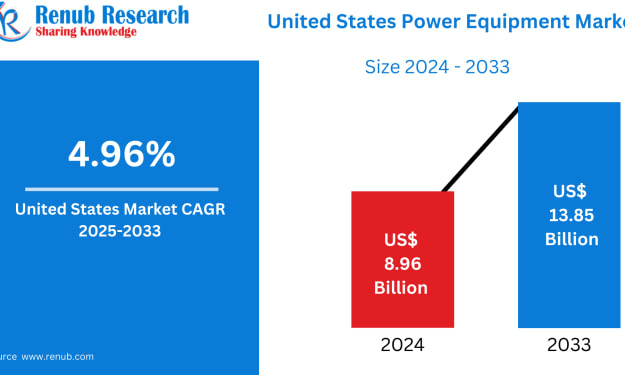
United States Power Equipment Market Overview The United States Power Equipment Market is on a steady growth trajectory, reflecting the nation’s expanding infrastructure needs, increasing energy reliability concerns, and accelerating transition toward cleaner power solutions. According to Renub Research, the market is projected to expand from US$ 8.96 Billion in 2024 to US$ 13.85 Billion by 2033, registering a solid Compound Annual Growth Rate (CAGR) of 4.96% during 2025–2033.
By Marthan Sir4 days ago in The Swamp
India’s January Russian Oil Imports May Fall Sharply as Reliance Expects No Deliveries
India’s oil import landscape may see a significant shift in January as Russian crude deliveries are expected to fall sharply, driven largely by Reliance Industries’ indication that it does not anticipate receiving shipments from Russia during the month. The development has drawn attention from global energy markets, policymakers, and geopolitical analysts, as India has emerged as one of Russia’s largest oil buyers since Western sanctions reshaped global crude flows. This potential decline is not just a routine fluctuation in trade. It reflects deeper changes in global energy logistics, the evolving impact of sanctions, and India’s careful effort to balance economic interests with diplomatic realities. How India Became a Major Buyer of Russian Oil Before 2022, Russian oil accounted for only a small share of India’s imports. That changed dramatically after Western sanctions and price caps redirected Russian crude away from Europe. India, along with China, stepped in as a major buyer, attracted by deeply discounted prices. For India, the shift made economic sense. As the world’s third-largest oil importer, the country depends heavily on foreign crude to fuel its growing economy. Cheaper Russian oil helped keep domestic fuel prices relatively stable while shielding consumers from global price shocks. Refiners such as Reliance Industries and Indian Oil Corporation played a key role, purchasing large volumes and reconfiguring supply chains to accommodate Russian grades. Why January Deliveries May Drop The expectation of no Russian oil deliveries to Reliance in January has raised eyebrows because Reliance is India’s largest private refiner and a major exporter of refined fuels. Several factors may be contributing to the anticipated decline. First, logistical and payment challenges linked to sanctions continue to complicate Russian oil trade. Shipping insurance, tanker availability, and payment mechanisms remain sensitive, particularly for private companies with significant exposure to Western markets. Second, pricing dynamics have changed. As discounts on Russian crude narrow, Indian refiners may find alternative suppliers more attractive, especially from the Middle East. When Russian oil is no longer significantly cheaper, the incentive to navigate complex trade arrangements weakens. Finally, compliance and reputational considerations matter. Large private refiners like Reliance operate globally and must remain cautious about secondary sanctions and regulatory scrutiny. Reliance’s Strategic Calculations Reliance Industries occupies a unique position in India’s energy ecosystem. It runs one of the world’s largest refining complexes and exports refined products to Europe, the United States, and other Western markets. Because of this global footprint, Reliance must be especially careful about sanction exposure. Even if purchasing Russian crude is technically permitted under existing rules, the surrounding compliance risks can be substantial. By stepping back from Russian oil—at least temporarily—Reliance may be signaling a preference for supply stability and regulatory certainty over short-term cost advantages. This does not necessarily mean a permanent shift, but it underscores how corporate strategy can influence national import patterns. What This Means for India’s Energy Security A sharp drop in Russian oil imports does not mean India faces an immediate energy crisis. The country has diversified its supply sources over decades and continues to import large volumes from Iraq, Saudi Arabia, the United Arab Emirates, and the United States. However, reduced access to discounted Russian crude could have economic implications. Higher average import costs may put pressure on refiners’ margins and, potentially, on domestic fuel prices if global benchmarks rise. The situation highlights a broader challenge for India: ensuring affordable energy while navigating a volatile and politicized global oil market. Geopolitical Implications India’s oil trade with Russia has been closely watched by Western governments. While New Delhi has consistently defended its purchases as necessary for national interest, it has also emphasized that it complies with international regulations and price caps. A decline in Russian imports—especially involving a major private refiner—may be interpreted by some as a subtle recalibration rather than a policy shift. India has repeatedly stressed its strategic autonomy, resisting pressure to align fully with any one geopolitical bloc. At the same time, maintaining strong ties with Russia remains important for India, particularly in defense and diplomatic cooperation. Any reduction in oil trade is likely to be framed as a commercial decision, not a political one. Global Oil Markets Watching Closely The potential drop in Indian demand for Russian oil could have ripple effects across global markets. Russia has relied heavily on Asian buyers to offset lost European demand, and any sustained reduction could force it to adjust pricing or seek new buyers. For Middle Eastern producers, the situation could open opportunities to regain market share in India. Increased competition among suppliers may help stabilize prices, but it could also intensify geopolitical jockeying in the region. Oil traders and analysts will be watching January data closely for clues about whether this is a temporary disruption or the start of a longer-term trend. Is This a Temporary Pause or a Structural Shift? It is too early to conclude that India is turning away from Russian oil altogether. Import patterns have fluctuated before, influenced by pricing, shipping availability, and refinery maintenance schedules. However, the current situation underscores a key reality: Russia’s grip on Indian demand is not guaranteed. As discounts narrow and compliance risks persist, Indian refiners—especially private ones—will continue to reassess their strategies. Future imports will likely depend on how global sanctions evolve, how Russia prices its crude, and how India balances cost savings with long-term strategic considerations. Conclusion India’s January Russian oil imports may fall sharply as Reliance expects no deliveries, marking a potentially important moment in the country’s evolving energy strategy. While not a definitive break, the development reflects the complex interplay of economics, geopolitics, and corporate risk management shaping global oil trade today. For India, the challenge remains the same: securing reliable and affordable energy without compromising strategic autonomy or economic stability. Whether this dip proves temporary or signals a broader shift, it serves as a reminder that in today’s world, energy decisions are never purely commercial—they are deeply political as well.
By Muhammad Hassan5 days ago in The Swamp



Comments
There are no comments for this story
Be the first to respond and start the conversation.