

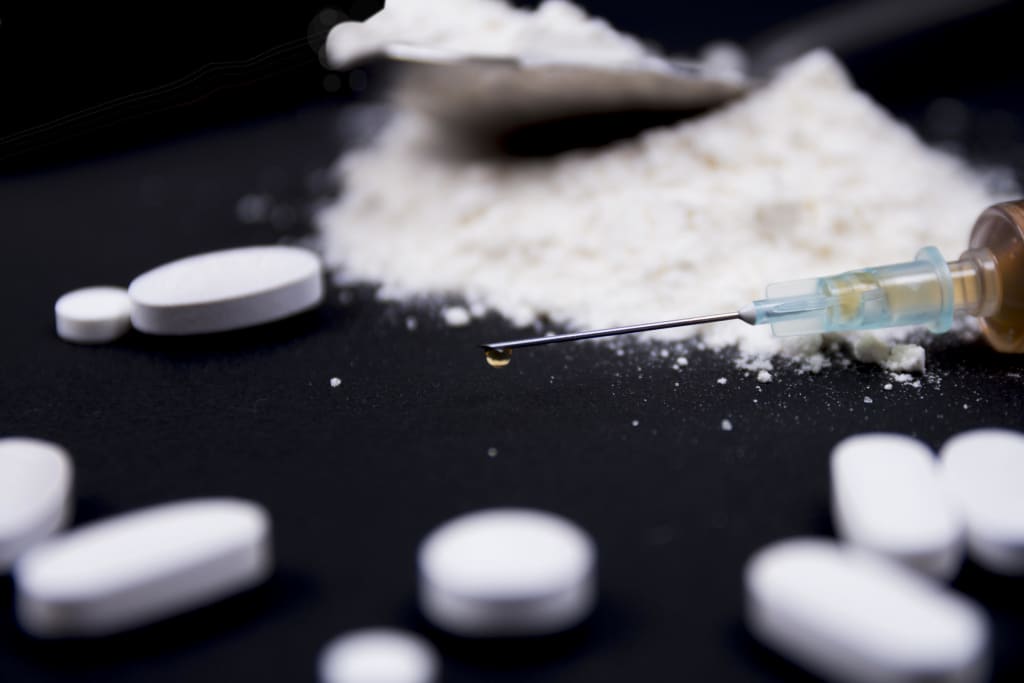
Most of us remember the tragic event of 9/11. Some of us even had friends and family who were impacted by this event. Thousands died in the event and there are probably still some unknown deaths. Imagine having a 9/11 event every 17 days. That is how many people die from drug overdose DAILY...
Drug overdoses are the leading preventable cause of death in America, surpassing motor vehicle accidents and gun violence. In fact, opioid overdose consumes more lives than other illegal drugs.
Now imagine this: In 2016, more people died from opioid overdose than in the Vietnam War. IN ONE YEAR.... Just a reminder that the Vietnam War was 19 years... Again, more people died from overdose in ONE year than a war that LASTED 19 YEARS! That is alarming!
I recently started a new job as a care coordinator. My role involves connecting patients with resources that are available to them within their community. These resources can be anything from finding a doctor to finding employment agencies. I knew there were tons of resources out there, but I was surprised that very few people knew about them or did not have the access to them. It is my job to educate the patients and the rest of the community. Finding valuable resources to help the patient is extremely important in terms of their recovery. Plus, it allows me to build rapport with them.
There are many things wrong with society and the ignorance of drug overdose is just one of them. People are afraid to discuss addiction, and some are afraid of being judged. What society does not realize is addiction is a chronic brain disease.
The brain is so complex with many different pathways. When a person uses a drug, they get a "good feeling." They experience a sense of euphoria. Once they get that feeling once, they want it back and continue to use. However, after a while that “good feeling” no longer exists. Since they no longer get the high they want, they increase the dose and that is when overdose occurs. However, once tolerance and dependence develop, a drug user will begin to experience withdrawal symptoms when the drug is not in their body. These withdrawal symptoms are brutal, and the user feels like they are going to die if they do not get more of the drug. I witnessed a patient curled up in a fetal position, shaking, crying, and sweating because he was in the withdrawal period. The user wants to use again, but instead of experiencing that high, they feel normal. Drug users use to escape the withdrawal symptoms.
So why is society so blind to this problem?
1) People are afraid to talk about it. People are afraid of judgement from others. Users are afraid that if they talk about their drug treatment, they will lose the people closest to them. There is still a stigma around drug abuse and until that changes, people are timid to get treatment.
2) Lack of knowledge. People are unaware of what is actually happening. Which is why, as a care coordinator, it is my responsibility to educate not only patients, but communities.
3) Addiction can be scary. Watching someone curled up in a fetal position, sweating, and crying hysterically is not a fun experience. It was very scary to watch, and I am sure the user was scared. Maybe if people are blind to the symptoms, they can pretend the problem does not exist.
There are probably thousands of reasons why society is blind to the drug industry and the problem behind overdose. Hopefully the facts were alarming enough that we can change society's perception.
About the Creator
Keep reading
More stories from Marissa Hall and writers in The Swamp and other communities.
Iran Says Over 100 Officers Killed as Protesters Defy Government Crackdown
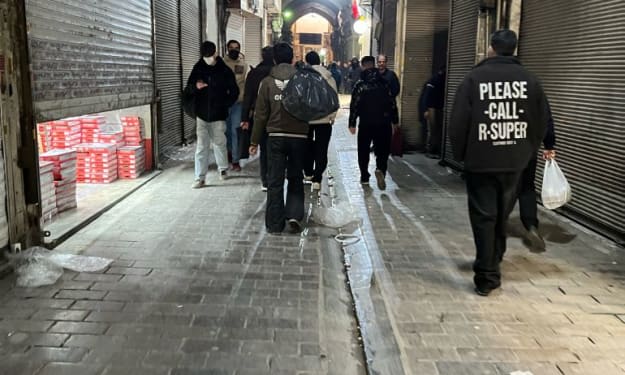
In a dramatic escalation of unrest, Iran is reporting that more than 100 security officers and personnel have been killed in clashes with demonstrators who have defied a violent government crackdown. The nationwide protests — some of the largest Iran has seen in years — have been met with intense force by state authorities, even as protesters continue to push for economic justice and political change. � Reuters +1 A Nation in Turmoil What began in late December 2025 as protests over mounting economic hardships — including soaring prices, inflation, and the collapse of the Iranian rial — quickly evolved into widespread opposition to the regime itself. Demonstrations have spread across all 31 provinces, uniting diverse segments of Iranian society in a shared display of discontent. � Le Monde.fr In response, the Iranian government has launched a harsh crackdown. Security forces, including the elite Islamic Revolutionary Guard Corps (IRGC) and police units, have deployed live ammunition, tear gas, and mass arrests to suppress dissent. A nationwide internet and communications blackout has been in effect for days, limiting independent verification of events but failing to halt the flow of information entirely. � Reuters +1 Conflicting Casualty Reports Iranian state media has highlighted fatalities among security personnel. Official reports suggest that dozens of police and security officers have been killed in clashes with protesters, describing them as casualties of violent “rioters” or coordinated attacks against state institutions. Some of these reported deaths occurred during confrontations in provinces such as Isfahan. � Al Jazeera However, independent sources paint a much broader picture of suffering. Human rights groups and activist networks estimate that the death toll — including civilian protesters — has risen significantly. According to some reports, at least 116 people have been killed overall, with thousands more arrested and hundreds wounded during the unrest. � AP News Discrepancies between state figures and those from international rights organizations make it difficult to verify the precise scale of violence. What is clear, however, is that the human cost is high — and growing. The combination of communications blackouts and state media control has made reliable reporting exceptionally challenging. � Le Monde.fr What Protesters Are Demanding The demonstrations initially centered on economic grievances, such as rising living costs and unemployment. Yet, a considerable number of protesters have shifted their focus toward political reform and even regime change. Many are calling for fundamental shifts in governance, greater freedoms, and accountability from leadership that they perceive as unresponsive and repressive. � Reddit In cities across Iran, crowds have formed in public squares, bazaars, and streets — often chanting slogans against state authorities and demanding improved living conditions. The breadth of participation demonstrates widespread frustration, cutting across age groups and social classes. � Reddit Government Response Iran’s leadership has framed the unrest as a security threat, insisting that what they term “rioters” are engaged in violent acts. Officials have issued stern warnings to foreign nations, particularly the United States and Israel, claiming external influences are at play. Some hard-line figures have even threatened retaliatory action in the event of foreign intervention. � People Daily Supreme Leader Ayatollah Ali Khamenei and other senior officials have portrayed the demonstrations as opportunistic uprisings fueled by foreign enemies intent on destabilizing Iran. Such rhetoric underscores a deepening divide between authorities and ordinary Iranians. � Financial Times The Role of Communication Blackouts One of the most significant facets of the current crisis is Iran’s near-total internet shutdown. Analysts argue this serves two purposes: obscuring the true extent of violence, and limiting the ability of protesters to organize. Groups like NetBlocks have confirmed widespread disruptions to connectivity, making independent reporting and documentation of abuses more difficult. � Reuters Despite these restrictions, videos and testimonials continue to leak online — often through VPNs, satellite connections, or foreign platforms — revealing scenes of intense street clashes, mass detentions, and military presence in urban centers. � Le Monde.fr Global Reaction International responses to the crisis have been mixed. Western nations, including the United States and members of the European Union, have condemned the violence and called for restraint. Former President Donald Trump publicly stated that the U.S. is “ready to help” Iranian protesters, a remark that was both welcomed by opposition activists and condemned by Tehran as interference. � Reuters Human rights organizations have also called for independent investigations into alleged abuses and urged Iran to lift its communication restrictions, emphasizing the need for transparency and accountability. � Le Monde.fr What Lies Ahead? With tensions continuing to escalate, Iran faces one of its most significant internal challenges in years. If protests persist and the government maintains its hard-line stance, the violence could deepen, risking a broader humanitarian crisis. Whether the state will soften its approach or double down on repression remains uncertain. As the world watches, the voices of both protesters and security personnel — their suffering, fears, and aspirations — illustrate the human toll of political unrest and the complex dynamics of power in one of the Middle East’s most influential nations.
By Fiazahmedbrohi 5 days ago in The Swamp
A Dart at Dusk
Seconds ago, the sullen sun set on the two of us… my exuberant furry companion and me. A fresh breeze embraces us, delivering welcome relief from the day’s oppressive heat. His typical stumbling and staggering along — apace with a sloth — has turned into trip-trapping, high-stepping, almost skipping along.
By Angie the Archivist 📚🪶3 days ago in Petlife



Comments
There are no comments for this story
Be the first to respond and start the conversation.