
Dragon Fruit Farming
Cultivation Process and Market Value

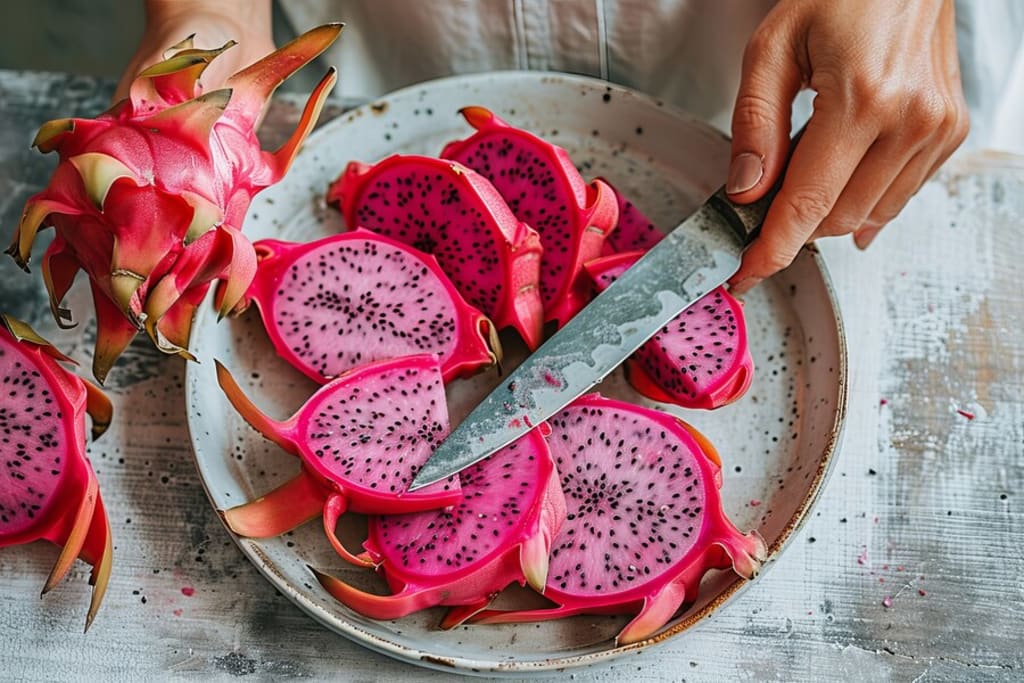
The cultivation of dragon fruit is slowly picking up pace in India because the fruit is in demand globally and is highly profitable to grow. Originally found in Central & South America, this has become a new-era exotic fruit that is being grown in several states of India. It is one of a kind in colour and packed with nutrients, such as dragon fruit, which offers farmers an excellent business chance.
Let’s learn more about growing dragon fruits, the equipment being used, and the market price in India.
Introduction to Dragon Fruit Farming
Dragon fruit, also called pitaya or pitahaya, is a kind of cactus fruit. Despite its relatively unusual look, it contains vitamins and antioxidants and is in great demand both on the local and global levels. Indian farmers are doing dragon fruit farming because it is strengthening economically for farmers from the states of Maharastra, Gujarat, Karnataka, and Andhra Pradesh.
Farmers are inclined because, with little effort and good planning, they can make much from dragon fruit farming. Further, the challenge of requiring sustainable farming practices makes growing dragon fruits suitable for the country’s varying climates.
Cultivation Process of Dragon Fruit Farming
Farmers who are seeking to grow economically can start dragon fruit farming, even on a small scale. Let’s learn what processes and precautions are required.
Ideal climate and soil conditions
Dragon fruit farming is normally adapted in areas that meet the plant's climatic and soil requirements. This fruit grows well under a warm climate of any tropical region. It thrives well in warm conditions and thermal range of 20-30°C and relatively short period of dry weather therefore it is suitable for areas with little rainfall. It prefers growing on well drained sandy soil with soil pH of 6 to 7.
As a result, dragon fruit can effectively be planted anywhere, whether near the coast or interior parts of the country. These advantages make it appropriate for Indian farmers because it can be flexibly adapted to different conditions.
Land Preparation
Land preparation for dragon fruit farming should be well and properly managed. Farmers should make beds or trenches to enhance water drainage, as advised. With the help of a Swaraj Tractor, farmers can easily plough the field and prepare the soil into proper condition for sowing. This tractor comes in models ranging between 28 HP and 120 HP and is suitable for all types of farming.
Propagation and Planting
Dragon fruit can be grown using stem cuttings or seeds, though stem cuttings are the most common since they give a faster germination rate. Pests are established along rows, at intervals of 2 to 3 meters between individuals, and in the form of cuttings. Therefore, each plant needs a support system, for example, concrete or wooden poles that will help it climb.
Dragon fruit plants require water during the growing phase. Drip irrigation is a technique widely employed to guarantee that water gets down to the root system without washing the soil.
Pruning and Care
Trimming is needed so that plants grow properly and bear fruits if necessary. Any branch that is either dead or affected by disease must be pruned. Fertilization is also important to help feed the plant and get it the nutrients it requires. Dragon fruit favours Organic manure, compost, and Nitrogenous fertilizers.
Unlike conventional tractors, a Mini Tractor is used by farmers for tasks that include mulching and fertilizing. These compact machines are well suited to small fields or restricted areas where maneuvering around the plant could be a little cumbersome.
Flowering and Harvesting
Bushy crops of dragon fruit stems start flowering in 6-8 months of plantation. The flowers open and close at night, and the crop is self-pollinated, although farmers sometimes apply hand pollination to raise production. The fruits are normally mature for harvest between thirty and fifty days after blooming.
One plant can have several crops in a year, and the plants start yielding full fruit in the third year. Another is the manner of managing and storing the fruit, especially if the fruit is exported to other markets.
Market Value
Dragon fruit is mostly sold in India owing to its fast-growing niche of consumer preference for products with health benefits. It is packed with fiber, vitamin C, and antioxidants, which have made it in high demand.
Dragon fruit can also be exported since many countries, such as the United States, European nations, and nations in Southeast Asia, import it. Dragon fruit is widely in demand globally, and Indian farmers have realized this and begun venturing into production.
Conclusion
Growing dragon fruits can be advantageous for farmers, given the rising demand, as they seek new ways to diversify their agricultural produce. These include land preparation activities done with farm implements and machinery, which are highly productive and profitable.
Since more people are now developing a taste for this unique fruit, growing dragon fruit also proves to be a very profitable business both locally and overseas. As more farmers in India opt for this method, the future of dragon fruit cultivation seems bright, with potential for expansion in the future.
About the Creator
Rajendra_Singh
I'm a agriculture blogger, who loves sharing my knowledge about growing things. On my blog, you'll find practical tips and interesting stories to help you get started!
Keep reading
More stories from Rajendra_Singh and writers in The Swamp and other communities.
Brinjal Farming
Eggplant, or Brinjal, as it is commonly known in the Indian States, is a vegetable grown mostly in India. It is suitable for planting in different climates and soil types. Brinjal farming is both economical and remunerative and plays an important role in the agricultural business. It contains vitamins and minerals that we all require to function properly.
By Rajendra_Singhabout a year ago in The Swamp
A Gathering of Evil Bosses
“I’m the queen of chin jutting while I smooth my hair, attacking, insulting, and deflecting to protect my appointer.” “Oh, please, Blondi, my hair is curled, highlighted, and longer than yours. I feature television commercials telling immigrants that we will give them a free plane ride home, and if they voluntarily turn themselves in, they will be allowed to legally apply for re-entry. It runs everywhere, and I look good in it! You can’t compete because of your blond hair. Mine is nicer, and my lips are prettier than yours.”
By Andrea Corwin 18 days ago in The Swamp
The BAFTA Awards
By now, in a stunning departure from recent years, most of the world is aware of what happened at the BAFTA film awards. Social Media Headlines will tell you the bare bones: that John Davidson, a Tourette's Syndrome advocate, shouted a racial slur at two Actors of Colour, Michael B Jordan and Delroy Lindo.
By Natasja Rose4 days ago in Psyche




Comments (1)
Interesting! well written Rajendra.