
Brinjal Farming
Cultivation Process and Market Value

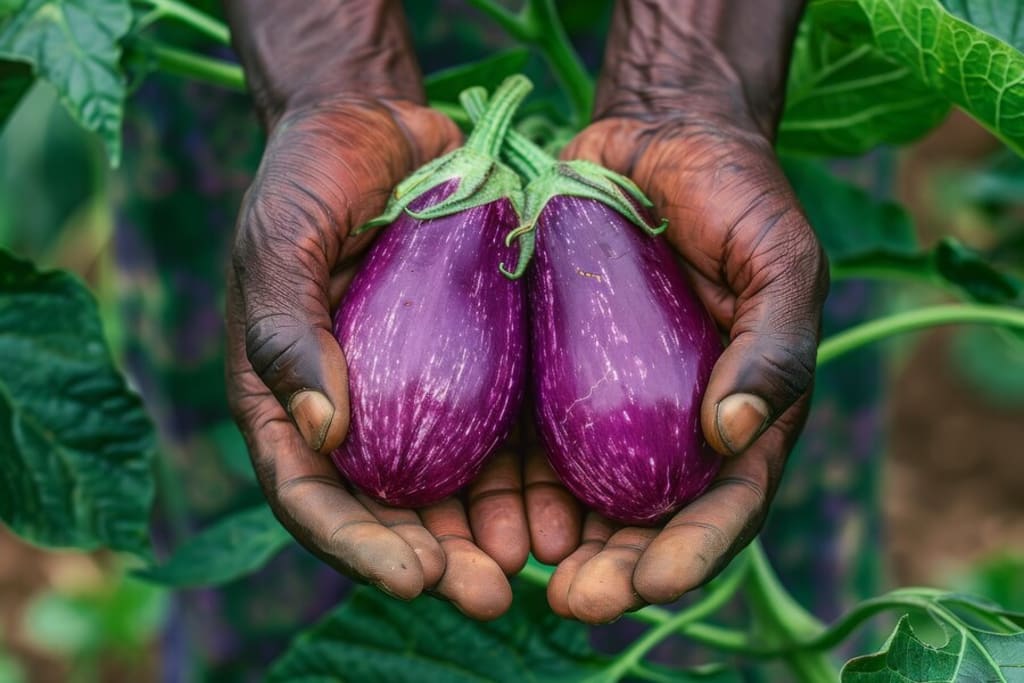
Eggplant, or Brinjal, as it is commonly known in the Indian States, is a vegetable grown mostly in India. It is suitable for planting in different climates and soil types. Brinjal farming is both economical and remunerative and plays an important role in the agricultural business. It contains vitamins and minerals that we all require to function properly.
Brinjal Farming can be grown using small-scale as well as large-scale farming techniques. Let’s learn more about the process of farming brinjal and the various practices performed, from preparing the soil to sorting and grading after harvest.
Cultivation Process of Brinjal Farming
Brinjal is a tropical plant that requires a fairly high temperature to grow, which makes it possible to grow in India. Let's learn more about the process of cultivation in detail:
Soil Preparation
The first important factor in brinjal farming is soil preparation. Brinjal plants grow well in well-drained, loamy soil containing organic manure, where they receive full sunlight. Organic matter must be at least 3%, while the pH level must be between 5. 5 and 6. 5 for optimal growth. Seeds should be planted in clean lands that must be ploughed to reduce weeds and provide adequate aeration for the seedlings. It is also important to incorporate green manure or compost into the soil as a source of nutrients.
Tractors are used to cultivate and level the land, making the process fast and efficient. An ideal tractor, such as the New Holland 3630, has the high performance required for cultivating crops. It is a durable model and a fuel-efficient one for farming in India. It comes with a 50 Hp fuel-efficient engine and 2000 kgs hydraulic capacity, which allows it to work efficiently.
Sowing and Planting
Seeds are usually planted in a nursery, then when the seedlings develop, they are transplanted to the main field. They are transplanted after about twenty-five to thirty days when the seedlings are 10-12 cm tall. Whenever plants have been grouped, ideally, the space between them should be between 60 to 65 cm. This guarantees that they have enough space to grow and get the required sunlight.
When transplanting, it is recommended that the seedlings be buried to a depth of 5-6 cm. Low yield and poor quality are some of the factors that are likely to be experienced due to overcrowding.
Irrigation Practices
Brinjal plants require a moderate level of water. However, the soil should not be soaked to the extent that it causes root diseases in the plants. The duration that the crops are irrigated depends on the weather and the kind of soil that the crops are grown on. During the early stages, frequent irrigation is needed; hence, there is a need to water your plant frequently. Later, once plants are established, water is not a major factor, and the need for irrigation is minimized.
Drip irrigation is widely regarded as effective for growing brinjal. It reduces water wastage by reaching the plant’s root area and helping the plants receive the water they require.
Fertilization and Weed Control
Healthy brinjal plants can be obtained using organic fertilizers and chemical fertilizers. In addition, before planting, the soil should be enriched with organic manure as cow dung or compost. During the growth phase, chemical fertilizers such as nitrogen, phosphorus and potassium enhance the plant’s growth.
Weeds compete with crops for the limited resources available, such as nutrients, water, and light for brinjal plants. Small farmers widely use manual welding processes. However, in large fields, herbicides may be used to combat the growth of weeds.
Harvesting Time
Brinjal fruits take between 70 and 90 days to be ready for harvest, depending on the type of brinjal plant one has planted. The fruits should be harvested when they are of the right size and glossy, and they should be firm.
Brinjal can be harvested by hand using knives or scissors. However, one must be careful when picking the fruits so as not to harm the plants in the process.
Post-Harvest Care
After harvesting, brinjals need to be washed and graded according to size and or quality. One has to ensure that spoilt or infected fruits are thrown away to prevent contamination of the rest of the fruits.
They added that storage conditions for brinjal must be carefully monitored. The average temperatures are between 10-12°C with fairly high humidity to avoid wilting.
Farmers use tractors in the post-harvest handling stage to transport produce to markets or storage facilities.
If you are looking for a tractor with good lifting capacity, then you must check out John Deere 5405. It comes in four different models with amazing engine capacity and offers a hydraulic capacity of around 2000 to 2500 kgs.
Market Value for Brinjial
Brinjal is available almost all year in Indian markets. The market value of the brinjal depends on the type of brinjal, season, and the quality of the brinjal produced. They are normally high during the low supply season.
Good seed choices, adequate cultivation management, and correct and efficient methods of harvesting can greatly enhance the profit of brinjal farming.
About the Creator
Rajendra_Singh
I'm a agriculture blogger, who loves sharing my knowledge about growing things. On my blog, you'll find practical tips and interesting stories to help you get started!
Keep reading
More stories from Rajendra_Singh and writers in The Swamp and other communities.
Spinach Farming in India
Spinach is one of the most nutritious leafy vegetables, which are not only tasty but also rich in nutrients. It has soft, dark green leaves, which are used in various dishes, from fresh salads to savoury soups. Tender, soft, and with a peculiarly mild yet slightly earthy flavour, spinach is adaptable and convenient to add to numerous meals-either for blending into a smoothie or using in a pasta dish.
By Rajendra_Singhabout a year ago in The Swamp
The Saddest Thing - The Billionaires Who Rule America Aren't Even Enjoying Themselves
This single post says more about our ruling class than a thousand policy papers. The saddest thing about today's system is that the men robbing the rest of us - sabotaging our economic prospects, our pensions, our access to affordable healthcare - are not even happy.
By Scott Christenson🌴29 days ago in The Swamp



Comments
There are no comments for this story
Be the first to respond and start the conversation.