
# Donald Trump’s Inauguration
A Turning Point in Modern American Politics

# Donald Trump’s Inauguration: A Turning Point in Modern American Politics
The inauguration of Donald J. Trump as the 45th President of the United States on January 20, 2017, marked a watershed moment in American political history. A billionaire businessman and reality television star with no prior political experience, Trump’s ascendancy to the presidency defied conventional norms and ushered in a new era characterised by polarisation, populism, and a direct engagement with the public via social media. The event itself and the sentiments it evoked remain etched in the collective consciousness of a divided nation.
A Day of Symbolism and Contrasts
The inauguration ceremony, held at the United States Capitol in Washington, D.C., adhered to traditions deeply rooted in the American democratic process. Chief Justice John Roberts administered the oath of office as Trump placed his hand on a Bible, signalling the peaceful transfer of power; a cornerstone of democracy.
The atmosphere was both celebratory and contentious. Supporters filled the National Mall, donning red “Make America Great Again” hats and waving American flags, while protests erupted across the country. Demonstrations like the “Women’s March” gained global attention, reflecting widespread opposition to Trump’s rhetoric and policies. This juxtaposition of fervent support and vehement dissent symbolised the deep divisions that would come to define his presidency.
The Inaugural Address: A Vision for America
Trump’s inaugural address departed from the polished and unifying tone typically associated with such speeches. Instead, he painted a stark picture of an America beset by challenges, using phrases like “American carnage” to describe issues such as crime, economic stagnation, and political dysfunction. His promise to transfer power from Washington, D.C., back to “the people” resonated with his base but alarmed critics who viewed his rhetoric as divisive.
The address emphasised nationalism and protectionism, with Trump pledging to put “America First” in all policy decisions. This phrase became a cornerstone of his administration’s approach to trade, immigration, and foreign policy. The speech’s populist tone underscored Trump’s appeal to working-class voters who felt neglected by the political establishment.
A Divided Response
The reactions to Trump’s inauguration were as polarised as the election that brought him to power. Supporters celebrated the event as the triumph of an outsider who defied all odds to challenge the status quo. For them, Trump embodied a promise to restore American greatness and prioritise the needs of ordinary citizens.
Conversely, critics expressed deep concern about the implications of his leadership. His controversial campaign, marked by incendiary remarks about immigrants, women, and minority groups, had already set a combative tone. The protests that erupted on inauguration day were a testament to the resistance Trump would face throughout his presidency.
Legacy of the Inauguration
Trump’s inauguration was more than a ceremonial event; it was the beginning of a presidency that would redefine American politics. His unconventional approach to governance, characterised by frequent use of social media to communicate directly with the public, disrupted traditional norms. The themes of his inaugural address; nationalism, protectionism, and a rejection of globalism, would shape his administration’s policies on trade, immigration, and international relations.
The inauguration also set the stage for the political and cultural divisions that would intensify during Trump’s tenure. His presidency became a lightning rod for debates about identity, governance, and America’s role in the world. While his supporters saw him as a champion of forgotten Americans, his detractors viewed him as a polarising figure who exacerbated societal divides.
Lessons and Reflections
Donald Trump’s inauguration serves as a reminder of the power of democratic institutions and the complexities of leadership in a diverse society. It highlights the importance of listening to different perspectives and addressing the underlying issues that drive political and social divides. For all its controversy, the event underscored the resilience of American democracy, as the peaceful transfer of power continued despite significant tensions.
As history evaluates Trump’s presidency, his inauguration will remain a focal point for understanding the forces that propelled him to power and the challenges that defined his tenure. It stands as a testament to the evolving nature of leadership and the enduring significance of engaging with the concerns of all citizens in a democracy.
About the Creator
Mutonga Kamau
Mutonga Kamau, founder of Mutonga Kamau & Associates, writes on relationships, sports, health, and society. Passionate about insights and engagement, he blends expertise with thoughtful storytelling to inspire meaningful conversations.
Keep reading
More stories from Mutonga Kamau and writers in The Swamp and other communities.
Donald Trump Handed Legal Loss Ahead of Sentencing
Donald Trump Handed Legal Loss Ahead of Sentencing: A Pivotal Moment in American Politics The political and legal landscape of the United States has witnessed many dramatic moments in recent history, but few have garnered as much attention as the legal battles surrounding former President Donald Trump. Known for his polarising rhetoric and controversial presidency, Trump remains a central figure in the nation’s political discourse. As the year unfolds, another chapter has been added to his complex story: a significant legal loss ahead of a critical sentencing hearing.
By Mutonga Kamauabout a year ago in The Swamp
A Gathering of Evil Bosses
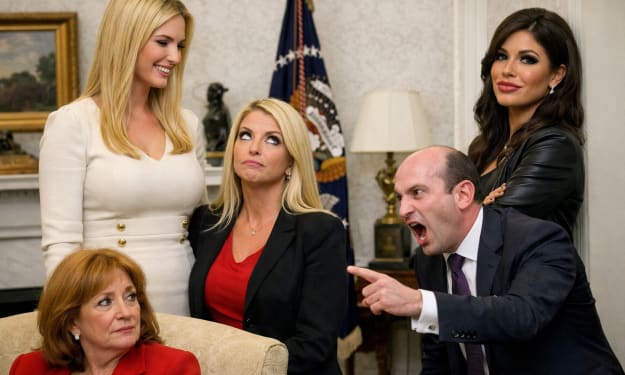
“I’m the queen of chin jutting while I smooth my hair, attacking, insulting, and deflecting to protect my appointer.” “Oh, please, Blondi, my hair is curled, highlighted, and longer than yours. I feature television commercials telling immigrants that we will give them a free plane ride home, and if they voluntarily turn themselves in, they will be allowed to legally apply for re-entry. It runs everywhere, and I look good in it! You can’t compete because of your blond hair. Mine is nicer, and my lips are prettier than yours.”
By Andrea Corwin 17 days ago in The Swamp
Khamenei: Power, Faith, and Iran’s Defining Voice
In Iran, one name carries unusual weight across politics, religion, and daily life: Khamenei. For decades, his words have shaped national policy, foreign relations, and the tone of public debate. To some, he represents resistance and religious authority. To others, he symbolizes strict control and limited freedom. Outside Iran, his image often appears in headlines tied to sanctions, protests, or regional conflict. Inside the country, his influence reaches into classrooms, courts, and state media. Understanding Khamenei means understanding modern Iran itself. His life story connects revolution, war, ideology, and power. Whether admired or criticized, Khamenei remains one of the most influential figures in the Middle East, and his leadership continues to define Iran’s direction in a changing world.
By Muqadas khan7 days ago in The Swamp



Comments
There are no comments for this story
Be the first to respond and start the conversation.