
Dollar Slides to Four-Month Low as Gold Surges Past $5,000 in Market Turmoil
A weakening U.S. dollar and soaring gold prices signal rising investor anxiety as markets react to shifting interest-rate expectations, inflation risks, and global uncertainty.


Markets Jolt as Dollar Weakens and Gold Shines
Global financial markets were rattled as the U.S. dollar fell to a four-month low, while gold surged past the $5,000 mark, a psychological and historic milestone for the precious metal. The sharp divergence reflects a growing shift in investor sentiment as concerns mount over inflation, geopolitical risks, and the future path of monetary policy.
The move marks a notable moment in markets, where traditional safe havens are being reassessed amid economic uncertainty and changing expectations around global growth.
What’s Driving the Dollar’s Decline?
The dollar’s recent weakness stems from a combination of economic data, central bank expectations, and investor positioning. Markets are increasingly pricing in the possibility that the U.S. Federal Reserve may ease monetary policy sooner than previously expected.
Softer economic indicators and signs of cooling inflation have fueled speculation that interest rates may peak—or even begin to fall—reducing the dollar’s appeal relative to other currencies.
Additionally, rising U.S. fiscal deficits and growing debt concerns have weighed on long-term confidence, prompting traders to look elsewhere for stability.
Gold Breaks the $5,000 Barrier
As the dollar weakened, gold surged above $5,000, reinforcing its role as a hedge against currency depreciation and economic volatility. The rally reflects strong demand from institutional investors, central banks, and retail traders seeking protection amid uncertain market conditions.
Gold traditionally performs well when real interest rates decline and confidence in fiat currencies weakens. With inflation risks lingering and geopolitical tensions unresolved, demand for the metal has intensified.
Central bank purchases—particularly from emerging markets—have also supported prices, signaling a broader diversification away from dollar-denominated reserves.
Investor Sentiment Shifts Toward Safety
The dollar-gold divergence highlights a broader shift in risk sentiment. Investors appear increasingly cautious, favoring assets perceived as stores of value rather than growth-driven instruments.
Equity markets have shown mixed performance, while bond yields have fluctuated as traders reassess the outlook for inflation and economic growth. Volatility in currency and commodity markets suggests heightened sensitivity to macroeconomic signals.
Gold’s rally, in particular, underscores growing demand for assets that are insulated from political and monetary uncertainty.
Global Factors Adding Pressure
Beyond domestic U.S. factors, global dynamics are also influencing markets. Slowing growth in major economies, persistent geopolitical tensions, and ongoing trade uncertainties have created a fragile environment.
Currency markets are responding to divergent policy paths among central banks, with some maintaining tight stances while others prepare for easing. This divergence has reduced the dollar’s relative advantage, allowing alternative assets to gain traction.
Emerging market currencies have also benefited from the dollar’s retreat, offering higher yields and diversification opportunities for global investors.
What This Means for Inflation and Policy
Gold’s surge and the dollar’s decline raise questions about inflation expectations. While headline inflation has moderated in many economies, investors remain wary of structural pressures such as supply constraints, rising government spending, and geopolitical disruptions.
Policymakers now face a delicate balancing act: easing too early could reignite inflation, while staying restrictive for too long risks slowing growth further. Markets are watching central bank communication closely for any signal of policy shifts.
Impact on Stocks, Bonds, and Commodities
The changing market landscape is reshaping asset allocation strategies. Stocks tied to commodities and mining have benefited from gold’s rally, while sectors sensitive to currency movements are adjusting to a weaker dollar.
Bond markets remain volatile, reflecting uncertainty over interest rate trajectories. Meanwhile, other commodities have seen mixed reactions, influenced by both currency effects and demand expectations.
For investors, diversification has become a key theme as correlations between traditional asset classes continue to evolve.
Is This a Short-Term Move or a Structural Shift?
Analysts remain divided on whether the dollar’s decline and gold’s surge represent a temporary reaction or a more structural realignment. Some argue that the dollar’s long-term dominance remains intact, supported by liquidity and global trust.
Others believe persistent fiscal imbalances and geopolitical fragmentation could gradually erode that dominance, making assets like gold increasingly attractive over time.
The answer may depend on how effectively policymakers navigate upcoming economic challenges.
Conclusion
The dollar’s fall to a four-month low and gold’s surge past $5,000 mark a pivotal moment for global markets. Together, they reflect growing investor caution, shifting expectations around monetary policy, and renewed interest in traditional safe-haven assets.
As uncertainty continues to shape market behavior, the relationship between currencies, commodities, and investor confidence will remain under close scrutiny. Whether this marks a turning point or a temporary swing, one thing is clear: markets are entering a more complex and sensitive phase.
About the Creator
Asad Ali
I'm Asad Ali, a passionate blogger with 3 years of experience creating engaging and informative content across various niches. I specialize in crafting SEO-friendly articles that drive traffic and deliver value to readers.
Disappointed’: Andy Burnham’s Bid to Return to Westminster Blocked — What It Means for Labour
‘ Andy Burnham — the high‑profile Mayor of Greater Manchester and one of Labour’s best‑known figures — has publicly expressed his disappointment after his attempt to stand as a candidate in a parliamentary by‑election was blocked by his own party’s leadership. The decision, taken by Labour’s powerful National Executive Committee (NEC), has ignited a fresh political controversy within the UK’s governing party, raising questions about internal divisions, party strategy, and Burnham’s future political ambitions.
By Salaar Jamaliabout 21 hours ago in The Swamp
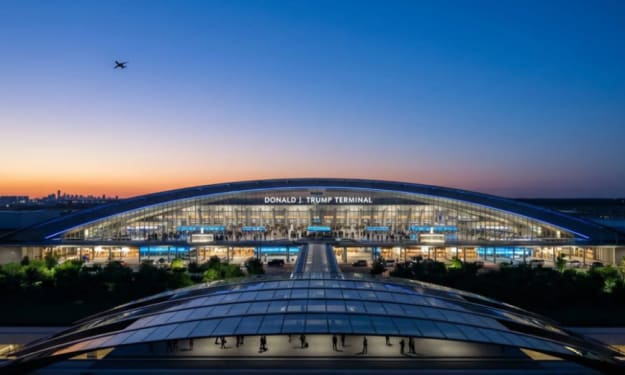
“Make Dulles Great Again”: Airport Renderings Unveiled, Featuring Trump Terminal and DJT People Movers
Washington Dulles International Airport, the primary gateway to the U.S. capital, has long served as a bustling hub for international travelers. But now, it may be on the cusp of a major transformation, with a proposed vision to “Make Dulles Great Again.” The highly anticipated renderings for the airport's redesign include an array of stunning and controversial elements—chief among them, a Trump Terminal and DJT People Movers, a nod to former President Donald Trump's legacy. These proposals have sparked intense debate, raising questions about their practicality, cost, and the role of political branding in public infrastructure projects. While some see the redesign as an innovative and exciting way to modernize Dulles, others view it as an unnecessary politicization of a public space. As the discussions surrounding this ambitious project unfold, let's take a closer look at the proposed changes and what they could mean for the future of one of America’s busiest airports. The “Make Dulles Great Again” Vision The bold new renderings, presented by a group of architects and urban designers in collaboration with officials from the Metropolitan Washington Airports Authority (MWAA), outline an ambitious vision to enhance the airport’s infrastructure, modernize its facilities, and create a lasting symbol of American prosperity. The catchphrase “Make Dulles Great Again” is a direct reference to Trump’s famous slogan, but it’s more than just a political statement—it encapsulates a vision of grandeur, wealth, and prestige. One of the most talked-about aspects of the redesign is the introduction of a Trump-branded terminal, set to be the focal point of the transformation. This terminal, which would be located in a prime spot within the airport’s complex, is designed to evoke the grandeur and luxury associated with the Trump brand. The terminal would feature high-end restaurants, luxurious retail spaces, and grandiose architecture, including gold-plated fixtures, oversized chandeliers, and a range of VIP services. The terminal’s layout would be centered around an opulent atrium with towering columns and large windows that offer stunning views of the runway. For travelers who want a taste of luxury from the moment they step off the plane, the Trump Terminal promises to deliver a high-end experience from the check-in counter to the gate. The idea is to turn Dulles into not just a transit point but a destination in itself—a showcase of American opulence and wealth, according to proponents of the project. DJT People Movers: The Future of Airport Transportation Another striking feature of the new renderings is the inclusion of the DJT People Movers—a state-of-the-art automated transportation system designed to ferry passengers between terminals. The futuristic-looking system would replace the current airport shuttle buses and offer a more efficient and technologically advanced means of getting from one terminal to another. The DJT People Movers would feature sleek, modern design elements with Trump-branded accents, further cementing the former president’s association with the airport’s image. These people movers would not only be a transportation solution but also an entertainment experience for travelers, with interactive touch screens, live feeds of global news, and advertisements for high-end Trump-branded merchandise. The aim is to turn an ordinary part of the airport experience into something extraordinary and memorable for visitors. Supporters argue that this upgrade would significantly improve the passenger experience, reducing wait times and improving traffic flow between terminals. Moreover, the use of cutting-edge technology in the people movers would make Dulles one of the most modern airports in the world, setting a benchmark for others to follow. However, detractors question the feasibility of such a system and whether the cost would justify the benefits. The Politics Behind the Trump Terminal Unsurprisingly, the idea of a Trump-themed terminal has stirred political controversy. While some believe that the terminal would be a fitting tribute to the former president’s legacy, others see it as an unnecessary attempt to inject political branding into a public space. Airports, after all, are meant to serve people from all walks of life, regardless of their political beliefs, and critics argue that turning Dulles into a Trump monument could alienate travelers who may not align with the former president’s ideals. Some observers have pointed to the political polarization that continues to divide the nation and suggested that incorporating Trump’s image so prominently into a public institution could exacerbate existing tensions. Others worry that this could be seen as a wasteful use of taxpayer money that could be better spent on improving the airport’s core functions, such as security, accessibility, and sustainability. At the same time, proponents of the Trump Terminal argue that it’s a reflection of the country’s democratic process and that such a terminal would serve as a symbol of national pride. They point to the fact that many other countries feature public monuments to their leaders and argue that the U.S. should embrace its own history with the same enthusiasm. Whether or not the Trump Terminal is ultimately built, it is clear that the idea has ignited passionate debate on both sides of the political spectrum. The Impact on Dulles’ Image and the Airport Experience The proposed changes at Dulles International have the potential to drastically shift the airport’s image and redefine the traveler’s experience. On one hand, the upgrades would undoubtedly enhance the airport’s luxury appeal, attracting wealthy passengers who may be looking for an exclusive, high-end airport experience. The Trump branding could also attract tourists and political enthusiasts who want to see the terminal as a historical landmark tied to one of the most controversial figures in modern American history. On the other hand, the decision to heavily brand the airport with Trump’s image could alienate other passengers, particularly those who don’t share the former president’s views. For frequent flyers, especially those who value a neutral, non-political space, this could present a challenge to their perception of Dulles as a welcoming, international airport. The balance between luxury and inclusivity will be a crucial factor in determining how successful this transformation is in the long run. Moreover, the emphasis on high-end amenities and luxury services could create a two-tiered system at Dulles, where affluent passengers have access to VIP lounges, luxury services, and exclusive experiences, while the average traveler is left with standard offerings. Critics argue that this could worsen the inequality that already exists within the travel experience, particularly at busy international hubs like Dulles. Looking Ahead: Will the Vision Become Reality? While the renderings for the “Make Dulles Great Again” redesign are certainly bold, it remains to be seen whether they will come to fruition. The project still requires approval from various stakeholders, including government agencies, local officials, and the traveling public. Moreover, the cost of implementing such a grandiose plan could run into the billions of dollars, leading to potential debates about the economic feasibility and long-term impact of the project. As the conversation around this proposed redesign continues, one thing is clear: the future of Dulles Airport is set to be shaped by both ambition and controversy. Whether or not the Trump Terminal becomes a reality, it has certainly captured the public’s attention, sparking important discussions about the role of politics in public infrastructure, the direction of American travel, and the way we shape the landmarks that define our nation’s identity. Conclusion: A Vision Divided Ultimately, the “Make Dulles Great Again” redesign is a vision of grandeur and boldness, one that reflects both the legacy of a polarizing political figure and the broader ambitions of those who seek to redefine public spaces. While the proposal has generated excitement for some, it also raises questions about the future of airport design and the role of politics in shaping our built environment. Only time will tell whether Dulles will undergo this transformation, but for now, the conversation continues to captivate those who care about the intersection of politics, design, and public space.Start writing...
By Muhammad Hassan2 days ago in The Swamp
The Duelist
The rays of a dying red sun flashed against the onrushing blade. The grey beards say the key to dueling lies in size, speed, reach, righteous fury, whatever the person in front of them pays them to say. Matteo knew better than any it was none of these and had an undefeated record on these sands to prove it.
By Matthew J. Fromma day ago in Fiction



Comments
There are no comments for this story
Be the first to respond and start the conversation.