
Depleted Savings and Plummeting Sales: Are We Entering a Consumer Slowdown?
The Squeeze No One Can Ignore

Across neighborhoods, shopping centers, and online stores, a quiet shift is happening. Consumers are spending less. Savings accounts are shrinking. Retailers are noticing slower foot traffic and softer online sales.
The phrase “depleted savings and plummeting sales” is no longer just an economic headline — it’s becoming a lived reality for many households.
For years, especially after pandemic-era stimulus programs, many families built up savings cushions. Government support, reduced travel spending, and remote lifestyles allowed consumers to accumulate extra cash. But in 2025 and now 2026, that cushion appears to be wearing thin.
Rising prices, higher interest rates, and persistent living costs are eating away at what once felt like financial breathing room.
Where Did the Savings Go?
Inflation may not dominate headlines the way it once did, but its effects are still present. Groceries remain expensive. Rent has climbed in many cities. Energy bills fluctuate. Healthcare costs continue rising.
In the United States, consumer data shows households relying more on credit cards compared to previous years. Meanwhile, savings rates have dropped from pandemic highs.
Higher interest rates from the Federal Reserve were designed to cool inflation. And they have had some effect. But higher rates also make borrowing more expensive. Car loans, mortgages, and credit balances now carry heavier costs.
The result? Families dip into savings just to maintain their standard of living.
And once savings decline, consumer confidence often follows.
Retailers Feel the Impact
When consumers tighten their belts, businesses feel it quickly.
Major retailers have reported weaker discretionary spending — meaning people are still buying essentials, but cutting back on non-essential items like electronics, fashion upgrades, and home décor.
Companies such as Target and Walmart have adjusted forecasts in response to shifting buying patterns. Discount retailers often perform better in these environments because consumers hunt for value. Luxury brands, on the other hand, can see sharper declines when middle-income shoppers pull back.
Small businesses face even greater pressure. Unlike large corporations, they often lack cash reserves to absorb slow months. For local stores, declining sales can mean reducing staff hours, delaying expansion plans, or in extreme cases, shutting down entirely.
A slowdown in spending creates a ripple effect through the economy.
The Psychology of Spending
Economic data tells part of the story. But psychology tells the rest.
When people feel uncertain about the future — whether due to job market concerns, political tensions, or global instability — they naturally become more cautious.
Even households that technically still have savings may choose not to spend.
Confidence matters.
Consumer spending makes up a significant portion of economic activity in many developed countries. If households shift from spending freely to saving defensively, growth can slow rapidly.
This doesn’t necessarily mean a recession is inevitable. But it does suggest fragility.
And fragility in economic systems often amplifies small shocks.
Youth and First-Time Earners
For younger generations, especially teenagers and young adults entering the workforce, this economic shift can feel discouraging.
Higher education costs remain elevated. Housing affordability is a growing challenge in many regions. Entry-level wages, while rising in some sectors, often struggle to keep pace with living expenses.
Savings are harder to build when starting salaries are stretched thin.
At the same time, many young consumers are more financially cautious than previous generations. They compare prices online, avoid unnecessary debt, and prioritize long-term stability over impulse purchases.
This cautious mindset, while personally responsible, can contribute to slower retail growth at a national scale.
Is This a Temporary Dip — or Something Bigger?
Economists debate whether this phase represents a short-term adjustment or the beginning of a broader economic slowdown.
On one hand, employment levels in many regions remain relatively stable. Innovation continues. Technology sectors are expanding. Renewable energy investments are growing.
On the other hand, if consumer spending weakens significantly, companies may reduce hiring or investment — creating a feedback loop.
Central banks, including the European Central Bank, closely monitor spending data to decide whether interest rates should remain high, stabilize, or eventually decline.
Lower interest rates could relieve pressure on borrowers. But moving too quickly risks reigniting inflation.
It’s a delicate balance.
What Businesses Are Doing
Companies are adapting in real time:
Offering more discounts and loyalty rewards
Expanding budget product lines
Investing in e-commerce efficiency
Cutting operational costs
Focusing on essentials rather than luxury
Some businesses are also leaning into subscription models to stabilize revenue streams.
In uncertain economic climates, flexibility becomes survival.
What Households Can Do
While macroeconomic trends feel out of individual control, there are practical steps families can consider:
Track expenses carefully.
Prioritize emergency savings where possible.
Limit high-interest debt.
Compare prices and look for value options.
Avoid panic decisions based on headlines alone.
Financial discipline during uncertain periods often creates resilience later.
The Bigger Picture
Depleted savings and plummeting sales are warning signs — but not necessarily signals of collapse.
Economic cycles are natural. Expansion and contraction alternate over time. What matters most is how institutions, businesses, and communities respond.
If policymakers manage interest rates carefully, if businesses adapt wisely, and if households make informed decisions, this period could stabilize rather than spiral.
The economy is not just numbers on a chart.
It’s millions of daily choices — from grocery aisles to boardrooms.
Right now, those choices are shifting toward caution.
Whether that caution turns into long-term slowdown or short-term reset depends on the months ahead.
But one thing is clear:
When savings decline and sales drop, the message is the same — people are feeling pressure.
And in economics, pressure always demands attention.
About the Creator
A Gathering of Evil Bosses
“I’m the queen of chin jutting while I smooth my hair, attacking, insulting, and deflecting to protect my appointer.” “Oh, please, Blondi, my hair is curled, highlighted, and longer than yours. I feature television commercials telling immigrants that we will give them a free plane ride home, and if they voluntarily turn themselves in, they will be allowed to legally apply for re-entry. It runs everywhere, and I look good in it! You can’t compete because of your blond hair. Mine is nicer, and my lips are prettier than yours.”
By Andrea Corwin 4 days ago in The Swamp
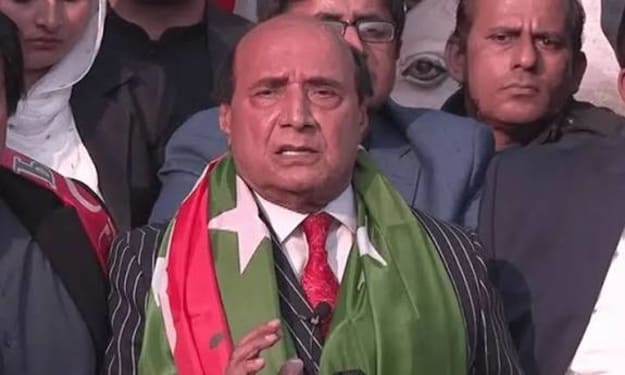
PTI Leader Latif Khosa Writes to CJP, Raises Concerns Over Imran’s Medical Check-Up at Adiala Jail in ‘Secrecy’
Senior Pakistan Tehreek-e-Insaf (PTI) leader Latif Khosa has written a formal letter to the Supreme Court of Pakistan, urging immediate judicial intervention over what he described as a “secretive and non-transparent” medical examination of former prime minister Imran Khan at Adiala Jail. In his letter addressed to the Chief Justice of Pakistan, Khosa alleged that Khan’s recent medical check-up was conducted without informing his legal team or family members and without following standard legal and medical protocols. The PTI leader claimed that this secrecy has raised serious concerns about Khan’s health, safety, and constitutional rights while in custody. Concerns Over Transparency Khosa stated that the medical examination was carried out under “unusual circumstances,” with restricted access to independent doctors and no official medical report shared with Khan’s lawyers. According to the letter, this violated basic principles of transparency and due process guaranteed under Pakistan’s Constitution and international human rights conventions. “Such secrecy creates doubt and anxiety regarding the true state of Mr. Khan’s health,” Khosa wrote, emphasizing that a former prime minister and political leader must not be deprived of proper and transparent medical care. He urged the court to ensure that future medical assessments be conducted in the presence of independent physicians and legal representatives. Health Issues and Previous Warnings Imran Khan, who has been in custody in multiple cases, has previously complained of deteriorating health conditions, including vision problems and chronic pain. PTI officials have repeatedly warned that his confinement conditions could worsen his medical state if not monitored properly. Party leaders have also accused jail authorities of denying him access to personal physicians and adequate medical facilities. While prison officials have denied these claims, asserting that Khan is receiving routine care under jail regulations, PTI leaders argue that the lack of documentation and public reporting undermines those assurances. Legal and Political Dimensions The issue has quickly taken on political significance, with PTI framing the situation as part of a broader pattern of pressure on its leadership. Khosa’s letter highlights what he called a “systematic effort to isolate Imran Khan” by restricting communication, visitation rights, and now medical transparency. Legal experts say the matter could prompt the Supreme Court to seek a detailed report from jail authorities and health officials. In past cases involving high-profile detainees, the court has intervened to ensure independent medical boards were formed and periodic health reports submitted. Khosa requested that the Chief Justice order the constitution of a neutral medical board comprising senior doctors from government hospitals, with authority to conduct a comprehensive health assessment of Khan and submit findings directly to the court. Reaction from PTI Leadership PTI leaders rallied behind Khosa’s move, calling it a necessary step to safeguard Khan’s well-being. Several party figures said the secrecy surrounding the medical check-up had alarmed supporters and family members alike. A senior PTI spokesperson said the party was not seeking preferential treatment but only equal rights under the law. “Every prisoner has the right to transparent medical care. Imran Khan is no exception,” the spokesperson said, adding that the party would continue to pursue legal remedies if concerns were not addressed. Government and Jail Authorities’ Position Officials from Adiala Jail have maintained that Khan is receiving medical attention according to prison rules and that no extraordinary measures were taken. They argue that medical procedures inside high-security prisons often involve limited disclosure due to security considerations. Government representatives have also rejected claims of mistreatment, stating that opposition leaders are politicizing a routine health check-up. However, they have not publicly released detailed medical findings, citing privacy and security concerns. Broader Implications The controversy highlights ongoing tensions between the PTI and state institutions, especially the judiciary and prison authorities. Analysts believe the case could further polarize the political environment, as supporters interpret the issue as symbolic of larger questions about rule of law and human rights. Human rights advocates have called for full transparency in the treatment of political detainees, warning that secrecy in medical matters can erode public trust in institutions. What Comes Next The Supreme Court is expected to review Khosa’s letter and decide whether to seek an official response from jail authorities or order an independent medical evaluation. If taken up, the case could set a precedent for how health concerns of high-profile prisoners are handled in Pakistan. For now, the issue remains a focal point for PTI’s legal and political campaign, with party leaders insisting that only judicial oversight can guarantee Imran Khan’s safety and constitutional rights while he remains in custody.
By Fiaz Ahmed 6 days ago in The Swamp
At My Wits’ End
Life is about taking out the trash and calling it trash because you have every reason to. It wasn't meant to be linear, they say. But the times you tried to make it straight led to problems, and you didn’t have the tools to put any of it to use. You don't put your right shoes on the right feet; you put the left shoes on the left feet. The grey hardened slab will trip you up anyway.
By Caitlin Charlton3 days ago in Humans



Comments
There are no comments for this story
Be the first to respond and start the conversation.