
Deadly Islamabad Bombing Sharpens Focus on Cross-Border Attacks in Pakistan
Cross-Border Militancy: A Persistent Challenge
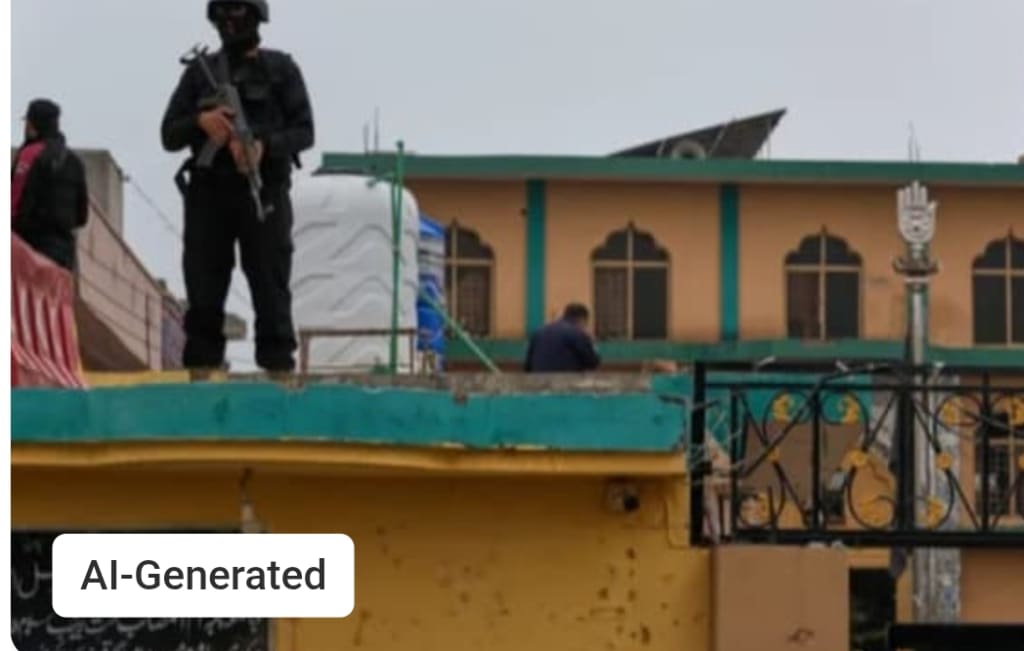
A recent bombing in Islamabad has once again brought national and international attention to the issue of cross-border militancy affecting Pakistan’s internal security. Although Pakistan has faced waves of extremist violence in the past, attacks in the federal capital are relatively rare, making this incident particularly alarming for policymakers, citizens, and global observers. The event has intensified discussions about the evolving threats, the sources of cross-border militancy, and the urgent need for coordinated regional security strategies.
A Rare Attack in the Capital
Islamabad is generally considered one of the safest cities in the country due to strict security protocols, diplomatic presence, and constant surveillance. When an attack occurs there, it raises questions about how militants are planning, moving, and operating despite these safeguards. Officials stated that initial investigations suggest the attack may be linked to militant networks operating along or beyond Pakistan’s borders. While details remain under review, the possibility of foreign-based groups influencing violence within the capital has heightened concerns among security agencies.
Cross-Border Militancy: A Persistent Challenge
For decades, Pakistan has struggled with militant activity emerging from regions along the Pakistan-Afghanistan border. Although major military operations have significantly reduced the presence of domestic militant groups, cross-border infiltration remains a complex challenge. Authorities believe some groups take advantage of weak border control on the Afghan side, ungoverned areas, or shifting political environments that allow them to regroup and launch attacks.
Security analysts argue that the Islamabad bombing may signal a transition in militant tactics. Rather than striking remote areas or border towns, militants appear increasingly willing to target major urban centers. This potential shift underscores the need for enhanced intelligence cooperation with neighboring countries and improved surveillance of transit routes into the capital.
Government Response and Heightened Security
Following the bombing, the government immediately increased security measures across Islamabad and other major cities. Patrols were expanded, checkpoints were strengthened, and intelligence-sharing between provincial and federal agencies was accelerated.
Prime Minister and cabinet officials condemned the attack and stressed that Pakistan will not bow to extremist pressure. They reiterated the country’s commitment to eliminating militant networks regardless of where they are based. The government also emphasized the importance of regional cooperation, particularly with Afghanistan, to ensure that militant groups cannot exploit cross-border gaps.
Regional Diplomacy and the Afghanistan Factor
The situation in Afghanistan has always played a crucial role in Pakistan’s internal security. Over the last several years, shifts in Afghan governance and stability have had a direct impact on Pakistan’s border regions. Islamabad has repeatedly urged Afghan authorities to prevent their territory from being used by groups that plan or support attacks inside Pakistan.
The Islamabad bombing has reignited diplomatic conversations. Pakistani officials are pressing for stronger border management, joint intelligence efforts, and actionable steps to dismantle safe havens. While Afghan authorities have expressed willingness to cooperate, political complexities, internal challenges, and limited resources continue to hinder consistent progress.
Impact on Civilians and Daily Life
Beyond political and security implications, the attack has affected public sentiment. Islamabad’s residents, long accustomed to living in a relatively secure environment, have expressed fear and frustration. Schools, offices, and markets have tightened their own security protocols. Many citizens worry about whether this attack is an isolated incident or part of a larger escalation.
Psychologists note that recurring security threats can contribute to stress and anxiety among the public, even when detailed information is not widely released. For that reason, officials have urged people to remain calm while staying alert and reporting suspicious activity. Public cooperation, they emphasized, is essential for preventing further incidents.
Media Coverage and Public Discussion
National media outlets have highlighted not only the attack itself but also the broader implications. Analysts on television and digital platforms have debated Pakistan’s counterterrorism strategy, the role of foreign-based militant networks, and the effectiveness of border management policies.
Many commentators have pointed out that militancy cannot be countered through security operations alone. Political stability in the region, economic development in border areas, and strong diplomatic ties with neighboring countries are equally important. Without a multi-layered approach, Pakistan may struggle to completely eliminate the threat of cross-border attacks.
Calls for International Cooperation
The Islamabad bombing has also attracted global attention, with several countries condemning the violence and expressing solidarity with Pakistan. International security experts note that cross-border militancy is not a challenge unique to Pakistan; it forms part of a wider pattern in which extremist groups operate across unstable borders worldwide.
Organizations focused on global counterterrorism have encouraged Pakistan and its neighbors to increase intelligence collaboration and participate in joint initiatives aimed at disrupting militant financing, communication networks, and movement across borders. Many stress that long-term peace in South Asia depends on sustained cooperation rather than isolated responses to individual attacks.
The Road Ahead
While investigations into the Islamabad bombing continue, one conclusion is already clear: cross-border threats remain a significant factor in Pakistan’s security landscape. The attack has served as a wake-up call, reminding policymakers that even small lapses in surveillance or coordination can have major consequences.
To protect its citizens and maintain stability, Pakistan will need a combination of strong border security, effective intelligence operations, consistent diplomatic engagement, and community vigilance. Strengthening ties with neighboring countries and gaining international support will also play a crucial role in reducing the frequency and impact of such attacks.
The Islamabad bombing was a tragic incident, but it has strengthened national resolve and renewed focus on the urgent need to address cross-border militancy. As Pakistan navigates this challenge, cooperation, preparation, and unity will be essential in ensuring a safer future for all its people.
About the Creator
Why Black History Matters in America?
The United States of America is celebrating their 250th anniversary in 2026. I'm proud to be an American and as someone who was born here, I wouldn't imagine myself living anywhere else. This is a country where opportunities are possible. Where anyone can be successful in anything they desire to do. Equality, community, and togetherness are the backbones of what America is and should be about. However, we have an administration who wants to erase and disregard those who have made positive, meaningful impacts in our country, specifically Black figures, such as Martin Luther King, Jr., Rosa Parks, and Maya Angelou. President Trump and his administration have been constantly complaining and fighting against what they call the "Woke agenda". They use this excuse as a distraction from other issues they refuse to address, such as the high cost of living, climate change, and inflation. That equality is dividing America, when in reality, it's bringing us together. Being woke is not tied to a specific political party. No matter where you stand on the political spectrum, you can still care about other people and their plights. Compassion and empathy for others isn't tied to a political party, either. We were taught as children to treat others the way we want to be treated and not judge others because they're different from us. Caring about others isn't a personal attack on your beliefs. It doesn't make you any less of a person. People who are easily offended over African American figures, past or present, or anything related to it, are grasping at straws. Current and future generations need to know who people like Harriet Tubman and Shirley Chisholm were, especially in the classroom. Black History is part of American History. It should be recognized, not hidden or forgotten. Besides, you can't shield children from everything, just because your feelings are easily hurt.
By Mark Wesley Pritchard 6 days ago in The Swamp
Ahead of the Winter Olympics, Milan Wins Gold in Gentrification
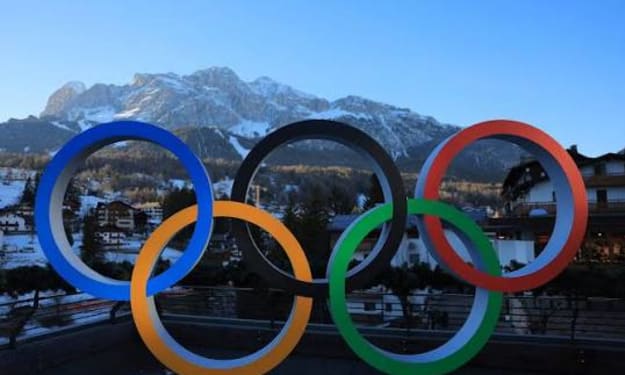
With less than two years until the Winter Olympics arrive in northern Italy, Milan is undergoing a transformation as dramatic as any athletic competition. New rail lines, luxury developments and polished public spaces are reshaping the city’s skyline. But as cranes rise and construction accelerates, critics say Milan is also winning an unintended “gold medal” in gentrification — displacing long-time residents and redefining entire neighborhoods in the name of global prestige. The 2026 Winter Olympics, jointly hosted by Milan and Cortina d’Ampezzo, were billed as a catalyst for sustainable growth and urban renewal. City officials promised improved infrastructure and economic opportunities. Yet for many locals, the benefits have come at a steep social cost. A City Remade for the World In districts such as Porta Romana and Scalo Farini, former industrial zones have been converted into sleek residential complexes, cultural venues and corporate offices. Olympic villages, once promoted as affordable housing for athletes and later for residents, are increasingly tied to private investors and high-end real estate projects. “Milan is becoming a city for tourists and executives, not for families,” said Elena Rossi, a community organizer in the Navigli area, where rents have surged by more than 30 percent in five years. “People who lived here for decades can no longer afford their own neighborhoods.” According to housing advocacy groups, property values around planned Olympic sites have climbed faster than in any other Italian city. Landlords are converting long-term rentals into short-term tourist accommodations in anticipation of the Games, further shrinking the supply of affordable housing. Infrastructure or Investment Opportunity? Supporters of the redevelopment argue that Milan is finally catching up to other global cities in terms of modern transport and urban design. New metro extensions, renovated train stations and pedestrian-friendly streets are widely praised by business leaders. “The Olympics give us the chance to modernize,” said a senior official from Milan’s urban planning department. “These projects would take decades without international investment and visibility.” But critics counter that modernization has become a code word for profit-driven development. Public funds earmarked for Olympic preparation have flowed into partnerships with real estate firms, creating what some activists call a “two-speed city” — one polished and wealthy, the other increasingly marginalized. Who Benefits? The neighborhoods closest to Olympic venues are seeing the sharpest changes. In Porta Romana, where the Olympic Village is being built on former rail yards, trendy cafes and luxury apartments have replaced workshops and small family businesses. Local shop owner Marco De Santis said his rent has doubled since plans were announced. “They tell us this is progress,” he said. “But progress for whom? My customers are disappearing, replaced by people who don’t live here, only pass through.” Students and migrant workers have been hit particularly hard. Milan already struggles with housing shortages due to its large university population. The Olympic construction boom has intensified competition for rooms and apartments, pushing many to move to distant suburbs. Lessons from Past Olympics Urban scholars note that Milan’s experience mirrors patterns seen in other Olympic host cities. From Barcelona to Rio de Janeiro, major sporting events have often triggered waves of redevelopment that benefit investors while displacing vulnerable residents. “The Olympics accelerate trends that are already underway,” said Professor Lucia Ferraro, an urban studies expert at Bocconi University. “Milan was already becoming more exclusive. The Games simply poured fuel on the fire.” Ferraro added that promises of long-term social housing frequently fall short once the event ends. Olympic villages are often sold to private developers rather than converted into affordable homes, despite early pledges. City Hall Defends Its Strategy Milan’s municipal government insists it is aware of the risks and is trying to balance growth with social responsibility. Officials point to new public housing projects and rent-control experiments aimed at easing pressure on low-income residents. “We are not blind to the challenges,” said Deputy Mayor for Urban Development Giulia Bianchi. “But refusing investment is not an option. The task is to guide it in a way that serves the whole city.” She acknowledged, however, that market forces are difficult to control once international attention turns to a city. “The Olympics create expectations. Investors arrive quickly, and regulation takes time.” A Cultural Shift Beyond economics, many residents say Milan’s identity is changing. Once known for its working-class neighborhoods and local markets, the city is increasingly shaped by luxury brands, corporate towers and short-term visitors. “You feel like a guest in your own home,” said retired teacher Paolo Mancini, who recently moved out of the Brera district after his landlord sold the building. “The soul of the city is being replaced by a postcard version of itself.” Street art collectives and grassroots groups have begun organizing protests and public discussions about the social cost of the Olympics. Their message is not opposition to sport, but concern over who gets to remain in the city once the spotlight fades. A Golden Future or a Divided City? As Milan races toward the Winter Olympics opening ceremony, the contrast between shiny new developments and growing social tension is becoming harder to ignore. The city may emerge with world-class infrastructure and global recognition, but it also risks becoming less livable for those who built its communities. The true legacy of the Games will not be measured only in medals or visitor numbers, critics argue, but in whether Milan can remain a city for its residents as well as for the world. For now, the cranes continue to rise, the streets grow more polished, and the price of belonging climbs higher. In the competition between global ambition and local life, Milan appears to be winning — but at a cost that many fear will last long after the Olympic flame is extinguished.
By Fiaz Ahmed 4 days ago in The Swamp
The Lesions of Devotion
Every day I set myself down on the freshly cut lawn and strip myself bare. I take my guitar and finger the frets and pick at the strings, listening for dissonance. My life is dissonance. I twist the tuning pegs until each string sounds bright. Then I kneel, calves pointing behind me, kneecaps facing forward. All exposed to the breeze. I close my eyes and play the melody.
By Paul Stewarta day ago in Fiction


Comments
There are no comments for this story
Be the first to respond and start the conversation.