
Costa Rica Heads to Polls Amid Fears of Authoritarian Turn
Election seen as test of Costa Rica’s long-standing democracy Rising crime and political tensions shape crucial vote Concerns grow over press freedom and judicial independence Populism and polarization dominate campaign season Civil society urges turnout to protect democratic values A nation at a crossroads between stability and strongman politics International observers watch closely as Costa Rica votes


Costa Rica is heading to the polls in a tense political atmosphere, with voters preparing to choose new local and national representatives amid growing concerns about democratic backsliding and an increasingly confrontational political climate. Once celebrated as one of Latin America’s most stable democracies, the country now finds itself at a crossroads, as critics warn that recent trends point toward a possible authoritarian turn.
The elections come after months of political disputes between the government and key institutions, including the judiciary, independent media, and civil society organizations. For many Costa Ricans, this vote is not only about selecting leaders but also about defending long-standing democratic values.
A Democracy Under Strain
Costa Rica has long stood apart in the region for abolishing its military in 1948 and investing heavily in education, healthcare, and democratic institutions. Its reputation for political stability has made it a model for peaceful governance in Central America.
However, recent years have seen growing polarization and public frustration with traditional political parties. Rising crime rates, economic pressures, and dissatisfaction with political elites have fueled support for more aggressive leadership styles.
Observers say the current political environment has shifted from consensus-based governance to one marked by sharp rhetoric and institutional conflict.
“We are witnessing a dangerous normalization of attacks on democratic institutions,” said a political analyst at the University of Costa Rica. “This election will show whether voters want to strengthen checks and balances or move toward a more centralized form of power.”
Tensions With the Judiciary and Media
One of the most contentious issues in the campaign has been the government’s relationship with the judiciary. Court rulings that challenged executive decisions have been met with harsh criticism from political leaders, who accuse judges of obstructing reforms.
Independent media outlets have also come under pressure. Journalists report increased hostility and public accusations of bias, creating a climate in which press freedom advocates fear intimidation tactics could undermine investigative reporting.
“These attacks weaken trust in institutions that are meant to protect democracy,” said a representative from a local human rights organization. “They set a precedent that disagreement equals disloyalty.”
International watchdog groups have noted a rise in political rhetoric that portrays opponents as enemies rather than rivals, a trend often associated with democratic erosion.
Crime and Security Dominate the Debate
Public security has emerged as a central issue in the election. Costa Rica has seen a surge in violent crime, including drug trafficking and gang-related killings, particularly in urban areas.
Some candidates have proposed tough-on-crime policies that include expanding police powers and limiting certain legal protections for suspects. While these proposals resonate with voters fearful for their safety, critics argue they risk undermining civil liberties.
“Security is essential, but it cannot come at the cost of democracy,” said a former Supreme Court judge. “History shows that emergency powers are often abused.”
Voters are divided between those who want immediate action and those who fear that sweeping security measures could lead to authoritarian practices.
Economic Frustration Fuels Populism
Economic pressures have also shaped the political landscape. Rising living costs, unemployment, and concerns over public debt have increased anger toward established parties. Populist rhetoric promising quick solutions has gained traction among disillusioned voters.
Many candidates frame themselves as outsiders who will “clean up” politics and challenge entrenched interests. This message has strong appeal, especially among younger voters and low-income communities.
“People feel the system no longer works for them,” said a sociologist specializing in political movements. “That creates an opening for leaders who claim only they can fix everything.”
While such messages energize supporters, they also raise fears of power being concentrated in the executive branch at the expense of democratic institutions.
Role of Civil Society
Civil society groups have mobilized to encourage voter participation and defend democratic norms. Universities, religious organizations, and community associations have launched campaigns emphasizing the importance of peaceful elections and respect for the constitution.
Public forums and debates have focused on transparency, press freedom, and judicial independence. Activists argue that these values are as important as economic and security policies.
“Democracy is not just about voting,” said a student organizer at a recent rally. “It is about protecting institutions that protect us.”
Election observers from regional and international organizations are expected to monitor the vote to ensure fairness and transparency.
What Is at Stake
For many Costa Ricans, this election represents a test of national identity. The country’s political culture has historically been built on dialogue, compromise, and rule of law. A shift toward more authoritarian governance would mark a dramatic departure from that tradition.
Analysts say the outcome will influence how Costa Rica positions itself internationally, particularly in relation to other Latin American nations experiencing democratic challenges.
“Costa Rica has always been seen as an exception in the region,” said a regional politics expert. “If that changes, it will send a powerful signal beyond its borders.”
Voters’ Voices
In San José, voters express mixed emotions ahead of election day.
“I want safety for my family, but I don’t want to lose our freedoms,” said a shop owner. “We must be careful who we give power to.”
A university student echoed similar concerns. “We grew up believing Costa Rica was different. Now we feel that difference is being tested.”
Others say they are simply tired of political conflict and want stability.
“We need leaders who unite, not divide,” said a retired teacher. “This election should be about rebuilding trust.”
Conclusion
As Costa Rica heads to the polls, the nation faces a defining moment. Long admired for its democratic stability, it now confronts fears that rising polarization and populist politics could weaken the institutions that have shaped its success.
The election outcome will reveal whether voters choose a path of institutional strength and balance or one that risks concentrating power and eroding democratic safeguards. Whatever the result, the vote will mark a turning point in Costa Rica’s political history — one that will shape its future for years to come.
About the Creator
Fiaz Ahmed
I am Fiaz Ahmed. I am a passionate writer. I love covering trending topics and breaking news. With a sharp eye for what’s happening around the world, and crafts timely and engaging stories that keep readers informed and updated.
Keep reading
More stories from Fiaz Ahmed and writers in The Swamp and other communities.
Spartan and Birds of Magyar Eliminate Four Russian Platoons Near Pokrovsk
Ukrainian military units known as “Spartan” and the “Birds of Magyar” have reported a significant battlefield success near the eastern city of Pokrovsk, claiming that four Russian platoons were neutralized during intense fighting in the area. The operation took place amid ongoing clashes along one of the most contested sections of the front line, where Russian forces have been attempting to advance despite heavy resistance. According to Ukrainian military sources, the engagement involved coordinated strikes using drones, artillery, and infantry maneuvers. While independent verification of the exact casualty figures remains difficult, the operation reflects the growing role of specialized Ukrainian units in slowing Russian advances through precision tactics and modern battlefield technology. Strategic Importance of Pokrovsk Pokrovsk has become a critical hub in eastern Ukraine due to its location near major supply routes and rail lines. Control of the area allows for the movement of troops and equipment deeper into the Donetsk region. Russian forces have sought to push toward the city in recent weeks, increasing pressure on Ukrainian defensive lines. Ukrainian commanders say the latest engagement was part of a broader effort to hold key positions and prevent encirclement of nearby towns. “Every meter of ground here matters,” said one Ukrainian officer, speaking on condition of anonymity. “If the enemy breaks through, it threatens multiple defensive sectors.” The Units Involved The Spartan unit is known as part of Ukraine’s National Guard, specializing in rapid-response operations and urban defense. The Birds of Magyar, meanwhile, is a drone-focused battalion that has gained attention for its use of aerial reconnaissance and strike drones to target enemy positions. Military analysts note that the combination of these two units illustrates how Ukraine has adapted its tactics over the course of the war. “Drone warfare has changed everything,” said a defense analyst in Kyiv. “Small teams can now locate and strike enemy concentrations with a level of accuracy that was impossible just a few years ago.” In the reported operation, drones were used to identify Russian troop movements and direct artillery fire, disrupting attempts to regroup and advance. Details of the Engagement Ukrainian officials stated that Russian forces attempted to move several platoons into forward positions under cover of darkness. Reconnaissance drones detected the movement, allowing Ukrainian units to prepare countermeasures. As Russian troops entered open terrain, they were met with concentrated fire from artillery and drone strikes. Ground forces then moved in to secure the area and prevent further infiltration. Video footage released by Ukrainian channels showed explosions and damaged military equipment, though such material could not be independently verified. The footage is part of a broader information effort aimed at demonstrating battlefield successes and maintaining morale. Broader Context of the Fighting The clash near Pokrovsk comes amid renewed Russian offensives in eastern Ukraine, particularly in Donetsk and Luhansk regions. Moscow has continued to deploy manpower and equipment in attempts to gain territory, while Ukraine relies increasingly on defensive fortifications and precision strikes. Both sides have suffered heavy losses in recent months, and fighting has intensified as winter conditions ease and ground becomes more passable. “The front lines are extremely dynamic right now,” said a European military observer. “We are seeing frequent localized battles rather than large sweeping offensives.” Impact on Morale and Public Perception For Ukraine, reports of successful operations play an important role in sustaining public confidence and international support. The claim that four Russian platoons were eliminated underscores Ukraine’s message that its forces remain capable of defending key areas despite limited resources. Residents in nearby towns have expressed cautious relief when Ukrainian forces manage to repel advances. “We hear explosions every day,” said a civilian from a village outside Pokrovsk. “When the army holds the line, it means we can sleep one more night in our homes.” At the same time, Ukrainian officials have warned against overconfidence, noting that the enemy continues to regroup and attempt new attacks. Information Warfare and Verification Challenges As with many battlefield claims in the conflict, details remain difficult to verify independently. Both sides regularly report enemy losses that cannot be fully confirmed by neutral observers. Military experts stress the importance of treating such announcements as indicative rather than definitive. “In war, information is part of the battle,” said a security researcher. “What matters most is whether territory is held and whether strategic objectives are met.” Nevertheless, the reported engagement highlights the tactical effectiveness of Ukraine’s drone units and mobile infantry formations. Human Cost of the Conflict Behind the military reports lies a continuing humanitarian toll. The fighting near Pokrovsk has forced additional evacuations, with families leaving homes damaged by shelling and infrastructure increasingly strained. Aid groups have called for humanitarian corridors and greater access to frontline communities, where electricity and clean water remain unreliable. “The military success of one side does not erase the suffering of civilians,” said a humanitarian worker operating in the region. “Every battle leaves another scar on local communities.” What Comes Next Ukrainian military leaders expect further attempts by Russian forces to probe defenses around Pokrovsk in the coming days. Reinforcements and additional drone units have reportedly been deployed to strengthen the area. Western allies continue to supply Ukraine with equipment and intelligence, though officials acknowledge that resources are stretched. “The coming weeks will be crucial,” said a senior Ukrainian defense official. “We must hold the line and protect our people.” Conclusion The reported elimination of four Russian platoons by the Spartan unit and the Birds of Magyar near Pokrovsk marks another intense chapter in the ongoing conflict in eastern Ukraine. Whether the engagement proves decisive remains uncertain, but it demonstrates Ukraine’s reliance on coordinated tactics and drone warfare to counter enemy advances. As fighting continues across the region, the situation near Pokrovsk reflects the broader struggle: a war of endurance, technology, and determination, with high stakes for both military strategy and civilian survival.
By Fiaz Ahmed 2 days ago in The Swamp
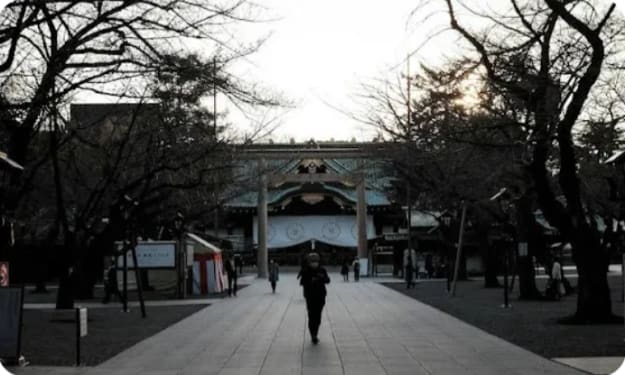
Pokémon Company Apologises After Advertising Event at Controversial War Crimes Shrine
The Pokémon Company has issued a public apology after promoting a themed event connected to a location widely associated with Japan’s wartime past, igniting controversy both domestically and internationally. The incident highlights how global entertainment brands can stumble when marketing intersects with unresolved historical and political sensitivities.
By Sajida Sikandarabout 6 hours ago in The Swamp
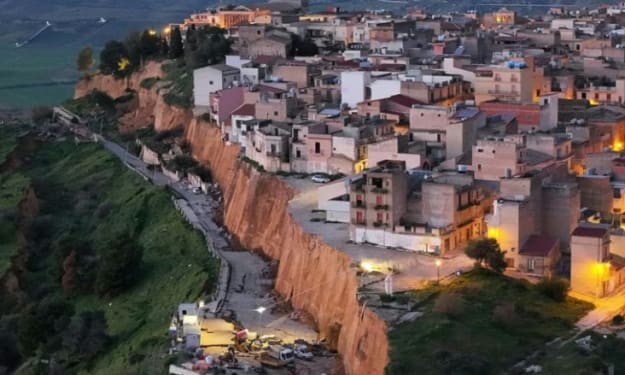
Huge Landslide Leaves Sicilian Homes Teetering on Cliff Edge
The ground gave way without warning. One moment, homes stood quietly against the backdrop of sea and sky; the next, the earth beneath them began to slide toward the void. In parts of Sicily, a massive landslide has left entire neighborhoods perched precariously on a cliff edge, forcing evacuations and reigniting urgent conversations about climate change, aging infrastructure, and the fragile balance between people and nature.
By Aqib Hussain5 days ago in The Swamp
One Unchecked Box
"Republished" because it was the only way to add the embed for the newly recorded audio version of this story due to the Top Story badge. Plus it serves as a nice, informal announcement of the podcast's revival for another season (go subscribe!):
By Stephen A. Roddewig7 days ago in Fiction


Comments
There are no comments for this story
Be the first to respond and start the conversation.