
Conflict in Sudan: A Nation Torn Between Power and Survival
Inside the humanitarian and political crisis that has left millions struggling to live amid chaos and uncertainty.

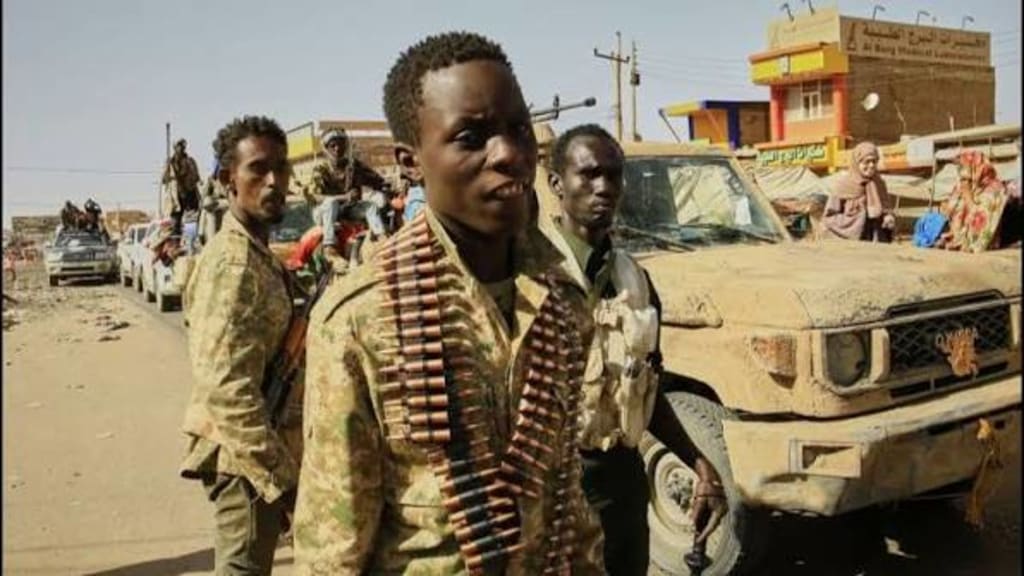
The African nation of Sudan has been through decades of turmoil, but the most recent conflict in Sudan has plunged the country into one of its darkest periods yet. What began as a power struggle between rival military leaders in 2023 has turned into a devastating war, leaving cities destroyed, families displaced, and hopes for democracy hanging by a thread.
While the world’s attention often shifts from one crisis to another, Sudan’s tragedy continues to unfold largely out of sight. Behind the headlines lies a story of resilience, desperation, and a people caught between powerful forces fighting for control.
---
The Roots of the Crisis
To understand Sudan’s current conflict, it’s important to look at its long and complex history.
Sudan, once Africa’s largest country, gained independence from Britain and Egypt in 1956. But freedom quickly gave way to decades of instability — marked by civil wars, military coups, and ethnic tensions.
In 2011, the southern part of the country broke away to form South Sudan, after years of bloody conflict that cost more than two million lives. Many hoped that this separation would bring peace to the north. Instead, Sudan fell into a new cycle of political and economic unrest.
By 2019, widespread protests erupted across the nation, demanding the removal of longtime dictator Omar al-Bashir, who had ruled for 30 years. The people’s voices finally prevailed — Bashir was ousted, and for a brief moment, hope filled the streets of Khartoum, Sudan’s capital.
But peace was short-lived. The transitional government meant to lead Sudan toward democracy was soon torn apart by power struggles between two men: General Abdel Fattah al-Burhan, head of the Sudanese Armed Forces (SAF), and Mohamed Hamdan Dagalo, known as Hemedti, leader of the powerful Rapid Support Forces (RSF).
Their rivalry exploded into open warfare in April 2023 — and Sudan hasn’t been the same since.
---
A Nation at War with Itself
The Sudan conflict is often described as a “war within a war.” Both Burhan’s army and Hemedti’s RSF claim to fight for the future of the nation, but their battle has devastated the very people they claim to protect.
In the capital, Khartoum, once-bustling neighborhoods have turned into battlegrounds. Residential buildings lie in ruins, hospitals have been bombed, and food and water are scarce.
Across the country, ordinary citizens have been forced to flee. The United Nations estimates that over 10 million people have been displaced — one of the largest humanitarian crises in the world today. Many have sought refuge in neighboring countries like Chad, Egypt, and South Sudan, carrying little more than the clothes on their backs.
Electricity and internet blackouts are common, making communication almost impossible. Families have been separated, and aid convoys often can’t reach those most in need because fighting blocks the roads.
---
The Human Cost
The human suffering in Sudan is staggering. The conflict has destroyed livelihoods, education, and healthcare systems. Children make up nearly half of those displaced, many of whom now live in overcrowded camps or on the streets.
According to humanitarian organizations, hunger is one of the greatest threats. Fields have been abandoned, and food prices have skyrocketed. The World Food Programme warns that millions could face famine if the fighting continues.
Amid all this, stories of courage still emerge. Doctors risk their lives treating patients in makeshift clinics. Teachers continue to hold classes wherever they can. Communities come together to share what little they have.
One volunteer nurse in Omdurman, a city near Khartoum, told reporters, “We have nothing, but we share everything — water, medicine, even hope.”
---
Why the Fighting Continues
The war drags on because both sides see themselves as the rightful rulers of Sudan. General Burhan’s Sudanese Armed Forces represent the traditional military establishment. Hemedti’s Rapid Support Forces, meanwhile, grew out of the infamous Janjaweed militias that were accused of atrocities in Darfur in the early 2000s.
Now, the RSF has turned its firepower toward Khartoum and other regions, seeking control of key cities and resources. Each faction controls parts of the country, with shifting frontlines and no clear end in sight.
Foreign powers have also been drawn into the mix, backing different sides in pursuit of influence or access to Sudan’s gold and trade routes. This has made peace negotiations even harder.
---
The Role of the International Community
The world’s response has been slow and cautious. While humanitarian aid continues to flow from organizations like the Red Cross and UNICEF, the fighting often makes delivery dangerous.
Peace talks have been attempted several times, hosted by countries like Saudi Arabia and Egypt, but so far, they have failed to produce lasting results. Ceasefires are announced — and broken — within days.
Many Sudanese citizens feel forgotten by the international community. Social media campaigns under the hashtag #ActForSudan have tried to raise awareness, urging governments to take stronger action to end the violence and support refugees.
---
A Glimmer of Hope
Despite the destruction, Sudan’s people have not given up on hope. In towns and villages untouched by the fighting, community leaders are forming local peace committees to protect civilians and mediate disputes.
Sudanese youth, who led the 2019 revolution, are again using their voices to call for unity and democracy. They dream of a future where power doesn’t rest in the hands of generals but in the will of the people.
As one activist wrote on social media, “Sudan’s soul cannot be destroyed by bullets. We will rebuild, even from ashes.”
---
Final Thoughts
The conflict in Sudan is not just a political battle — it is a human tragedy. Behind every statistic is a story of survival, loss, and courage.
Ending the war will take more than diplomacy; it will require compassion, accountability, and the world’s attention. Sudan’s people have shown resilience before, and they may yet rise again. But until peace returns, their struggle reminds us of a painful truth: when leaders fight for power, it is always the people who pay the highest price.
About the Creator
Fiaz Ahmed
I am Fiaz Ahmed. I am a passionate writer. I love covering trending topics and breaking news. With a sharp eye for what’s happening around the world, and crafts timely and engaging stories that keep readers informed and updated.
Keep reading
More stories from Fiaz Ahmed and writers in The Swamp and other communities.
International Diplomacy: The Art of Building Peace in a Divided World
In a world often divided by borders, beliefs, and interests, one concept remains essential for keeping peace — international diplomacy. Behind every global treaty, alliance, or even handshake between world leaders, diplomacy plays a quiet but powerful role. It is the art of talking instead of fighting, negotiating instead of threatening, and finding common ground when everything seems to pull nations apart.
By Fiaz Ahmed 3 months ago in The Swamp
Why Notifications Feel More Stressful Than Useful Now
Once upon a time, notifications were helpful. A message alert meant someone needed us. A calendar reminder kept us organized. A breaking news alert informed us of something important. Today, however, notifications feel less like assistance and more like intrusion.
By Aarif Lasharia day ago in The Swamp



Comments
There are no comments for this story
Be the first to respond and start the conversation.