
International Diplomacy: The Art of Building Peace in a Divided World
How nations use dialogue, strategy, and compromise to shape global harmony.

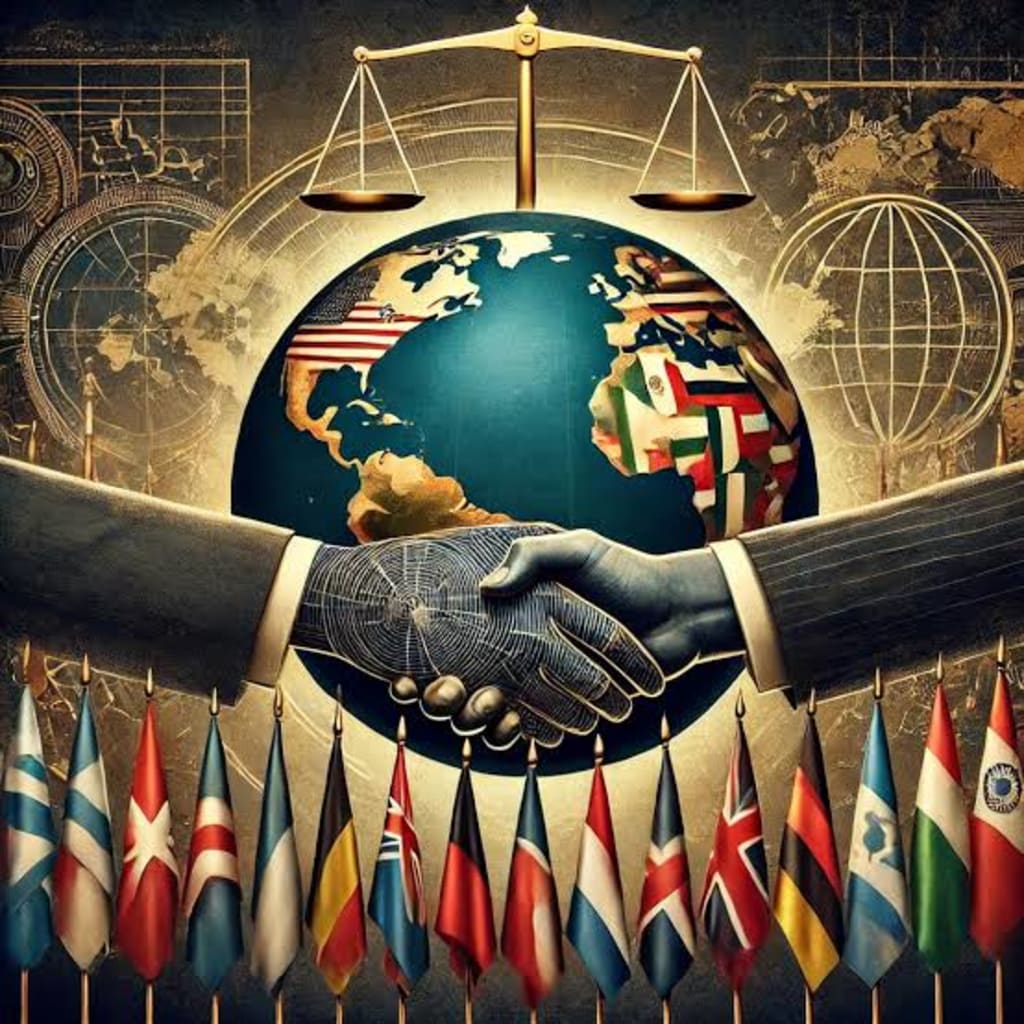
In a world often divided by borders, beliefs, and interests, one concept remains essential for keeping peace — international diplomacy. Behind every global treaty, alliance, or even handshake between world leaders, diplomacy plays a quiet but powerful role. It is the art of talking instead of fighting, negotiating instead of threatening, and finding common ground when everything seems to pull nations apart.
Today, international diplomacy is more complex than ever. It’s not just about politicians sitting at a table — it’s about communication across cultures, managing crises, and working together to solve problems that affect everyone on the planet.
---
What Is International Diplomacy?
At its core, international diplomacy is the practice of managing relations between countries through dialogue and negotiation. It’s how nations communicate, cooperate, and sometimes compete — all while trying to avoid conflict.
Diplomacy can take many forms: peace talks, trade agreements, humanitarian missions, and even online summits. Ambassadors, diplomats, and envoys act as bridges between governments, helping their nations express interests, resolve disputes, and promote mutual understanding.
The ultimate goal? To maintain peace and stability in a world where power, politics, and personality often collide.
---
A Brief History of Diplomacy
While diplomacy feels modern, its roots stretch back thousands of years. Ancient civilizations like Egypt, Greece, and China practiced early forms of diplomacy through envoys and treaties. The idea was simple — it’s better to talk than to fight.
Modern diplomacy, as we know it, began in Renaissance Italy during the 15th century, when city-states like Venice and Florence appointed permanent ambassadors. By the 19th and 20th centuries, diplomacy became formalized through international organizations and written agreements.
The creation of the United Nations (UN) in 1945 marked a major turning point. After two devastating world wars, the global community realized that the only way to prevent future conflict was through dialogue and cooperation. Since then, the UN has become the main platform for international diplomacy, addressing issues from peacekeeping to human rights.
---
The Role of Diplomats
Diplomats are the unsung heroes of international relations. Their job is to represent their country’s interests abroad while also promoting understanding and goodwill.
A diplomat must be skilled in communication, negotiation, and cultural awareness. They attend meetings, draft agreements, and even help citizens in foreign lands. But more importantly, they build trust — something that can’t be signed on paper.
For example, when tensions rise between nations, it’s often the diplomats who meet behind closed doors to find peaceful solutions before situations escalate. Their success or failure can literally shape the course of world history.
---
Diplomacy in Action: Real-World Examples
Some of the most significant global events have been shaped by successful diplomacy.
The Camp David Accords (1978): The peace agreement between Egypt and Israel, brokered by U.S. President Jimmy Carter, showed how dialogue can end decades of hostility.
The Paris Agreement (2015): A historic climate deal where nearly every country pledged to reduce carbon emissions, proving that diplomacy isn’t only about war and peace — it’s also about the planet’s survival.
The End of the Cold War: Negotiations between the U.S. and the Soviet Union helped bring an end to decades of nuclear tension.
These examples show that diplomacy doesn’t just prevent wars; it helps solve the world’s toughest challenges — from environmental crises to global health emergencies.
---
Modern Challenges in Diplomacy
In today’s digital age, international diplomacy faces new and unpredictable challenges.
Technology has changed the way countries communicate — and the speed of information can both help and harm relations. Social media allows leaders to speak directly to global audiences, but one careless tweet or statement can spark tensions instantly.
There are also growing global issues that no single nation can solve alone — climate change, pandemics, terrorism, and cyber warfare. These problems require countries to work together, even if they don’t always agree politically or culturally.
Another challenge is the rise of nationalism and mistrust between major powers. Countries are becoming more protective of their interests, making global cooperation harder. Yet, despite these divisions, diplomacy remains the only realistic path toward lasting peace.
---
The Future of International Diplomacy
The world is changing fast, and diplomacy must evolve with it. Future diplomats will need not only political knowledge but also skills in technology, economics, and environmental science. They’ll also need empathy — the ability to see problems through other nations’ perspectives.
Organizations like the United Nations, the World Health Organization (WHO), and the European Union (EU) will continue to play crucial roles in promoting dialogue. Meanwhile, new voices — from youth activists to nonprofit organizations — are joining the global diplomatic conversation.
International diplomacy is no longer limited to governments. Businesses, scientists, and even ordinary citizens can influence global discussions through advocacy and innovation.
---
Why Diplomacy Still Matters
In a time when conflicts and crises dominate headlines, diplomacy reminds us of humanity’s greatest strength — our ability to communicate and cooperate.
Without diplomacy, the world would be ruled by violence and mistrust. Every peaceful resolution, trade partnership, and humanitarian effort is proof that dialogue still works. It’s slow, imperfect, and often frustrating, but diplomacy remains the best tool we have for creating a stable and fair world.
---
Final Thoughts
International diplomacy is more than political strategy — it’s the language of peace. It connects nations, cultures, and people who might otherwise stand divided. Whether through quiet negotiations or historic treaties, diplomacy proves that talking is always better than fighting.
In the end, it isn’t the power of armies or the wealth of nations that keeps the world together — it’s the courage to sit down, listen, and understand one another. And that is the true art of diplomacy.
About the Creator
Fiaz Ahmed
I am Fiaz Ahmed. I am a passionate writer. I love covering trending topics and breaking news. With a sharp eye for what’s happening around the world, and crafts timely and engaging stories that keep readers informed and updated.
Keep reading
More stories from Fiaz Ahmed and writers in The Swamp and other communities.
Lloyds Bank News: Navigating Change in a Modern Financial World
For over two centuries, Lloyds Bank has been one of the cornerstones of the British financial system. From its humble beginnings in 1765 in Birmingham to becoming one of the UK’s “Big Four” banks, Lloyds has weathered wars, recessions, and revolutions in technology. In 2025, the institution remains a key player in shaping the country’s economic landscape — and recent Lloyds Bank news reveals just how much it continues to evolve in an ever-changing financial world.
By Fiaz Ahmed 3 months ago in The Swamp
Verizon Says Its Service Is Back After a 10-Hour Outage
Verizon, one of the largest telecommunications providers in the United States, announced that its services have been fully restored following a widespread outage that lasted approximately 10 hours. The disruption, which affected millions of customers nationwide, left people unable to make calls, send texts, or access mobile data for much of the day, highlighting the growing reliance on mobile networks for everyday communication, work, and emergency services. The outage also served as a stark reminder of the vulnerabilities in modern telecommunications infrastructure and the challenges that major carriers face in keeping their networks online in an increasingly connected world. Scope of the Outage According to reports from Verizon and monitoring platforms like Downdetector, the outage began early in the morning and persisted through mid-afternoon, impacting multiple states across the country. Customers reported issues with: Voice calls – Many users could not make or receive phone calls. Text messaging – SMS services were interrupted, particularly for those relying on Verizon’s network. Mobile data and internet access – Users experienced slow or completely inaccessible data connections, affecting work-from-home setups, video calls, and streaming. Social media platforms lit up with complaints, as users took to Twitter, X, and other networks to report service interruptions and seek information. Verizon acknowledged the issue through official channels, promising updates as technicians worked to resolve the problem. Verizon’s Response In a statement, Verizon said: “Our teams have resolved the network issues that impacted voice, messaging, and data services for our customers. We sincerely apologize for the inconvenience and appreciate everyone’s patience as we worked to restore service.” The carrier also explained that the outage was caused by an internal network configuration error, which led to widespread service disruption. While the company did not provide detailed technical specifics, experts suggest that such outages can result from software misconfigurations, routing errors, or failures in network backbone systems that support millions of users. Impact on Customers The outage affected millions of Verizon subscribers, including both individual and business customers. In an era where smartphones are central to daily life, the disruption had real-world consequences, including: Remote Work Challenges: Many employees rely on Verizon for mobile hotspots and corporate connectivity. The outage disrupted video calls, emails, and cloud-based collaboration. Emergency Communication: Verizon customers reported difficulties in contacting family or emergency services, a reminder of how critical reliable mobile service is in modern society. Financial Transactions: Mobile banking apps and digital payment services that depend on mobile data were inaccessible for several hours. General Communication: Everyday activities such as texting, social media updates, and online browsing were affected, leaving users frustrated. For businesses, the outage was particularly challenging. Retailers, delivery services, and small businesses relying on mobile payment systems or VoIP communication had to adapt quickly, often resorting to backup networks or offline solutions. How Common Are Outages Like This? While rare, multi-hour outages for major carriers like Verizon do occur. The growing complexity of telecom networks, combined with increasing dependence on mobile infrastructure, means that even minor configuration errors can have widespread consequences. According to industry analysts: Outages of 1–2 hours are relatively common and usually localized. Nationwide or multi-state outages, especially lasting over 8 hours, are far less frequent but cause significant disruption. Telecom providers often run redundant systems to minimize downtime, but large-scale outages still occur due to software glitches, maintenance errors, or unexpected hardware failures. Verizon’s Plan to Prevent Future Outages Verizon has committed to reviewing its systems and processes to prevent similar outages in the future. This includes: Network Audits: Conducting thorough audits of hardware and software configurations. Enhanced Monitoring: Implementing more sophisticated tools to detect issues before they escalate. Redundancy Improvements: Strengthening backup systems to maintain service continuity in case of failures. Employee Training: Ensuring network engineers are equipped to manage complex configurations safely. Industry experts emphasize that network reliability is increasingly critical, especially as mobile data consumption, IoT devices, and 5G services continue to expand. Public Reaction and Social Media Buzz As expected, social media was ablaze during the outage. Verizon users expressed frustration, confusion, and, at times, humor. Memes about losing mobile service and jokes about being “cut off from civilization” quickly spread online. Many praised Verizon for providing updates and resolving the issue relatively quickly, while others criticized the carrier for the lack of transparency regarding the cause and scale of the outage. Analysts note that clear communication during outages is almost as important as fixing the technical problem itself, as it helps maintain customer trust. Broader Implications The Verizon outage highlights how critical mobile connectivity has become in daily life. With smartphones serving as the primary tool for communication, work, entertainment, and emergency access, disruptions can ripple through society in significant ways. The event also underscores the vulnerability of digital infrastructure. As reliance on 5G networks, smart devices, and cloud services increases, carriers must prioritize robust, resilient systems to prevent widespread outages that can impact both individuals and businesses. Conclusion: Lessons from the Outage Verizon’s 10-hour outage serves as a reminder that even large, technologically advanced networks are not immune to disruption. The incident affected millions of people, highlighting both the challenges of modern telecommunications and the high stakes of maintaining network reliability. For Verizon, the key takeaway is clear: investing in network resilience, transparent communication, and proactive monitoring is essential to maintain customer trust and ensure continuous service. For users, the outage is a reminder of the importance of backup communication plans and the increasing dependence on mobile connectivity in the modern world. As technology continues to advance, maintaining reliable, robust networks will be a top priority—not just for Verizon, but for all telecom providers navigating the digital age.
By Muhammad Hassan5 days ago in The Swamp



Comments
There are no comments for this story
Be the first to respond and start the conversation.