
Concerned that FTA may cut access to medicines in India, rest of the developing world: Médecins Sans Frontières writes to EU
Aid group warns trade deal could restrict production of affordable generic drugs MSF urges EU to avoid patent rules that threaten global public health Humanitarian organization raises alarm over intellectual property clauses in trade talks Doctors Without Borders cautions against provisions that may drive up medicine prices Civil society pressure grows as EU–India trade negotiations continue

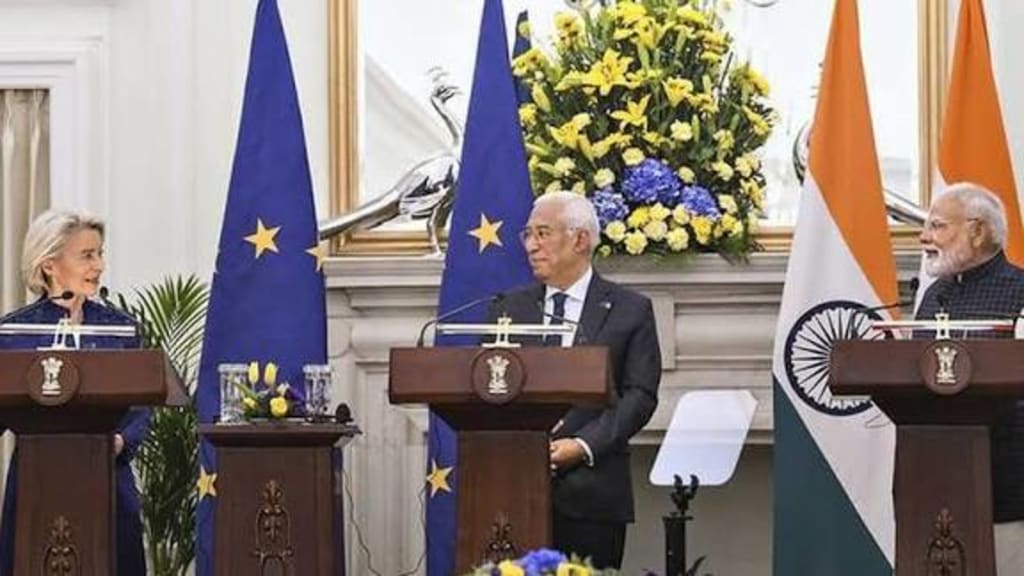
Médecins Sans Frontières (MSF), also known as Doctors Without Borders, has formally urged the European Union to reconsider key provisions in its proposed free trade agreement (FTA) with India, warning that stricter intellectual property rules could severely limit access to affordable medicines in India and across much of the developing world.
In a letter sent to senior EU trade officials, MSF expressed alarm that negotiations may include clauses that go beyond the requirements of the World Trade Organization’s Agreement on Trade-Related Aspects of Intellectual Property Rights (TRIPS). The humanitarian organization argues that such measures could extend patent protections on medicines, delay the introduction of low-cost generic drugs, and undermine global public health efforts.
India is widely regarded as the “pharmacy of the developing world” because of its ability to manufacture and export affordable generic medicines for diseases such as HIV/AIDS, tuberculosis, malaria, and hepatitis C. MSF warned that weakening India’s generic drug industry would have ripple effects far beyond the country’s borders.
“Any trade agreement that restricts India’s capacity to produce and export generic medicines will directly threaten the lives of millions of patients who depend on affordable treatment,” MSF said in its letter.
Fears Over ‘TRIPS-Plus’ Measures
At the heart of MSF’s concern are so-called “TRIPS-plus” provisions that the EU has previously sought in trade agreements with other countries. These measures can include longer patent terms, data exclusivity rules that delay the approval of generics, and limits on compulsory licensing, which allows governments to authorize the production of cheaper versions of patented drugs during public health emergencies.
MSF argues that such provisions would make it harder for Indian manufacturers to produce low-cost alternatives to expensive branded medicines. This could raise treatment costs dramatically for patients in low- and middle-income countries.
“In many places where MSF operates, generic medicines from India are the only affordable option,” the organization said. “Introducing stronger monopoly protections would slow competition and drive prices up.”
Public health advocates have echoed these concerns, noting that similar trade provisions in other regions have led to delays in the availability of life-saving drugs. They point to past experiences in Latin America and Southeast Asia, where stricter intellectual property rules were followed by price increases for cancer drugs and antiviral treatments.
India’s Role in Global Health
India supplies more than half of the world’s generic medicines used in HIV treatment programs and is a major exporter of vaccines and antibiotics to Africa and parts of Asia. International health agencies and donor-funded programs rely heavily on Indian pharmaceutical companies for affordable supplies.
MSF officials said that any disruption to this system would be particularly damaging at a time when many countries are struggling with fragile healthcare systems, rising disease burdens, and limited budgets.
“The global health community depends on India’s ability to produce quality medicines at scale,” said a senior MSF policy adviser. “Weakening that capacity would undo decades of progress in expanding access to treatment.”
The organization also expressed concern that new patent rules could discourage innovation in neglected diseases, where profits are already low and public funding plays a critical role.
EU Response and Trade Negotiations
The European Union has defended its trade policy, arguing that intellectual property protections are necessary to encourage pharmaceutical innovation and ensure high safety standards. EU officials have said that any agreement with India would balance commercial interests with public health needs.
A spokesperson for the European Commission stated that the EU “remains committed to safeguarding access to medicines” and that negotiations are still ongoing. However, the Commission did not comment directly on whether TRIPS-plus provisions would be included in the final text.
Trade talks between India and the EU were revived after several years of stagnation, with both sides seeking to deepen economic ties and expand market access. The agreement is expected to cover a wide range of sectors, including pharmaceuticals, digital trade, agriculture, and services.
Indian officials have previously resisted stronger intellectual property rules, citing the country’s constitutional obligation to protect public health. Domestic pharmaceutical companies have also warned that tighter patent protections could harm the industry’s competitiveness.
Civil Society Mobilizes
MSF’s letter adds to growing pressure from civil society groups, patient organizations, and health activists who fear the FTA could undermine affordable healthcare. Several groups have called for greater transparency in the negotiations and for public health safeguards to be written explicitly into the agreement.
“These talks cannot happen behind closed doors when the outcome affects millions of lives,” said a representative of an international access-to-medicines coalition. “Trade rules should not come at the expense of patients.”
Activists are urging the EU to exclude pharmaceutical intellectual property from the trade deal or to reaffirm the primacy of public health under international law.
Broader Implications
Experts say the dispute highlights a long-standing tension between trade policy and global health priorities. While pharmaceutical companies argue that patents are essential for funding research and development, humanitarian groups counter that excessive monopoly protections restrict competition and delay access to treatment in poorer countries.
The issue has taken on renewed urgency following the COVID-19 pandemic, which exposed deep inequalities in vaccine and medicine access worldwide. Many countries are now re-examining how trade and patent systems affect health security.
“If we learned anything from the pandemic, it is that global cooperation on medicines saves lives,” said a public health economist. “Policies that reduce access are not just ethically questionable; they are strategically short-sighted.”
Uncertain Path Ahead
As negotiations continue, MSF has urged the EU to ensure that the FTA does not include provisions that would harm India’s generic drug industry or restrict the use of public health safeguards. The organization says it will closely monitor the talks and continue advocating for patient-centered policies.
“The EU and India have an opportunity to create a trade agreement that supports innovation while protecting access to medicines,” MSF concluded. “Failing to do so would have consequences far beyond their borders.”
With both sides under pressure from industry and civil society, the outcome of the negotiations will likely shape not only trade relations but also the future of global access to essential medicines for years to come.
About the Creator
Fiaz Ahmed Brohi
I am a passionate writer with a love for exploring and creating content on trending topics. Always curious, always sharing stories that engage and inspire.
Keep reading
More stories from Fiaz Ahmed Brohi and writers in The Swamp and other communities.
As West goes after Russia’s oil fleet, Moscow fears for its war funding
Western governments have intensified efforts to target Russia’s so-called “shadow fleet” of oil tankers, raising fresh concerns in Moscow that a crucial source of funding for its war effort could be severely disrupted. The campaign, driven by tighter sanctions enforcement and growing international coordination, aims to choke off the revenue Russia earns from exporting crude oil despite existing restrictions. Since the introduction of price caps and shipping sanctions following the invasion of Ukraine, Russia has relied heavily on an informal network of aging tankers operating outside mainstream insurance and regulatory systems. These vessels, often registered under obscure flags and owned through shell companies, have allowed Moscow to continue exporting millions of barrels of oil each day to buyers in Asia, the Middle East, and Africa. Now, Western officials say they are closing loopholes that allowed this fleet to operate with relative impunity. A Critical Revenue Stream Oil and gas sales remain the backbone of Russia’s economy and its largest source of state revenue. According to energy analysts, proceeds from crude exports help finance military operations, weapons procurement, and domestic subsidies designed to cushion the impact of sanctions. “The shadow fleet has been essential to keeping Russia’s oil flowing,” said one European energy policy expert. “If that fleet is significantly disrupted, it will hit Moscow where it hurts most—its ability to fund the war.” Recent measures include stricter monitoring of ship-to-ship transfers, penalties on ports and insurers that assist sanctioned vessels, and expanded blacklists of tanker operators suspected of helping Russia evade the price cap on oil exports. The United States and European Union have also increased intelligence sharing on vessel movements, using satellite tracking and maritime databases to identify suspicious patterns such as tankers switching off transponders or changing flags shortly before entering restricted waters. Moscow’s Growing Anxiety Russian officials have publicly dismissed Western actions as ineffective, but privately there is growing concern that sustained pressure could disrupt export volumes. Several industry insiders say shipping costs have risen sharply in recent months, forcing Russian exporters to offer deeper discounts to buyers willing to accept legal and logistical risks. “This is becoming more expensive and more complicated every month,” said a Moscow-based oil trader. “Insurance is harder to obtain, routes are longer, and vessels are under constant scrutiny.” There are also fears that accidents involving poorly maintained tankers could lead to environmental disasters, prompting international intervention and further restrictions. Many ships in the shadow fleet are more than 20 years old and operate with limited oversight. Russia’s energy ministry has reportedly warned the government that any major interruption in tanker availability could cause bottlenecks at ports and reduce export capacity just as military spending remains high. Western Strategy: Closing the Gaps Western governments say their goal is not to disrupt global oil markets but to limit the revenue Russia earns from each barrel it exports. The price cap mechanism allows Russian oil to be sold only if it remains below a set threshold and uses Western shipping and insurance services. However, Moscow’s workaround—using non-Western tankers and insurers—has blunted the policy’s effectiveness. The latest push seeks to deter companies and countries from facilitating these arrangements. New sanctions have targeted specific shipping firms in the Middle East and Asia accused of enabling Russian exports. Some ports have begun denying entry to tankers suspected of carrying Russian oil in violation of international rules. “This is about enforcement,” a senior Western official said. “The rules already exist. Now we are making sure they are followed.” Impact on Global Markets Analysts warn that overly aggressive action against the shadow fleet could have unintended consequences for global energy prices. If Russia’s exports drop sharply, supply shortages could push prices higher, affecting consumers worldwide. So far, markets have reacted cautiously, with oil prices fluctuating but not surging dramatically. Much depends on whether Russia can find alternative shipping arrangements or whether buyers such as India and China will continue purchasing Russian crude despite increased scrutiny. “These countries are walking a fine line,” said an energy economist. “They want cheap oil, but they don’t want to be caught in the middle of a sanctions enforcement campaign.” Russia’s Countermeasures In response, Moscow has accelerated efforts to build its own maritime insurance systems and expand cooperation with non-Western partners. Officials are also exploring the purchase of additional tankers through intermediaries and strengthening ties with shipping companies in countries that have not joined sanctions. Some Russian lawmakers have called for more state control over oil exports, arguing that national security requires tighter oversight of transport and sales. At the same time, the Kremlin is promoting alternative payment systems and trade in local currencies to reduce reliance on the dollar and euro. These moves are part of a broader strategy to insulate Russia’s economy from Western pressure. A Test of Endurance The battle over Russia’s oil fleet underscores the central role energy plays in the conflict. For Ukraine’s allies, restricting oil revenue is seen as one of the most effective non-military tools to weaken Moscow’s ability to sustain the war. For Russia, maintaining exports is vital not only economically but politically, as domestic stability depends on continued government spending. “This is becoming a war of logistics and finance as much as of weapons,” said a security analyst. “Whoever controls the flow of money and fuel will have a major advantage.” Uncertain Future As Western scrutiny tightens, the future of Russia’s shadow fleet looks increasingly uncertain. More vessels may be seized, denied insurance, or blocked from ports. Accidents or legal challenges could further disrupt operations. Yet Russia has repeatedly shown an ability to adapt to sanctions, finding new routes and partners when old ones are closed. For now, the struggle continues on the high seas, where tankers quietly carry the resources that help sustain a distant battlefield. Whether Western pressure can truly cut off this lifeline remains one of the most important economic questions of the war. What is clear is that the fight over Russia’s oil fleet has become a central front in the broader effort to limit Moscow’s capacity to finance its military campaign—and the outcome will shape not only the conflict but also the future of global energy trade.
By Fiaz Ahmed Brohi3 days ago in The Swamp
Why Black History Matters in America?
The United States of America is celebrating their 250th anniversary in 2026. I'm proud to be an American and as someone who was born here, I wouldn't imagine myself living anywhere else. This is a country where opportunities are possible. Where anyone can be successful in anything they desire to do. Equality, community, and togetherness are the backbones of what America is and should be about. However, we have an administration who wants to erase and disregard those who have made positive, meaningful impacts in our country, specifically Black figures, such as Martin Luther King, Jr., Rosa Parks, and Maya Angelou. President Trump and his administration have been constantly complaining and fighting against what they call the "Woke agenda". They use this excuse as a distraction from other issues they refuse to address, such as the high cost of living, climate change, and inflation. That equality is dividing America, when in reality, it's bringing us together. Being woke is not tied to a specific political party. No matter where you stand on the political spectrum, you can still care about other people and their plights. Compassion and empathy for others isn't tied to a political party, either. We were taught as children to treat others the way we want to be treated and not judge others because they're different from us. Caring about others isn't a personal attack on your beliefs. It doesn't make you any less of a person. People who are easily offended over African American figures, past or present, or anything related to it, are grasping at straws. Current and future generations need to know who people like Harriet Tubman and Shirley Chisholm were, especially in the classroom. Black History is part of American History. It should be recognized, not hidden or forgotten. Besides, you can't shield children from everything, just because your feelings are easily hurt.
By Mark Wesley Pritchard 6 days ago in The Swamp
Should We Not Try to Get Too Political?
Here's something you often hear people say, "I try not to get too political." I understand the sentiment and I sympathize with it... while at the same exact time, I completely disagree with the notion. Whether it's referring to social media or wherever, it's kind of unavoidable. You can attempt to sidestep it, not engage, leave the less important things for actual politicians to discuss... you can want it to not take over your life, your conversations, your relationships, and that makes perfect sense.
By Stephen Kramer Avitabile3 days ago in Writers


Comments
There are no comments for this story
Be the first to respond and start the conversation.