
“Come Help Us”: Wildfires Grip Parts of Chile, Killing at Least 18
Flames, Fear, and a Nation in Distress
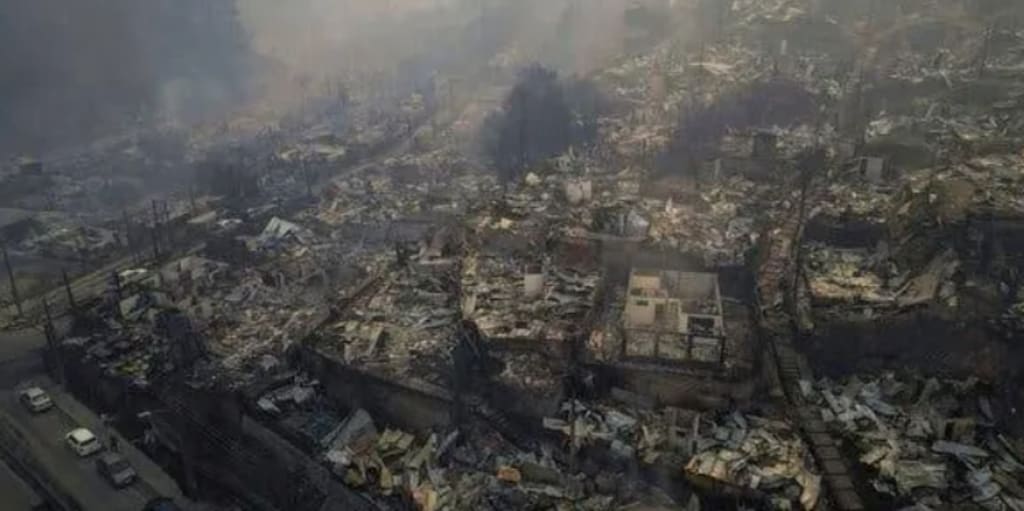
A desperate cry—“Come help us”—has echoed across parts of Chile as devastating wildfires tear through communities, leaving destruction, grief, and heartbreak in their wake. At least 18 people have been confirmed dead, with many more injured or displaced, as fast-moving flames consume homes, forests, and livelihoods. For thousands of families, life has been divided into a painful before and after.
Chile, a country long familiar with wildfires during its dry summer months, is once again facing a crisis that feels larger, fiercer, and more relentless than in years past. Fueled by extreme heat, dry winds, and prolonged drought conditions, the fires have overwhelmed emergency services and pushed communities to the brink.
A Rapidly Escalating Disaster
The wildfires spread with terrifying speed, leaving residents little time to react. Entire neighborhoods have been reduced to ash, and evacuation orders were issued as flames advanced toward densely populated areas. Survivors describe scenes of chaos—smoke-darkened skies, the roar of fire approaching, and families fleeing with only what they could carry.
In some areas, roads became clogged as people attempted to escape, while others were forced to shelter in place, hoping the fire would change direction. Firefighters and emergency crews worked around the clock, battling multiple blazes at once, often under dangerous and unpredictable conditions.
Despite their efforts, the scale of the fires proved deadly. The confirmed death toll of at least 18 people serves as a grim reminder of how quickly these disasters can turn fatal.
Communities Left in Ruins
Beyond the tragic loss of life, the wildfires have destroyed thousands of homes and structures, displacing entire communities. Schools, small businesses, and local infrastructure lie in ruins, threatening long-term economic and social consequences.
For many families, the loss is total. Decades of memories, personal belongings, and hard-earned property vanished in a matter of minutes. Shelters have filled with evacuees, and volunteers have rushed in with food, clothing, and basic supplies—but the needs continue to grow.
Rural communities have been especially vulnerable. Farmers report the loss of crops and livestock, dealing a severe blow to livelihoods that were already strained by drought and rising costs.
The Human Toll Behind the Headlines
Statistics alone cannot capture the depth of this tragedy. Behind every number is a story—a family searching for loved ones, an elderly resident who could not escape in time, a child asking when they can go home again.
Eyewitnesses describe neighbors helping neighbors, strangers opening their doors to those fleeing the flames, and volunteers risking their own safety to assist emergency responders. In the midst of devastation, these acts of solidarity offer brief moments of hope.
Yet the trauma remains. Mental health professionals warn that survivors may struggle with long-term psychological effects, including anxiety, grief, and post-traumatic stress.
Climate Change and a Growing Threat
While wildfires are not new to Chile, their increasing intensity and frequency raise urgent questions about climate change. Rising temperatures, prolonged droughts, and shifting weather patterns have created ideal conditions for fires to ignite and spread uncontrollably.
Experts warn that without significant action, such disasters may become more common—not only in Chile, but around the world. The current crisis highlights the urgent need for improved fire prevention strategies, better urban planning, and stronger early-warning systems.
It also underscores the importance of global climate action. What is happening in Chile is part of a broader pattern affecting countries across multiple continents.
Government Response and International Support
Authorities have declared states of emergency in affected regions, mobilizing military units, firefighters, and disaster response teams. Aerial firefighting efforts have been deployed, and additional resources continue to be sent to the hardest-hit areas.
International assistance has also begun to arrive, with neighboring countries and global partners offering support in the form of equipment, expertise, and humanitarian aid. While this help is crucial, officials acknowledge that recovery will take months—if not years.
A Long Road to Recovery
As the fires are gradually brought under control, Chile faces the daunting task of rebuilding. Reconstructing homes, restoring infrastructure, and supporting displaced families will require sustained commitment and resources.
For now, the priority remains saving lives and preventing further loss. But once the flames are extinguished, the deeper work begins—healing communities, honoring those lost, and preparing for a future where such disasters may no longer be rare.
The plea still resonates: “Come help us.” It is a call not only for immediate aid, but for long-term solutions to protect lives, land, and the generations yet to come.
About the Creator
Keep reading
More stories from Aqib Hussain and writers in The Swamp and other communities.
Macron to Seek Use of EU Anti‑Coercion Instrument Against the U.S.
In a bold move that could reshape the future of transatlantic relations, French President Emmanuel Macron is set to urge the European Union to activate its Anti‑Coercion Instrument in response to a fresh wave of U.S. trade threats. The announcement comes after U.S. President Donald Trump hinted at the possibility of new tariffs against several European nations over their reluctance to allow the United States to buy Greenland.
By Aqib Hussaina day ago in The Swamp
As Divisions Over Greenland Grow, Europe Examines Its Options
Europe is facing a growing diplomatic and strategic challenge as tensions over Greenland continue to escalate. The Arctic island, a semi-autonomous territory of Denmark, has long held strategic significance due to its location, natural resources, and role in regional security. Now, with renewed interest and pressure from the United States, European leaders are being forced to weigh their options carefully — balancing sovereignty, alliance cohesion, and global influence.
By Aarif Lashariabout 15 hours ago in The Swamp
Wild Card Weekend Recap: What Happens Now?
I think I figured out why I love Wild Card Weekend so much. It's because it's the first playoff anything of the calendar year. The NFL season starts in the fall, and once upon a time, the champion was crowned either on or slightly before New Year's. The evolution of the NFL schedule has resulted in the playoffs starting just into the New Year, and currently, the final week of the season falls on the first weekend of the New Year, with Wild Card Weekend coming a week after that. So yes, chronologically, the NFL's Wild Card Weekend serves as the first playoff anything of the calendar year.
By Clyde E. Dawkins6 days ago in Unbalanced



Comments
There are no comments for this story
Be the first to respond and start the conversation.