
Colossal 35-Metre Waves Detected in the Pacific Shock Oceanographers
How Satellite Technology Revealed Giant Waves and What This Means for Climate Science and Ocean Safety
Introduction: A Stunning Discovery From Space
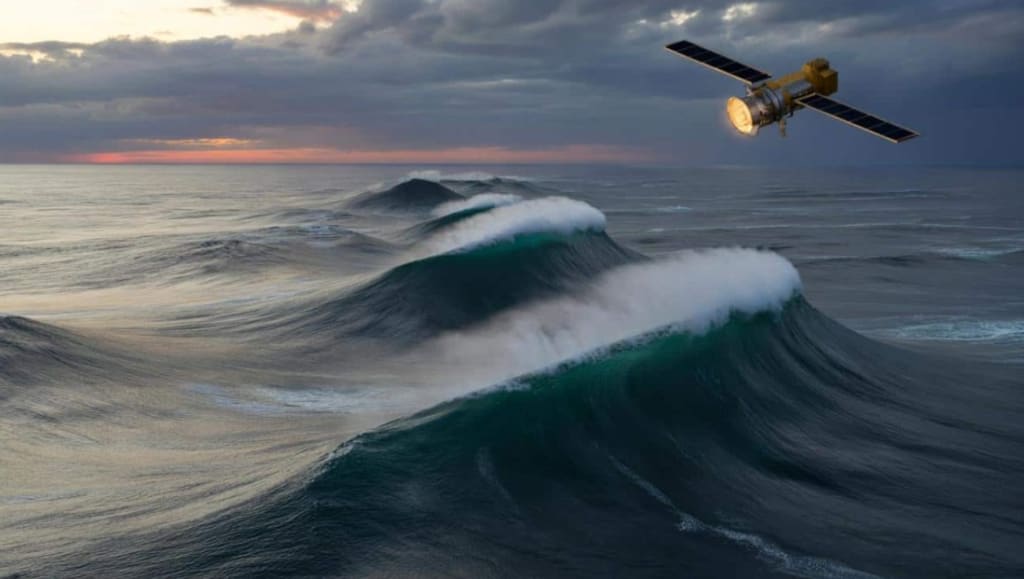
The world’s oceans are vast, mysterious, and often unpredictable. Recently, scientists made a shocking discovery: satellites detected massive waves reaching up to 35 meters high in the middle of the Pacific Ocean. These colossal waves stunned oceanographers and raised serious questions about ocean dynamics, climate change, and maritime safety.
A 35-meter wave is roughly as tall as a 10-story building. Such waves are rare and extremely dangerous, and detecting them in the open ocean highlights how powerful and unpredictable nature can be.
How Were These Giant Waves Detected?
Modern satellites are equipped with advanced radar systems that can measure sea surface height, wave patterns, and ocean currents from space. These instruments allow scientists to observe the ocean in real-time, even in remote areas where ships rarely travel.
The detected waves were recorded by satellite altimeters that measure the distance between the satellite and the ocean surface. When scientists analyzed the data, they found unusual spikes—indicating waves far larger than typical ocean waves.
Oceanographers were surprised because waves of this size are usually associated with severe storms or rare rogue wave events.
What Are Rogue Waves?
Rogue waves, also known as freak waves, are unusually large and unexpected waves that appear suddenly in the ocean. Unlike regular waves, rogue waves can be:
Extremely tall
Very steep
Unpredictable
Capable of damaging ships and offshore structures
For many years, rogue waves were considered myths or sailor stories. But modern science and satellite technology have confirmed their existence.
The 35-meter waves detected in the Pacific are among the largest ever recorded by satellites, making this discovery scientifically significant.
Why Do Giant Waves Form?
1. Powerful Storm Systems
Large storms, hurricanes, and cyclones can generate massive waves. When strong winds blow over long distances, they transfer energy to the ocean surface, creating towering waves.
2. Ocean Currents and Wave Interactions
When waves from different directions meet, they can combine to form a single, much larger wave. This phenomenon is called constructive interference, and it can produce rogue waves.
3. Underwater Geography
Seafloor features like ridges, trenches, and underwater mountains can amplify wave height. As waves travel over these structures, their energy can concentrate, making them grow taller.
4. Climate Change Effects
Climate change is increasing the intensity of storms and altering ocean currents. Warmer oceans provide more energy for storms, which can lead to more extreme waves.
Why This Discovery Matters
1. Maritime Safety
Giant waves pose a serious threat to ships, oil platforms, and coastal infrastructure. A 35-meter wave can:
Damage or sink ships
Destroy offshore structures
Endanger crew members
Understanding where and how these waves form helps improve safety guidelines and ship design.
2. Climate Science
Extreme ocean waves are indicators of changing climate patterns. Scientists use wave data to study:
Storm intensity
Wind patterns
Ocean energy transfer
Climate change trends
This discovery provides valuable data for climate research.
3. Coastal Risk and Tsunami Research
While rogue waves are different from tsunamis, studying extreme waves helps scientists understand ocean hazards better. Coastal communities rely on accurate data to prepare for storms and sea-level changes.
The Role of Satellites in Ocean Research
Satellites have revolutionized oceanography. Before satellites, scientists relied on ships and buoys, which could only cover small areas.
Today, satellites can:
Monitor global wave patterns
Track sea level rise
Measure ocean temperature
Detect storms and currents
Provide real-time data to researchers worldwide
The detection of 35-meter waves shows how powerful space technology has become in studying Earth’s oceans.
Are Giant Waves Becoming More Common?
Scientists are still debating whether rogue waves are becoming more frequent due to climate change. Some research suggests that:
Stronger storms could lead to higher waves
Changing wind patterns may increase wave extremes
Melting polar ice may alter ocean circulation
However, rogue waves have always existed. The difference today is that we have better technology to detect and measure them.
What This Means for Future Ocean Exploration
The discovery of massive waves opens new questions for scientists:
How often do such waves occur?
Can we predict rogue waves in advance?
How will climate change affect ocean wave patterns?
How can ships and offshore structures be designed to withstand extreme waves?
Researchers are now using satellite data, ocean buoys, and computer models to better understand these extreme events.
Human Impact and Ocean Awareness
The oceans cover more than 70% of Earth’s surface, yet much of them remain unexplored. Discoveries like this remind us of the ocean’s power and mystery.
They also highlight the importance of:
Protecting marine environments
Investing in scientific research
Preparing for natural hazards
Understanding climate change impacts
As human activities influence the climate, the oceans respond in complex and sometimes dangerous ways.
A Wake-Up Call for the World
The detection of 35-meter waves is not just a scientific curiosity—it is a reminder of nature’s strength. While technology allows us to observe these phenomena, predicting and controlling them remains a challenge.
For sailors, engineers, scientists, and policymakers, this discovery emphasizes the need for better monitoring systems, stronger infrastructure, and global cooperation in ocean research.
Conclusion: Nature’s Power Revealed From Space
The colossal waves detected in the Pacific Ocean have stunned scientists and captured global attention. Standing as tall as buildings, these waves show how dynamic and powerful Earth’s oceans are.
Thanks to satellite technology, we can now observe and study these extreme events, improving safety and expanding our understanding of the planet. As climate change continues to reshape weather and ocean patterns, such discoveries will become even more important.
The ocean is not just a beautiful blue expanse—it is a living, moving force that demands respect, research, and responsibility.
About the Creator
Why Black History Matters in America?
The United States of America is celebrating their 250th anniversary in 2026. I'm proud to be an American and as someone who was born here, I wouldn't imagine myself living anywhere else. This is a country where opportunities are possible. Where anyone can be successful in anything they desire to do. Equality, community, and togetherness are the backbones of what America is and should be about. However, we have an administration who wants to erase and disregard those who have made positive, meaningful impacts in our country, specifically Black figures, such as Martin Luther King, Jr., Rosa Parks, and Maya Angelou. President Trump and his administration have been constantly complaining and fighting against what they call the "Woke agenda". They use this excuse as a distraction from other issues they refuse to address, such as the high cost of living, climate change, and inflation. That equality is dividing America, when in reality, it's bringing us together. Being woke is not tied to a specific political party. No matter where you stand on the political spectrum, you can still care about other people and their plights. Compassion and empathy for others isn't tied to a political party, either. We were taught as children to treat others the way we want to be treated and not judge others because they're different from us. Caring about others isn't a personal attack on your beliefs. It doesn't make you any less of a person. People who are easily offended over African American figures, past or present, or anything related to it, are grasping at straws. Current and future generations need to know who people like Harriet Tubman and Shirley Chisholm were, especially in the classroom. Black History is part of American History. It should be recognized, not hidden or forgotten. Besides, you can't shield children from everything, just because your feelings are easily hurt.
By Mark Wesley Pritchard 7 days ago in The Swamp
Silver rate today: Silver price may correct 75% from peak in two years, say experts
Silver prices have been on a roller-coaster ride over the past few years, thrilling investors with sharp rallies while also reminding them of the metal’s notorious volatility. Now, market experts are sounding a stark warning: silver could correct as much as 75% from its recent peak within the next two years. This forecast has triggered intense debate among traders, long-term investors, and industrial users who rely on silver as both a financial asset and a critical raw material.
By Sadaqat Aliabout 14 hours ago in The Swamp




Comments
There are no comments for this story
Be the first to respond and start the conversation.