
China’s Next-Generation Stealth Frigate Achieves Operational Capability
A closer look at China’s newest stealth frigate and its growing naval power


A major step forward for China’s modern navy and regional maritime power
China has reached another important milestone in its naval modernization drive as its next-generation stealth frigate has officially achieved operational capability. The development signals a growing focus on advanced naval technology, improved combat readiness, and enhanced maritime presence. As global attention increasingly shifts toward the Indo-Pacific, this new class of warship highlights how China is reshaping its naval forces for future conflicts and missions.
The frigate is designed to operate in complex environments, combining stealth features, advanced sensors, and flexible mission capabilities. Its entry into service reflects China’s ambition to build a modern, blue-water navy capable of operating far beyond its coastline.
What Makes This Frigate “Next-Generation”?
Unlike older frigates that focused mainly on patrol and escort roles, China’s new stealth frigate is built for multi-domain operations. It can carry out anti-air, anti-surface, and anti-submarine missions, making it highly versatile.
Key characteristics of the new frigate include:
Stealth design to reduce radar detection
Advanced radar and sensor systems
Integrated weapon platforms
Improved command and control systems
The ship’s angular hull design and reduced superstructure help lower its radar signature, making it harder for adversaries to track. This reflects lessons learned from modern naval warfare, where detection often determines the outcome of a confrontation.
Operational Capability: What It Means
Achieving operational capability means the frigate is no longer in testing or trial phases. It is now fully integrated into the navy, with trained crews and combat systems ready for deployment.
This stage confirms that:
Weapons systems function as intended
Crew training meets combat readiness standards
The ship can operate independently or as part of a larger fleet
It is capable of real-world missions, not just exercises
For China, this marks a shift from development to active use, allowing the navy to deploy the frigate in regional patrols, joint drills, and potential overseas missions.
A Boost to the People’s Liberation Army Navy
The People’s Liberation Army Navy (PLAN) has undergone rapid expansion over the past decade. The addition of next-generation frigates strengthens the PLAN’s ability to protect sea lanes, escort carrier groups, and conduct maritime security operations.
Frigates play a crucial role in modern fleets. They are often used to:
Escort aircraft carriers and amphibious ships
Conduct anti-submarine patrols
Enforce maritime claims
Participate in international missions such as anti-piracy patrols
By upgrading its frigate fleet, China gains greater flexibility in deploying naval forces across different regions without relying solely on larger and more expensive destroyers.
Advanced Weapons and Technology
The new stealth frigate is equipped with modern missile systems, naval guns, and close-in defense weapons. These allow it to respond to threats from the air, sea, and underwater.
Notable features include:
Vertical launch systems (VLS) for surface-to-air and surface-to-surface missiles
Modern sonar systems for detecting submarines
Electronic warfare suites for jamming and countermeasures
Helicopter facilities for extended surveillance and anti-submarine operations
These capabilities make the frigate suitable for both defensive and offensive missions, increasing its value in high-intensity naval scenarios.
Strategic Significance in the Indo-Pacific
The operational deployment of this frigate comes at a time of heightened maritime competition in the Indo-Pacific region. With busy shipping lanes, disputed waters, and frequent naval exercises, the presence of advanced frigates enhances China’s ability to assert its interests.
From a strategic perspective, the frigate supports China’s goals to:
Maintain a strong presence in nearby seas
Protect trade routes vital to its economy
Respond quickly to regional security challenges
Demonstrate technological progress to rivals and partners
While frigates are not as heavily armed as destroyers, their numbers and versatility make them a powerful tool in sustained maritime operations.
Comparison With Other Navies
Many major naval powers are investing in similar platforms. Countries such as the United States, the United Kingdom, and Japan also rely on advanced frigates for escort and patrol missions.
China’s new frigate compares favorably in terms of:
Stealth features
Modern sensors
Cost-effective deployment
This places China among the leading nations in frigate development and reflects its growing confidence in domestic shipbuilding and defense technology.
Domestic Shipbuilding Success
Another important aspect of this achievement is China’s shipbuilding capability. The frigate was designed and built using domestic technology, demonstrating China’s ability to produce advanced warships at scale.
This success supports:
Faster fleet expansion
Reduced reliance on foreign technology
Continuous upgrades through local innovation
China’s shipyards are now among the busiest and most advanced in the world, enabling rapid construction and deployment of new naval assets.
Global Reactions and Implications
The operational readiness of the new frigate has drawn attention from defense analysts worldwide. While some view it as a natural step in China’s naval modernization, others see it as a sign of increasing competition at sea.
For neighboring countries and global powers, the development reinforces the importance of:
Monitoring naval capabilities
Strengthening alliances and maritime cooperation
Investing in advanced naval technologies
The frigate’s deployment will likely influence future naval planning and regional security strategies.
Conclusion
China’s next-generation stealth frigate achieving operational capability marks a significant milestone in the country’s naval development. Combining stealth, advanced technology, and multi-mission flexibility, the ship strengthens the People’s Liberation Army Navy’s ability to operate in modern maritime environments.
As global naval competition intensifies, this frigate represents more than just a new warship — it reflects China’s broader ambition to build a modern, capable, and globally active navy. Its operational deployment will shape regional dynamics and serve as a key component of China’s maritime strategy in the years ahead.
About the Creator
Fiaz Ahmed
I am Fiaz Ahmed. I am a passionate writer. I love covering trending topics and breaking news. With a sharp eye for what’s happening around the world, and crafts timely and engaging stories that keep readers informed and updated.
Keep reading
More stories from Fiaz Ahmed and writers in The Swamp and other communities.
In Beijing, Starmer and Xi Seek a Way Around a Volatile U.S
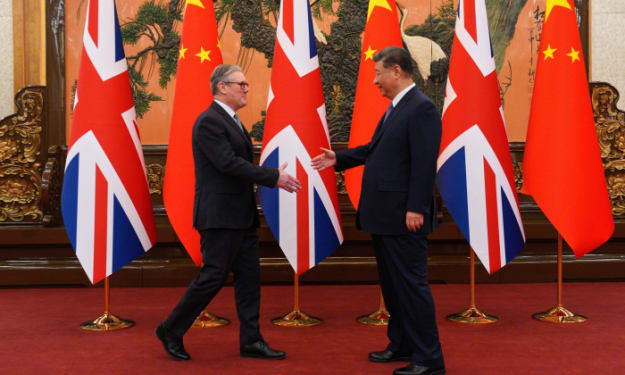
UK and China eye closer ties amid shifting global alliances British Prime Minister Keir Starmer traveled to Beijing in late January for a historic visit with Chinese President Xi Jinping, aiming to strengthen ties between the United Kingdom and China at a time when the United States appears increasingly unpredictable in its foreign policy. The visit has drawn attention around the world as leaders from both countries explore opportunities for cooperation and maybe a way to hedge against volatility in Western alliances. Reuters +1 This trip is the first visit by a British prime minister to China since 2018, marking a significant moment in UK diplomacy. Starmer and Xi met amid broader international tensions tied to trade, security, and geopolitical shifts involving the U.S., Europe, and Asia. Reuters Why Beijing Matters Now China is the world’s second-largest economy and a major global player in trade, manufacturing, and technology. For the UK, engaging with Beijing makes economic sense: China was one of Britain’s largest trading partners, with tens of billions of pounds in annual trade before the 2025 dip in global commerce. The Express Tribune Starmer’s delegation included business leaders from more than 50 firms — including banks, pharmaceutical companies, and carmakers — showing the economic aims of the visit. European companies have also been exploring closer ties with China, especially as the U.S. takes a more unpredictable stance on global trade. Reuters A Shift From Dependence on Washington? A key theme of Starmer’s visit was the idea that the UK should look beyond traditional dependence on the U.S. The U.S. and UK have long enjoyed a close partnership known as the “special relationship,” built on shared history, defense cooperation, and economic ties. Wikipedia However, recent actions by the U.S. under President Donald Trump — including threats to impose tariffs on allies and unusual policy moves — have made some British leaders question how reliable Washington will be as a partner in the long term. The Express Tribune Starmer has stressed that the UK will not choose between the U.S. and China, but will instead build independent relationships with both. This approach aims to protect Britain’s interests in trade, security, and global influence without being pulled exclusively in one direction. Reddit What Starmer and Xi Discussed At the heart of the Beijing meetings was an effort to build what Starmer called a “more sophisticated relationship” with China, one that includes economic cooperation but also honest dialogue where disagreements exist. Yahoo News UK Xi told Starmer that the relationship between China and the UK had seen “twists and turns” that did not serve either country but said that strengthening dialogue was essential in a “turbulent world.” He emphasized mutual respect and cooperation as the foundation for moving forward. Anadolu Ajansı Both leaders discussed the benefits of closer ties in areas like trade, climate change, and global stability — while acknowledging differences on issues such as human rights and national security. ABC News Security and Caution Though Starmer embraced economic cooperation with China, he also stressed that the UK must remain clear‑eyed about national security concerns. Before his departure, the prime minister said London will engage with Beijing but will not ignore potential threats posed by foreign interference or espionage. The Guardian This balanced approach seeks to reassure audiences in London and Washington that diplomacy — not domination by any single power — guides Britain’s foreign policy. Economic Goals and Business Interests Starmer’s visit wasn’t just political — it was strategic. The UK has focused on attracting Chinese investment into sectors like financial services, clean energy, and manufacturing. Business leaders accompanying Starmer made it clear that economic cooperation was a central goal. Reuters China also eased certain visa measures for UK visitors during the visit, a sign that Beijing is willing to make concessions to improve cooperation. AnewZ These moves aim to support British economic growth at a time when traditional markets have slowed and global competition for investment has increased. Criticism and Debate at Home Not everyone in the UK welcomes a closer relationship with China. Critics have raised concerns over human rights issues, including China’s policies in Hong Kong and Xinjiang, and the strategic implications of deepening ties with Beijing. ABC News Some British politicians and commentators worry that too close a relationship could compromise national security or weaken ties with traditional allies like the United States. Starmer has responded by saying that engagement — including discussion of disagreements — is more productive than isolation, and that robust diplomacy can address concerns without shutting down cooperation. Global Relevance of the Visit Starmer’s trip fits into a broader pattern: Western leaders are increasingly meeting with China as they navigate a shifting global order. Leaders from Canada, France, and other nations have also visited Beijing, seeking business opportunities and political cooperation. The Express Tribune This trend reflects a wider reevaluation of how Western nations balance relationships with both the U.S. and China amid changing geopolitical realities. Conclusion The visit of UK Prime Minister Keir Starmer and his discussions with Chinese President Xi Jinping in Beijing are significant not just for Britain and China — but for global diplomacy. In a time of uncertainty and shifting alliances, nations are exploring new ways to protect their interests while engaging with multiple global powers. Starmer’s approach suggests that the UK no longer sees itself as bound to a single path dictated by others, but instead aims to balance security, economic opportunity, and strategic independence. Whether this new direction will succeed remains to be seen, but the Beijing visit is a clear sign that global diplomacy is entering a new era of complexity and cooperation.
By Fiaz Ahmed 2 days ago in The Swamp
10 Times Rotten Tomatoes and I Disagreed
***Disclaimer*** I will be ranking these movies in the following manner: The greater the divide between Rotten Tomatoes and I, the higher up on the list (and I am referring to the critic's score, not the audience score). I will also show Rotten Tomatoes' score on each one in addition to my score. I am curious to know what everyone thinks, please let me know in the comments below!
By Madison "Maddy" Newton5 days ago in Geeks



Comments
There are no comments for this story
Be the first to respond and start the conversation.