
China’s Growing Influence in Southeast Asia: A Closer Look at Its Role in Cambodia and Thailand
From Trade to Diplomacy, China’s Expanding Footprint Is Reshaping the Future of Cambodia and Thailand

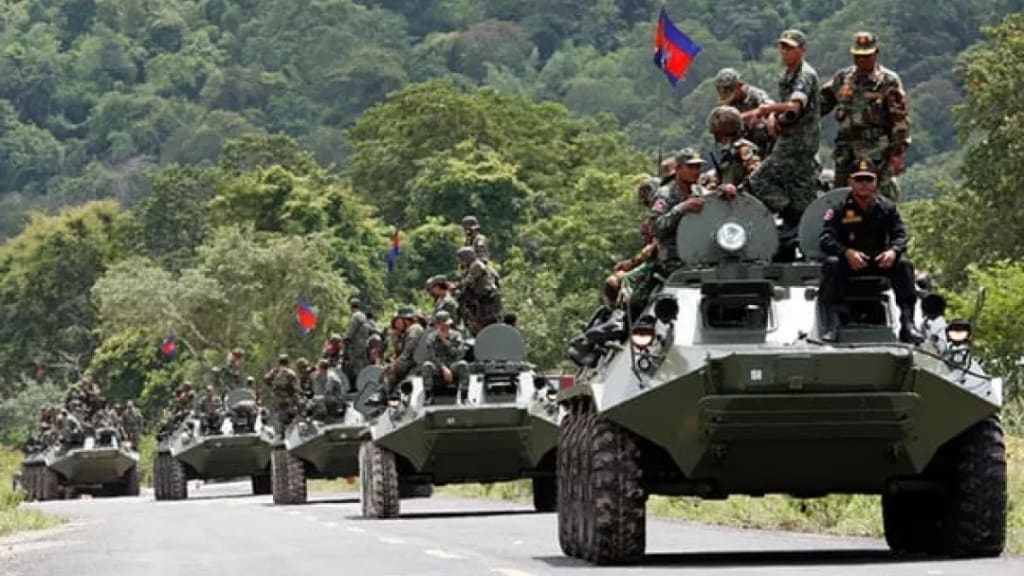
In recent decades, China has emerged as a dominant power in Southeast Asia, reshaping political alliances, trade relationships, and military partnerships across the region. Among the countries most significantly impacted by this rise are Cambodia and Thailand, two neighboring nations that have grown increasingly reliant on Chinese investment, technology, infrastructure development, and diplomatic backing.
China’s role in both Cambodia and Thailand is not merely economic — it is deeply strategic and multifaceted, affecting everything from foreign policy alignment to national security and regional cooperation. While many see this growing partnership as a win-win model for development, others raise concerns about dependency, loss of sovereignty, and shifting balances of power within ASEAN.
This essay explores the depth, nature, and consequences of China’s role in Cambodia and Thailand, examining how Beijing has positioned itself as an indispensable partner while expanding its geopolitical influence in mainland Southeast Asia.
Historical Background: The Evolution of China’s Ties with Cambodia and Thailand
China’s relationship with Cambodia dates back centuries, but it became particularly significant in the 20th century, especially during and after the Cold War. Despite ideological rifts in the past, Cambodia has grown extremely close to China since the early 2000s, primarily under the leadership of Prime Minister Hun Sen. Beijing supported Cambodia through aid, infrastructure, and political backing when many Western nations were critical of its domestic governance issues.
Thailand, on the other hand, has historically been a U.S. ally, especially during the Cold War, serving as a regional bulwark against communism. However, in recent years, as China’s economy has surged and U.S. interest in the region has wavered, Thailand has recalibrated its foreign policy, aiming for a more balanced and pragmatic approach — increasingly favoring closer ties with Beijing.
Economic Engagement: Belt and Road Initiative and Investment Power
One of the most visible elements of China’s role in Cambodia and Thailand is its economic engagement through the Belt and Road Initiative (BRI). China has poured billions of dollars into both countries, funding roads, railways, energy plants, and special economic zones.
In Cambodia, China is the largest foreign investor, responsible for major infrastructure projects like the Phnom Penh-Sihanoukville Expressway, hydropower dams, and major urban developments. Chinese investment in real estate and tourism, particularly in coastal cities like Sihanoukville, has transformed the landscape — both economically and demographically.
Thailand has also embraced BRI. The Thailand-China high-speed railway, connecting Bangkok with northeastern provinces and eventually with Laos and China, is a flagship project. Chinese companies are active in industrial parks, digital innovation, and energy cooperation across Thailand.
These investments have not only strengthened bilateral ties but also increased China’s strategic presence in the heart of Southeast Asia. However, they have also triggered debates about debt dependency, transparency, and environmental impact.
Political Influence and Diplomacy: Strategic Partnership or Soft Control?
China’s role in the domestic politics and foreign policy orientation of Cambodia and Thailand has grown significantly. Cambodia is often described as Beijing’s closest ally within ASEAN, frequently aligning with Chinese positions on regional matters, including the contentious South China Sea issue. Cambodia has, on multiple occasions, blocked ASEAN consensus on statements critical of China, demonstrating how Beijing’s support has translated into diplomatic influence.
This close alignment is mutually beneficial — Cambodia receives aid, military support, and investment, while China gains a loyal voice within ASEAN, helping it divide and dilute opposition to its regional ambitions.
In Thailand, the relationship is more nuanced. While Thai leaders often speak of “strategic partnership” with China, they have also sought to maintain ties with the U.S., Japan, and ASEAN neighbors. However, China’s “non-interference” policy and respect for sovereignty appeal strongly to Thai elites, especially in times of political uncertainty or military rule.
Chinese diplomacy in both countries often operates through people-to-people exchanges, cultural institutes (like Confucius Institutes), scholarships, and media cooperation, further building soft power and public goodwill.
Military and Security Cooperation: Quiet but Significant
Another growing area of Chinese influence is military cooperation. Cambodia has deepened its military ties with China through joint exercises, arms purchases, and training programs. Notably, speculation about a potential Chinese naval presence at the Ream Naval Base in Cambodia has raised alarm in the U.S. and among regional observers. While both countries deny permanent Chinese military presence, the pattern of construction and military aid suggests deepening defense cooperation.
Thailand, while still participating in U.S.-led military exercises like Cobra Gold, has increased arms purchases from China, including submarines and tanks. Thailand also conducts joint military drills with China, reflecting growing trust and interoperability.
China’s expanding defense ties in both nations provide it with strategic depth and a stronger presence in the Gulf of Thailand and the Mekong subregion — key corridors for trade and influence.
Cultural and Technological Presence: A Growing Soft Power Strategy
China’s role is not limited to politics and infrastructure. Beijing has also invested heavily in cultural diplomacy and digital technology across Cambodia and Thailand. From promoting Mandarin language programs to building smart city infrastructure, China is embedding itself into the social and technological fabric of these countries.
In Cambodia, many Chinese-run schools and Confucius Institutes operate across the country. Chinese television content, apps, and media are gaining popularity, especially in urban areas. In Thailand, Chinese apps like TikTok, WeChat, and AliPay are widely used, and Chinese tourists (pre-pandemic) formed one of the largest tourist demographics.
This soft power strategy enhances China’s long-term influence, especially among the younger generations who increasingly engage with Chinese platforms, entertainment, and education.
Concerns and Criticisms: Dependency, Sovereignty, and Transparency
Despite the many benefits, China’s growing role in Cambodia and Thailand is not without criticism. Concerns about over-dependence, loss of sovereignty, and lack of transparency in Chinese-funded projects are widely discussed among local and international observers.
In Cambodia, critics argue that Chinese investment disproportionately benefits elites and has led to social tension, especially in areas like Sihanoukville, where Chinese casinos and businesses dominate. The lack of regulatory oversight and the influx of Chinese workers have also sparked local resentment.
In Thailand, concerns about the quality of Chinese infrastructure, lack of technology transfer, and growing debt obligations have sparked public debate. Moreover, there is unease about China’s political system and whether closer ties could erode democratic values or civil liberties.
About the Creator
INAM ULLAH
Inam Ullah, BS in Computer Science and MS in Wireless Sensor Networks. Passionate about blogging, history, wars, and science. A lifelong learner with a curious mind and diverse interests.
Keep reading
More stories from INAM ULLAH and writers in The Swamp and other communities.
AI Automation: The Ultimate Key to Success in the Modern World
In the 21st century, success is increasingly determined not just by intelligence, talent, or resources, but by how efficiently one can adapt and integrate Artificial Intelligence (AI) into daily life. Across industries — be it education, healthcare, warfare, business, or even agriculture — automation powered by AI is rewriting the rules of engagement. It’s not just the future; it’s the present. Those who leverage it effectively will thrive. Those who resist or misuse it risk falling behind.
By INAM ULLAH6 months ago in Futurism
China’s Birthrate Plunges to Lowest Level Since 1949
China, long known for its staggering population, is now facing a demographic reality that could reshape its future. According to recent reports, the country’s birthrate has plunged to its lowest level since 1949, signaling a potential crisis not just for China’s economy, but for global markets that depend on its workforce.
By Muhammad Hassanabout 13 hours ago in The Swamp




Comments
There are no comments for this story
Be the first to respond and start the conversation.