
“China Matters”: Why Keir Starmer’s Beijing Visit Signals a Shift in UK Global Strategy
As the UK Labour leader heads to China with business leaders, his message reflects economic pragmatism, geopolitical recalibration, and a search for post-Brexit relevance
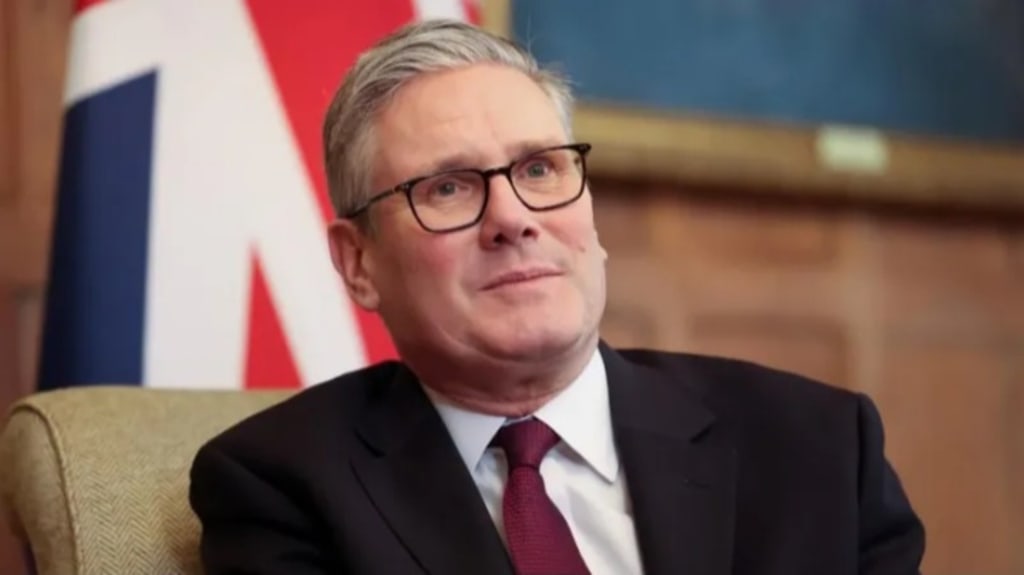
When Keir Starmer declares that “China matters,” he is doing more than stating the obvious. As he heads to Beijing accompanied by senior British business leaders, the Labour leader is sending a carefully calibrated signal: the United Kingdom, regardless of political party, cannot afford to ignore China’s economic gravity or its growing influence on the global stage. Starmer’s visit represents a notable moment in UK-China relations, one that blends economic realism with diplomatic caution.
For years, British politics has struggled to define a coherent China policy. Torn between security concerns, human rights issues, and economic opportunity, successive governments have oscillated between engagement and restraint. Starmer’s message suggests a shift toward a more pragmatic approach—one that recognizes China as both a strategic challenge and an indispensable economic partner.
A Pragmatic Turn in Labour’s Foreign Policy
Starmer’s leadership has been defined by his attempt to reposition Labour as a credible party of government. That effort extends beyond domestic policy and into foreign affairs. By choosing Beijing as a destination and bringing business leaders along, Starmer is emphasizing economic competence and international seriousness.
The phrase “China matters” is intentionally simple but politically loaded. It avoids ideological confrontation while acknowledging reality: China is the world’s second-largest economy, a central player in global supply chains, and a major actor in climate policy, technology, and international trade. For a country seeking economic growth after Brexit, engagement with China is not optional—it is strategic.
This does not mean Labour is abandoning concerns over human rights or national security. Rather, Starmer appears to be advocating a dual-track approach: standing firm on values while remaining open to dialogue and trade. This balance is increasingly common among Western nations recalibrating their China strategies in a multipolar world.
The Business Case for Engagement
The presence of British business leaders on the trip underscores the economic motivations behind the visit. UK companies operating in finance, green technology, manufacturing, education, and professional services all see China as a crucial market. Despite political tensions, bilateral trade between the UK and China remains significant.
For businesses, stability and predictability in political relationships matter. Starmer’s visit offers reassurance that, under a potential Labour government, the UK would pursue constructive engagement rather than isolation. This message is particularly important for sectors that rely on long-term investment and cross-border cooperation.
China, for its part, is eager to maintain strong economic ties with major Western economies amid global uncertainty. Starmer’s willingness to engage may be welcomed in Beijing as a sign that the UK is open to dialogue, even if disagreements persist.
Geopolitics in a Changing World
Starmer’s Beijing visit also reflects broader shifts in global geopolitics. The world is moving away from a strictly US-dominated order toward a more fragmented and competitive system. In this environment, middle powers like the UK must navigate carefully, balancing alliances with national interests.
The UK remains a close ally of the United States, particularly on security and intelligence matters. However, Washington’s increasingly confrontational stance toward China leaves limited room for nuance. Starmer’s message suggests that the UK should retain its own diplomatic voice, engaging China where possible while coordinating with allies where necessary.
This approach aligns with the thinking of several European countries that have adopted “de-risking” rather than “decoupling” strategies—seeking to reduce vulnerabilities without severing ties entirely. For the UK, such a strategy could help protect economic interests while managing strategic risks.
Domestic Political Calculations
Domestically, Starmer’s visit is also about perception. Voters want economic stability, growth, and competent leadership. By engaging with China on the world stage, Starmer is positioning himself as a statesman capable of handling complex international relationships.
At the same time, the move carries political risks. Critics may accuse Labour of being too soft on Beijing or prioritizing trade over human rights. Starmer will need to communicate clearly that engagement does not mean endorsement, and that dialogue can coexist with principled disagreement.
His challenge will be to convince both the public and Parliament that a mature China policy is not about choosing sides, but about protecting British interests in an interconnected world.
What This Means for the Future
Starmer’s declaration that “China matters” may well shape the tone of future UK-China relations. If Labour comes to power, this visit could be seen as a preview of a more stable, pragmatic, and economically focused foreign policy.
The UK’s relationship with China is unlikely to return to the optimism of the early 2000s, nor should it. The world has changed, and so have the stakes. But outright disengagement is neither realistic nor beneficial.
By heading to Beijing with business leaders and a clear message, Starmer is acknowledging a simple truth: global influence today is built not just on values or alliances, but on economic relevance and diplomatic engagement. In that sense, his words resonate beyond China—they speak to how Britain sees itself in a rapidly changing world.
About the Creator
Keep reading
More stories from Ayesha Lashari and writers in The Swamp and other communities.
Tearful Carol Kirkwood Announces Her Departure from BBC: A Heartfelt Farewell to a Beloved Meteorologist
In a tearful moment that touched the hearts of millions, Carol Kirkwood, one of the most beloved faces of BBC Weather, announced that she will be leaving her role at BBC. After decades of service, Kirkwood’s departure has left fans in shock, and her farewell message was both emotional and heartfelt, reflecting on her career and the joy she has experienced in her time at the broadcaster.
By Ayesha Lashari2 days ago in The Swamp
US Officially Leaves World Health Organization
The United States has officially withdrawn from the World Health Organization (WHO), marking a major shift in global health governance and international cooperation. The move, confirmed by US officials, ends decades of American membership in the world’s leading public health body and has sparked widespread debate about its consequences for global disease response, diplomacy, and public health funding.
By Aarif Lashari6 days ago in The Swamp



Comments
There are no comments for this story
Be the first to respond and start the conversation.