
China and Taiwan Relations Reach Breaking Point After New Military Drills
Rising military tensions spark global concern over stability in the Taiwan Strait.

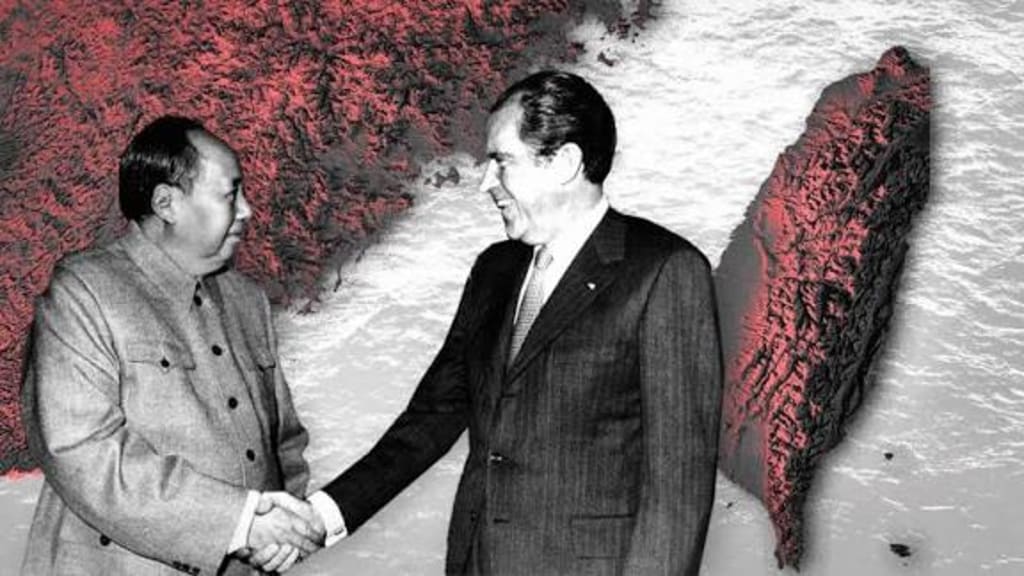
Tensions between China and Taiwan have escalated to a critical level following a new wave of large-scale Chinese military drills around the island. The exercises, described by Beijing as routine and defensive, have been viewed by Taipei and the international community as a direct show of force and a warning against any move toward formal independence. These latest actions have pushed already fragile relations closer to a breaking point, raising fears of miscalculation and conflict in one of the world’s most sensitive geopolitical hotspots.
The military drills involved naval vessels, fighter jets, and missile units operating in waters and airspace surrounding Taiwan. According to Taiwan’s Ministry of Defense, dozens of Chinese aircraft crossed the median line of the Taiwan Strait, a long-standing unofficial boundary meant to prevent direct confrontation. The drills simulated blockades, amphibious landings, and precision strikes, signaling China’s growing military preparedness and its determination to assert control over what it considers a breakaway province.
China’s leadership has repeatedly stated that reunification with Taiwan is a core national objective and that the use of force remains an option if peaceful means fail. Officials in Beijing argue that foreign interference, particularly from the United States and its allies, has encouraged Taiwan to resist reunification. The drills were widely interpreted as a response to recent diplomatic visits by foreign officials to Taipei and increased military cooperation between Taiwan and Western nations.
In Taiwan, the reaction has been one of heightened alert and concern. President and defense officials condemned the exercises as intimidation tactics designed to undermine the island’s security and democracy. Taiwan’s armed forces were placed on increased readiness, and air defense systems were closely monitoring Chinese movements. While leaders in Taipei emphasized their commitment to peace, they also reaffirmed their determination to defend the island against any threat.
The situation has drawn international attention, with the United States, Japan, and several European countries expressing concern over the rising tensions. The U.S. reaffirmed its support for Taiwan under existing security commitments, while calling on China to avoid actions that could destabilize the region. Regional neighbors fear that a conflict in the Taiwan Strait would disrupt global trade routes and economic stability, given the importance of the area for shipping and semiconductor production.
Analysts say the latest military drills represent a significant shift in China’s strategy, moving from symbolic displays of power to more complex and realistic combat simulations. These actions increase the risk of accidents or misunderstandings that could quickly spiral into open confrontation. Even a small incident involving aircraft or naval ships could trigger a chain reaction of political and military responses.
Economic consequences are also a growing concern. Taiwan plays a crucial role in the global technology supply chain, particularly in the production of advanced semiconductors. Any disruption caused by military conflict would impact industries worldwide, from automobiles to consumer electronics. Investors are watching developments closely, and financial markets have already shown signs of nervousness in response to the escalating crisis.
Public opinion in both China and Taiwan is becoming more polarized. In China, state media has framed the drills as a necessary measure to protect national sovereignty. In Taiwan, citizens are increasingly worried about their safety and future, while also expressing strong support for maintaining their political system and way of life. This divide makes compromise more difficult and deepens mistrust on both sides.
Diplomatic channels remain open, but meaningful dialogue has been limited. Efforts by international organizations and regional powers to mediate have so far produced little progress. The lack of direct communication between military leaders increases the danger of misinterpretation and rapid escalation during periods of tension.
Experts warn that the current trajectory is unsustainable. Without confidence-building measures or renewed talks, each new military action raises the stakes further. Some analysts suggest that both sides may be using displays of strength to influence domestic audiences as much as foreign ones, but such strategies carry serious risks.
In conclusion, the latest Chinese military drills have pushed China-Taiwan relations to one of their most dangerous points in decades. What Beijing sees as a show of resolve, Taiwan and its allies view as a threat to peace and stability. As tensions rise, the world watches anxiously, aware that the Taiwan Strait is not just a regional issue but a global one. The coming months will be crucial in determining whether diplomacy can prevail or whether this long-standing dispute moves closer to open conflict.
About the Creator
Fiaz Ahmed
I am Fiaz Ahmed. I am a passionate writer. I love covering trending topics and breaking news. With a sharp eye for what’s happening around the world, and crafts timely and engaging stories that keep readers informed and updated.
Keep reading
More stories from Fiaz Ahmed and writers in The Swamp and other communities.
Shipping Giant Maersk to Take Over Panama Canal Ports After Court Ruling
In a major development with far-reaching implications for global trade and geopolitics, Danish shipping giant Maersk is set to assume control of key port operations along the Panama Canal following a landmark ruling by Panama’s Supreme Court. The decision comes after long-standing contracts held by Hong Kong-based CK Hutchison were ruled unconstitutional, paving the way for Maersk’s subsidiary to temporarily operate the strategic Balboa and Cristóbal terminals at either end of the canal. Al Jazeera +1 The Panama Canal is one of the world’s most vital maritime chokepoints, handling nearly 40 percent of U.S. container traffic and about 5 percent of global seaborne commerce. Control of the adjacent port facilities has historically been a symbol of influence in global shipping routes and geopolitical power. Al Jazeera Court Ruling Ends Long-Standing Concession On January 30, 2026, Panama’s Supreme Court annulled the contracts granting CK Hutchison’s subsidiary, Panama Ports Company (PPC), the rights to operate the Balboa and Cristóbal ports. The court found that the concession — first awarded in the 1990s and extended most recently in 2021 — violated constitutional requirements and lacked sufficient competitive bidding and public interest safeguards. Investing.com The ruling effectively terminated nearly three decades of CK Hutchison’s involvement at these strategic terminals — a decision that will have ripple effects across the global shipping industry. The nullification also affects a planned $23 billion sale of CK Hutchison’s global port assets, involving major investors such as BlackRock and Mediterranean Shipping Company. ft.com Maersk Steps In as Temporary Operator In response to the court’s decision, Panama’s Maritime Authority confirmed that APM Terminals Panama — a local subsidiary of Maersk Group — will act as temporary administrator of the Balboa and Cristóbal ports once the concession formally ends. This move ensures operational continuity while the government prepares a new bidding process for long-term port concessions. s President, José Raúl Mulino, emphasized that port operations will continue without disruption during the transition period. He underscored the economic importance of these terminals to Panama’s economy and the global shipping network. mb.com.ph Maersk’s temporary stewardship reflects its deep experience in maritime logistics and container transportation, underscoring the company’s central role in global supply chains. The firm’s stewardship is seen as a stabilizing force, ensuring that trade flows through the canal region remain steady even amid legal and political upheavals. Geopolitical Context and Reactions The court’s ruling has stirred international debate, especially given the strategic significance of the Panama Canal region in U.S.–China competition. For years, the United States has expressed concern about Chinese influence over critical global infrastructure. Panama’s decision aligns with broader efforts to limit foreign control over strategic assets and reaffirm sovereign oversight of its key ports. isp.netscape.com Beijing has publicly criticized the ruling, with Hong Kong officials stating they “firmly reject” the decision and view it as hostile to legitimate business interests. Chinese authorities have vowed to protect the rights of their companies through appropriate legal channels. euronews Meanwhile, critics of the ruling argue that nullifying longstanding contracts could undermine investor confidence and legal certainty in Panama, potentially impacting future foreign investment. PPC itself warned that the decision could harm the welfare of thousands of Panamanian families dependent on port-related activity. taipeitimes.com Economic and Trade Implications The Panama Canal and its adjacent ports are linchpins of global maritime trade. Cargo moving between the Atlantic and Pacific oceans accounts for a significant share of international shipping — particularly for container traffic involving goods between Asia, Europe, and the Americas. Any disruption to port operations could have cascading effects on global logistics costs and supply chain efficiency. Maersk’s entry as a temporary operator may reassure markets and shippers that commercial continuity remains a priority. By maintaining the operation of the Balboa and Cristóbal terminals, Maersk helps ensure that cargo flows through one of the globe’s busiest trade arteries will not be interrupted. KOB.com The transition also highlights the competitive nature of global port management. As nations and multinational corporations vie for influence over key logistics hubs, companies like Maersk — with extensive expertise in port operations and maritime transport — are well positioned to play pivotal roles in shaping the future of international trade infrastructure. Looking Ahead Panama has signaled that a new tender process will soon be launched to award long-term operating contracts for the canal’s major ports. This open process aims to attract top global logistics firms and ensure that future concessions serve Panama’s strategic interests while promoting efficient and secure global trade. KOB.com In the meantime, Maersk’s temporary administration of the canal’s ports marks a major shift in the region’s maritime dynamics. It underscores how legal decisions can quickly reshape economic and geopolitical landscapes — especially when involving critical infrastructure that underpins global commerce. As Panama navigates this transition, stakeholders around the world will be watching closely how the new port concession process unfolds and how it might influence the balance of power in global shipping and trade.
By Fiaz Ahmed about 24 hours ago in The Swamp
Exclusive: Trump Says Iran Wants a Deal as U.S. “Armada” Arrives
In a revealing development that adds a dramatic new chapter to U.S.–Iran relations, U.S. President Donald Trump has stated that Iran is interested in negotiations, even as the United States positions a large naval force — described by Trump as an “armada” — near Iranian waters. The comments, made in a recent interview with Axios and reported across major outlets, come during one of the most volatile periods in the region’s recent history.
By Salaar Jamali5 days ago in The Swamp



Comments
There are no comments for this story
Be the first to respond and start the conversation.