
Canada, Exposed
What Monday's Election Says About Us

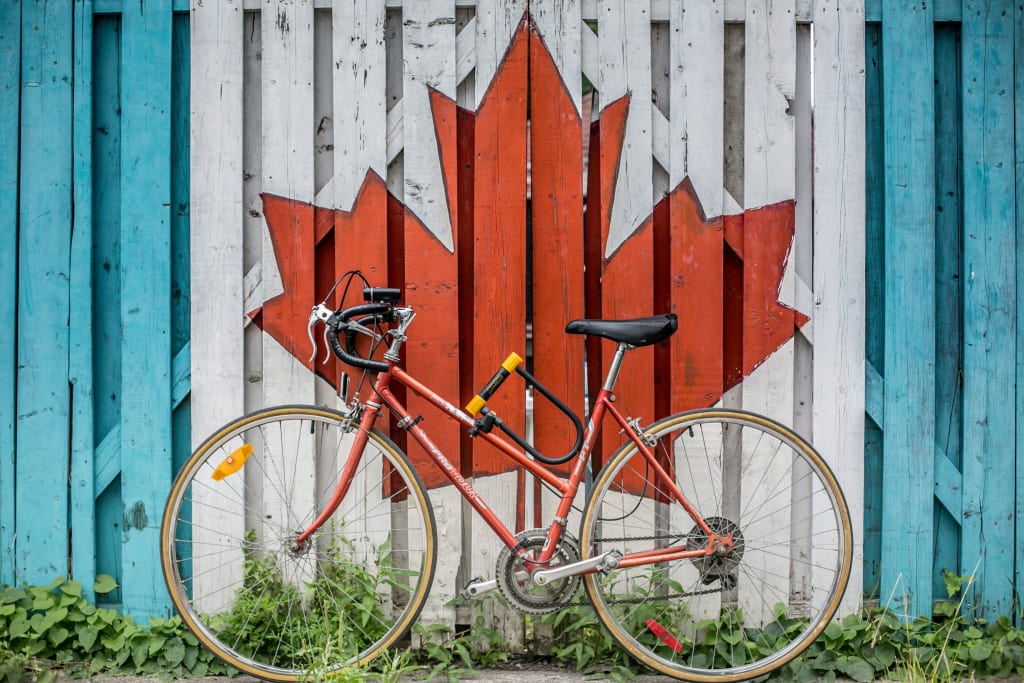
Some people were surprised at the results of Monday’s Federal Election, when Justin Trudeau’s Liberals retained power, albeit in a minority government. I have to say, I wasn’t. Many would ask, how could a man so awash in scandal, so obviously shallow, so egregiously out of his depth, be re-elected?
It’s easy, really. The voters had their minds made up going in, and didn’t change them. They’ve concluded that all politicians are liars, and with the candidates making promises left, right, and centre, they also concluded something else.
This election was all about “me.” Whatcha gonna give me, eh?
Canada is not a unified federal state. It never has been, and, thanks in large part to geography and language, it never can be. On the map, it looks like a big, broad, bruiser of a country. That’s deceiving. Most of the land on the map is essentially unlivable. 90% of Canada’s 37 million people live on a tiny, 100-kilometre-wide strip that hugs the US border from the Pacific to the Atlantic. That strip is long and fragile. And people on one end of it, don’t see things the same way as the people on the other end of it. That’s a fact we like to try and avoid.
We pretend that hockey, Tim Hortons, and the Tragically Hip hold us together. But these are essentially trivialities. When it comes to who should run the country, and how it should be run, we do not agree. And, increasingly, the way we think things should be run is for our own benefit.
Let’s work our way east to west, shall we? The Maritime Provinces, Newfoundland and Labrador, Nova Scotia, Prince Edward Island, and New Brunswick, are generally safe Liberal territory. The Liberals keep the powerful Irving conglomerate happy, and do not trouble Newfoundland’s oil and gas industry in the way they love to mess with Alberta’s. In fact, in PEI and Newfoundland on election night, it would appear that voters were unaware there was another party besides the Liberals, if their voting patterns were any indication.
Quebec. Ah, mais oui (but yes), the “special case.” Recognized as a “distinct society," with control over its own pensions and immigration, Canada’s majority French enclave frustrated the hopes of anti-Liberals by turning to the separatist Bloc Quebecois instead. The time spent pandering to Quebec’s inflated sense of grievance, and the delicate work of ignoring Bill 21, an anti-religious symbols law that would have been denounced as bigotry anywhere else, was wasted for the Conservatives and the NDP.
See, Quebec, better than any other Canadian province, gets the racket that is Canada. Complain, stomp your feet, and pretend you want to leave, and people will pay attention. To the tune of 13 billion dollars a year in equalization payments, at least partially from Alberta and Saskatchewan, provinces that have suffered since North America decided domestic oil production was evil but Saudi oil was swell. This pretty much blatant extortion guarantees three things:
1. Quebec gets lots of shiny things other provinces don’t get, like subsidized daycare.
2. Quebec will therefore, continue to vote for its own interests, and only that.
3. The rest of the country, though not admitting it, will hate Quebec.
And Quebec does not like pipelines. Despite the fact that a small town in Quebec was recently wiped out by an out-of-control oil train, with grievous loss of life, non, pipelines are the devil’s work. This is the main motivating factor in the Liberals’ yes/no/maybe attitude to getting Alberta’s oil to market. One must not displease Quebec.
Ontario is the largest and most populous of Canada’s provinces. Though westerners sometimes regard Ontario as being another monolith of think-alikes united against their interests, the picture is actually more complex. In this election, large swathes of rural and suburban Ontario went Conservative blue. The thinking in these areas is not too different from what you’d hear in Saskatchewan.
But. Toronto.
Toronto, the country’s most populous city, is a testament to Canada’s “more is better” immigration policy. It is the most diverse city in the world, except in one respect. In this election, it was pretty solidly Liberal.
The Liberals are the party that brought in grandma, and they don’t let you forget it. Despite the fact that no Canadian government on either side of the aisle in the last fifty years has ever challenged the almost religious belief in immigration being an unqualified good, the Liberals still make great hay out of the murky, unspecified threat of the Conservatives not being quite as welcoming. They might, you know, do something. Can’t have that.
And so, recent immigrants love the Liberals, and young Trudeau specifically. More settled immigrants may question why their neighbourhoods are free-fire zones, and just what they are getting for their taxes, but if they are supplanted by newcomers at a greater rate, and they get their citizenships within the election cycle, say three years instead of five, then problem solved!
Also, the Conservatives might do something… something about abortion, or maybe gay rights. Sure, they say they won’t, and the last Conservative government didn’t, but they can’t be trusted. This is enough, when combined with a magic-wand promise to ban the legal guns almost never involved in Toronto gun crime, to woo the 905 set.
The Prairies is where Liberal luck runs out. Starting in Manitoba, then accelerating in Saskatchewan and Alberta, the blue tide accelerates and wipes out Liberal representation. Trudeau is hated in oil country, perceived as the pawn of Quebec and foreign anti-energy celebrities and lobbyists. Hated like his father was. Albertans have noticed that Trudeau was willing to risk the fall of his government to save 8000 jobs in Montreal in the SNC-Lavalin scandal. But he was unwilling to do much of anything to save 100,000 jobs in Alberta’s oilpatch. It seems that the Trudeau senior slogan of “Forget the west, we’ll take the rest” is actual policy.
But now, Alberta and Saskatchewan are left without any representation in government. Not the first time this has happened. Dark mutterings of separation are being heard.
If Alberta is Canada’s Texas, then British Columbia is its California. In the north and interior, Conservatives are popular among ranchers, loggers, and energy workers. But the urban ridings of Vancouver have some of the same love for Trudeau seen in Toronto, and Vancouver Island is a hippy enclave of Green Power. No pipelines or tankers for us, thank you very much. The Liberals got just enough support out here to save their bacon, when combined with their stellar performance in Toronto.
The result is a splintered and mutually suspicious conglomeration of regions. Trudeau is delusional if he really thinks, as he said on Monday night, that he’s been given a mandate to govern. He owes his success to a friendly press, a resurgent BQ, and a lackluster Conservative leader. I’d say there was a chance to salvage things, if he played his cards right, but this is Trudeau we’re talking about. When comes to cards, his skill level is strictly “Go Fish.”
Look for Canadian politics to become more divisive, uglier, and more populist in the years to come. That fragile, 100 KM band of a nation could be stretched to the breaking point.
About the Creator
Grant Patterson
Grant is a retired law enforcement officer and native of Vancouver, BC. He has also lived in Brazil. He has written fifteen books.
Keep reading
More stories from Grant Patterson and writers in The Swamp and other communities.
Mother Corp Makes the Case for Her Own Extinction
Sometimes, it's hard to let go of a national icon. All countries confront this problem, in one way, shape, or form, eventually. And now, in 2019, Canada comes face-to-face with a reality it has long dreaded. We no longer need the Canadian Broadcasting Corporation.
By Grant Patterson6 years ago in The Swamp
The Saddest Thing - The Billionaires Who Rule America Aren't Even Enjoying Themselves
This single post says more about our ruling class than a thousand policy papers. The saddest thing about today's system is that the men robbing the rest of us - sabotaging our economic prospects, our pensions, our access to affordable healthcare - are not even happy.
By Scott Christenson🌴24 days ago in The Swamp
EU Sanctions Russian Officials as Hungary Blocks Funds to Ukraine
In a tense session that underscored the European Union’s internal divisions, EU member states imposed fresh sanctions on Russian officials linked to the ongoing conflict in Ukraine, even as Hungary blocked a portion of funds intended to support Kyiv’s war effort. The move highlights both the bloc’s commitment to pressuring Moscow and the political fractures that complicate collective action. The sanctions target several high-ranking Russian politicians and military figures accused of facilitating or enabling military operations in Ukraine. Measures include travel bans, asset freezes, and restrictions on financial transactions within the EU. The European Council described the action as “a necessary step to hold accountable those responsible for destabilizing the region and perpetuating the war.” EU officials emphasized that the sanctions are part of a broader strategy to maintain economic and political pressure on Russia, following months of escalating conflict. “We are demonstrating unity in condemning aggression and in supporting the sovereignty of Ukraine,” said an EU diplomat familiar with the discussions. Hungary’s Block and Internal Disputes At the same time, Hungary, long criticized for its close ties to Moscow, has blocked disbursement of certain EU funds allocated to Kyiv. Prime Minister Viktor Orbán cited concerns over financial oversight and alleged inefficiencies in the use of the funds, although critics argue that the move is politically motivated. “The decision undermines European solidarity,” said a European Commission spokesperson. “EU funds are designed to support a country under attack, and blocking these resources contradicts the shared principles of the Union.” The standoff exposes persistent challenges in coordinating EU foreign policy. While the bloc often speaks with one voice on paper, differing national interests, political alliances, and domestic pressures can complicate unified responses to crises. Impact on Ukraine and the War Effort For Ukraine, the timing of the partial block is problematic. The funds in question were intended for critical infrastructure repairs, humanitarian support, and military aid. Kyiv’s government expressed disappointment but maintained that international assistance remains vital. “We rely on our partners to help sustain our people and defense capabilities,” said a Ukrainian government official. “Every delay in support weakens our ability to respond to aggression and protect civilians.” The sanctions on Russia, however, were broadly welcomed in Kyiv. Analysts suggest that targeting individual officials and freezing assets could deter further escalation and signal that the international community is watching. “While sanctions alone won’t end the war, they send a strong message that those responsible cannot operate freely or enjoy the benefits of their positions,” said a policy analyst in Brussels. EU’s Strategic Calculus The dual actions — sanctions on Russian figures and the partial freeze of funds to Ukraine — illustrate the EU’s delicate balancing act. Brussels must uphold its commitment to Ukraine, maintain economic stability within the bloc, and navigate member states’ divergent political stances. Some EU officials hope that Hungary’s objections can be resolved through negotiation, emphasizing enhanced monitoring and reporting requirements for fund usage. Others warn that prolonged resistance could embolden Moscow and undermine the EU’s credibility as a unified actor. Looking Ahead Observers expect the coming months to be critical. With sanctions likely to expand and political negotiations ongoing, the EU faces a test of both its internal cohesion and its ability to influence the trajectory of the war in Ukraine. The situation also serves as a reminder that European solidarity is not guaranteed and must be actively maintained amid competing domestic and international interests. As Ukraine continues to face Russian military pressure, the international community watches closely. The EU’s ability to reconcile internal disagreements while sustaining support for Kyiv may prove decisive in shaping the region’s stability and the long-term geopolitical balance in Eastern Europe.
By Fiaz Ahmed 7 days ago in The Swamp
Trickle Them Down, But Not Out
The thing about smart people is that they should know better, but alas, intelligence is not the same as wisdom. Not only do the mistakes of experts too short on vision—when they are not corrected—have the potential to do great and far-reaching damage, but they also undermine public confidence in the very notion of expertise. This is particularly so when expertise is wielded in defence of the rich and powerful as a cudgel against those laid low. As an academic, this lack of faith in “so-called experts” is painful to see as it plays out in the spread of dis-/misinformation, conspiracy theories, and anti-intellectualism writ large. But it is also an understandable impulse given the catastrophic failure of an economic ideology pushed by certain economic experts. Supply-side economics has shaped a broken system for the last half-century and has arguably done more to undermine the fabric of the American Dream than any policy framework of the past century.
By Cory Wright-Maley6 days ago in Humans


Comments
There are no comments for this story
Be the first to respond and start the conversation.