
Can You Still Trust the News?
Here’s How to Know What’s Fair and What’s Not

In today's modern day and age of a million different ideas, articles, and news sources, it can seem impossible to know what sources are accurate. Rest assured, you are not alone in these worries, as struggling to determine the validity of news media is a widespread problem these days, especially with media bias. While no journalistic media outlet is 100% perfect in factual accuracy or completely free from bias, there are various ways to determine the reliability of news articles and outlets.
Determining outlets' reliability, bias, and factual accuracy is crucial for maintaining an accurate worldview. This article aims to help you understand how to determine the bias and reliability of specific news sources and articles. While there is no "magic bullet" to assess accuracy, there are various ways to determine the reliability of news sources and decrease the risk of falling for false or misleading information.
Why Trust In The News Has Eroded
Unfortunately, trust in the news has significantly degraded today and will likely continue declining. Oddly, the average person reading this article here also distrusts mass media and believes it is unreliable. According to Gallup, only 34% of Americans have " a great deal" or "fair amount" of trust in news media, while 38% have "no trust at all" in news. These statistics remind us that our sources of what should be one of our most effective ways of determining objective reality are rightly or wrongly greatly mistrusted. To assess the accuracy of journalistic media, we must first uncover the contributing factors to why the media is so mistrusted. Some of the factors that have led to media mistrust are:
The politicization of news and newsrooms has led to a divide over what is considered trustworthy news. Those who listen to FOX have a different view than those who listen to MSNBC, and partisan divide leads to higher bias and lower factual news delivery. Another contributing factor is the rise of clickbait and misinformation. With distrust in mass media and the rise of the internet, it becomes much easier for conspiracy theories, clickbait, and misinformation to thrive, further lowering trust in media. Finally, with such a large media market today, vast political polarization and news echo chambers reign over trust in news media. These factors lead to great distrust of news, making it harder to determine factual accuracy and what news sources to trust.
What Does it Mean for News to Be Fair?
Fairness reporting does not automatically take sides due to bias but instead determines the truth based on factual, specific information. There are several factors that must be noted regarding fair and objective reporting in news media. The difference between objective journalism and opinion pieces is perhaps the most significant. Objective journalism is reporting on a situation's facts and knowledge, whereas an opinion piece is the opinion of the article's author.
An example would be in an outlet like the Washington Post, which has objective and opinion pieces. Another essential consideration is the difference between fair reporting and a false balance. Just because there are two sides to an opinion on a topic, even a politically divided one, does not mean that both sides are equally factual. One example of a false balance might be a journalistic piece on "the evolution debate," presenting both sides as similarly supported despite 98% of scientists supporting the view that evolution is real. Journalistic bias is not binary but a spectrum. All news has some bias, but not all news sources are equally biased. For instance, InfoWars and NBC News may have biases, but not to the same degree.
Understanding Media Bias: Types and Examples
To fully understand media bias, however, it is necessary to understand the various types of ways in which sources may be biased. One example of bias in news is framing bias, or how an issue is framed. One news outlet might frame in its headlines a war, another defense, another an invasion, another fighting terrorists. How an article title or article itself is framed can often present a bias. Another example of bias in news media is selection bias, or what stories are covered or omitted.
A right-biased outlet might omit stories harmful to a right-wing candidate, and a left-wing outlet vice versa. Confirmation bias is when news articles or outlets give readers only the stories they already believe rather than objective stories. Spin or Loaded language are stories with deliberate, emotionally charged speech and vague language specifically meant to sway a reader to one side without presenting factual information. Partisan bias is media with an ideological alignment that affects objective reporting, rather than media that is heavily biased towards one side. Various news outlets might have different framing or take on the same issues due to partisanship and ideological bias.
For example, regarding something like Israel's recent actions, like food blockades in Gaza, the Guardian, a left outlet, will have a vastly different framing than Fox News, a right outlet. Fox News would likely frame issues on blockaded aid from the perspective of the Israeli government. In contrast, The Guardian would likely frame issues from the perspective of those who believe Israel is committing atrocities or genocide. With this in mind, it is vital to note that there are places such as Biasly that help determine the media bias and credibility of news organizations and articles. Biasly is a non-partisan media-bias-checking site with numerous interpretive tools, including the Media Bias Chart, and many more. Platforms like Biasly help determine factual accuracy and bias in the news media.
How to Evaluate a News Source Yourself
Evaluating news may be interesting, but how exactly am I, your average Joe or Jane, supposed to improve my media literacy? You may be wondering. Rest assured, there are many ways to learn and determine how to notice media accuracy and inoculate yourself from misinformation! There are several important ways to evaluate news credibility when searching for accurate news sources, which will vastly improve factual accuracy.
One such way is relatively simple: reading about who owns the outlet. If an outlet is owned by someone who has previously proven trustworthy or untrustworthy regarding facts, then that can help determine the outlet or source’s accuracy. Another way to determine factual accuracy is to see if the journalist is named and what, if any, sources are cited. Named journalists have a record and past journalism that can be analyzed, and the works cited publicly are much more reliable than anonymous sources.
Are opposing views frequently presented, or are one-sided views disproportionately represented? What is the language of the piece? Does it show a more neutral and non-slanted stance, or is it emotionally charged and meant to rile the reader up? Finally, and most usefully, can the facts be cross-checked and verified with other dependable sources, or can they be backed up through other works?
A number of useful or helpful news bias rating sources can help determine reliability in the media. One such example is Biasly’s Bias Checker that lets you detect bias in a news article from just the URL. It’s simple, just put the URL in the box and the AI-powered Bias Meter will determine the bias and reliability score of the article.
Though there is no one tactic to decide how to evaluate news credibility, various tools and tricks can considerably increase the odds of a healthy media diet.
How Bias Affects Public Perception and Democracy
All this may be good, but why must it go through all that effort? What's the harm if you don't have an accurate media diet? Who cares if people don't trust or cannot rely on fact-based media? What's the real harm? Unfortunately, being unable to determine actual news or trust in unbiased media can have dire consequences. A distorted or heavily biased news media can, and has, led to a vast increase in political polarization. Distrust in the media also tends to vastly increase distrust in democracy, leading to increased political extremism and potential democratic collapse.
A distorted news media also inevitably distorts public understanding of issues, leading to a dangerous, undereducated public, or with manufactured consent for very harmful ideas. According to the Pew Research Center, mass media consumption has drastically declined in the last 20 years.”Meanwhile, many traditional news organizations have struggled. In 2004, daily weekday news circulation in the US totaled 55 million. By 2022, that had fallen to just 21 million." Better media literacy is vital because evaluating reliable news sources objectively is the most critical tool for countering misinformation.
Through the steps and tricks detailed above, you can be an aware reader and substantially increase your interpretation of reliable news starting today. There are, unfortunately, no perfect sources, but with the right tools, you can learn to differentiate fact from fiction. One of the benefits of using these tools is the ability to make informed judgments and to gain a more fact-based approach to the world. Another vital gain is the ability to observe diverse viewpoints, which reduces the odds of falling into a media bias echo chamber. Finally, it can help avoid a pitfall we all are unfortunately capable of, which is falling to manipulation by unreliable sources. So, the next time you're looking for reliable and unbiased news, check out a trustworthy bias checker to determine the accuracy of the news source.
About the Creator
Keep reading
More stories from Bella Clum and writers in The Swamp and other communities.
Inflation in Pakistan
Inflation in Pakistan is more than a buzzword; it is a grave reality for most Pakistanis. The rising costs are becoming a daily struggle, a kitchen table crisis, and a constant threat to the country’s fragile economy. Increasing fuel and transport costs, skyrocketing costs of basic grocery, and the constant squeeze of energy bills has now made life very difficult and complex for the average countryman.
By Bella Clum11 months ago in The Swamp
Parallel Protests
I haven't written for quite some time, but I have A LOT of thoughts about yesterday's protest rally against our government's involvement and complicity in America's war on Iran, on the harbourside of my home city Bristol, and I need to put them somewhere. My gorgeous girlfriend is always a loving and listening ear and sharing it all with her will always be a healthy and happy way of processing the mental and emotional weight, but getting it straight in my brain to share means writing it all down in straight lines, so, here we are and thanks for being here.
By Steph Cole6 days ago in The Swamp
US and Mideast Countries Seek Kyiv’s Drone Expertise as Russia-Ukraine Talks Put on Ice
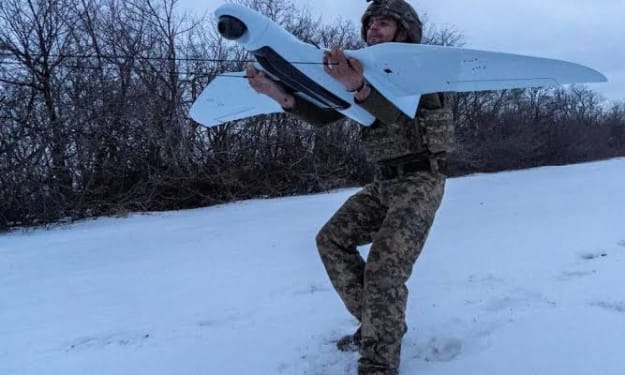
The ongoing war in Ukraine has unexpectedly transformed Kyiv into one of the world’s most influential centers of drone warfare expertise. Now, as tensions escalate in the Middle East and diplomatic talks between Russia and Ukraine stall, the United States and several Middle Eastern countries are turning to Ukraine for help in defending against drone attacks. According to Ukrainian President Volodymyr Zelenskyy, governments in both Washington and the Gulf region have approached Kyiv seeking guidance on how to counter Iranian-made attack drones. Over the past four years of war with Russia, Ukraine has gained extensive battlefield experience defending its cities, infrastructure, and military positions from waves of unmanned aerial vehicles used by Russian forces. These drones — many of them based on the Iranian-designed Shahed drone — have become a defining feature of the conflict. Russia has launched tens of thousands of them against Ukrainian targets since the invasion began in 2022, forcing Ukraine to rapidly innovate new defensive techniques and technologies. In recent weeks, Zelenskyy said he held discussions with leaders from several Middle Eastern countries, including the United Arab Emirates, Qatar, Bahrain, Jordan, and Kuwait. These governments are increasingly concerned about the threat posed by Iranian drone technology in the region and are eager to learn from Ukraine’s combat-tested experience. The interest comes as tensions in the Middle East have intensified following a new round of hostilities involving Iran. Iranian drones have been deployed in attacks across the region, raising alarms about the vulnerability of critical infrastructure such as oil facilities, airports, and power plants. Ukraine’s response to similar threats has relied on a combination of innovation and necessity. Because traditional air-defense systems are expensive and limited in supply, Ukrainian engineers and military planners developed alternative strategies. These include electronic warfare systems that jam drone signals, mobile anti-aircraft units, and even specialized interceptor drones designed to hunt down and destroy incoming UAVs. One particularly notable innovation has been the development of extremely low-cost counter-drone systems. Some Ukrainian interceptor drones cost as little as $1,000, making them far cheaper than conventional missile-based defenses that can cost hundreds of thousands of dollars per shot. This affordability has drawn the attention of military planners around the world. In modern conflicts where drones are used in large numbers, traditional missile systems can quickly become economically unsustainable. Ukraine’s approach — combining inexpensive technologies with layered defense strategies — has shown how countries can defend themselves against mass drone attacks without exhausting their defense budgets. The new cooperation discussions also reflect a broader geopolitical shift. Ukraine’s experience in drone warfare has effectively turned the country into a laboratory for modern combat technologies. Lessons learned on Ukrainian battlefields are now influencing defense strategies far beyond Europe. At the same time, Kyiv is carefully weighing how much assistance it can provide. Zelenskyy emphasized that any sharing of expertise or equipment must not weaken Ukraine’s own defensive capabilities. The country remains locked in a prolonged war with Russia, and protecting its airspace remains the top priority. “We help defend those who help Ukraine bring a just end to the war,” Zelenskyy said in remarks outlining Kyiv’s approach to international cooperation. Meanwhile, diplomatic efforts to end the war between Russia and Ukraine have been put on hold. A new round of U.S.-brokered talks had been expected to take place this week, but the escalating crisis in the Middle East has diverted international attention and delayed negotiations. The pause in diplomacy underscores how interconnected global conflicts have become. Developments in one region can quickly reshape the strategic landscape elsewhere, drawing new actors into existing conflicts. For Ukraine, the sudden demand for its expertise represents both an opportunity and a challenge. On one hand, sharing its knowledge could strengthen alliances and expand its global influence. On the other, Kyiv must balance those partnerships with the urgent demands of its own war effort. As drone warfare becomes an increasingly dominant feature of modern battlefields, Ukraine’s experience may prove to be one of the most valuable strategic assets to emerge from the conflict.
By Fiaz Ahmed 3 days ago in The Swamp



Comments
There are no comments for this story
Be the first to respond and start the conversation.