
Cabbage Cultivation in India
Benefits, Processes and More

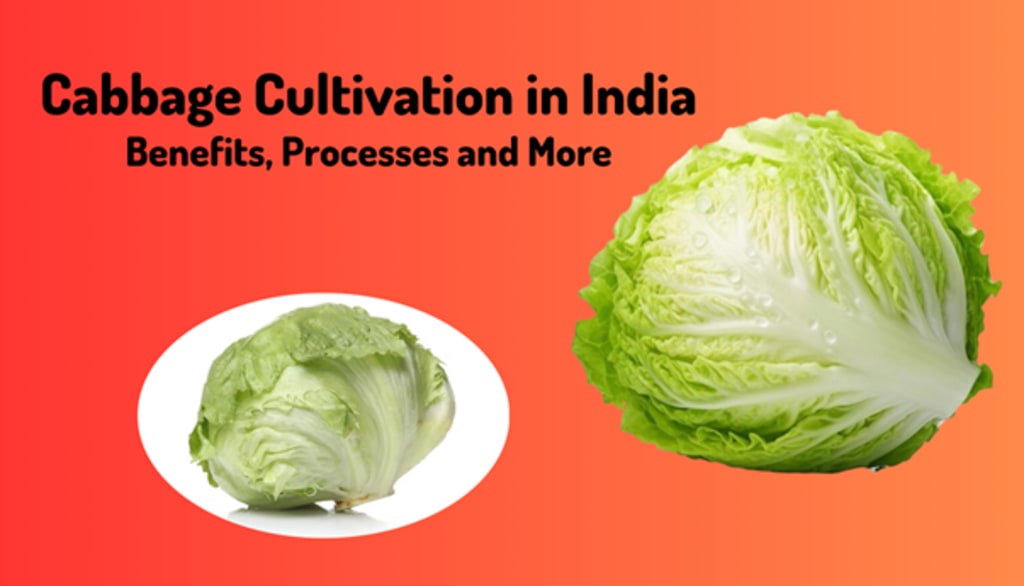
Cabbage, an annual crop, is cultivated all over the world. Some of the cabbage's colours are green, red, purple, and white. The availability of white and red colours is low, but green and purple are found in almost every part of the world.
The cabbage plant—an annual leafy plant—comes in different sizes and qualities, and each has its unique growing and maturity phases. After potatoes, cabbage ranks as the second-largest green vegetable crop and forms a staple in most diets.
The green vegetable crop is rich in vitamins A and C and in minerals like phosphorus, potassium, calcium, sodium, and iron, making it very healthy to eat with any meal. The crop is eaten raw and in cooked form. In India, this crop is grown mainly during winter.
Are you planning to start cabbage farming? You can read the guide below to get all the information that is important to grow this leafy vegetable.
Types of Cabbage in India:
In India, various types of cabbage are cultivated and used in a range of culinary traditions. Here’s a rundown of the main types of cabbage commonly found in India.
- Green Cabbage
- Red Cabbage
- Savoy Cabbage
- Chinese Cabbage (Napa Cabbage)
- Brussels sprouts
- Bok Choy
Leading Cabbage Producing States in India:
Cabbage is a vital vegetable crop grown in various states of India due to its nutritional value and versatility in cooking. Let’s check the top-producing states of this vegetable below.
- West Bengal
- Orissa
- Gujarat
- Madhya Pradesh
- Assam
- Bihar
8 Health Benefits of Cabbage:
Cabbage is a nutritious and versatile vegetable with numerous health benefits. Below, you can read about these health benefits :
- Improves gut health
- Have anti-cancer properties
- Reduces inflammation
- Good for pregnant women
- Helps in weight loss
- Works as an immunity booster
- Good for skin
- Controls blood sugar levels
Cabbage Farming Steps:
Cabbage growing involves several processes, such as weather conditions, soil preparation, plantation, irrigation, harvesting, etc. If you are interested in this farming, you can learn more about these stages below:
1. Weather Conditions:
Here are the weather requirements needed for optimal growth of cabbage.
Temperature: Cabbage grows best in cool weather, ideally between 15°C and 20°C. High temperatures above 25°C can cause the cabbage to bolt, and temperatures below 0°C freeze the plants.
Rainfall: Cabbage needs consistent moisture but not waterlogged conditions. Aim for 600-800 mm of rainfall per year. If it’s dry, you will need to irrigate.
Sunlight: Cabbage needs 6-8 hours of full sunlight daily for healthy growth.
2. Soil Preparation:
The following steps will help to prepare the soil perfectly for growing cabbage.
Soil Type: Cabbage prefers well-drained loamy soil.
Soil pH: The ideal range is 6.0 to 7.0. Test the soil's pH and adjust it by adding lime to raise it or sulfur to lower it.
Preparation: Weed and clean the field, then till to a depth of 15-20 cm. Farmers should mix the soil with compost or well-rotted manure and level it. To properly level the land, farmers can attach a leveller to any Mahindra tractor.
3. Plantation:
The major steps involved in the cabbage plantation process are as follows:
Seeds or Seedlings: Choose high-quality seeds or seedlings that will grow well in your climate.
Sowing Seeds: Sow the seeds indoors 6-8 weeks before the last frost. Keep them warm and moist at 18°C to 22°C.
Transplanting: Transplant seedlings into the field when they are 4-6 weeks old and have at least two true leaves. Space them 18-24 inches apart.
4. Irrigation:
Timely irrigation is important for the cabbage plants growth. Here are some of the methods that one can use to water the plants.
Watering Needs: Keep the soil consistently moist but not waterlogged. Use methods like drip irrigation or sprinklers.
5. Pest and Disease Control:
There are many pests and diseases that can damage cabbage plants. So, to keep these pests away from your cabbage farm, you can follow the below-mentioned methods.
Common Pests: Watch out for Aphids, caterpillars, and slugs. Insecticidal soap or hand-picking can control these.
Common Diseases: These include downy mildew and black rot. Fungicides and resistant varieties can be used to manage these diseases.
6. Harvesting:
Knowing when to harvest and how to cut the cabbage is what a farmer needs to harvest the cabbage properly.
When to Harvest: Cabbage is ready when the heads are firm and dense. This generally takes 70-120 days from planting.
How to Harvest: Cut the head from the stem with a sharp knife, leaving a few outer leaves.
7. Post-Harvest Handling:
This is the last step of cabbage farming.
Cleaning: Remove soil and damaged leaves from the cabbage. Wash if needed.
Storage: Store cabbage in a cool, dry place. It can stay fresh in the refrigerator for up to 2 weeks. For longer storage, ferment or freeze.
If the farmer wants to take the cabbages to market, they should use a powerful and fuel-efficient tractor like a John Deere Tractor. Hence, these Tractor price is also affordable, so farmers can buy it easily.
Conclusion:
Cabbage farming in India can yield highly if you take proper care of each step of this farming. By following all the above-mentioned steps, you will be able to grow healthy cabbages with good harvesting. Since cabbage is a widely consumed vegetable with steady market demand, you will get good returns with proper management of the farm. Additionally, cabbage farming can offer the potential for expansion into other markets.
About the Creator
Rajendra_Singh
I'm a agriculture blogger, who loves sharing my knowledge about growing things. On my blog, you'll find practical tips and interesting stories to help you get started!
Keep reading
More stories from Rajendra_Singh and writers in The Swamp and other communities.
AI In Agriculture
AI in Agriculture stands for Artificial intelligence in Agriculture. It refers to the use of advanced technologies like drones, machine learning, computer vision, and data analytics. It analyzes the data on soil, weather, and crops. AI helps enhance various aspects of farming, like optimal irrigation and yield prediction.
By Rajendra_Singh2 years ago in The Swamp
A Gathering of Evil Bosses
“I’m the queen of chin jutting while I smooth my hair, attacking, insulting, and deflecting to protect my appointer.” “Oh, please, Blondi, my hair is curled, highlighted, and longer than yours. I feature television commercials telling immigrants that we will give them a free plane ride home, and if they voluntarily turn themselves in, they will be allowed to legally apply for re-entry. It runs everywhere, and I look good in it! You can’t compete because of your blond hair. Mine is nicer, and my lips are prettier than yours.”
By Andrea Corwin 17 days ago in The Swamp
Rafale: India prepares a second major Rafale M carrier jet contract
India is gearing up for yet another significant step in its growing partnership with Dassault Aviation by preparing a follow-on contract to expand its fleet of Rafale M carrier-based fighter jets. This potential new agreement comes on the heels of India’s landmark acquisition of 26 Rafale Marine aircraft — the first export order for the naval version of the French multirole fighter — and underscores New Delhi’s ambition to modernize its naval air power as it faces evolving security challenges in the Indian Ocean region. In April 2025, India and France concluded a major intergovernmental agreement for 26 Rafale M jets, consisting of 22 single-seat and four two-seat aircraft, valued at roughly ₹63,000 crore (about $7.5 billion) and slated for delivery starting in 2028. These jets are intended to operate from India’s indigenous aircraft carrier INS Vikrant as well as the Soviet-origin INS Vikramaditya, replacing ageing MiG-29K platforms. Now, barely a year after that deal was signed, New Delhi is laying the groundwork for an additional contract that could substantially increase its inventory of Rafale M fighters. Reports and defence sources indicate that India’s Navy has identified a requirement for more carrier-capable Rafale Marine jets to complement the existing order, potentially bringing the total number of Rafale Ms in Indian service to well over 50 aircraft. This prospective contract is part of a broader strategy to ensure India’s maritime dominance in the Indian Ocean — a region of increasing geostrategic importance due to rising Chinese naval activity, contested sea lanes, and ongoing competition with other regional powers. The addition of more Rafale M aircraft would enhance the Indian Navy’s strike, reconnaissance, and air defence capabilities, enabling more robust carrier air wing operations for extended periods at sea. The expanded Rafale M fleet would be expected to feature the latest F4 standard upgrades, including advanced avionics, reinforced structures, improved weapons integration, and enhanced sensor fusion designed to boost survivability and lethality in multi-domain operations. The F4 standard also improves interoperability with allied forces, a key consideration given India’s increased cooperation with Western and Indo-Pacific partners. From a tactical perspective, carrier-borne aircraft like the Rafale M are critical for projecting power beyond a nation’s shores. They provide significant flexibility during maritime air defence missions, strike operations, fleet escort duties, and humanitarian assistance and disaster relief tasks. India’s Navy has placed emphasis on building a credible carrier strike capability as part of its overall force structure modernization, and these additional aircraft would play a central role in achieving that objective. While official details about the second Rafale M contract — including the number of jets, monetary value, and timeline — have not been confirmed publicly, industry analysts believe negotiations between New Delhi and Paris are in advanced stages. A formal contract announcement could be linked to high-level diplomatic engagements, defence dialogues, or visits by senior officials from both countries. In addition to the direct tactical benefits, this emerging contract has broader strategic implications. It signals India’s continued reliance on French aerospace technology in its quest to modernize its armed forces, even as New Delhi explores indigenous production and global partnerships for future combat aircraft. Past discussions have highlighted India’s desire for deeper technology transfer and local industrial participation — although France has historically been cautious about sharing sensitive source code and core intellectual property. Economically, the expanded Rafale M deal could also involve a wide network of Indian suppliers and aerospace firms under India’s “Make in India” initiative. This would not only support local industry but also build up technical expertise and sustainment infrastructure for high-end military aircraft. Some commentators suggest that a significant portion of future jets could eventually be assembled or serviced domestically with French technical collaboration. The potential new contract for additional Rafale M fighters illustrates how defence procurement is evolving into a long-term partnership between India and France. It builds on the foundation of previous deals — including orders for 36 Rafale jets for the Indian Air Force and the initial 26 naval Rafale Ms — and reinforces the importance of enduring military-industrial ties between the two democracies. As India prepares to finalize this second contract, it is clear that carrier aviation remains a cornerstone of its military strategy. The expanded Rafale M fleet will significantly enhance the Indian Navy’s operational reach, contributing to deterrence and stability in the wider Indian Ocean region. Whether at sea or anchored at home ports, the aircraft are poised to become a defining feature of India’s naval aviation for decades to come.
By Fiaz Ahmed 5 days ago in The Swamp
The BAFTA Awards
By now, in a stunning departure from recent years, most of the world is aware of what happened at the BAFTA film awards. Social Media Headlines will tell you the bare bones: that John Davidson, a Tourette's Syndrome advocate, shouted a racial slur at two Actors of Colour, Michael B Jordan and Delroy Lindo.
By Natasja Rose3 days ago in Psyche



Comments
There are no comments for this story
Be the first to respond and start the conversation.