
Breaking the Waves: Gaza’s Struggle, the Flotilla Missions, and the Call for Palestinian Freedom
As humanitarian flotillas brave the seas to deliver aid, Gaza’s blockade tells a story of injustice the world cannot ignore.

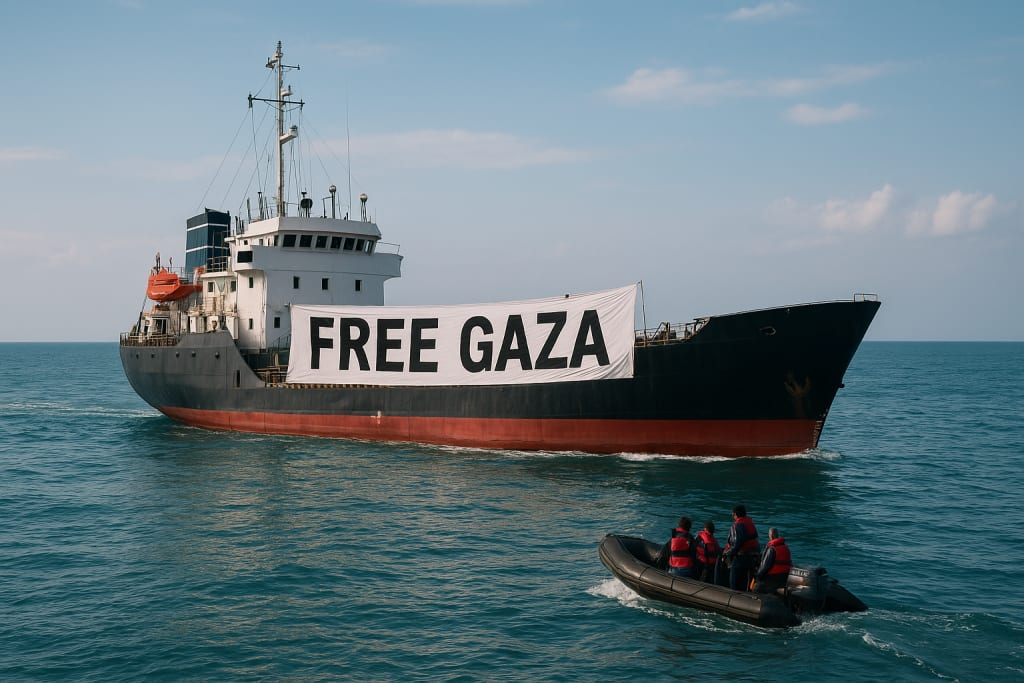
The Mediterranean Sea glistens under the sun, calm and serene on the surface. But for the people of Gaza, these waters carry a much darker meaning. For nearly two decades, Gaza has been under a suffocating blockade that has turned this small coastal strip into one of the most heavily restricted places in the world. Movement in and out of Gaza is tightly controlled, supplies are limited, and opportunities for its two million residents are almost nonexistent. This isn’t just a political dispute; it’s a humanitarian catastrophe unfolding before our eyes.
To challenge this reality, international activists and humanitarian groups have organized flotilla missions—small ships filled with medicine, food, and other essential supplies—aimed at breaking through the blockade and bringing help directly to Gaza’s shores. These flotillas are not just boats; they are symbols of courage and compassion. They are lifelines sent by people across the world who refuse to stand by while innocent civilians suffer in silence.
Yet, every time these ships set sail, they face the same grim reality. Israeli naval forces intercept them long before they can reach Gaza. Instead of being welcomed as humanitarian missions, they are treated as security threats. Activists are detained, aid supplies are seized, and the world’s media often moves on within a day or two, leaving the people of Gaza right where they were—trapped. This cycle of hope and heartbreak has repeated itself over and over again, and each intercepted flotilla serves as a painful reminder of the deep injustice that defines life in Gaza.
The blockade has transformed daily life into a struggle for survival. Imagine living in a place where electricity is available for only a few hours a day, where clean water is scarce, and where hospitals operate with dangerously low medical supplies. For Gaza’s children, warplanes in the sky are a normal sight, and the sound of explosions is as familiar as the sound of traffic in other cities. Dreams of studying abroad, starting a business, or even visiting family members outside the territory feel almost impossible. The blockade doesn’t just restrict movement; it restricts hope.
The flotilla missions, though often unsuccessful in physically reaching Gaza, have achieved something remarkable. They have shone a spotlight on the injustice and forced conversations in international circles. They remind us that Gaza is not just a headline or a political talking point—it is home to real people with hopes, fears, and dreams. Each ship that sets sail carries not just aid, but also a message: the world has not forgotten Gaza, even if powerful governments seem to have.
Critics argue that these flotillas provoke unnecessary tension, but this perspective ignores the desperation that fuels such actions. When a population is isolated for years, when families are separated by walls and checkpoints, when children grow up malnourished and traumatized, the international community has a moral obligation to respond. The flotilla missions are a cry for help, and more importantly, a call to action.
Palestine’s right to self-determination is not a controversial demand; it is a principle recognized under international law. Yet the reality on the ground tells a different story. Gaza’s residents are effectively prisoners in their own land, unable to leave or rebuild without permission. The blockade is not a neutral security measure—it is a form of collective punishment that violates the basic rights of civilians.
Ending the blockade will not solve all of Palestine’s struggles overnight, but it would be a critical first step toward justice. People should not have to risk their lives to deliver bread, medicine, and clean water. Humanitarian aid should never be treated as a weapon or a threat. The flotillas shouldn’t have to exist in the first place, but until there is meaningful change, they remain one of the few symbols of hope for Gaza’s besieged population.
We cannot look away. The story of Gaza is not just a regional conflict; it is a global test of humanity. Will we allow an entire generation to grow up knowing only war, walls, and suffering? Or will we stand together and demand a future where Palestinians can live freely, with dignity and security, just like anyone else?
The flotilla missions remind us of something powerful: even in the darkest of times, there are people willing to take risks for what is right. They remind us that justice is not a gift handed down by the powerful, but something we must all fight for. Gaza’s struggle is not just Gaza’s—it is humanity’s struggle. And history will remember where we stood.
About the Creator
Amanullah
✨ “I share mysteries 🔍, stories 📖, and the wonders of the modern world 🌍 — all in a way that keeps you hooked!”
The Absolute Best French Fries in Every US State
Few foods are as universally loved across the United States as French fries. Golden, crispy, perfectly salted — they are a staple on fast-food menus, in diners, and even in fine dining establishments. But not all fries are created equal. Across the country, chefs and home cooks alike have elevated the humble potato into a culinary canvas, adding unique twists and flavors that make each state’s fries distinct. From the beaches of Hawaii to the plains of Kansas, there is a fry in every state that locals swear by — and visitors must try.
By Muhammad Hassana day ago in The Swamp




Comments (2)
I support with gaza people and children ❤️ ♥️
🌍 “This piece powerfully sheds light on the ongoing humanitarian crisis in Gaza. The courage of those on the flotilla delivering aid despite threats is truly inspiring. The world needs to wake up, support Palestine’s right to freedom, and hold those in power accountable for these injustices. Thank you for raising your voice for humanity