
Boat Crew Tosses 115 Kilos of Cocaine in Pacific While Fleeing Navy, Colombia Says
high-speed maritime chase off Colombia’s Pacific coast ends with smugglers dumping hundreds of kilograms of cocaine, but authorities recover nearly the entire shipment in a major anti-drug operation.
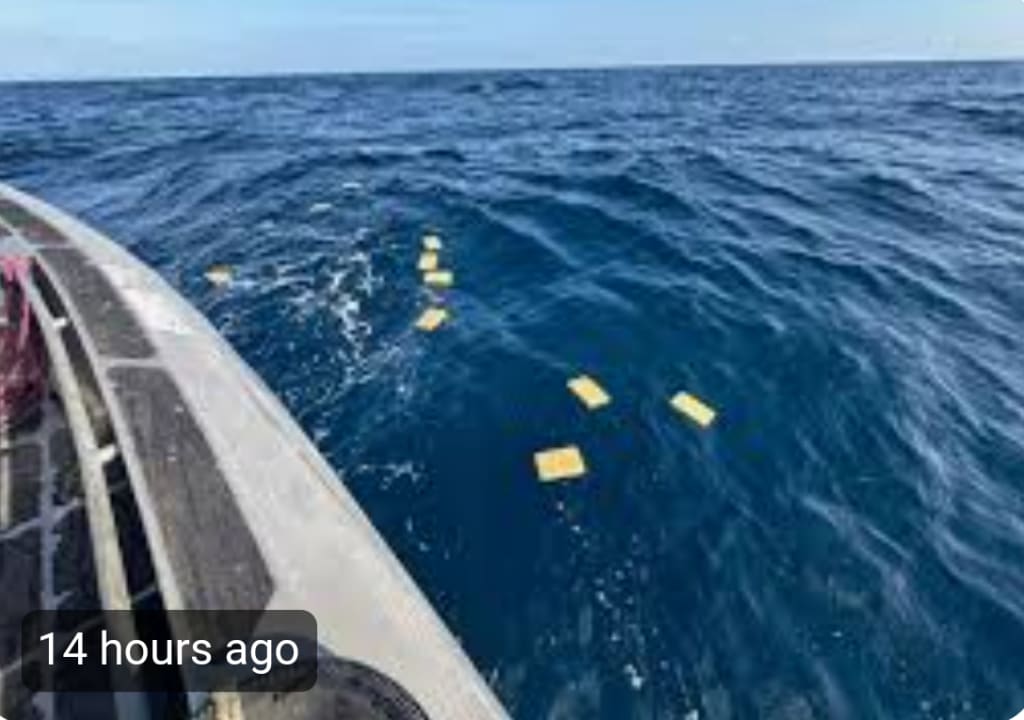
A Dramatic Sea Pursuit
The waters off Colombia’s Pacific coast became the stage for a tense and dramatic maritime pursuit as the Colombian Navy intercepted a speedboat suspected of transporting cocaine. According to official reports, the boat’s crew, realizing they were being tracked, threw their cargo overboard in an attempt to evade prosecution.
The operation resulted in the recovery of 115.7 kilograms of cocaine, highlighting both the desperation of smugglers and the effectiveness of Colombia’s maritime interdiction efforts. Such seizures are part of a broader strategy to disrupt drug trafficking networks before their cargo reaches international markets.
How the Chase Unfolded
Colombian authorities reported that the pursuit occurred roughly 55 nautical miles off the Pacific coastline, a known corridor for cocaine smuggling. The Navy’s statement described the boat as a “go-fast” vessel, designed for speed and evasion.
As the Navy closed in, the crew jettisoned over 100 packages of cocaine into the sea, hoping the shipment would be lost. However, Navy personnel recovered 116 packages, confirming a total weight of 115.7 kilograms of cocaine hydrochloride. Each package is believed to contain thousands of doses, making the seizure a significant blow to the smuggling operation.
The Value and Impact of the Seizure
The cocaine seized from the Pacific has an estimated street value of $5.6 million. Beyond the monetary figure, the operation carries strategic significance. It disrupts the supply chain for organized crime networks that rely on maritime routes to transport narcotics to North America and beyond.
Colombia remains one of the largest cocaine producers globally, and the Pacific corridor is a critical route for traffickers. Authorities emphasize that intercepting drugs at sea prevents massive shipments from reaching consumer markets, ultimately weakening criminal organizations.
Why Smugglers Dump Drugs at Sea
Dumping cargo during a naval pursuit is a common, though risky, tactic among drug traffickers. Smugglers hope to:
Avoid leaving evidence linking them to the shipment.
Reduce potential legal penalties if arrested.
Confuse law enforcement, buying time for escape.
In this case, however, the strategy failed. The Colombian Navy’s swift response ensured that almost the entire shipment was recovered, demonstrating the efficiency of anti-narcotics operations and the risks smugglers face at sea.
Maritime Drug Trafficking: The Bigger Picture
Go-fast boats, like the one involved in this incident, are a hallmark of maritime trafficking operations. They are small, fast, and difficult to detect. Crews rely on speed, stealth, and knowledge of ocean routes to evade authorities. However, the Navy’s persistent patrolling and intelligence-gathering capabilities often lead to intercepts.
Maritime drug trafficking is more than a local problem. These operations are international in scope, connecting producers in Colombia to consumers across the Americas. Interdiction at sea is therefore a critical component of global anti-drug strategies.
Colombia’s Anti-Narcotics Efforts
Colombia’s navy has increasingly focused on coordinated operations along both the Pacific and Caribbean coasts. These efforts often involve:
High-speed chases and interception of go-fast boats.
Intelligence coordination with international partners, particularly the United States.
Targeting trafficking organizations’ financial and operational structures.
The government’s goal is to prevent shipments before they leave Colombian waters, reducing the scale and reach of drug trafficking. Operations like this one reflect a commitment to disrupting illegal networks and protecting regional security.
International Cooperation and Diplomatic Context
This seizure occurs amid growing international pressure on Colombia to curb cocaine production and trafficking. Only days earlier, President Gustavo Petro met with U.S. President Donald Trump to discuss drug policy and regional cooperation.
Such discussions underscore the global dimension of the cocaine trade, where enforcement, policy coordination, and intelligence sharing are essential. The U.S. continues to work with Colombia to monitor maritime routes, including the Pacific corridor where this chase occurred.
Legal and Human Consequences
When boat crews are intercepted, authorities focus on:
Seizing drugs and evidence for prosecution.
Arresting suspects and pressing charges under national and international drug laws.
Preventing the distribution of narcotics that would fuel organized crime networks.
The risks for traffickers are high. Beyond legal penalties, they face dangerous conditions at sea, including high-speed chases, rough waters, and potential accidents. This high-stakes environment reflects the perilous nature of maritime drug smuggling.
Implications for Regional Security
The incident highlights several broader issues:
Disruption of supply chains: By intercepting 115.7 kilograms, authorities prevent significant quantities of cocaine from reaching consumers.
Weakened criminal organizations: Each seizure impacts the financial operations of trafficking networks.
Reinforcement of law enforcement: Successful operations serve as a deterrent, signaling that traffickers face heightened risks at sea.
Maritime seizures also strengthen international cooperation, showing that law enforcement and navies can coordinate effectively to combat cross-border crime.
Conclusion: A Reminder of the Ongoing Battle
The Colombian Navy’s recent operation underscores the complexity and danger of maritime drug trafficking. The crew’s attempt to dump cocaine into the Pacific shows the desperation of traffickers, while the recovery of the shipment highlights the effectiveness of coordinated law enforcement.
As traffickers innovate new routes and methods, Colombia’s navy and international partners continue to adapt and strengthen their operations. Each successful seizure disrupts the cocaine trade, sends a warning to smugglers, and contributes to broader efforts to combat organized crime on a global scale.
Maritime drug trafficking remains a high-stakes, high-risk enterprise for both traffickers and law enforcement. Incidents like this remind the world that the fight against illegal drugs extends beyond borders — from Colombia’s Pacific coast to markets across the Americas and beyond.و
About the Creator
Why Black History Matters in America?
The United States of America is celebrating their 250th anniversary in 2026. I'm proud to be an American and as someone who was born here, I wouldn't imagine myself living anywhere else. This is a country where opportunities are possible. Where anyone can be successful in anything they desire to do. Equality, community, and togetherness are the backbones of what America is and should be about. However, we have an administration who wants to erase and disregard those who have made positive, meaningful impacts in our country, specifically Black figures, such as Martin Luther King, Jr., Rosa Parks, and Maya Angelou. President Trump and his administration have been constantly complaining and fighting against what they call the "Woke agenda". They use this excuse as a distraction from other issues they refuse to address, such as the high cost of living, climate change, and inflation. That equality is dividing America, when in reality, it's bringing us together. Being woke is not tied to a specific political party. No matter where you stand on the political spectrum, you can still care about other people and their plights. Compassion and empathy for others isn't tied to a political party, either. We were taught as children to treat others the way we want to be treated and not judge others because they're different from us. Caring about others isn't a personal attack on your beliefs. It doesn't make you any less of a person. People who are easily offended over African American figures, past or present, or anything related to it, are grasping at straws. Current and future generations need to know who people like Harriet Tubman and Shirley Chisholm were, especially in the classroom. Black History is part of American History. It should be recognized, not hidden or forgotten. Besides, you can't shield children from everything, just because your feelings are easily hurt.
By Mark Wesley Pritchard 4 days ago in The Swamp
Former Prince Andrew Moves Out of Royal Lodge at Windsor
Former Prince Andrew, now officially known as Andrew Mountbatten-Windsor, has moved out of Royal Lodge in Windsor Great Park, bringing an end to more than twenty years of residence at one of the British monarchy’s most prestigious properties. While the move itself was carried out quietly, its implications are anything but small. It represents another chapter in the dramatic fall of a once-senior royal figure whose name has become inseparably linked with controversy.
By Ayesha Lashariabout 24 hours ago in The Swamp



Comments
There are no comments for this story
Be the first to respond and start the conversation.