
Blood Parliament: BBC Africa Eye Documentary (Kenya Gen Z Protests)
Not Just Politics — Blood Was Spilled

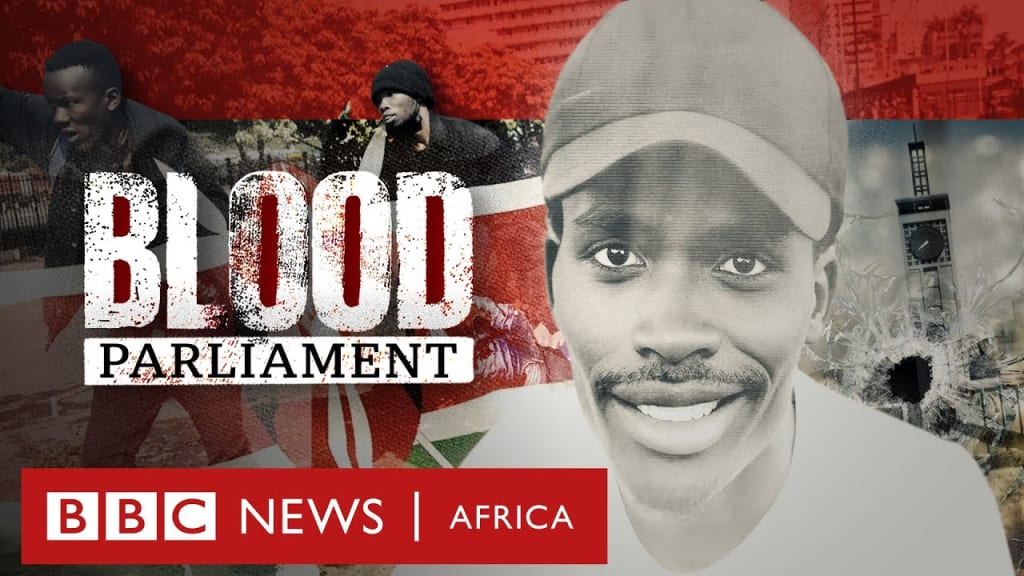
The BBC Africa Eye documentary Blood Parliament investigates the dramatic protests that rocked Kenya in June 2024. It captures the raw energy of a youth-led movement against government policies and highlights the explosive events that unfolded when demonstrators stormed Parliament. The Blood Parliament BBC production offers an unprecedented look into how a generation raised on social media stood up to political authority, reshaping Kenya’s political conversation in the process.
For a comprehensive understanding of the events and insights from those directly involved, you can watch the full Blood Parliament documentary below:
Background: Finance Bill 2024 and the Rise of Public Dissent
At the heart of the unrest documented in Blood Parliament was the controversial Finance Bill 2024. The bill proposed hefty new taxes on essential items, mobile money transfers, and salaries — policies that would have hit Kenya’s working and middle classes hardest. Already grappling with high inflation, joblessness, and widespread corruption, many Kenyans — especially the youth — saw the Finance Bill as the last straw.
Kenya’s Generation Z, often dismissed as apolitical or disinterested, proved critics wrong. Harnessing platforms like TikTok, X (formerly Twitter), and Instagram, they organized massive peaceful demonstrations without traditional political leaders. They used viral hashtags like #RejectFinanceBill2024 and #OccupyParliament, turning memes, dance videos, and graphics into tools for mobilization and education.
The Blood Parliament documentary carefully traces how these online calls transformed into real-world action across Nairobi and other cities.
June 25th: Storming Parliament and Tragic Violence
The climax of the protests came on June 25, 2024, when thousands of protestors gathered outside Kenya’s Parliament building. In a shocking turn of events, some demonstrators breached the Parliament compound — a rare occurrence in Kenyan history.
The government’s response was swift and brutal. Police forces used live ammunition, tear gas, and water cannons against largely unarmed civilians. According to independent reports and witnesses interviewed in the Blood Parliament BBC documentary, over 20 people lost their lives that day, with many more wounded.
BBC Africa Eye’s cameras captured powerful testimonies from survivors, grieving families, and young activists who described the betrayal they felt by leaders they once trusted. The Blood Parliament documentary doesn't shy away from showing how state forces turned a moment of youthful hope into a national tragedy.
The Fallout: Bill Withdrawal, Cabinet Shakeup, and Gen Z's Awakening
The political repercussions of the protests were immediate. Just a day after the bloodshed, President William Ruto announced the withdrawal of the Finance Bill. The move was seen as a major victory for the protesters, but the damage — both physical and psychological — had already been done.
In the weeks that followed, President Ruto dissolved much of his cabinet, promising reforms and new leadership. However, many activists interviewed in Blood Parliament remained skeptical, warning that cosmetic changes would not erase years of poor governance.
Perhaps the most lasting legacy of June 2024, as illustrated in the Blood Parliament BBC film, is the political awakening of a new generation. Kenya’s Gen Z realized their collective power — not through political parties, but through decentralized, tech-driven activism. Their success inspired youth movements across Africa, making Blood Parliament not just a Kenyan story but a continental one.
Why Blood Parliament Matters
Blood Parliament is a powerful reminder of the importance of free speech, accountability, and citizen action. The Blood Parliament documentary offers viewers a raw, honest portrayal of youth courage in the face of institutional violence, capturing a defining moment for Kenya’s democracy.
By documenting this historic uprising, the BBC Africa Eye team has preserved an essential narrative: that when faced with injustice, a determined, digitally-savvy generation can force real change — even against enormous odds.
About the Creator
Keep reading
More stories from Marveline Merab and writers in The Swamp and other communities.
Beatrice Elachi: Age, Husband, Tribe, Son Accident, Biography & More
Beatrice Elachi is one of Kenya’s most resilient and trailblazing female leaders, whose career has spanned the corridors of political power, grassroots advocacy, and international diplomacy. Best known as the first female Speaker of the Nairobi County Assembly, Elachi has carved out a legacy defined by bold leadership, controversy, and reform.
By Marveline Merab8 months ago in The Swamp
Philippines: Rubbish Landfill Collapse Death Toll Rises to 13
A tragic landfill collapse in the Philippines has once again exposed the deadly consequences of poor waste management, rapid urbanization, and climate-related risks. Authorities confirmed that the death toll has risen to 13 people, with fears that more victims may still be buried under tons of garbage and debris. The incident has shocked the nation and reignited urgent debates about public safety, environmental governance, and the lives of vulnerable communities living on society’s margins. What Happened at the Landfill? The disaster occurred at a large rubbish landfill site located near a densely populated area. According to officials, a massive section of the landfill gave way following days of heavy rainfall, causing a towering mound of waste to collapse onto nearby homes and informal shelters. Residents reported hearing a loud rumble before waves of garbage, mud, and foul-smelling sludge swept through the community in seconds. Emergency responders described the scene as chaotic and heartbreaking. Entire families were caught off guard, many of them asleep when the collapse happened. Rescue teams worked tirelessly, digging through unstable waste piles using both heavy machinery and bare hands in hopes of finding survivors. Rising Death Toll and Rescue Challenges As of the latest updates, 13 deaths have been officially confirmed, including women and children. Several others were injured, some critically, while multiple residents remain unaccounted for. Search-and-rescue operations have been complicated by ongoing rain, unstable landfill slopes, and the risk of further collapses. Authorities admitted that time is working against rescuers. Decomposing waste produces toxic gases and creates dangerous working conditions, making prolonged rescue efforts increasingly risky. Despite these challenges, teams continue their efforts, driven by the possibility that someone may still be alive beneath the debris. The Human Cost: Communities Living on the Edge One of the most painful aspects of this tragedy is that many victims were informal settlers and waste pickers—people who rely on landfills for survival. In many parts of the Philippines, impoverished families live dangerously close to dumping sites, scavenging recyclable materials to earn a living. For these communities, landfills are not just dumping grounds but economic lifelines. However, this dependence comes at a devastating cost. Activists argue that the deaths highlight deep-rooted inequality, where the poorest citizens are forced to live in hazardous environments while lacking access to safe housing and basic services. Was the Disaster Preventable? Environmental experts say the warning signs were there. Landfills are particularly vulnerable during heavy rainfall, as water weakens waste structures and increases pressure within garbage piles. Improper waste compaction, lack of drainage systems, and poor monitoring further raise the risk of collapse. Critics claim that local authorities failed to enforce safety regulations and ignored previous warnings from residents. Some community members had reportedly raised concerns about cracks, foul-smelling leaks, and minor waste slides weeks before the disaster. These warnings, they say, were not taken seriously. Government Response and Accountability In response to the tragedy, government officials have launched an investigation into the landfill’s management and safety compliance. Local authorities promised immediate assistance to affected families, including temporary shelters, food aid, and medical support. National leaders also called for a review of waste disposal policies across the country. The Philippines generates millions of tons of waste annually, much of it ending up in poorly managed landfills. Environmental groups argue that without systemic reform, such tragedies will continue to occur. Environmental and Health Risks Beyond the Collapse Beyond the immediate loss of life, the collapse poses serious environmental and health risks. Toxic runoff from the landfill may contaminate nearby water sources, increasing the risk of disease outbreaks. Air pollution from decomposing waste and burning debris also threatens surrounding communities. Public health officials have warned residents to avoid contact with floodwaters and contaminated soil. Long-term exposure to landfill pollutants has been linked to respiratory illnesses, skin diseases, and other chronic health problems. A Wake-Up Call for Sustainable Waste Management This deadly incident serves as a stark reminder that waste management is not just an environmental issue—it is a matter of human safety and dignity. Experts are urging the Philippines to accelerate investments in recycling, waste reduction, and modern landfill engineering, while also addressing housing insecurity for informal settlers. Calls are growing for stronger enforcement of environmental laws, transparent oversight of landfill operations, and community-based early warning systems. Without these changes, critics warn, the country risks repeating the same deadly mistakes. Conclusion The rising death toll from the landfill collapse is more than a statistic—it represents lives lost to neglect, inequality, and systemic failure. As families mourn and rescuers continue their grim search, the tragedy stands as a powerful indictment of unsafe waste practices and social injustice. Whether this disaster leads to real reform or fades into yet another forgotten headline will depend on how seriously authorities act now. For the victims and their families, justice and change cannot come soon enough.
By Fiaz Ahmed Brohi5 days ago in The Swamp


Comments
There are no comments for this story
Be the first to respond and start the conversation.