
Bitcoin Transaction Linked to Nancy Guthrie Ransom Letter Offers Potential New Lead in Investigation
Digital payment traced to crypto wallet mentioned in ransom communication may help investigators map suspect activity

Introduction
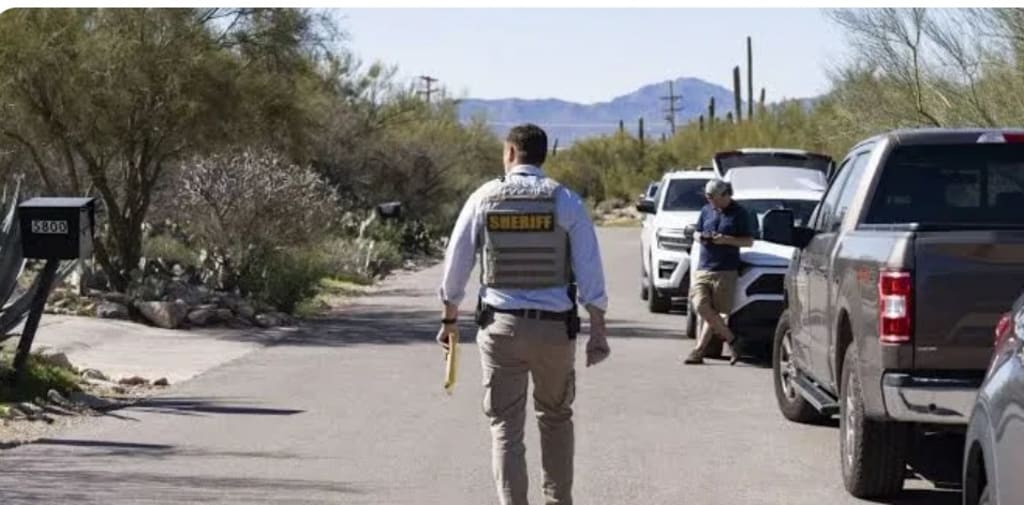
Investigators examining the disappearance of Nancy Guthrie are reviewing a reported Bitcoin transaction sent to a cryptocurrency wallet associated with a ransom letter in the case. The development may provide a new line of inquiry as law enforcement agencies continue their search for answers.
According to individuals familiar with the investigation, the ransom letter included a Bitcoin wallet address and demanded payment in cryptocurrency. Recently, a transaction was reportedly made to that wallet, raising questions about who sent the funds and whether the payment could help trace those involved.
Authorities have not confirmed all details publicly, but officials have acknowledged that digital transactions are being examined as part of the broader investigation.
Background of the Case
Nancy Guthrie was reported missing earlier this year. Her disappearance triggered a coordinated response involving local law enforcement, state agencies, and federal investigators. In the days following her disappearance, a ransom letter was reportedly received, demanding payment in Bitcoin.
The letter included specific instructions and referenced a cryptocurrency wallet address where funds were to be transferred. Investigators have been working to determine whether the letter was authentic, whether the demand was credible, and whether the sender had direct knowledge of Guthrie’s whereabouts.
The reported Bitcoin transaction now adds another element to that inquiry.
The Reported Bitcoin Transaction
Sources indicate that a measurable amount of Bitcoin was sent to the wallet address listed in the ransom letter. Blockchain data, which is publicly viewable, shows that the transaction occurred within a recent timeframe.
Cryptocurrency transactions are recorded on a decentralized digital ledger known as the blockchain. While wallet addresses do not automatically reveal personal identities, the transparency of blockchain records allows investigators to trace the movement of funds between wallets.
Law enforcement officials are reportedly analyzing the origin of the transaction, the digital pathway the funds traveled, and whether the sender can be identified.
Why Cryptocurrency Is Used in Ransom Cases
Bitcoin and other cryptocurrencies are sometimes used in ransom demands because they allow peer-to-peer transfers without traditional banking intermediaries. This can make transactions appear more anonymous than wire transfers or credit card payments.
However, cryptocurrency is not fully anonymous. Each transaction is permanently recorded on the blockchain. With the help of forensic tools and cooperation from cryptocurrency exchanges, investigators can often trace funds back to accounts that may require identity verification.
In recent years, law enforcement agencies have developed stronger capabilities in tracking digital currency transactions, particularly in cases involving cybercrime and ransom schemes.
Investigative Approach
Authorities typically follow several steps when analyzing a cryptocurrency payment linked to a criminal investigation:
1. Confirming the wallet address listed in communications
2. Reviewing blockchain records for activity
3. Identifying exchanges or platforms used to move funds
4. Requesting user data from cryptocurrency service providers
5. Monitoring whether funds are transferred to additional wallets
If the Bitcoin sent to the ransom wallet is later moved to an exchange that requires identity verification, it could provide investigators with identifying information.
Officials have not disclosed whether they have identified a suspect connected to the transaction. However, they have indicated that digital evidence remains a priority.
Potential Scenarios
The reported Bitcoin payment could represent several possibilities:
A ransom payment made in response to the demand
A test transfer intended to confirm the wallet’s validity
A transfer made by the sender of the ransom letter to create confusion
An unrelated transaction coincidentally sent to the same address
Investigators will likely assess the timing of the transaction in relation to the ransom letter, public statements, and other case developments.
Understanding who initiated the payment and why may help clarify whether the ransom demand is legitimate or part of a larger deception.
Digital Forensics and Blockchain Analysis
Blockchain analysis tools allow investigators to map out transaction flows. Specialized software can group wallet addresses that appear to be controlled by the same entity, based on patterns of activity.
If the ransom wallet interacts with known cryptocurrency exchanges, law enforcement may issue legal requests for customer information tied to those transactions.
In previous criminal cases, blockchain analysis has led to arrests when suspects attempted to convert cryptocurrency into traditional currency through regulated exchanges.
Privacy and Legal Considerations
While blockchain transactions are public, linking a wallet address to a real person typically requires legal process and cooperation from service providers. Investigators must balance digital tracing efforts with privacy protections and due process.
Officials have not released details about the amount of Bitcoin involved or the timing of the payment, citing the sensitivity of the investigation.
Public disclosure of too much information could compromise investigative steps or alert potential suspects.
Community Impact
The reported Bitcoin transaction has drawn attention within the local community and online. Residents continue to seek updates on Guthrie’s status and the progress of the investigation.
Community members have expressed concern about the role of digital currency in criminal activity. At the same time, experts note that cryptocurrency itself is not inherently criminal but can be misused, similar to cash or other financial tools.
Authorities have encouraged the public to avoid speculation and to rely on verified information released by official sources.
Broader Implications for Law Enforcement
Cases involving cryptocurrency demonstrate how investigations now require technical expertise in digital forensics. Law enforcement agencies increasingly collaborate with federal partners and private-sector analysts to interpret blockchain data.
Training programs and task forces focused on cybercrime have expanded in recent years, reflecting the growing use of digital tools in criminal schemes.
The outcome of this investigation may highlight both the challenges and the capabilities associated with tracking cryptocurrency transactions.
Ongoing Investigation
At this stage, authorities have not confirmed whether the Bitcoin transaction is directly linked to a suspect. They have emphasized that all leads are being evaluated.
Search efforts related to Guthrie’s disappearance continue, and investigators are reviewing physical evidence, witness statements, and digital communications in addition to blockchain data.
Officials have asked anyone with information related to the case to come forward.
Public Communication and Transparency
Law enforcement agencies often limit public statements during active investigations. This approach aims to preserve the integrity of evidence and prevent interference.
While the reported Bitcoin transfer may represent a significant development, investigators caution that digital transactions alone do not confirm responsibility.
Clear and verified updates are expected to be shared as appropriate.
Conclusion
The reported Bitcoin payment to a wallet associated with Nancy Guthrie’s ransom letter introduces a potentially important lead in the investigation. Blockchain records may help authorities trace the origin and movement of funds, offering insights that traditional financial systems might not provide.
As investigators continue to analyze digital and physical evidence, the focus remains on determining who is responsible and ensuring a thorough and lawful inquiry.
The case underscores how modern investigations increasingly involve digital financial tools, requiring technical expertise and coordinated effort across agencies. Whether the reported transaction proves to be a decisive clue will depend on the findings of ongoing forensic analysis.
For now, officials continue to review the evidence and pursue all available leads in the search for answers.
About the Creator
Saad
I’m Saad. I’m a passionate writer who loves exploring trending news topics, sharing insights, and keeping readers updated on what’s happening around the world.
The Saddest Thing - The Billionaires Who Rule America Aren't Even Enjoying Themselves
This single post says more about our ruling class than a thousand policy papers. The saddest thing about today's system is that the men robbing the rest of us - sabotaging our economic prospects, our pensions, our access to affordable healthcare - are not even happy.
By Scott Christenson🌴7 days ago in The Swamp




Comments
There are no comments for this story
Be the first to respond and start the conversation.