
Autocracy Won’t Affect My Dog
Why Authoritarian Politics Feel Distant — Until They Suddenly Aren’t
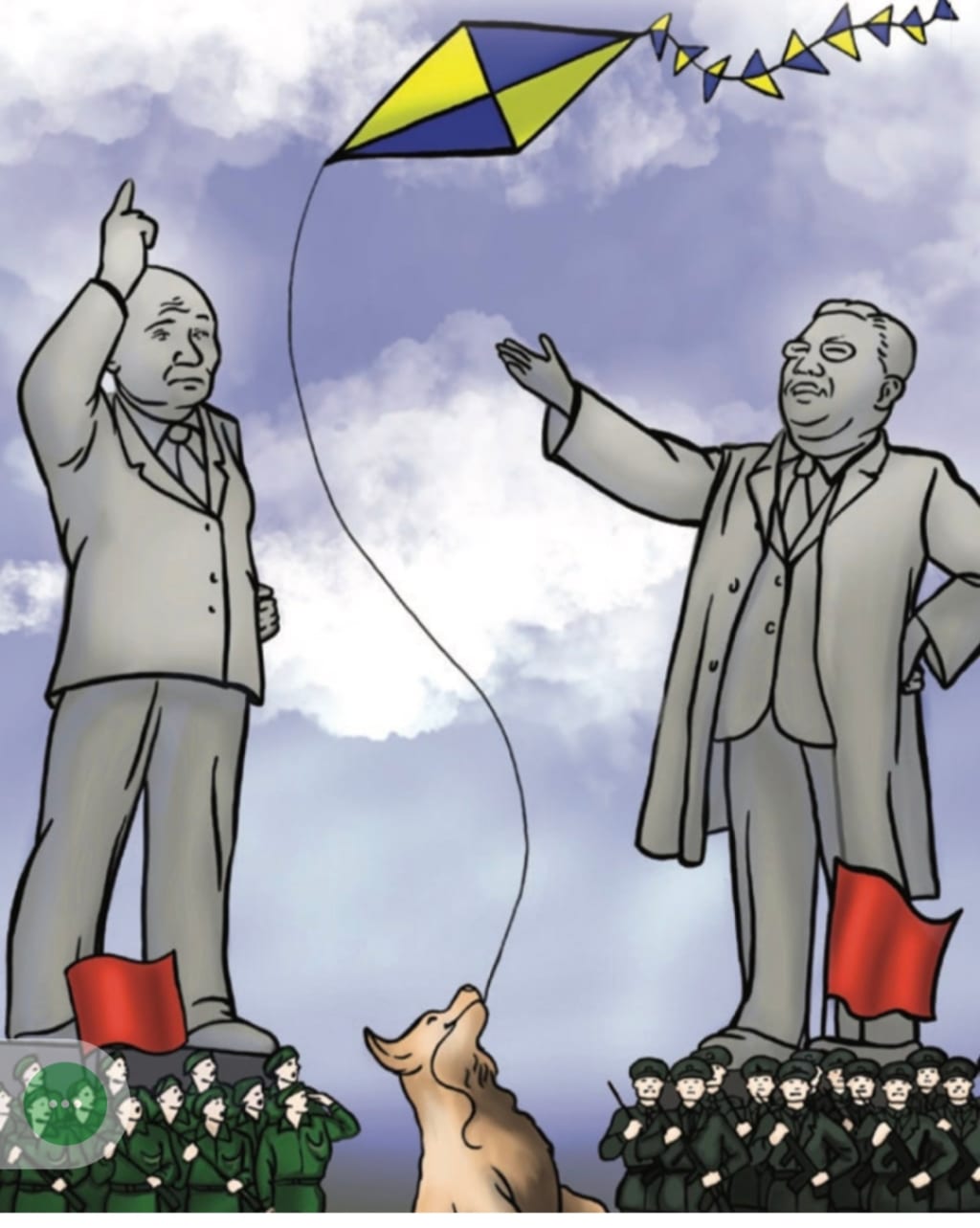
“Autocracy won’t affect my dog.”
It’s the kind of phrase you hear half-jokingly, half-resigned, usually in conversations about politics that feel too big, too abstract, or too far removed from daily life. After all, when governments slide toward authoritarianism, your dog still needs walking, still begs for treats, still curls up beside you at night. Life, at least on the surface, goes on.
But that comforting thought hides a dangerous assumption: that political systems only affect headlines, not homes. That autocracy is something that happens to other people, in other places, while our own lives — and our pets — remain untouched.
History suggests otherwise.
The Illusion of Personal Immunity
One of the most powerful traits of modern authoritarianism is how quietly it arrives. Unlike the dramatic coups of the past, today’s autocracies often advance through legal changes, bureaucratic shifts, and slow erosions of rights. For many people, especially those not directly targeted, the impact feels negligible at first.
Your dog doesn’t notice when independent courts are weakened.
Your dog doesn’t care if journalists are pressured or elections quietly reshaped.
Your dog still needs dinner at six.
This sense of normality creates the illusion that politics is optional — something you can ignore because it doesn’t interfere with the rhythms of daily life.
Until it does.
When Power Tightens, Everyday Life Shrinks
Autocratic systems don’t stop at controlling political opponents. Over time, they reshape society itself. Rules multiply. Surveillance expands. Economic uncertainty grows. And those changes seep into the most ordinary corners of life.
Consider what happens when:
Inflation spikes due to mismanaged economies
Jobs disappear as businesses flee unstable systems
Public spaces become controlled or restricted
Freedom of movement quietly narrows
Suddenly, walking your dog isn’t just a routine. It’s affected by curfews, policing, or deteriorating infrastructure. Veterinary care becomes expensive or inaccessible. Imported pet food vanishes from shelves. Even something as simple as a park visit can feel different when public spaces are monitored.
Autocracy doesn’t announce itself with a siren. It accumulates, like pressure.
Why Pets Are a Measure of Stability
Pets, especially dogs, are deeply tied to social stability. They rely on systems humans often take for granted: functioning supply chains, accessible healthcare, safe public spaces, and predictable routines. When those systems weaken, pets feel the impact almost immediately.
In countries under authoritarian rule, animal welfare often declines alongside human rights. Funding for shelters dries up. Stray populations grow as families can no longer afford care. Veterinary professionals emigrate. Laws that once protected animals become unenforced.
Your dog may not understand politics, but it depends on a society shaped by political decisions.
The Comfort of Distance
For people living in relatively stable democracies, autocracy often feels like a distant problem. News reports from abroad feel tragic but detached. The phrase “it won’t affect me” becomes a psychological shield against discomfort.
“My life is small. My world is local. My dog is happy.”
That mindset is understandable — but it’s also how democratic erosion goes unnoticed. Authoritarianism thrives not only on repression, but on apathy. It grows when enough people decide that as long as their personal bubble remains intact, the wider system doesn’t matter.
The truth is that political systems don’t collapse overnight. They erode while people are busy living.
When Silence Becomes Complicity
Autocracies rely on the silence of the unaffected. As long as repression targets “others” — journalists, activists, minorities — it’s easy to rationalize inaction. The dog still gets walked. The bills still get paid. The cost feels theoretical.
But power never stops with one group. Once accountability disappears, corruption spreads. Rules become arbitrary. Protection depends on loyalty, not law. At that point, no one is truly insulated — not even those who thought they were safe.
History is full of people who believed politics would never reach their doorstep. It almost always does.
Small Choices, Big Consequences
The idea that “autocracy won’t affect my dog” reflects a deeper belief: that individual choices don’t matter. But political systems are built on cumulative behavior — voting, speaking, resisting, or remaining passive.
You don’t have to be an activist to make a difference. Paying attention matters. Questioning narratives matters. Supporting independent institutions matters. Even casual conversations shape what feels normal and acceptable.
Democracy doesn’t survive on grand gestures alone. It survives because ordinary people decide that the system they live in is worth protecting — not just for themselves, but for those who cannot speak.
Including their dogs.
Why This Phrase Should Make Us Pause
The phrase isn’t wrong in the narrowest sense. Your dog doesn’t vote. It doesn’t read the news. It doesn’t understand power structures. But that’s precisely why it’s a powerful metaphor.
If autocracy reaches a point where it affects even the most innocent, dependent beings in society, it’s already gone far too far. And by then, reversing course is painfully difficult.
The health of a society can often be measured by how it treats the vulnerable — children, the elderly, animals. When systems fail them, it’s rarely accidental.
Conclusion: The Politics Beneath the Leash
Autocracy may not affect your dog today. But the conditions that allow your dog to live safely, comfortably, and freely are deeply political. They depend on transparency, accountability, and shared responsibility.
Ignoring politics because life feels normal is a luxury — and a fragile one. The leash you hold during a peaceful walk exists because of laws, norms, and freedoms maintained by people who refused to believe that politics didn’t matter.
Your dog trusts you to protect it.
Democracy relies on the same instinct.
About the Creator
Keep reading
More stories from Aarif Lashari and writers in The Swamp and other communities.
Weak Dollar Drives Gold Over $5,500 an Ounce for the First Time
Gold prices have surged to an unprecedented $5,500 per ounce, marking a historic milestone for the precious metal as a weakening US dollar, rising geopolitical tensions, and deepening fears of currency debasement send investors rushing toward safe-haven assets. The dramatic rally underscores growing unease in global markets and signals a potential shift in how investors protect wealth during periods of economic uncertainty.
By Aarif Lasharia day ago in The Swamp
EU Countries Give Final Approval to Russian Gas Ban
In a landmark decision, European Union (EU) member states have officially approved a ban on imports of Russian natural gas. This ban, set to be fully enforced by late 2027, is a major step in reducing Europe’s reliance on Moscow for energy. It also reflects the EU’s commitment to reshaping its energy landscape amid ongoing geopolitical tensions. A Long-Awaited Shift in Policy After months of negotiation, EU energy ministers gave their final approval for a regulation that will phase out Russian gas. This includes both pipeline gas and liquefied natural gas (LNG). Here’s what the new rules mean: Russian LNG imports must end by December 31, 2026. Pipeline gas imports will stop by September 30, 2027, with a possible short extension to November 1, 2027 if needed. All new contracts with Russian suppliers are banned immediately. The law balances ambition with practicality. Some countries still heavily depend on Russian energy, and the phased timeline allows them to adjust gradually. Balancing Energy Security and Political Differences The approval was not without disagreement. Hungary and Slovakia voted against the ban, citing concerns about energy shortages, while Bulgaria abstained. Hungary has already announced plans to challenge the ban at the European Court of Justice. Despite these differences, the EU law passed thanks to a reinforced qualified majority, showing the bloc’s growing determination to secure energy independence and reduce Russian influence. It’s worth noting that Russia used to supply over 40% of the EU’s gas, a number that fell to around 13% by 2025 thanks to sanctions, diversification, and changing markets. Some countries like France and Belgium still relied on Russian gas longer, highlighting the uneven transition across Europe. Why This Ban Matters The gas ban is about more than just energy; it’s a strategic and symbolic move. Here’s why: Weakening Russia’s Economic Power Cutting off EU gas imports will further reduce Russia’s revenue, limiting its ability to fund military operations and exert influence abroad. Strengthening EU Energy Sovereignty The ban pushes member states to diversify gas supplies and invest in infrastructure, storage, and interconnectors to ensure reliable energy. National plans must be prepared by March 2026. Accelerating the Green Transition As Europe phases out Russian gas, investment in renewable energy like wind, solar, and hydrogen is expected to increase, helping the bloc reach its climate goals. Economic Challenges Ahead While the ban is historic, it comes with challenges: Rising energy prices in some markets as cheaper Russian gas is replaced. Infrastructure needs, including LNG terminals and interconnectors, to ensure supply resilience. Compliance penalties for companies failing to phase out Russian gas, which could include multi-million-euro fines. Critics also warn that Europe could risk dependence on other external suppliers if diversification efforts are not broad enough. Looking Forward: Europe’s Energy Independence The Russian gas ban is part of REPowerEU, the EU’s strategy to reduce reliance on foreign fossil fuels. Beyond gas, the EU is preparing to phase out Russian oil and nuclear fuel, signaling a long-term shift toward energy sovereignty and sustainability. The final approval of this ban is not just the end of Russian gas imports—it’s the start of a decade-long transformation in European energy, geopolitics, and economic strategy. Final Thoughts The EU’s decision to ban Russian gas is historic. It reduces Moscow’s economic leverage, strengthens European energy security, and encourages investment in green alternatives. While challenges remain, including rising prices and infrastructure needs, the move marks a bold step toward independence and a redefined geopolitical balance in Europe.
By Aqib Hussain4 days ago in The Swamp
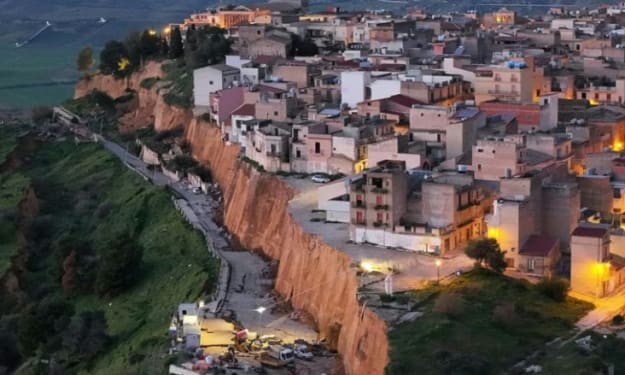
Huge Landslide Leaves Sicilian Homes Teetering on Cliff Edge
The ground gave way without warning. One moment, homes stood quietly against the backdrop of sea and sky; the next, the earth beneath them began to slide toward the void. In parts of Sicily, a massive landslide has left entire neighborhoods perched precariously on a cliff edge, forcing evacuations and reigniting urgent conversations about climate change, aging infrastructure, and the fragile balance between people and nature.
By Aqib Hussaina day ago in The Swamp
One Unchecked Box
"Republished" because it was the only way to add the embed for the newly recorded audio version of this story due to the Top Story badge. Plus it serves as a nice, informal announcement of the podcast's revival for another season (go subscribe!):
By Stephen A. Roddewig3 days ago in Fiction



Comments
There are no comments for this story
Be the first to respond and start the conversation.