
Australia Vows to Repair ‘Distressing’ Damage to War Graves in Gaza Bulldozed by Israeli Army
Government calls for protection of heritage sites amid ongoing Gaza conflict War graves linked to Commonwealth soldiers damaged during military operations Foreign minister says damaged burial grounds must be treated with dignity and respect Australia to work with international partners to assess and rebuild cemeteries Satellite images prompt diplomatic response from Canberra Historians warn of loss of shared wartime memory Families of fallen soldiers express shock over destruction Restoration efforts depend on access to conflict zones

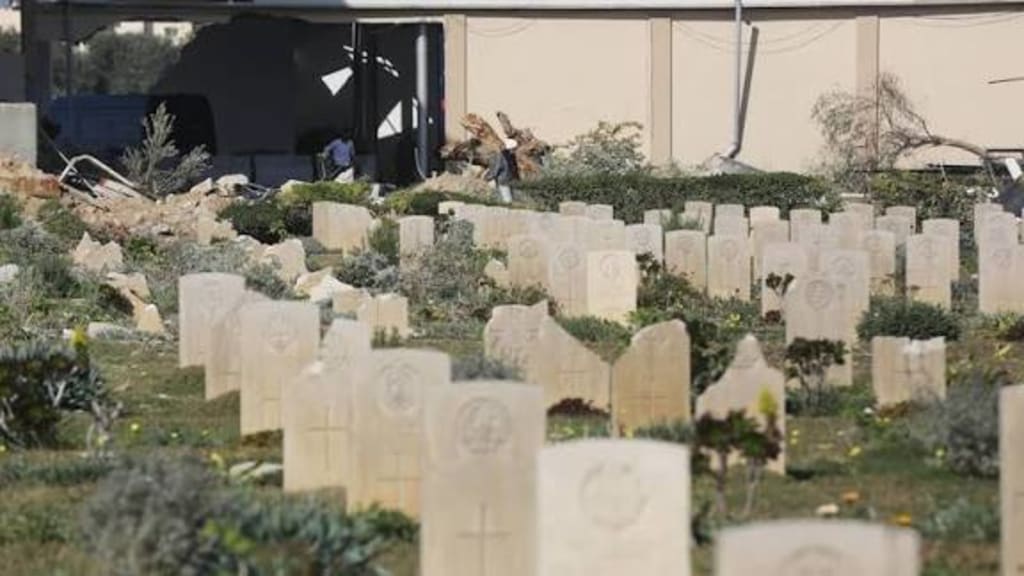
The Australian government has pledged to help repair and restore war graves in Gaza that were damaged during recent military operations, describing the destruction as “deeply distressing” and calling for greater protection of historical and humanitarian sites during conflict.
The commitment follows reports and satellite imagery showing several cemeteries and burial grounds in Gaza had been bulldozed or severely damaged amid Israeli military activity in the territory. Among the affected sites are graves believed to hold the remains of soldiers from World War I and World War II, as well as civilians and local residents whose families have maintained the plots for generations.
Australian Foreign Minister Penny Wong said the government had raised the issue through diplomatic channels and would work with international partners to assess the damage and support reconstruction efforts.
“These sites carry immense historical and emotional significance,” Wong said in a statement. “The damage to war graves is distressing and unacceptable. Australia is committed to helping ensure these places are treated with the dignity and respect they deserve.”
Historical Significance of the Graves
The damaged cemeteries are believed to include burial grounds associated with Commonwealth forces who fought in the region during the First World War, when Palestine was part of the Ottoman Empire and later came under British control. Some graves are linked to the British-led Egyptian Expeditionary Force, which included Australian and New Zealand troops.
War graves in Gaza have long been maintained under international agreements overseen by the Commonwealth War Graves Commission (CWGC), which works to preserve burial sites across former conflict zones. These cemeteries are protected under international humanitarian law, which requires parties to a conflict to safeguard cultural and religious sites where possible.
Historians say the destruction represents not only physical damage but also a loss of shared historical memory.
“These graves are a reminder of a period when soldiers from across the world fought and died in the Middle East,” said Dr. Martin Reeves, a military historian based in Sydney. “Their preservation is a matter of respect for the dead and for future generations.”
Images Spark International Concern
The issue gained international attention after satellite images and videos circulated online showing bulldozers moving through cemetery areas near zones of heavy fighting. Human rights groups and heritage organizations expressed alarm, urging investigations and immediate steps to prevent further damage.
The Israeli military has said its operations in Gaza are focused on targeting militant infrastructure and that any damage to civilian or historical sites is unintended. Officials have stated that Hamas and other armed groups often operate in or near sensitive locations, complicating military efforts.
However, critics argue that greater precautions should have been taken.
“Even in war, there are rules,” said a spokesperson for an international humanitarian organization. “Graveyards and memorials should be treated as protected spaces.”
Australia’s Response
Australia’s pledge to assist in restoration marks one of the strongest statements by a Western government specifically focused on the war graves issue. The Department of Foreign Affairs and Trade confirmed it would coordinate with the CWGC and relevant international bodies to determine the scale of repairs required once access to the sites is possible.
Officials said financial assistance and technical expertise may be offered, including archaeological assessments and rebuilding damaged markers and boundary walls.
“We want to make sure these sites are restored properly, not simply cleared or rebuilt without regard to their history,” a senior government source said.
The government also reiterated its broader call for the protection of civilians and heritage during ongoing hostilities in Gaza.
Diplomatic Sensitivities
The announcement comes amid growing global scrutiny of Israel’s conduct in Gaza and increasing pressure on allied governments to address humanitarian and cultural losses. Australia has attempted to balance its long-standing support for Israel’s right to self-defense with criticism of actions that result in civilian harm or damage to protected sites.
Opposition figures welcomed the pledge but urged stronger diplomatic engagement.
“Repairing the damage is important, but preventing it in the first place is even more crucial,” said one senior opposition lawmaker. “Australia should be pushing for clearer safeguards around heritage and burial sites.”
Voices from Families and Communities
For families connected to those buried in Gaza, the news has been deeply painful. Descendants of Commonwealth soldiers have expressed shock that graves maintained for more than a century could be damaged in modern warfare.
“It feels like history itself has been trampled,” said the granddaughter of an Australian soldier believed to be buried in the region. “These men died far from home. The least we can do is protect their resting places.”
Local Palestinian residents have also described the destruction as another layer of loss in an already devastated landscape.
“Our cemeteries are sacred,” said one Gaza resident via phone interview. “They hold our ancestors and our memories. Seeing them destroyed adds to our grief.”
International Law and Accountability
Under the Geneva Conventions, parties to armed conflict are obligated to respect and protect burial sites and cultural property. Legal experts say that if the damage is proven to be unnecessary or disproportionate, it could raise serious questions of accountability.
“Intent and context matter,” said international law professor Nadia Karim. “But destruction of war graves is not a minor issue. It touches on both humanitarian law and cultural protection treaties.”
Looking Ahead
Restoration efforts will depend heavily on access to Gaza, which remains limited due to ongoing fighting and security concerns. Experts warn that delays could worsen the damage, particularly if heavy machinery continues to operate near burial grounds.
Australia has said it will continue to raise the matter in international forums and push for safe corridors to allow assessment teams to reach the affected sites.
For now, the pledge to repair the graves stands as a symbolic and practical gesture aimed at preserving a fragile link to the past amid a conflict defined by loss and destruction.
“These graves remind us that war leaves scars that last generations,” Wong said. “Protecting them is part of protecting our shared human history.”
About the Creator
Fiaz Ahmed
I am Fiaz Ahmed. I am a passionate writer. I love covering trending topics and breaking news. With a sharp eye for what’s happening around the world, and crafts timely and engaging stories that keep readers informed and updated.
Keep reading
More stories from Fiaz Ahmed and writers in The Swamp and other communities.
Irish government to impose total ban on scramblers in public places
The Irish government has announced plans to introduce a nationwide ban on the use of scrambler bikes in public places, following growing concern over public safety, noise pollution, and a sharp rise in accidents involving unregulated off-road vehicles. The move represents the most decisive action yet against what officials describe as a persistent and dangerous problem in urban and rural communities alike. Under the proposed legislation, scramblers and similar off-road motorcycles will be prohibited from operating in parks, housing estates, beaches, and other public spaces. The ban is expected to come into effect later this year after final approval by the Oireachtas. Rising Safety Concerns Justice Minister officials confirmed that the new measures were prompted by an increase in serious injuries linked to scrambler use, particularly among young riders. Emergency departments across the country have reported a surge in trauma cases involving off-road bikes, many of which are not road-legal and lack basic safety features such as registration plates or insurance coverage. “Too many people have been hurt, and too many communities feel unsafe,” said a senior government spokesperson. “This is about restoring public order and protecting lives.” Police data shows that scrambler-related incidents have doubled in some counties over the past three years, with children and pedestrians among those injured. Several high-profile accidents have intensified pressure on lawmakers to act. Enforcement Powers Expanded The new legislation will give Gardaí expanded powers to seize scramblers immediately if they are found being used illegally in public areas. Owners may face heavy fines and, in repeat cases, confiscation of the vehicle without compensation. Authorities will also be permitted to pursue riders who attempt to evade officers, ending a long-standing limitation that prevented police from engaging scramblers due to safety risks. “We are closing legal loopholes that allowed reckless behavior to continue,” said a senior Garda official. “These bikes are not toys when used in crowded public spaces.” Local councils will also be allowed to designate specific zones where scrambler use is completely prohibited, including school grounds, playgrounds, and pedestrian pathways. Community Pressure Drives Policy Public frustration has been mounting for years, especially in working-class neighborhoods where scramblers are often ridden through housing estates at high speed. Residents have complained of intimidation, sleepless nights, and fear for children playing outdoors. “I can’t let my kids cycle on our street anymore,” said a Dublin mother. “These bikes fly past with no helmets, no lights, and no regard for anyone else.” Community groups have welcomed the ban as long overdue. Several advocacy organizations have argued that scrambler misuse has become a symbol of lawlessness and lack of enforcement. “This law sends a message that public spaces belong to everyone, not just those willing to take risks,” said one community leader. Critics Warn of Social Impact Despite widespread support, some youth organizations and motorsport groups have warned that the ban could disproportionately affect young people from disadvantaged backgrounds. They argue that scramblers provide recreation in areas lacking sports facilities and structured activities. “There is a danger of criminalizing teenagers instead of investing in alternatives,” said a spokesperson for a youth outreach charity. “We need safe places for legal riding, not just punishment.” In response, the government has indicated that it will explore funding for designated off-road tracks and supervised training programs. Officials say the goal is not to eliminate the sport, but to remove it from unsafe environments. “We recognize the need for balance,” the Justice Minister said. “This is about where these vehicles are used, not banning them outright.” Legal and Insurance Issues Another major concern driving the ban is the lack of insurance and registration associated with scramblers. Most models are designed for off-road use only and cannot be legally insured for public areas. When accidents occur, victims are often left without compensation. Legal experts say the new law could significantly reduce liability disputes and help clarify responsibility in collision cases. “Unregulated vehicles operating in shared spaces create serious legal grey areas,” said one transport law specialist. “This reform brings much-needed clarity.” Political Support Grows The proposal has received backing from across party lines, reflecting the widespread frustration of constituents. Several TDs reported receiving hundreds of complaints from residents demanding action. “This issue cuts across class and geography,” said one opposition politician. “Rural beaches and city parks are both affected.” The bill is expected to pass with strong majority support when introduced for final debate next month. What Happens Next Once enacted, the ban will be accompanied by a national public awareness campaign explaining where scramblers may and may not be used. Retailers will also be required to inform buyers of the new restrictions at the point of sale. Gardaí will focus initially on education and warnings before moving to full enforcement, officials said. However, repeat offenders can expect strict penalties. A Shift in Public Space Policy The scrambler ban marks a broader shift in how Ireland regulates public spaces amid changing patterns of recreation and transport. Officials say the government must adapt to new risks while preserving safety and accessibility for all. “This is about reclaiming parks, beaches, and estates for families and communities,” the Justice Minister said. “No one should feel afraid to walk in their own neighborhood.” As Ireland prepares to implement the ban, the debate highlights a larger challenge: balancing freedom, recreation, and responsibility in shared public environments. Whether the new law succeeds will depend on consistent enforcement and the creation of safer alternatives for riders. For many communities, however, the decision already represents a long-awaited step toward quieter streets and safer public spaces.
By Fiaz Ahmed 5 days ago in The Swamp
Why Black History Matters in America?
The United States of America is celebrating their 250th anniversary in 2026. I'm proud to be an American and as someone who was born here, I wouldn't imagine myself living anywhere else. This is a country where opportunities are possible. Where anyone can be successful in anything they desire to do. Equality, community, and togetherness are the backbones of what America is and should be about. However, we have an administration who wants to erase and disregard those who have made positive, meaningful impacts in our country, specifically Black figures, such as Martin Luther King, Jr., Rosa Parks, and Maya Angelou. President Trump and his administration have been constantly complaining and fighting against what they call the "Woke agenda". They use this excuse as a distraction from other issues they refuse to address, such as the high cost of living, climate change, and inflation. That equality is dividing America, when in reality, it's bringing us together. Being woke is not tied to a specific political party. No matter where you stand on the political spectrum, you can still care about other people and their plights. Compassion and empathy for others isn't tied to a political party, either. We were taught as children to treat others the way we want to be treated and not judge others because they're different from us. Caring about others isn't a personal attack on your beliefs. It doesn't make you any less of a person. People who are easily offended over African American figures, past or present, or anything related to it, are grasping at straws. Current and future generations need to know who people like Harriet Tubman and Shirley Chisholm were, especially in the classroom. Black History is part of American History. It should be recognized, not hidden or forgotten. Besides, you can't shield children from everything, just because your feelings are easily hurt.
By Mark Wesley Pritchard 7 days ago in The Swamp
Blessed 33
So I woke up on the morning of February 5, 2026 and guess what and you know what I realized? It’s my 33rd birthday. Do you know what that means? Yes, technically I’m getting old, but what I couldn’t have guessed was this would be one of the best days of my life.
By Joe Pattersonabout 18 hours ago in Confessions


Comments
There are no comments for this story
Be the first to respond and start the conversation.