
China’s Opacity Brings Pekingology Back Into Vogue
Why Decoding Beijing Has Become an Essential Skill Again
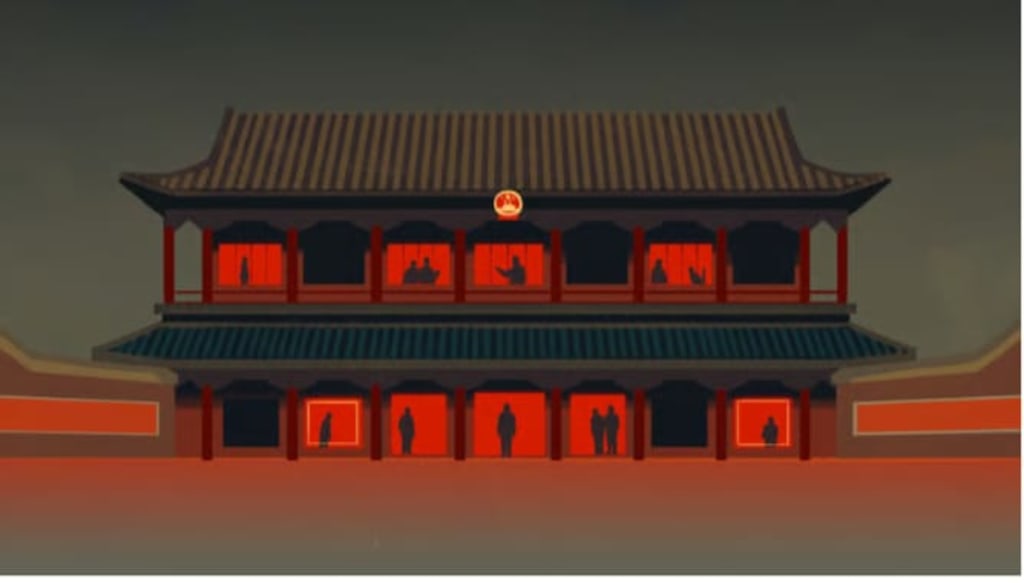
If you’ve been following global politics lately, you may have noticed a curious trend: experts, journalists, and even armchair analysts are dusting off an old Cold War practice called Pekingology. But why is this obscure term suddenly back in circulation? The answer is simple: China has become more secretive than ever.
In today’s world of instant news and endless data streams, it might seem like we know everything about China. Social media, state news outlets, and open-source data are everywhere. Yet, when it comes to the inner workings of the Chinese Communist Party (CCP), information is scarce—and what little we get is often carefully controlled. This has made Pekingology relevant again, as people try to read between the lines of Beijing’s cryptic signals.
What Is Pekingology, Anyway?
Pekingology was a term coined during the Cold War. Back then, Western analysts had almost no access to the inner workings of the CCP. So, they became experts at reading subtle clues: analyzing who attended which meetings, studying the language in official statements, and noticing even the smallest shifts in behavior or protocol.
Think of it as detective work—except your suspects are government leaders, and your clues come from state media and public appearances.
Now, under Xi Jinping, China has grown even more opaque. Power is highly centralized, top officials rarely explain their decisions, and political messaging is tightly controlled. That secrecy has revived interest in Pekingology as a way to make sense of a system that reveals very little.
Why China Is So Hard to Read
Under Xi, opacity isn’t just a side effect—it’s a deliberate strategy. By controlling what the public and foreign observers know, the CCP can:
Consolidate power without scrutiny
Control narratives at home and abroad
Keep rivals and analysts guessing about key policy moves
For example, when top officials like Foreign Minister Qin Gang suddenly disappear from the public eye, speculation explodes. Analysts and journalists scramble to interpret what it might mean, looking at minor shifts in diplomatic appearances or cryptic wording in state media. Every gesture, every absence, every phrase could hold a hidden message.
In other words, opaque politics demand careful reading—and that’s exactly what Pekingology does best.
How Pekingology Is Making a Comeback
Modern China watchers combine old-school Pekingology with new tools. Satellite images, digital archives, AI-driven language analysis, and open-source datasets help experts spot patterns that would have been impossible to detect decades ago.
Western think tanks, academic programs, and specialized newsletters are all embracing this revival. Analysts are now trained to look for subtle signs of leadership reshuffles, policy shifts, or factional changes. Even casual observers can follow along with online blogs and newsletters that specialize in decoding Beijing’s moves.
But here’s the catch: Pekingology is as much an art as a science. There’s always uncertainty, and overinterpretation is a real risk. Some past predictions have been way off, showing that even experienced analysts can misread the signals.
The Risks and Rewards of Decoding Beijing
Why go through all this effort? Because understanding China isn’t just an academic exercise—it has real-world consequences. Decisions in Beijing affect global trade, climate policy, military strategy, and diplomacy. Misreading Chinese politics can lead to costly mistakes for governments, companies, and investors.
Pekingology doesn’t promise certainty. But it provides a disciplined way to interpret limited information and reduce the risk of being blindsided. By carefully piecing together subtle signals, analysts can anticipate trends and make more informed decisions—even in a highly secretive system.
Pekingology in the Modern Era
Today, Pekingology is no longer a niche interest. It’s a vital skill for anyone who wants to understand China’s political landscape. Analysts, journalists, and policymakers must learn to:
Observe subtle signals in leadership behavior
Analyze official language for hidden meaning
Integrate modern tools like satellite imagery and data analytics
Maintain healthy skepticism about conclusions drawn from limited evidence
The art of decoding Beijing is alive and well. And with China continuing to play a central role in global affairs, Pekingology is likely here to stay.
Final Thoughts
China’s growing secrecy under Xi Jinping has made it harder than ever to understand what’s happening inside the CCP. But that opacity has also revived an old-school craft: Pekingology, the careful, patient study of subtle clues in politics.
While it’s not a perfect science, Pekingology helps analysts, journalists, and policymakers navigate uncertainty. In an age where clarity is scarce and stakes are high, reading between the lines has become a strategic necessity.
In short, if you want to understand China today, you need to think like a detective—because in Beijing, nothing is ever as simple as it seems.
About the Creator
Why Iran’s Response to a U.S. Attack Could Be Different This Time
As tensions rise between the United States and Iran — with U.S. warnings, military buildups, and political posturing on both sides — analysts are asking a key question: If a U.S. attack were to occur, why might Iran’s response differ from past patterns? The answer lies in an unprecedented blend of internal instability, external pressures, and strategic rethinking within Iran’s leadership. 1. A More Volatile Internal Political Landscape Unlike previous confrontations, Iran is currently grappling with significant domestic unrest. Massive anti‑government protests have shaken the country and led to thousands of deaths, according to activist reports. � albaniandailynews.com Previous military responses — such as the more measured retaliation after U.S. strikes in June 2025 — were partly designed to project resolve while avoiding immediate escalation. But today’s leaders face internal pressures that could encourage a faster and more forceful response if attacked. Some officials might see rapid retaliation as a way to unify public sentiment and distract from persistent domestic challenges. � albaniandailynews.com And at times of internal strain, political leaders may feel they have less room to maneuver — making sudden retaliation appear as the only viable way to demonstrate strength. 2. More Direct and Uncompromising Rhetoric from Iran’s Top Officials Iranian military and political statements have become significantly less restrained. In contrast to past conflicts where responses were calibrated to signal only limited retaliation, current official statements emphasize that any attack — limited or otherwise — would be treated as an “all‑out war.” � trtworld.com Brigadier General Mohammad Akraminia, a spokesperson for Iran’s army, said that any assault would be met with a “decisive and swift response,” stressing that Iranian forces have been instructed to react “in real time and without delay.” � Anadolu Ajansı This shift in tone indicates that Tehran may no longer prefer delayed or symbolic retaliation, as it has at times in the past, but instead could opt for an immediate, robust military response. 3. Strengthened Military Readiness and Broader Arsenal Since the previous confrontations, Iran has invested in expanding and upgrading its military capabilities — including missile systems, drones, and naval defenses. Reports suggest that Iran’s armed forces consider their level of readiness significantly heightened compared to previous years. � A News This improved readiness means Tehran may feel capable of responding swiftly and across multiple fronts if attacked. That includes: Missile and drone strikes against U.S. forces or bases in the Middle East Targeting U.S. naval assets, including aircraft carriers Cyber and asymmetric responses that could challenge U.S. infrastructure or regional interests � Anadolu Ajansı +1 The combination of expanded capabilities and ideological resolve suggests a response could be broader and more complex than what the United States has observed during previous stand‑offs. 4. Regional Considerations and Proxy Dynamics Iran no longer faces tensions with the U.S. as a solely bilateral issue. Its regional network — including allied militias and proxy forces — increases the potential scope of any retaliation. Gulf states, Israel, and U.S. partners in the region could be drawn into response scenarios indirectly or directly, heightening the risk that conflict spreads beyond Iran itself. � Le Monde.fr This dynamic means Tehran may be preparing not just a direct reply but a multi‑layered response involving both its conventional forces and allied groups — a stark contrast to earlier, more constrained exchanges. 5. Diplomatic Shifts and External Pressures The international environment also affects Iran’s calculus. The European Union’s designation of the Iranian Revolutionary Guard Corps (IRGC) as a terrorist organization has increased diplomatic isolation and pressure on Tehran. � The Guardian At the same time, Iranian officials have expressed conditional openness to diplomacy, preferring negotiations on an equitable footing rather than talks tied to defense‑capability restrictions. � Reuters This mix of harsher international pressure and limited diplomatic avenues could push Tehran toward a more assertive defensive posture, interpreting an attack as both a national and ideological threat. 6. Lessons from Past Conflicts and “Deterrence Signals” In the 2025 U.S. strikes on Iranian nuclear facilities, Iran retaliated with a missile attack on U.S. forces the next day — a response seen as both a warning and a signal that it would retaliate without triggering full‑scale war. � WHYY But current rhetoric from Iranian leaders suggests that narrow or symbolic retaliation may no longer suffice to preserve deterrence. They have repeatedly framed any attack as potentially equal to an act of war, hinting they may escalate more quickly than before to avoid appearing weak — a legacy of missed deterrence opportunities and the perceived costs of prolonged domestic unrest. � trtworld.com 7. Risk of Rapid Escalation: What Could Change the Game Past patterns of measured, delayed, or proportionate retaliation were rooted in a desire to avoid full‑blown conflict. Now, Tehran’s leaders may feel: They must reassert deterrence immediately Internal political legitimacy depends on a strong posture Regional allies expect decisive action That means Iran’s response — if faced with a U.S. attack — is more likely to be immediate, forceful, and multifaceted, involving simultaneous military, cyber, and proxy responses. Such escalation dynamics differ fundamentally from earlier periods when Tehran carefully calibrated its responses to avoid widening wars, making today’s potential conflict far more unpredictable and dangerous. Conclusion: A Turning Point in Strategic Calculus If the United States were to strike Iran, Tehran’s response could be dramatically different than in the past. The combination of: internal instability, harder official rhetoric, enhanced military capabilities, complex regional alliances, and heightened international isolation points toward a scenario where Iran might respond swiftly, decisively, and broadly. This shift heightens the stakes for U.S. policymakers and global security. In a world where miscalculation can quickly spiral into wider conflict, understanding these evolving dynamics isn’t just strategic — it’s essential.
By Zahid Hussain4 days ago in The Swamp



Comments
There are no comments for this story
Be the first to respond and start the conversation.