
8 Police Officers Killed in Guatemala After Prison Crackdown on Gangs
Violence Escalates Amid Government’s Tough Stance on Crime
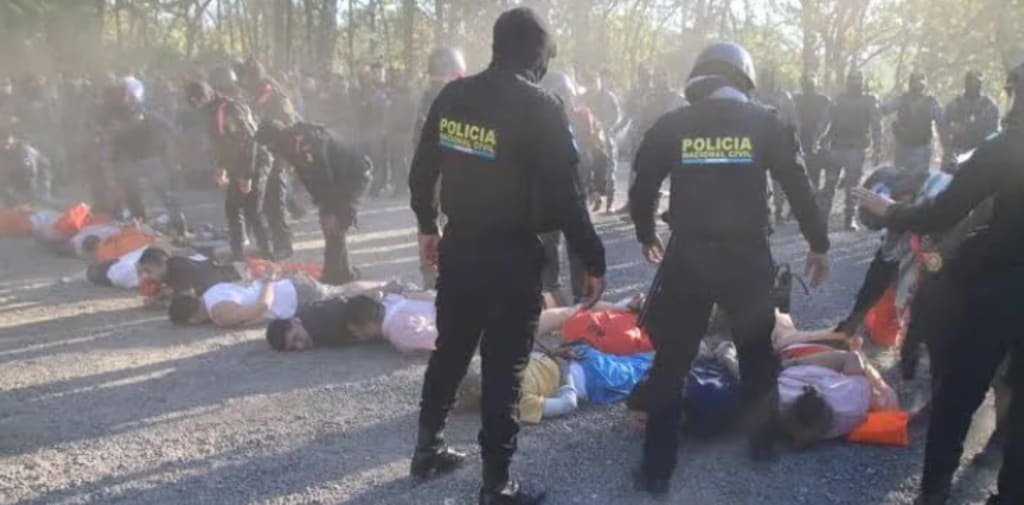
Guatemala is facing a wave of violence that has shocked the nation. Over the past weekend, eight police officers were killed in coordinated attacks following a major government crackdown on gangs in the country’s prison system. The events mark a disturbing escalation in a conflict that has plagued Guatemala for decades, with ordinary citizens and law enforcement alike caught in the crossfire.
How the Violence Started
The chaos began when inmates tied to notorious gangs, especially Barrio 18, staged uprisings in three maximum-security prisons. The prisoners seized control, taking dozens of guards and staff hostage. Officials said the riots were triggered by the government’s tougher policies inside the prisons, including stripping gang leaders of privileges and imposing stricter conditions.
What started as a prison crisis quickly spiraled into a national emergency. Authorities had to act fast to regain control, releasing hostages and neutralizing key gang figures, including Aldo Dupie Ochoa, also known as “El Lobo”, a top Barrio 18 leader.
Retaliation Hits the Streets
The crackdown, while necessary, triggered swift retaliation. Armed gang members launched attacks targeting police officers in Guatemala City and surrounding areas, resulting in the deaths of eight officers and injuries to at least ten others.
Officials believe these attacks were organized from inside the gangs’ networks, demonstrating how deeply criminal influence penetrates Guatemalan society. Multiple gunfights erupted on city streets, showing that this was not random crime but a calculated response to state actions.
Interior Minister Marco Antonio Villeda described the attacks as coordinated, with gang members deliberately targeting police patrols and vehicles. The events revealed the dangerous reach of these criminal organizations beyond prison walls.
State of Emergency Declared
In response to the escalating violence, President Bernardo Arevalo declared a 30-day nationwide state of emergency. This move grants security forces broader powers, including:
The ability to arrest and interrogate suspects without prior court approval.
Restrictions on public assembly to prevent further clashes.
Expanded authority for police and military to dismantle criminal networks.
The government also deployed the army to assist the police on the streets and temporarily closed schools in some areas to protect students. While the measures are intended to curb violence, they also raise concerns about civil liberties and potential human rights risks.
Gangs’ Influence and Guatemala’s Security Challenges
Guatemala’s gang problem is long-standing. Groups like Barrio 18 and MS‑13 are deeply embedded in society, involved in drug trafficking, extortion, and other criminal enterprises. These gangs operate with a level of organization that allows them to challenge government authority directly, even from within prisons.
Prison uprisings are not new in Guatemala. Over the years, authorities have faced multiple escapes, riots, and violent takeovers of correctional facilities. In late 2025, for example, 20 gang leaders escaped custody, with only a few recaptured, highlighting the persistent difficulties in controlling these networks.
The Human Cost
Beyond the statistics, the recent violence underscores the human toll of gang activity. Eight law enforcement officers lost their lives, leaving families, friends, and colleagues in mourning. Communities also face the fear and uncertainty that come with living under the shadow of organized crime.
The conflict raises tough questions: How does Guatemala enforce law and order without compromising civil rights? Can the government dismantle gangs’ power while protecting innocent civilians? These are challenges that will continue long after the immediate crisis ends.
What Comes Next?
Guatemala now faces a critical moment. The state of emergency will give authorities the tools to act, but the nation’s long-standing structural problems — weak institutions, corruption, and entrenched criminal networks — make it clear that no single action will solve the issue overnight.
The coming weeks will reveal whether the government can restore stability or whether retaliatory violence will continue to escalate. What is certain is that the killing of these police officers is a stark reminder of the high stakes in Guatemala’s fight against gang violence.
Guatemala’s situation is a cautionary tale for the region, highlighting the difficulty of balancing security, justice, and civil rights in a society under siege from organized crime. For citizens and law enforcement alike, the struggle to reclaim safety is far from over.
About the Creator
Keep reading
More stories from Aqib Hussain and writers in The Swamp and other communities.
‘Night of Deep Pain’: Train Crash in Southern Spain Leaves 39 Dead
Spain is in mourning after a devastating train crash in southern Andalusia left 39 people dead and dozens injured. Prime Minister Pedro Sánchez described the incident as a “night of deep pain”, while rescue teams worked tirelessly through the night to help survivors.
By Aqib Hussainabout 20 hours ago in The Swamp
Saudi Arabia’s Maaden Uncovers 7.8 Million Ounces of New Gold — A Major Boost for the Kingdom’s Economy
In a landmark discovery that reinforces Saudi Arabia’s rising profile as a global mineral powerhouse, the Saudi Arabian Mining Company (Ma’aden) has announced the uncovering of 7.8 million ounces of new gold resources. This significant find not only highlights the Kingdom’s geological potential but also marks a defining moment in the nation’s economic diversification strategy under Vision 2030. This discovery is set to reshape local mining prospects, strengthen Saudi Arabia’s position in global gold markets, and further diversify an economy long dependent on oil revenues. A Golden Find in the Heart of the Desert Ma’aden’s new gold resource estimate comes from exploration activities in the Kingdom’s northern and central regions — areas long suspected to hold rich mineral deposits. The discovery is a result of extensive geological surveys, advanced exploration technologies, and years of persistent investment in local expertise. While 7.8 million ounces may sound like an abstract figure, its economic significance is immense. At current global gold prices — which hover above $2,000 per ounce — this discovery could represent billions of dollars in potential value. More importantly, it signals a shift in how Saudi Arabia approaches its natural resource wealth beyond hydrocarbons. Strengthening Vision 2030 Goals Saudi Arabia’s Vision 2030 blueprint aims to reduce the Kingdom’s reliance on oil by fostering sectors such as tourism, renewable energy, manufacturing, and mining. Gold — one of the most enduring and universally valued commodities — plays a central role in strengthening economic resilience. Ma’aden’s discovery supports several strategic goals: Economic Diversification: Adding high-value mining output to the GDP mix Job Creation: Stimulating employment in engineering, geology, logistics, and processing Technological Advancement: Encouraging innovation in exploration and mining technologies Foreign Investment: Attracting international partners into Saudi mining projects The gold find aligns perfectly with these ambitions, demonstrating that Saudi Arabia’s vast terrain holds more than just oil — it harbors minerals capable of securing long-term economic growth. Ma’aden: From Promising Prospect to Mining Powerhouse Ma’aden is no newcomer to mining success. Since its establishment in 1997, the company has expanded rapidly, partnering with major global firms to develop projects involving gold, phosphate, aluminum, and industrial minerals. The company’s progress reflects strategic planning and an increasing willingness by the Saudi government to open mining ventures to international collaboration. Through technology transfer, joint ventures, and export partnerships, Ma’aden has steadily built a reputation as a reliable and innovative mining operator. With this latest gold discovery, Ma’aden not only enhances its resource base but also reinforces investor confidence in the Kingdom’s mining sector. What the Discovery Means for the Saudi Economy 1. Economic Resilience Gold is traditionally viewed as a safe-haven asset, with demand often rising during global economic uncertainty. Increased domestic gold production gives Saudi Arabia greater leverage in international markets and adds a hedge against oil market volatility. A robust mining sector can also cushion the economy against global downturns — an increasingly valuable advantage in an interconnected world. 2. Job Creation and Skills Development Developing gold resources requires a broad range of skills in mining engineering, geology, environmental science, and project management. This creates opportunities for Saudi nationals and positions the Kingdom as a regional hub for mining talent. The demand for skilled professionals may also nurture educational programs in geosciences and mining technologies — a long-term investment in human capital. 3. Export Potential and Foreign Partnerships Saudi gold does not have to remain domestic. With global gold demand consistently strong — spanning jewelry, electronics, and investment markets — Saudi Arabia has the potential to become a significant gold exporter. International partnerships could accelerate infrastructure development and improve extraction efficiency, while revenue from exports could help fund other national initiatives under Vision 2030. Mining With Environmental Responsibility Saudi authorities and Ma’aden have emphasized that mining operations will incorporate modern environmental standards aimed at minimizing ecological impact. Responsible mining practices include water recycling, land rehabilitation, and protecting biodiversity near mining sites. Environmental stewardship is not only ethical but essential for long-term sustainability — particularly in harsh desert environments where natural systems are fragile. A Model for Regional Growth Saudi Arabia’s gold discovery may inspire other Gulf nations to explore their untapped mineral potential. Countries like Oman, Jordan, and the United Arab Emirates also possess geological terrains with promising mineral resources, and Saudi success could catalyze broader regional cooperation and investment in mining exploration. Looking Ahead: A Golden Future? While the 7.8 million ounces of newly uncovered gold will require years of exploration, development, and extraction before it becomes revenue, the significance of the discovery is already clear. It represents not only a treasure beneath the desert sands but a strategic asset for national growth and economic transformation. For Saudi Arabia, this gold find is more than a mineral discovery: it’s proof that the Kingdom’s future — long linked to black gold — now shines with golden potential in a broader economic landscape.
By Fiaz Ahmed Brohi5 days ago in The Swamp
My New Book is Finally Here
My poetry collection Beautiful and Brutal Things is done. It's actually done and finally published over 270 pages. Over a year of my life went into this book. More than a year, really. Long days at my computer, sometimes seven days a week because I couldn't stop even when I probably should have. Then two months of editing that felt harder than the writing itself. But it's finished, and I'm still standing, and the book is real.
By Tim Carmichael3 days ago in BookClub



Comments
There are no comments for this story
Be the first to respond and start the conversation.