
Artificial Intelligence: The Technology Reshaping Our Future
A simple explanation of how AI works and why it’s becoming a vital part of modern life.


Introduction
Artificial Intelligence, or AI, is no longer just a futuristic concept from science fiction movies. It’s a part of our everyday lives — from the way we shop and communicate to how businesses make decisions and doctors diagnose diseases. As the topic trends across the United Kingdom, people are asking an important question: is AI improving our lives, or changing them too fast for us to keep up?
The answer lies in understanding what AI really is — and how it’s transforming the world around us.
---
What Is Artificial Intelligence?
At its core, Artificial Intelligence refers to machines or computer systems that can perform tasks that normally require human intelligence. This includes recognizing speech, learning from experience, solving problems, and even understanding natural language.
We use AI daily, often without realizing it. When you ask Siri or Alexa a question, get recommendations from Netflix or Spotify, or use Google Maps to find the fastest route — that’s AI at work.
But AI isn’t just about convenience. It’s a technology that’s driving innovation across nearly every industry, from healthcare to education, finance, and transportation.
---
AI in Everyday Life
Artificial Intelligence quietly powers much of our modern world. In healthcare, AI helps doctors analyze medical scans and predict diseases early. In business, it streamlines customer service with chatbots and automates repetitive tasks, saving both time and money.
Education has also been transformed. Adaptive learning platforms now adjust lessons to a student’s skill level, creating personalized learning experiences. Meanwhile, in transport, self-driving cars and smart traffic systems are pushing us closer to a world of safer, more efficient travel.
Even in creative industries, AI plays a growing role — generating music, writing articles, and designing digital art. The line between human creativity and machine capability is becoming thinner every day.
---
The Benefits of Artificial Intelligence
AI offers enormous benefits when used responsibly. It can boost efficiency, reduce human error, and unlock new possibilities for innovation.
In Medicine: AI-powered systems can detect cancer, heart disease, and neurological disorders earlier than traditional methods.
In Business: Companies use AI to predict market trends, personalize marketing, and improve customer satisfaction.
In Climate Science: AI helps track environmental changes and develop strategies to combat climate change.
AI isn’t replacing humans — it’s enhancing what we can do, allowing us to focus on creativity, empathy, and critical thinking while machines handle repetitive or data-heavy tasks.
---
The Challenges and Ethical Questions
While AI offers many benefits, it also raises serious concerns. The biggest questions revolve around privacy, bias, and employment.
As AI learns from data, it can unintentionally reflect human biases. For example, if an AI system is trained on biased data, it might make unfair decisions about job candidates or loan approvals. Similarly, the rise of automation has sparked fears about job displacement in industries like manufacturing, logistics, and customer service.
There’s also the issue of data privacy. AI systems often rely on personal information to operate effectively — but how that data is stored and used remains a growing concern for individuals and governments.
To address these challenges, experts argue for stronger AI ethics and regulation — frameworks that ensure technology is developed and deployed responsibly.
---
AI and the Future of Humanity
The future of AI is filled with both excitement and uncertainty. On one hand, it could revolutionize medicine, education, and sustainability. On the other, it challenges us to rethink what it means to be human in an age where machines can mimic intelligence.
Some experts predict that AI will lead to a new “industrial revolution,” changing the way we live and work. Others believe it could create a new form of partnership between humans and machines — one built on collaboration rather than competition.
One thing is certain: the choices we make now will shape how AI impacts the generations to come.
---
Conclusion
Artificial Intelligence is no longer a distant dream — it’s our present reality. It’s changing how we live, learn, and connect with the world. But with great power comes great responsibility.
To harness AI’s full potential, society must balance innovation with ethics, ensuring technology serves humanity — not the other way around. As this digital revolution unfolds, one truth stands out: the future isn’t about machines replacing people, but people learning to evolve alongside them.
About the Creator
Fiaz Ahmed
I am Fiaz Ahmed. I am a passionate writer. I love covering trending topics and breaking news. With a sharp eye for what’s happening around the world, and crafts timely and engaging stories that keep readers informed and updated.
Keep reading
More stories from Fiaz Ahmed and writers in The Swamp and other communities.
Jamie Dimon: The Banker Who Became a Symbol of Financial Leadership
Introduction When people talk about powerful figures in global finance, one name consistently stands out — Jamie Dimon. As the longtime CEO of JPMorgan Chase, Dimon has steered one of the world’s largest banks through financial crises, economic booms, and rapid technological changes. To many, he represents the resilience and adaptability that define modern banking. To others, he’s a controversial figure whose influence extends far beyond Wall Street.
By Fiaz Ahmed 5 months ago in The Swamp
A Gathering of Evil Bosses
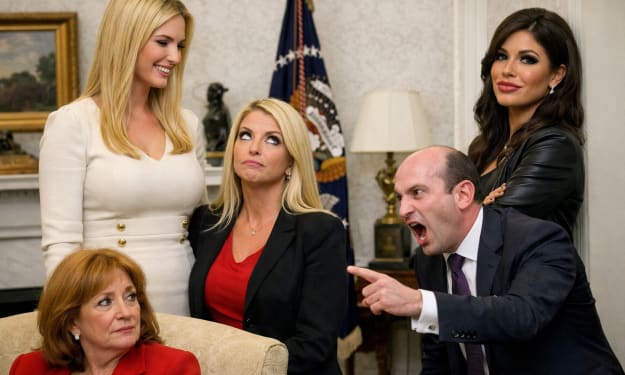
“I’m the queen of chin jutting while I smooth my hair, attacking, insulting, and deflecting to protect my appointer.” “Oh, please, Blondi, my hair is curled, highlighted, and longer than yours. I feature television commercials telling immigrants that we will give them a free plane ride home, and if they voluntarily turn themselves in, they will be allowed to legally apply for re-entry. It runs everywhere, and I look good in it! You can’t compete because of your blond hair. Mine is nicer, and my lips are prettier than yours.”
By Andrea Corwin 12 days ago in The Swamp



Comments
There are no comments for this story
Be the first to respond and start the conversation.