
Anthony Albanese Was Cruising to the Summer Break. Now His Leadership Faces Its Most Serious Test
A sudden political crisis has disrupted Australia’s calm summer narrative, forcing the prime minister to confront growing public pressure, internal party tensions, and questions about his authority.


For much of the year, Australian Prime Minister Anthony Albanese appeared to be steering his government through relatively calm waters. With major elections behind him, steady approval ratings, and a focus on economic management and social reform, the approach of the summer break seemed like a chance for consolidation rather than confrontation. That sense of political ease, however, has been abruptly disrupted. A combination of mounting public pressure, policy controversies, and national security concerns has pushed Albanese into the most demanding phase of his leadership to date.
At the heart of the challenge is the shifting public mood. Rising living costs, housing affordability issues, and concerns over public safety have begun to erode the patience of voters who once welcomed Labor’s promise of stability after years of political churn. While inflation has shown signs of easing, many Australians continue to feel the strain in everyday expenses, from rent to groceries. For a leader who campaigned on fairness and economic responsibility, the gap between macroeconomic indicators and lived experience has become politically dangerous.
Compounding this pressure are recent events that have intensified scrutiny of the government’s decision-making. High-profile incidents related to security, protests, and law enforcement have sparked debates about social cohesion and public order. Critics argue that the government has been slow to respond decisively, while supporters caution against reactionary policymaking that could undermine civil liberties. Albanese now finds himself balancing firmness with restraint—a test of leadership style as much as policy substance.
Within his own party, quiet tensions are also becoming harder to ignore. While Labor remains broadly united, differing views on how aggressively to pursue reforms on housing, climate policy, and national security are surfacing. Progressive voices are urging faster, bolder action, while more cautious figures warn of alienating centrist voters. Managing these internal dynamics without appearing indecisive will be critical if Albanese hopes to maintain authority and momentum.
Externally, the international environment adds another layer of complexity. Australia’s strategic position in the Indo-Pacific, its alliance with the United States, and its evolving relationship with China demand constant attention. Any perception of weakness at home can quickly translate into doubts abroad. Albanese’s leadership is therefore being tested not just domestically, but on the global stage, where clarity and consistency are essential.
Opposition parties have been quick to seize the moment. Framing the current situation as evidence of drift, they argue that the prime minister is struggling to impose discipline and direction. Whether this narrative sticks will depend largely on Albanese’s response in the coming weeks. History suggests that political turning points often emerge from how leaders handle pressure rather than how they perform during calm periods.
To his credit, Albanese has shown resilience before. His personal story—from a modest upbringing to the highest office in the country—has long been a source of political strength. Supporters believe this resilience will once again come to the fore, enabling him to reconnect with voters and reassert control of the agenda. Doing so, however, will require more than rhetoric. Clear communication, tangible policy outcomes, and a willingness to make difficult decisions will be essential.
The summer break, once seen as a pause, may instead become a proving ground. Australians are watching closely to see whether their prime minister can adapt to changing circumstances and lead with confidence through uncertainty. Leadership, after all, is rarely defined by moments of comfort. It is forged in times of challenge.
As Anthony Albanese confronts this critical juncture, the outcome will shape not only his political future but also the direction of Australia in a rapidly changing world. Whether he emerges strengthened or diminished will depend on how convincingly he can turn crisis into clarity—and pressure into purpose.
About the Creator
Fiaz Ahmed Brohi
I am a passionate writer with a love for exploring and creating content on trending topics. Always curious, always sharing stories that engage and inspire.
Keep reading
More stories from Fiaz Ahmed Brohi and writers in The Swamp and other communities.
Satellite Shows Tanker Seized by US Near Venezuela Is Now Off Texas Coast
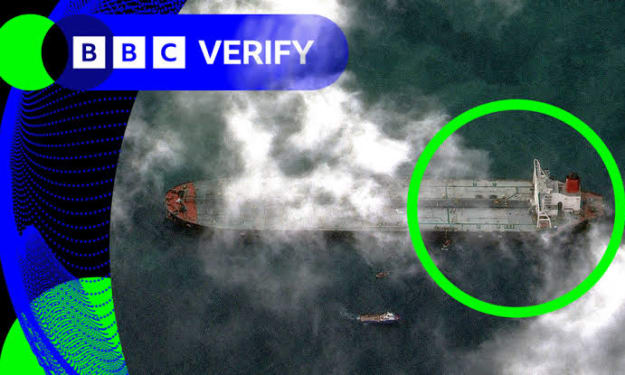
Satellite imagery revealing that a tanker seized by the United States near Venezuela has now appeared off the coast of Texas has renewed global attention on Washington’s enforcement of sanctions, maritime law, and energy geopolitics. The movement of the vessel, once at the center of a tense standoff in the Caribbean, highlights how sanctions enforcement increasingly plays out not only through diplomacy and courts, but also on the open seas. From Caribbean Waters to the Gulf of Mexico The tanker was originally intercepted by US authorities near Venezuelan waters amid allegations that it was carrying oil linked to sanctioned entities. According to officials familiar with the case, the vessel was suspected of transporting crude in violation of US sanctions imposed on Venezuela’s energy sector. These sanctions aim to restrict the flow of oil revenues that Washington argues have supported authoritarian governance rather than the Venezuelan population. Recent satellite images now show the tanker anchored or maneuvering near the Texas coastline, a clear sign that US authorities have taken physical control of the ship and its cargo. The journey from the Caribbean to the Gulf of Mexico underscores the operational reach of US maritime enforcement and its ability to bring seized assets directly under American jurisdiction. Why the Seizure Matters The seizure is more than a single enforcement action; it is part of a broader strategy to curb sanctions evasion. Over the past few years, the US has accused networks of ship owners, traders, and intermediaries of using complex tactics to move Venezuelan oil despite restrictions. These tactics often include turning off tracking systems, changing ship names, transferring cargo at sea, or routing oil through third countries. By physically seizing a tanker and relocating it to US waters, authorities send a powerful message to global energy traders: sanctions violations carry real and costly consequences. The move also demonstrates that satellite tracking and maritime intelligence have become critical tools in modern economic enforcement. Legal and Diplomatic Dimensions Once a seized tanker reaches US-controlled waters, the case typically moves into the legal system. Courts may determine the fate of the vessel and its cargo, including whether the oil is confiscated, sold, or used to compensate for penalties. In previous cases, proceeds from seized cargoes have sometimes been redirected toward humanitarian or legal settlements, though such outcomes often spark political debate. Diplomatically, the seizure adds strain to already fragile US–Venezuela relations. Caracas has repeatedly condemned sanctions as illegal and harmful, arguing they exacerbate economic hardship for ordinary citizens. Venezuelan officials often portray tanker seizures as acts of piracy, while Washington frames them as lawful enforcement under international and domestic law. Energy Markets Watching Closely Global energy markets are also paying attention. While one tanker does not significantly alter global oil supply, such actions contribute to uncertainty around sanctioned crude flows. Traders, insurers, and shipping companies become more cautious when enforcement appears aggressive and visible. This caution can have ripple effects, including higher transportation costs, reduced willingness to handle high-risk cargoes, and increased scrutiny of vessels operating near sanctioned regions. In a world already grappling with geopolitical tensions, energy security concerns, and price volatility, even symbolic actions can influence market behavior. The Role of Satellite Technology The public availability of satellite imagery has transformed how such घटन events are monitored and reported. Analysts, journalists, and even private citizens can track vessels almost in real time, making maritime enforcement more transparent than ever before. This visibility reduces the ability of sanctioned actors to operate quietly and increases public accountability for governments enforcing or violating international rules. In this case, satellite images showing the tanker’s presence off Texas effectively confirm US claims of control, leaving little room for ambiguity about the outcome of the seizure. A Signal of Future Enforcement The tanker’s relocation to US waters suggests that Washington intends to maintain, if not intensify, its sanctions enforcement posture. As long as sanctions on Venezuela remain in place, similar actions are likely, especially against vessels suspected of repeated or large-scale violations. For ship owners and energy traders, the lesson is clear: sanctions compliance is no longer just a paperwork exercise. Physical enforcement, backed by technology and legal authority, is very much on the table. Conclusion The appearance of a US-seized tanker off the Texas coast, confirmed by satellite imagery, is a vivid reminder of how geopolitics, energy, and maritime law intersect. While the legal process will determine the vessel’s ultimate fate, the broader message has already been delivered. In an era of heightened scrutiny and advanced surveillance, sanctions enforcement is becoming more visible, more assertive, and harder to ignore—on the high seas and beyond.
By Fiaz Ahmed Brohi28 days ago in The Swamp
Japan PM Takaichi Calls Snap Election Three Months After Taking Office
In a surprising move, Japanese Prime Minister Sanae Takaichi has announced a snap general election just three months after assuming office. The election is set for February 8, 2026, following the dissolution of the House of Representatives on January 23.
By Aarif Lashariabout 10 hours ago in The Swamp



Comments
There are no comments for this story
Be the first to respond and start the conversation.