
Japan PM Takaichi Calls Snap Election Three Months After Taking Office
Inside Sanae Takaichi’s bold gamble to seek public backing just weeks into her premiership.
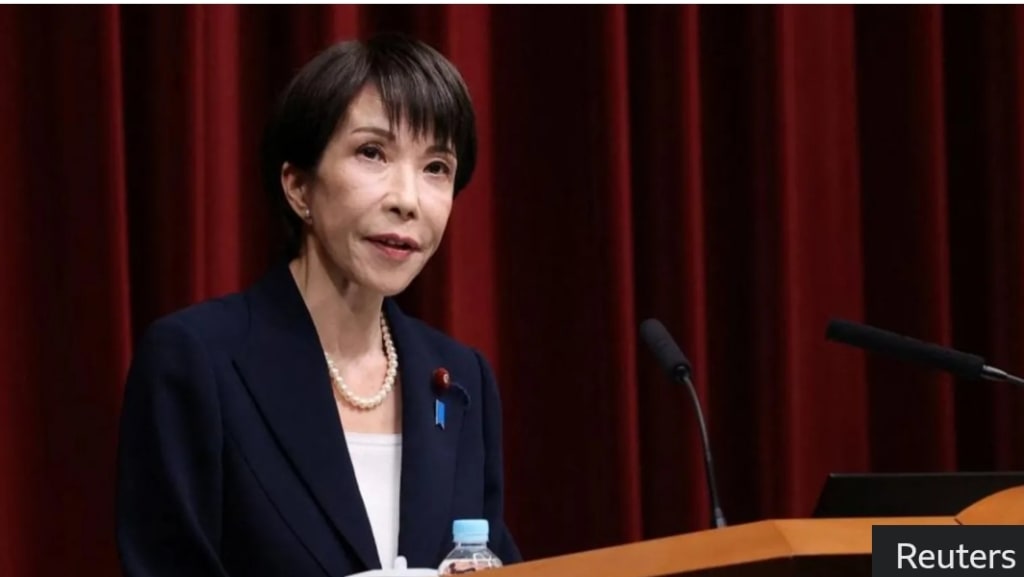
In a surprising move, Japanese Prime Minister Sanae Takaichi has announced a snap general election just three months after assuming office. The election is set for February 8, 2026, following the dissolution of the House of Representatives on January 23.
All 465 seats are up for grabs, and this vote will determine whether Takaichi can convert her early popularity into a solid mandate to lead Japan through economic challenges, rising living costs, and shifting security concerns.
A Premiere With a Risky Timeline
Takaichi made the announcement during a press conference, stating:
“I want the public to judge directly whether they will entrust me with the management of the nation.”
Her announcement comes after she became Japan’s first female prime minister in October 2025, after winning the leadership of the long-dominant Liberal Democratic Party (LDP).
Despite her personal popularity, the LDP’s broader appeal has been inconsistent, evidenced by its weak showing in the 2024 general election. To govern, the party formed a coalition with the Japan Innovation Party (JIP), holding a slim majority in the lower house.
Why Call an Election Now?
Several factors may have influenced Takaichi’s decision to call an early vote:
1. Solidifying a Mandate
Although she assumed office via an internal party vote, Takaichi has never faced the public as prime minister. This election allows her to gain legitimacy and strengthen her parliamentary position.
2. Riding High on Popularity
Polls indicate Takaichi’s personal approval ratings are stronger than her party’s. Calling an election now allows her to capitalize on this honeymoon period before public opinion potentially shifts.
3. Testing the Coalition
The LDP’s coalition with JIP provides a narrow majority. A decisive election outcome could solidify the alliance and expand their influence in parliament, while a poor result could weaken Takaichi’s control.
The Election Agenda: Economy and Security
Takaichi has outlined major policy initiatives ahead of the vote:
Economic relief: A two-year suspension of the 8% food sales tax to ease household spending.
Government stimulus: Measures to boost growth and create jobs.
National defense: Strengthened spending amid regional security concerns.
These proposals aim to address the public’s top concerns, particularly rising living costs.
Opposition and Challenges
Takaichi faces a new Centrist Reform Alliance (CRA), comprising former opposition parties, including the Constitutional Democratic Party and Komeito. Analysts suggest this coalition could complicate the ruling party’s path to a majority.
Her economic policies, especially the tax suspension, have sparked concern among investors, pushing Japanese government bond yields to a 27-year high.
Historical Context: Short Timelines and Strategy
Snap elections are allowed under Japan’s parliamentary system, but calling one this early is unusual. Quick elections can backfire, as seen with her predecessor, Shigeru Ishiba, whose early election led to disappointing results.
This move also reflects internal LDP dynamics. Securing a fresh mandate could unify the party and strengthen Takaichi’s negotiating power.
A Fast-Paced Campaign Ahead
The election campaign will be intense:
Dissolution of parliament: January 23
Campaign launch: January 27
Voting day: February 8
The compressed schedule challenges candidates to communicate platforms quickly. Critics worry that timing — during winter and exam season — could suppress voter turnout.
Why This Election Matters
This vote is more than routine; it’s a referendum on Takaichi’s leadership and vision. Her stances on economy and national security will influence Japan’s role in regional geopolitics, including relations with China and the U.S.
A strong victory could allow Takaichi to reshape Japan’s policies for years. A narrow win or loss could empower opposition forces and shift the political landscape.
Conclusion: Japan at a Crossroads
By calling a snap election just three months into her tenure, Prime Minister Sanae Takaichi is taking a bold gamble. Her leadership, policy direction, and political vision are all on the line.
As voters head to the polls on February 8, 2026, Japan stands at a political crossroads — one that could define its economic and strategic course for the coming decade.
About the Creator
Keep reading
More stories from Aarif Lashari and writers in The Swamp and other communities.
Australia Moves to Pass Tougher Gun and Hate Crime Laws After Bondi Shooting
Australia is set to pass a significant package of stricter gun control and hate crime laws following the devastating Bondi Beach shooting in December 2025. This tragic attack, which left 15 people dead, has prompted lawmakers to act swiftly to prevent similar violence in the future.
By Aarif Lashari2 months ago in The Swamp
The Forsyth House Fire
Since 1851, Forsyth House has stood on the corner of Union Street and Gordon Street in the heart of Glasgow. Its iconic, or was... because on Sunday 8th of March, 2026, a fire broke out in a small, seemingly un-named shop in the building and tore all that history down. As I write, the rubble is still unsettled and the street is still blocked off. Central Station is quiet on the upper level, and around 30 small businesses have quite literally gone up in smoke.
By S. A. Crawford2 days ago in The Swamp
Father and Daughter Killed in Gaza as War Intensifies and Civilian Toll Rises
Renewed strikes highlight the growing humanitarian crisis as the conflict spreads across the region. A father and his young daughter were killed in the Gaza Strip during a recent airstrike as the ongoing war continues to claim civilian lives. Local health officials reported that the victims were among several people killed during strikes that struck residential areas amid escalating hostilities between Israel and the militant group Hamas. The deaths occurred in a densely populated neighborhood in northern Gaza Strip, where residents said explosions hit a cluster of buildings late at night. Emergency responders rushed to the scene, pulling survivors and casualties from damaged structures while families searched through rubble for missing relatives. According to local medical authorities, the father and daughter were inside their home when the strike occurred. Both were declared dead after being transported to a nearby hospital. Several other civilians were injured in the same attack. Rising Civilian Casualties The incident reflects the mounting civilian toll in Gaza as the conflict continues. Hospitals in the enclave, already strained by shortages of medical supplies and staff, have reported a steady flow of wounded civilians in recent weeks. Health officials in Gaza say many of the victims are women and children, highlighting the severe humanitarian impact of the fighting. Residential buildings, roads, and infrastructure have sustained heavy damage as military operations and rocket fire continue across the territory. The Israeli military has stated that its operations are directed at militant targets linked to Hamas and other armed groups. Officials say strikes are aimed at weapons storage sites, command centers, and launch positions used to fire rockets into Israeli territory. However, the densely populated nature of Gaza — home to more than two million people — means that military operations often occur close to civilian homes and infrastructure, increasing the risk of casualties among residents. Wider Regional Tensions The Gaza conflict has unfolded alongside growing instability across the Middle East. Regional actors have become increasingly involved, raising fears that the fighting could expand into a broader confrontation. Analysts say the situation remains volatile as exchanges of fire continue on multiple fronts. Cross-border tensions and military activity have been reported in several areas, reflecting the complex web of alliances and rivalries that shape the region’s security landscape. The humanitarian situation in Gaza has also drawn global concern. International organizations and aid agencies have warned that civilians face severe shortages of food, water, and medical supplies as the conflict disrupts supply routes and infrastructure. International Reactions Several governments and international bodies have called for restraint and renewed diplomatic efforts to reduce violence. The United Nations has repeatedly urged all parties to protect civilians and allow humanitarian aid to reach affected communities. Aid agencies working in Gaza say that access to essential supplies remains limited in many areas. Damage to roads and infrastructure has complicated efforts to deliver assistance, while overcrowded shelters struggle to accommodate displaced families. Human rights organizations have also emphasized the need for independent investigations into civilian deaths during the conflict. They argue that accountability and adherence to international humanitarian law are essential to protecting noncombatants. A Continuing Humanitarian Crisis For families living in Gaza, the loss of loved ones has become an all too familiar reality. Survivors of the latest strike described scenes of devastation, with damaged homes and grieving relatives gathering outside hospitals. The father and daughter killed in the recent attack are among the many civilians whose lives have been lost during the war. Their deaths underscore the human cost of the conflict and the urgent need for efforts to reduce violence and protect vulnerable populations. As fighting continues and regional tensions persist, the humanitarian consequences of the war are expected to deepen. For the people of Gaza, each day of conflict brings renewed uncertainty about safety, security, and the future.
By Fiaz Ahmed 7 days ago in The Swamp
A Transparent Look at Vocal Challenges and Top Stories
Almost three years ago, we shared a resource article that served as a place for people to suggest new challenge prompts. We thought it would be a good idea to refresh that thread, and take the opportunity to answer a few common questions about top stories, how challenges are judged and how submissions are reviewed.
By Vocal Curation Team3 days ago in Resources



Comments
There are no comments for this story
Be the first to respond and start the conversation.