

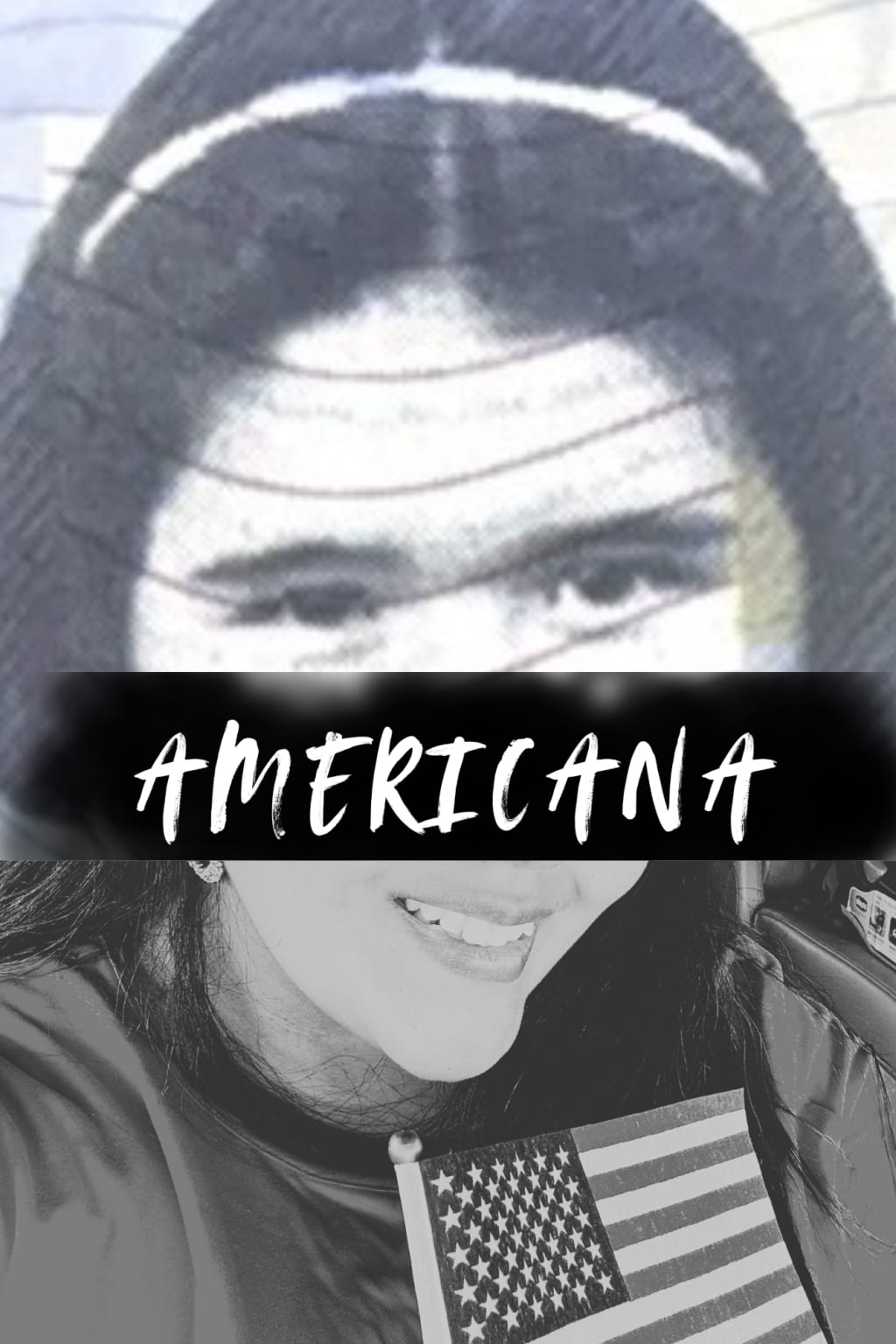
The USCIS office in Jacksonville, Florida was tucked away just out of sight from the busy road. My husband easily found a parking spot in front of the building and abandoned the ship as I unbuckled my daughter from her car seat, my son was antsy to exit the minivan just behind her. As I turned toward the building, I was internally grateful that my appointment was set early in the morning.
The sky was still a little dark as we walked up the short sidewalk hand in hand toward the tall, mustached security officer. I held back a laugh as I watched my husband squirm through security inside the building, even through the window, I could see his eyes darting to the sign that read “Restrooms” just ahead.
“Respira,” the security officer was saying to the elderly couple in line in front of me. “Breathe.”
I smiled as he turned his attention to me and issued a similar command, this time adding a little extra. “Or I’ll have to kick you in the pants,” he muttered in Spanish.
I chuckled and threw my hands up. He looked pointedly at my bag.
“You don't have a bomb in there, do ya?”
“No way!”
He furrowed his brow with a twinkle in his eye. “Alright, go on in.” He offered my children a fist-pump as they wiggled inside.
I glanced at the appointment notice in my hand, the date September 10th, 2024 was displayed clearly along with a list of the supporting documents I was required to bring with me. I checked the weight of my bag once more for good measure before lifting it into the security bin to be inspected. I followed my children through security, holding my pregnant belly protectively as I did so before being handed back my belongings.
It wasn't the first time my life had been reduced to government records, and tax forms. As an immigrant and child of immigrants, I was terrified of the school forms that asked for things like social security number and place of residence. I didn’t know all it meant was where I currently resided. I was afraid it was asking about my current status in the USA. Which was, for a good portion of my life, undocumented. I was described by an ugly word. Alien. Worse. Illegal alien.
When eight-year-old me watched the Twin Towers come crumbling down on September 11th, 2001 from a rabbit ear T.V. in Central America, I didn’t know that what I was watching was a terrorist attack. All I knew was that I was scared: Papi was in America and something bad just happened there. I didn’t know my dad was safely 1,000 miles away in Florida or that my whole life, like that of millions, was about to change.
I arrived at the Orlando International Airport two months later in November of 2001 on a visitor’s visa with nothing but a change of clothes, a tweety-bird backpack, and my mom and baby brother. We met up with my dad, whom I hadn’t seen in six months, and he, along with my American cousin, took us to a little apartment complex an hour away where, when we entered, I asked my dad’s permission to use the restroom.
“Of course you can,” he said. “This is your home now.”
Up until this moment, I thought we were going to Disney World.
“I can take the next person in line!”
The voice broke through my memory and I blinked and looked down at my children with whispered instructions.
My daughter held tightly to my hand, her hair was straight like mine used to be. My son grinned at me with missing front teeth, before leading the way toward the lady at the check-in window.
I was only a little older than him when I’d been led into a new country holding my own mother by the hand.
“Take a seat,” the lady said. I admired her nails. They were painted red, white and blue. “How are you?”
About to give birth on this chair if you don't get me through this as quickly as humanly possible.
“Fine, thanks for asking.”
“Great. Can I have your appointment notice and your Green Card?”
I handed them over.
“Please place your finger on the scanner.”
Dear God, please don't let this baby come until sometime after the interview.
We were currently one hour away from the hospital where I planned to give birth. Nevermind the fact that the hospital was still an hour away from my home. Between the distance and the fact that this would be my third delivery, my mind had been flooded with intrusive thoughts about whether I would rather give birth in the van or in my 90 year old remodeled farmhouse.
I confirmed my address for the lady behind the plexiglass. I'd come a long way from the tiny apartment where I spent my first night in this country twenty-three years ago.
The houses in that first neighborhood were not like the ones I’d seen in 90’s sitcoms. Not one of them was two stories with a white picket fence. It was a little disappointing. Kids didn't seem to play outside as much and the weather was chillier than what I was used to.
My first day of school was full of surprises. I decided I wasn't a huge fan of air-conditioning. Back in my old school, the teacher would crack windows open or leave the door ajar if we were hot.
There were computers in my new second grade classroom that were different colors and fancier than anything I’d ever seen. I wondered if I would ever get to use one.
My teacher was a tall black woman. I thought she was very pretty despite the fact that she had terrifying acrylic nails that made the most crippling sound when they tapped impatiently against my desk. She didn’t seem to grasp the concept that talking louder to a kid who only knew the words “sheep” and “door” in English, wouldn’t make much of a difference as to my level of understanding. A few days later, I was paired up with Janette, a Mexican girl who hated my guts, but since she had a full grasp of both languages, she was my only lifeline. I caught on to the language quickly as a matter of survival.
“We are all done here, please take a seat in the waiting area.”
I thanked her and struggled to rise from the chair my belly tightening uncomfortably as I did so. My phone started to ring, I fumbled with it on the way to my new seat.
“Babe, can you keep the kids with you? The security guard said I had to leave when I asked to get them.”
Unbelievable.
“Umm… let me call you back.”
I opened the door that led to the security area and waved down the closest officer.
“Excuse me, are my children allowed to be with me?”
The officer raised his eyebrows. “Oh, so that was your husband.”
“Uh-huh. My kids are well-behaved but I want to make sure this won’t cause an issue with my interviewer.”
The officer cleared his throat. “Tell your husband he can pick them up at the door.”
I turned up the corners of my mouth and dialed his number again.
“Where are you?”
“I left.”
I hissed his name. “Get back here. Now.”
“But—”
“The kids will be waiting for you. Goodbye.”
Click.
I watched as the van pulled back in its place and gave the security officer a thankful nod as he led them to their Daddy before sinking into a plastic chair.
My parents’ intention had always been to apply for citizenship. They did so shortly after their arrival, but the crackdown on immigration following the terrorist attack on the World Trade Center was an impact that was felt almost immediately. My visa expired during the time we waited to hear back from Immigration services, at which time I became illegal.
My parents could have left then but already I’d started to settle into my new life. My English was fluent by the fourth grade and I was being recognized for my reading and writing progress. My parents decided to keep their heads down, pay their taxes, keep out of trouble, and keep trying to adjust their status from inside the country, not knowing how long that might take. Never once did they apply for a government benefit, but every year, like clockwork, they filed taxes.
While other kids took family trips out of the country, I knew that if I ever left I could never come back. As much as I missed my family in my home country, I knew there was no life for me there anymore. My parents had lost everything. America was our last hope.
I often had nightmares about my last day in my country, they came back like clockwork every month when my grandmother would call and beg me to come back home. I felt responsible for breaking her heart and eventually, I stopped picking up the phone. For me it was easier to try to forget where I came from, rather than to re-live my trauma time and time again.
At school I always stayed in my lane. Although I was far from a straight A student, I did what I could to get good grades, extra credit, and to be thought of as a good student. But I lived with a terrible secret, one that made my heart pound every time I walked past a police officer. I feared that any slip on my part could get my parents arrested or deported.
When my friends were getting their first driver’s license, or car, I was holding back tears thinking that would never be me. While they posed for their senior photos, I longingly held them in my hands and admired how beautiful they came out. When I was given my form I’d tossed it in the trash, not wanting to burden my parents with the price of the shoot, or the guilt of not being able to buy me new clothes for it. I knew if I asked them they would work extra hours to get me whatever I wanted but I already felt so guilty when they got me a new cell phone or MP3 player for Christmas. I saw them sweating every time they had to ask the landlord to collect the rent a couple of weeks late.
I looked down at my TEMU dress now and tried not to think of how ironic it was to be going into a naturalization interview wearing something imported from China. I'd made a lot of changes in my adulthood, but I still couldn't comfortably spend any more than $30 on a new outfit for myself. This one was supposed to be my Christmas dress. I got my kids matching ones for a grand total of less than $15.
“P14!”
I glanced at the ladies I’d been making small-talk with as they recognized their number being called. The younger woman was the neighbor of the applicant, a lovely elderly Indian woman who barely spoke English. I gave them a thumbs-up as they walked past me and said a prayer as they followed the immigration officer to the back.
With no one else to distract me from my jitters, I took to thumbing through the documents in my bag for the hundredth time. Google had nothing on the amount of personal information contained in my leather bag, a gift from my husband from when we were newlyweds.
The acceptance letter from my dream school was tucked away in my file folder along with invitations to join prestigious clubs for high school scholars or visit the Capitol as a part of a group of accomplished kids.
Going to my dream school would require more money than a poor college student working two jobs could afford. Instead, I kept the cardstock letters with embalmed seals. I’d long since taught myself not to think of what might have been if I’d had the courage to seek more opportunities.
Still, I knew financial aid was not possible at the time for people like me. For someone who'd become accustomed to having doors of opportunity slammed in her face, trying again felt like a form of self-harm and so, I submitted myself to keeping the papers as reminders that someone out there thought I could be great if I really got the chance.
“P13!”
My heart gave a start as I recognized my number and jumped to my feet, ignoring the tightening of my belly again as I waddled, rather than sprinted, toward the lady immigration officer holding the door open for me.
We exchanged pleasantries, me, without a single hint of an accent. The woman was Hispanic and gave a polite smile under scrutinizing eyes. Her small talk seemed harmless, but I recognized it for what it was; the calculated beginning of my interview. I answered her accented questions without hesitation, followed her instructions to the letter, and raised my right hand, pledging to tell the whole truth.
We took our seats across from one another. I concentrated on her inquiries and swallowed everything else. I tried not to think of the twenty-three years that led me to this point, the heartache, the pain, the Christmases missing my family members. The empty pews on my side of the church when I made my marriage vows. My first miscarriage and the inexplicable longing I had to bury my face in my grandmother’s neck and be held like I used to be. Like I held my daughter now when she skinned her knee. To this woman I was one of hundreds of cases that crossed her desk every year. I could be that one more time. I could be a pile of papers on her desk once more if it meant that after this I got to be whoever I wanted to be.
A dreamer. A mother. A lover. A fighter. A good daughter. A loving wife. A daughter of God who would fight for the integrity and health of the nation she had come to know and love. The nation she called home.
“Please stand again and raise your right hand.”
I did as I was told and held back tears as I repeated the oath of allegiance. My heart beat wildly in my chest, was this happening? Was it finally over?
Breathe, girl. Breathe.
“Congratulations,” Officer Hernandez was saying now. “You are a citizen of the United States of America.”
Back in the waiting room she handed me a small American flag with my official certificate of naturalization. The photo was that of eighteen year old me the first time I applied for DACA. Out of all the applications that followed, it seemed the most fitting that they would use the photo that my government first came to know me by.
I hugged the smiling officer and walked outside, clutching the last document that would come to define me.
In the last four years over 11 million border crossings have occurred, resulting on longer wait times for legal immigrants who have waited, many of them for many years for their chance at the American Dream.
Many of the crossings have been made up of unaccompanied minors who are now lost in this country through no fault of their own and with no one to help them.
About the Creator
Mezmur
Rooted in Christian faith yet unafraid of human fragility, Mezmur writes as both survivor and worshipper. Her work invites readers to breathe again, to see that even in the deepest silence, Love remains.
Reader insights
Outstanding
Excellent work. Looking forward to reading more!
Top insights
Compelling and original writing
Creative use of language & vocab
Easy to read and follow
Well-structured & engaging content
Excellent storytelling
Original narrative & well developed characters
Eye opening
Niche topic & fresh perspectives
Heartfelt and relatable
The story invoked strong personal emotions
Masterful proofreading
Zero grammar & spelling mistakes
On-point and relevant
Writing reflected the title & theme
Why Black History Matters in America?
The United States of America is celebrating their 250th anniversary in 2026. I'm proud to be an American and as someone who was born here, I wouldn't imagine myself living anywhere else. This is a country where opportunities are possible. Where anyone can be successful in anything they desire to do. Equality, community, and togetherness are the backbones of what America is and should be about. However, we have an administration who wants to erase and disregard those who have made positive, meaningful impacts in our country, specifically Black figures, such as Martin Luther King, Jr., Rosa Parks, and Maya Angelou. President Trump and his administration have been constantly complaining and fighting against what they call the "Woke agenda". They use this excuse as a distraction from other issues they refuse to address, such as the high cost of living, climate change, and inflation. That equality is dividing America, when in reality, it's bringing us together. Being woke is not tied to a specific political party. No matter where you stand on the political spectrum, you can still care about other people and their plights. Compassion and empathy for others isn't tied to a political party, either. We were taught as children to treat others the way we want to be treated and not judge others because they're different from us. Caring about others isn't a personal attack on your beliefs. It doesn't make you any less of a person. People who are easily offended over African American figures, past or present, or anything related to it, are grasping at straws. Current and future generations need to know who people like Harriet Tubman and Shirley Chisholm were, especially in the classroom. Black History is part of American History. It should be recognized, not hidden or forgotten. Besides, you can't shield children from everything, just because your feelings are easily hurt.
By Mark Wesley Pritchard 27 days ago in The Swamp
It's 2026. Songs Turning 10 This Year
In 2016, we saw the rise of short form videos and what would lead to the birth of TikTok. We cannot forget the Snapchat filters no matter how cringe worthy some of them might have been. It was also the year in which the hit series Stranger Things debuted.
By Jasmine Aguilar7 days ago in Beat


Comments (2)
I’ll just wait u til your second book. Ruby is also Mia.
I LOVED YOUR STORY! I cried.