
Venezuela to Free Scores Under New Amnesty Law
Government says reconciliation is the goal, critics warn of political calculations ahead of elections
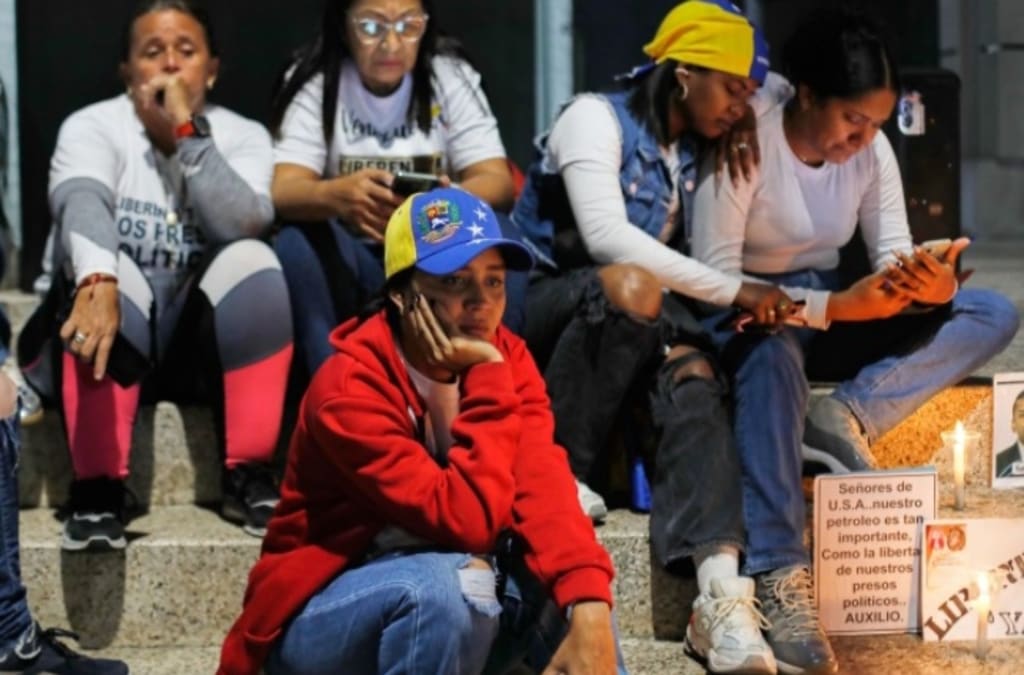
In a move that has stirred cautious optimism and deep skepticism in equal measure, Venezuela’s government has announced that it will release scores of detainees under a newly approved amnesty law. Officials say the measure is designed to promote national reconciliation after years of political turmoil. Critics, however, argue that the timing raises questions about whether the decision is driven by principle — or political strategy.
The announcement from the administration of President Nicolás Maduro marks one of the most significant gestures toward easing domestic tensions in recent years. Venezuela has been locked in a prolonged political and economic crisis that has polarized institutions, fractured opposition movements, and drawn international scrutiny.
Now, with the passage of a new amnesty framework by the pro-government National Assembly, dozens — and potentially more — individuals accused of political offenses could see their charges reduced or dismissed altogether.
What the Amnesty Law Covers
According to government officials, the law applies to individuals accused of certain political crimes related to protests, public disorder, or alleged conspiracy against the state. It does not extend to those convicted of serious violent offenses.
Authorities say the purpose is to “turn the page” on years of unrest that intensified after disputed elections and waves of demonstrations. Over the past decade, protests against economic hardship, shortages, inflation, and governance have led to arrests, with human rights groups repeatedly raising concerns about due process.
The government maintains that many of those detained were involved in efforts to destabilize the state. Opposition leaders counter that numerous detainees were political prisoners held for exercising free speech or participating in demonstrations.
A Gesture of Reconciliation — or Political Timing?
Supporters of the measure argue that the amnesty law is a step toward reducing tensions and opening space for dialogue between the government and opposition factions. They point to previous attempts at negotiation that stalled amid mistrust and international sanctions.
However, critics note that the announcement comes at a politically sensitive moment. With elections and renewed international engagement on the horizon, some analysts believe the amnesty could be aimed at improving Venezuela’s diplomatic standing and easing external pressure.
The country has faced sanctions from the United States and European nations over allegations of democratic backsliding and human rights abuses. Moves perceived as reforms — including prisoner releases — may influence how foreign governments assess Venezuela’s political climate.
The Broader Political Context
Venezuela’s political crisis has roots stretching back more than a decade, intensifying after the death of former President Hugo Chávez in 2013. Under Maduro’s leadership, the country has experienced economic collapse, hyperinflation, and mass migration.
At the height of the standoff in 2019, opposition leader Juan Guaidó declared himself interim president, a move recognized by several Western governments but rejected by Maduro and his allies. Though Guaidó’s international support later waned, the episode underscored the deep divisions within Venezuelan politics.
In this context, the amnesty law represents not just a legal maneuver but a symbolic one. It suggests an acknowledgment — at least rhetorically — that reconciliation may be necessary to stabilize the country.
Families React with Cautious Hope
For families of detainees, the news has brought cautious relief. Many have spent years advocating for the release of relatives they describe as unjustly imprisoned. Human rights organizations report that uncertainty remains about how quickly releases will occur and whether the process will be transparent.
Some families fear bureaucratic delays or selective implementation. Past announcements of releases have sometimes unfolded gradually or involved conditional measures.
Advocacy groups are calling for independent oversight to ensure that the amnesty is applied fairly and that freed individuals are not subject to re-arrest under new charges.
International Response
The international community’s reaction has been measured. Diplomats from several countries have welcomed the prospect of releases while urging Venezuela to pursue broader institutional reforms.
Organizations such as the United Nations have long encouraged dialogue and the protection of civil liberties in the country. A sustained reduction in politically motivated detentions could potentially open doors for renewed diplomatic engagement and economic cooperation.
However, observers caution that lasting change requires more than symbolic gestures. Structural issues — including judicial independence, electoral transparency, and economic management — remain central to Venezuela’s long-term stability.
Economic Pressures Loom Large
Beyond politics, Venezuela continues to grapple with profound economic challenges. Although inflation has eased somewhat compared to its peak hyperinflation years, living standards remain fragile for many citizens.
Oil production — historically the backbone of the Venezuelan economy — has struggled due to infrastructure decay, sanctions, and underinvestment. Any improvement in international relations that results from perceived political reform could influence economic prospects, particularly in the energy sector.
Some analysts suggest that the amnesty law may be part of a broader strategy to rebuild investor confidence and reduce isolation.
Risks and Unanswered Questions
While the announcement signals potential progress, key questions remain:
How many detainees will ultimately be freed?
Will the law apply equally to high-profile opposition figures and lesser-known activists?
Could future political unrest lead to new waves of arrests?
Is this the beginning of sustained reform — or a temporary measure?
The credibility of the initiative may hinge on consistent implementation and transparency.
A Delicate Balancing Act
For Maduro’s government, the amnesty law represents a delicate balancing act. On one hand, it offers an opportunity to ease criticism and possibly strengthen diplomatic channels. On the other, it risks alienating hardline supporters who view concessions as weakness.
For the opposition, the challenge is equally complex. Accepting the releases as a good-faith gesture may open space for negotiation, but skepticism remains high after years of failed talks.
A Turning Point or Tactical Pause?
Whether Venezuela’s new amnesty law marks a genuine turning point remains to be seen. Political crises rarely resolve overnight, especially in deeply polarized societies.
Still, for the individuals who may soon regain their freedom — and for their families — the stakes are deeply personal. If implemented fully and fairly, the measure could reduce tensions and create space for broader reforms.
If it proves selective or short-lived, it may deepen mistrust.
For now, Venezuela stands at a crossroads. The decision to free scores under the new amnesty law has opened a narrow window of possibility. What comes next will determine whether that window widens into lasting reconciliation — or closes as another fleeting chapter in a long-running crisis.
About the Creator
A Gathering of Evil Bosses
“I’m the queen of chin jutting while I smooth my hair, attacking, insulting, and deflecting to protect my appointer.” “Oh, please, Blondi, my hair is curled, highlighted, and longer than yours. I feature television commercials telling immigrants that we will give them a free plane ride home, and if they voluntarily turn themselves in, they will be allowed to legally apply for re-entry. It runs everywhere, and I look good in it! You can’t compete because of your blond hair. Mine is nicer, and my lips are prettier than yours.”
By Andrea Corwin 5 days ago in The Swamp
For an Immigration Trap on a Bridge to Canada, an Encouraging Sign
Authorities along the Canada–U.S. border are closely monitoring a section of the Rainbow Bridge that has long been associated with attempts at irregular migration. In recent months, officials and community groups have noticed developments that suggest a potential shift toward safer, more regulated crossings and improved support for vulnerable migrants. The bridge, which connects Niagara Falls, New York with Niagara Falls, Ontario, has historically been a site where migrants seeking asylum in Canada attempted dangerous crossings, often in precarious conditions. In response, Canadian and U.S. authorities have increased surveillance, reinforced law enforcement presence, and introduced programs to educate potential migrants about safe, legal routes. A Risky Journey Migrants attempting to cross the bridge irregularly often face significant risks, including exposure to harsh weather, physical injury, and legal consequences. Many are fleeing conflict, persecution, or economic hardship in their home countries, driven by the hope of finding safety and opportunity in Canada. Despite increased border enforcement, some continue to take dangerous paths, prompting concern from both law enforcement and humanitarian organizations. In recent years, incidents of arrests, injuries, and near-misses have highlighted the need for both stricter oversight and safer alternatives. Encouraging Developments Officials report that outreach efforts and new policies are showing promise. Canadian immigration authorities have expanded programs to inform potential asylum seekers about legitimate channels, such as pre-arrival registration, legal aid services, and temporary resident visas. Community organizations, including refugee support networks in Ontario and New York, are collaborating to provide guidance, shelters, and legal resources. Their efforts aim to reduce the temptation of unsafe crossings and ensure that migrants understand the requirements and protections available through official channels. “Education is a critical tool,” said a spokesperson for a local refugee support group. “When people know the legal pathways and the risks of irregular crossings, they are more likely to take safer steps toward seeking asylum.” Law Enforcement Perspective Authorities on both sides of the border continue to prioritize safety and deterrence. U.S. Customs and Border Protection (CBP) and the Canada Border Services Agency (CBSA) have enhanced patrols and surveillance technologies to monitor bridge approaches and detect irregular crossings. “While enforcement is necessary, we also recognize the importance of outreach and information,” said a CBSA official. “We want migrants to understand that crossing safely through legal channels is the best way to protect themselves and their families.” Regional Impact The Niagara region has witnessed fluctuating migration patterns over the past decade, with local economies, emergency services, and law enforcement adapting to changing demands. Officials emphasize that coordinated efforts between U.S. and Canadian authorities, along with community organizations, are essential to managing the flow of people while minimizing risks and disruptions. The presence of volunteers, legal counselors, and educational campaigns reflects a growing recognition that humane, well-informed approaches can be as effective as enforcement in reducing dangerous crossings. Looking Forward Experts suggest that continued collaboration between governments and community organizations could further reduce the risks associated with irregular migration at border points like the Rainbow Bridge. By combining legal guidance, outreach, and vigilant monitoring, authorities aim to create an environment where migrants are encouraged to use safe, regulated paths rather than resorting to hazardous crossings. While challenges remain, the recent signs of improved coordination and outreach offer hope that the dangerous cycle of irregular border attempts can be mitigated, providing safer outcomes for those seeking refuge in Canada.A Symbol of Hope For now, the Rainbow Bridge is showing what cooperation can achieve. By combining enforcement with education and humanitarian assistance, authorities are slowly transforming a dangerous crossing into a place of redirection rather than risk. “It’s not perfect,” said a volunteer advocate, “but fewer people are putting their lives in danger. That alone is progress.” The bridge that once symbolized an immigration trap may now stand as an example of how compassion and coordination can reshape border realities—offering hope that safer solutions are possible even in the most challenging migration corridors.
By Fiaz Ahmed 6 days ago in The Swamp
The Cairn Beside the Lake
And so it came to pass that King Ertharion, Tenth King of Lombaia, stood beside the still lake below unrelenting and unassailable cliffs with the remainder of his harried host. In what was the tenth year of his reign and his forty-fourth upon this great green earth, Menigo the Betrayer, cousin of King Ertharion, pressed home his false claim.
By Matthew J. Fromm3 days ago in Fiction




Comments
There are no comments for this story
Be the first to respond and start the conversation.