
All-Terrain Vehicle Market Size & Forecast 2026–2034: Off-Road Mobility Enters a New Era
Rising Adventure Tourism, Utility Applications, and Electric Innovation Drive the Global ATV Market Forward


All-Terrain Vehicle Market Overview
The global All-Terrain Vehicle (ATV) market is entering a phase of steady and sustainable expansion as off-road mobility gains traction across recreational, agricultural, industrial, and defense applications. According to Renub Research, the market is expected to grow from US$ 4.73 billion in 2025 to US$ 6.29 billion by 2034, registering a CAGR of 3.21% during the forecast period 2026–2034.
This growth is supported by the rising popularity of adventure tourism, expanding utility use in agriculture and forestry, and continuous technological innovation—especially in electric powertrains and safety systems. As consumers increasingly seek versatile, rugged, and efficient vehicles capable of navigating difficult terrain, ATVs are emerging as indispensable machines for both leisure and productivity.
What Is an All-Terrain Vehicle?
An All-Terrain Vehicle (ATV) is a compact, off-road motor vehicle designed to traverse a wide variety of terrains such as dirt trails, deserts, forests, snowfields, and rocky landscapes. Most ATVs feature four low-pressure tires, a wide stance for stability, and handlebar steering, making them highly maneuverable in challenging environments.
Initially developed for recreation, ATVs have evolved into multi-purpose utility vehicles used in agriculture, forestry, construction, military patrols, and rescue operations. Modern ATVs now range from lightweight sport models to heavy-duty utility machines capable of towing equipment, plowing snow, or carrying cargo with specialized attachments.
All-Terrain Vehicle Market Outlook
The market’s outlook remains optimistic, driven by changing lifestyles, rising disposable income, and a global shift toward experience-based recreation. ATVs are no longer niche vehicles—they have become mainstream tools for adventure seekers, farmers, government agencies, and industries operating in remote regions.
Technology is also reshaping the market. Advanced suspension systems, digital displays, GPS tracking, and the introduction of electric ATVs are enhancing performance while addressing environmental concerns. Governments and manufacturers alike are focusing on safety, sustainability, and efficiency, making the next decade a transformative phase for the ATV industry.
Key Growth Drivers of the All-Terrain Vehicle Market
1. Rising Demand for Outdoor Recreation and Adventure Sports
The growing enthusiasm for outdoor activities such as trail riding, desert exploration, off-road racing, and eco-tourism is a major catalyst for ATV adoption. Consumers across North America, Europe, the Middle East, and Asia-Pacific are increasingly investing in recreational vehicles that offer thrill, freedom, and connection with nature.
Adventure tourism operators are expanding ATV-based experiences, particularly in desert regions, mountainous areas, and forest trails. Off-road parks and dedicated ATV tracks have further boosted participation across all age groups.
In June 2024, Sichuan Jinjia Special Equipment Technology Co., Ltd. launched the “Giant Lizard”, a state-of-the-art all-terrain vehicle designed for extreme environments including deserts, wetlands, snowfields, and inland waterways—highlighting innovation in recreational and utility segments alike.
2. Expanding Use in Agriculture, Forestry, and Utility Applications
Beyond recreation, ATVs are becoming essential in agriculture, forestry, and land management. Farmers use ATVs for transporting equipment, crop spraying, livestock monitoring, fence installation, and field inspection—tasks that would otherwise require larger, costlier machinery.
Compared to tractors and pickup trucks, ATVs offer lower operating costs, higher maneuverability, and better fuel efficiency, making them ideal for small and medium farms. Forestry departments and conservation agencies also rely on ATVs for patrols and monitoring in inaccessible terrain.
In November 2024, Gravton Motors introduced “Quanta”, an electric all-terrain motorcycle powered by LMFP battery technology, offering a range of 130 km and rapid charging—demonstrating how utility applications are driving innovation in electric off-road vehicles.
3. Technological Advancements and Product Innovation
Manufacturers are heavily investing in innovation to enhance performance, safety, and user experience. Modern ATVs now feature:
Advanced suspension systems for stability
Electronic fuel injection and traction control
Improved braking systems
Ergonomic seating and digital interfaces
Connectivity features and customization options
Electric ATVs are gaining momentum due to low noise, zero emissions, and minimal maintenance, making them ideal for eco-sensitive zones and agricultural operations. In February 2025, BRP (Bombardier Recreational Products) received approval for its LinQ Quick-Attach System, allowing faster attachment changes on its Can-Am ATVs—improving efficiency and usability.
Challenges Facing the All-Terrain Vehicle Market
Safety Concerns and Regulatory Restrictions
Despite their benefits, ATVs are associated with accident risks and rollover injuries, prompting governments to enforce strict safety regulations. In many countries, ATV use is restricted in public spaces, forests, and protected lands. Manufacturers also face rising compliance costs due to safety standards, certifications, and age restrictions.
Varying regulations across regions further complicate global expansion strategies, making compliance a significant challenge for international brands.
High Purchase and Maintenance Costs
Premium ATVs—especially high-performance and utility models—require substantial upfront investment. Additional costs for accessories, safety gear, fuel, and maintenance can discourage price-sensitive buyers, particularly in emerging economies.
Economic uncertainty also affects discretionary spending on recreational vehicles. Manufacturers must carefully balance innovation with affordability to remain competitive in diverse markets.
Segment Analysis
Agricultural All-Terrain Vehicle Market
Agricultural ATVs represent one of the fastest-growing utility segments. Their ability to operate in rough farmland, hilly terrain, and muddy fields makes them indispensable for modern farming. The availability of attachments such as plows, trailers, and sprayers has significantly expanded their usefulness.
Developing countries with large rural populations are witnessing rising adoption as farmers seek cost-effective and mobile equipment to improve productivity.
Recreational All-Terrain Vehicle Market
The recreational segment remains the largest contributor to global ATV revenue. Growing disposable incomes, social media influence, and the desire for outdoor experiences are driving demand. Tourism companies increasingly offer ATV-based excursions, while off-road events and races attract enthusiasts worldwide.
Despite being discretionary, recreational ATVs continue to dominate in regions with favorable regulations and strong outdoor cultures.
400–800cc All-Terrain Vehicle Market
ATVs in the 400–800cc engine range are the most versatile and widely sold globally. They offer the ideal balance of power, cost, and usability for both utility and recreational applications. This segment is favored by intermediate users seeking multi-functional performance without excessive fuel consumption or maintenance costs.
Above 800cc All-Terrain Vehicle Market
High-capacity ATVs are designed for users who demand maximum power, towing capacity, and rugged performance. While this segment commands higher prices and limited volumes, it generates strong value for manufacturers due to premium features and specialized use cases such as heavy towing and extreme off-roading.
Regional Market Insights
United States
The U.S. is the largest ATV market globally, supported by strong outdoor recreation culture, extensive rural land, and well-developed off-road infrastructure. Both recreational and utility segments are highly developed. In August 2023, American Honda introduced new ATV models including FourTrax Recon, TRX250X, and TRX90X, reinforcing product diversity in the market.
Germany
Germany’s ATV market is dominated by utility applications rather than recreation due to environmental regulations. ATVs are widely used in agriculture, forestry, and municipal services. In April 2023, German defense forces expanded procurement of armored all-terrain vehicles, highlighting the strategic importance of this segment.
India
India’s ATV market is still emerging but shows strong potential driven by adventure tourism, defense use, and agriculture. Regulatory challenges and high import costs remain barriers. In 2024, Goa-based startup Powerland introduced India’s first certified electric ATV, Tachyon 4×4, marking a major milestone for domestic innovation.
Saudi Arabia
Saudi Arabia’s ATV market thrives on desert recreation, tourism, and utility operations in oil fields and remote areas. Government-backed tourism projects and high disposable income continue to fuel demand for premium ATVs. In January 2026, Abdul Latif Jameel Motors organized its second off-road experience event, showcasing growing consumer engagement.
Competitive Landscape
Key players shaping the global ATV market include:
Polaris Inc.
BRP Inc.
Textron Inc.
Zhejiang Chunfeng Power Co., Ltd.
Yamaha Motor Co., Ltd.
Honda Motor Co., Ltd.
Deere & Company
Mitsubishi Heavy Industries Ltd.
These companies compete across five strategic viewpoints: company overview, leadership, recent developments, SWOT analysis, and revenue performance, ensuring a highly dynamic and competitive industry environment.
Final Thoughts
The All-Terrain Vehicle Market is steadily evolving from a recreational niche into a multi-industry mobility solution. As adventure tourism expands, utility use increases, and electric innovation gains momentum, ATVs are becoming more relevant than ever.
With Renub Research projecting the market to reach US$ 6.29 billion by 2034, manufacturers that focus on safety, sustainability, and affordability will lead the next phase of growth. From farms and forests to deserts and defense zones, ATVs are redefining off-road mobility—one terrain at a time.
About the Creator
Keep reading
More stories from Aaina Oberoi and writers in The Swamp and other communities.
Malaysia Agriculture Equipment Market Size and Forecast 2025–2033
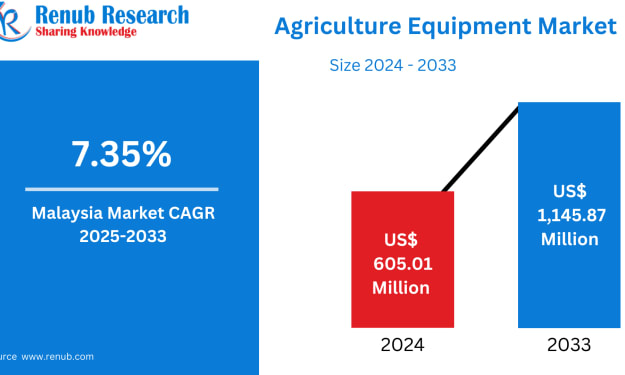
Malaysia Agriculture Equipment Market Overview The Malaysia Agriculture Equipment Market is entering a phase of steady and meaningful transformation as the country accelerates its shift toward modern, mechanized farming. According to Renub Research, the market was valued at US$ 605.01 million in 2024 and is expected to reach US$ 1,145.87 million by 2033, growing at a CAGR of 7.35% from 2025 to 2033.
By Aaina Oberoi2 days ago in The Swamp
Exchange Firm’s Licence Cancelled: What It Means for Investors and the Market
The cancellation of an exchange firm’s licence by financial authorities has sent ripples across the investment community, sparking uncertainty among investors and renewed debate about regulatory oversight. Such actions are not taken lightly and often signal serious compliance failures, governance issues, or risks to the broader financial system. For investors and market participants, the decision raises an urgent question: what happens next? This development highlights the fragile balance between innovation in financial markets and the need for strict regulation to protect investors. As authorities move to enforce rules, the implications extend far beyond a single firm, affecting confidence, liquidity, and the overall market environment. Why an Exchange Firm’s Licence Gets Cancelled Regulators typically revoke an exchange firm’s licence only after identifying significant violations. These may include failure to meet capital requirements, inadequate risk management systems, lack of transparency, or breaches of anti-money laundering (AML) and know-your-customer (KYC) regulations. In some cases, repeated warnings or fines precede the final decision. When corrective actions are ignored or deemed insufficient, authorities may conclude that the firm poses a risk to investors or market integrity. Licence cancellation is therefore both a punitive and preventive measure designed to stop further harm. For the public, such decisions often raise concerns about how long the problems existed and whether earlier intervention could have minimized losses. Immediate Impact on Investors For investors directly involved with the exchange firm, the licence cancellation can be deeply unsettling. Access to accounts may be restricted while regulators assess the situation, and withdrawals or trades could be temporarily frozen. This uncertainty often leads to anxiety, particularly for retail investors who rely on the platform to manage savings or active investments. Regulators usually work with administrators or trustees to safeguard client assets. However, the recovery process can be slow, and outcomes depend on how well customer funds were segregated from the firm’s operational accounts. Investors are often advised to stay informed through official regulatory updates and avoid relying on rumors or unverified sources. Market Reaction and Short-Term Volatility Beyond individual investors, the broader market can also feel the effects. News of a licence cancellation often triggers short-term volatility, especially if the firm had a significant market presence. Prices of related assets may fluctuate as traders react to uncertainty, and confidence in similar platforms can weaken. Other exchange firms may experience increased scrutiny, with investors reassessing where they place their funds. While this can initially disrupt trading volumes, it may also encourage a shift toward more transparent and well-regulated platforms. Market analysts note that while short-term reactions can be dramatic, long-term stability often improves when weak or non-compliant entities are removed from the system. What This Means for Market Trust Trust is a cornerstone of financial markets. When an exchange firm loses its licence, it can undermine confidence, especially among first-time or smaller investors. Many may begin to question whether regulatory bodies are doing enough to monitor firms proactively rather than reactively. At the same time, decisive regulatory action can also restore trust. By demonstrating that rules are enforced and misconduct has consequences, authorities send a message that investor protection is a priority. Over time, this can strengthen the market by encouraging higher standards across the industry. Regulatory Oversight and Its Broader Significance The licence cancellation underscores the critical role of regulators in maintaining market integrity. Financial authorities are tasked with balancing innovation and risk, ensuring that firms operate transparently while allowing markets to evolve. In recent years, regulators worldwide have tightened oversight, particularly in fast-growing sectors such as digital assets and alternative trading platforms. This case may prompt further reviews of licensing frameworks, compliance monitoring, and enforcement mechanisms. For firms still operating in the market, the message is clear: compliance is not optional. Strong governance, clear reporting, and adherence to regulations are essential for long-term survival. Lessons for Investors This incident offers several important lessons for investors: Due diligence matters: Investors should research exchange firms carefully, including their regulatory status and compliance history. Diversification reduces risk: Relying on a single platform increases exposure to operational and regulatory risks. Regulation provides protection: While regulation may seem restrictive, it plays a crucial role in safeguarding investor interests. Financial experts recommend that investors prioritize platforms with strong regulatory backing and transparent operational practices. Long-Term Implications for the Market In the long run, the removal of non-compliant exchange firms can lead to a healthier market environment. While disruptions are inevitable, stronger oversight can improve resilience and reduce systemic risk. The episode may also accelerate reforms, encouraging regulators to enhance monitoring tools and firms to adopt higher standards. For investors, this could mean greater confidence and more sustainable growth opportunities in the future. Conclusion The cancellation of an exchange firm’s licence is a significant event with far-reaching implications. For investors, it brings uncertainty and potential financial stress. For the market, it highlights vulnerabilities while reinforcing the importance of regulation and accountability. Although the immediate impact may be unsettling, decisive regulatory action can ultimately strengthen trust and stability. As the situation unfolds, investors and market participants alike will be watching closely, hoping that lessons learned lead to a safer and more transparent financial ecosystem.
By Aarif Lasharia day ago in The Swamp
Markets Fall and Gold and Silver Hit New Highs After Trump’s Latest Tariff Threat
Global markets were rocked after U.S. President Donald Trump’s latest tariff threats against European nations tied to Greenland. Stocks tumbled, while investors rushed into safe-haven assets like gold and silver, pushing their prices to record highs. The developments highlight the delicate balance between geopolitics and financial markets, showing how political decisions can quickly ripple through the global economy.
By Aarif Lashari6 days ago in The Swamp



Comments
There are no comments for this story
Be the first to respond and start the conversation.