
A Question of Desperation: Why Would a 70-Year-Old Woman Want to Kill Netanyahu?
"She Didn’t Want to Die Quietly — Why a Dying Woman Allegedly Considered Taking Netanyahu With Her"

A Question of Desperation: Why Would a 70-Year-Old Woman Want to Kill Netanyahu?
"She Didn’t Want to Die Quietly — Why a Dying Woman Allegedly Considered Taking Netanyahu With Her"
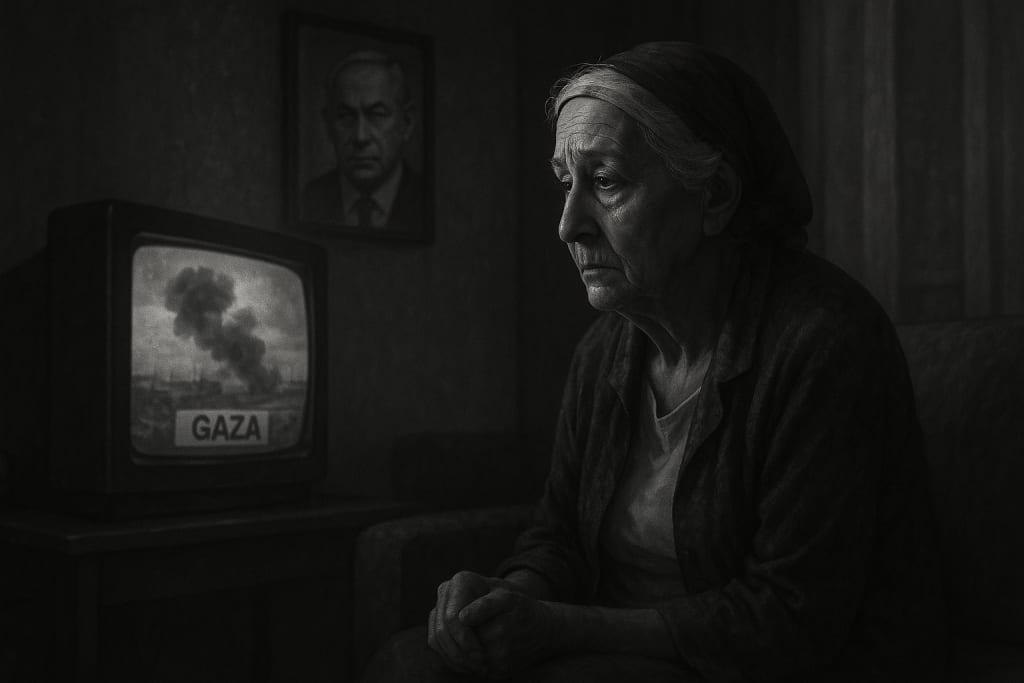
There are stories that, whether literally true or not, lodge themselves in your mind. A recent one from Israel is like that: a 70-year-old Jewish woman, reportedly terminally ill, allegedly confessed a desire to kill Prime Minister Benjamin Netanyahu. It's the kind of story that forces you to stop and ask—what on earth could bring someone to that point?
Was it a desperate, final attempt to save an Israel she no longer recognized? Or a scream into the void, hoping to stop a man she believed was causing immeasurable suffering?
What could possibly lead to this?
You try to imagine the reasons. Was it the feeling of watching her country tear itself apart from the inside? The slow, grinding loss of faith in a democratic system she once cherished? Or was it simpler, more visceral? Maybe, like so many of us, she saw one too many images from Gaza—the bombed homes, the impossible grief—and something inside her simply, finally, broke.
We don't know exactly what she saw. But her alleged words weren’t shouted at a protest. They were said quietly, almost like a confession whispered into the dark:
“If I’m going to die, I’ll take Bibi with me.”
This wasn't some detailed manifesto or an act of terror. It was a thought, raw and unfiltered. And what's so revealing about it, I think, is its sheer quietness. A whisper of absolute desperation.
Who is this woman?
The person at the center of this story isn't who you'd expect. Reports describe her as a Tel Aviv resident who protested Netanyahu’s judicial reforms. A believer in institutions. She wasn't a militant or part of some fringe group. Just an ordinary woman, it seems, overwhelmed by a world that felt more cruel and unjust each day.
And when everything felt broken—her body, her country, her hope—she allowed herself to think the unthinkable.
When Anger Becomes a Moral Question
It’s easy to just dismiss this as one person’s tragic breakdown. But that feels too simple. The story raises a much larger question, one that sits uncomfortably with all of us: what happens when rage feels like the only moral language left?
And that leads to the knot at the center of this story. It's a terrifying thought, really. Because if you start down the path where violence feels like the only answer to injustice, where do you stop? How do you keep from becoming the very thing you despise?
To even begin to unerstand her mindset, you have to look at the pressure cooker of Netanyahu's Israel. Since October 7, his strategy has been one of overwhelming force—crushing Hamas, confronting Iran. But this has come with deep costs. At home, a feeling that democracy is eroding. Abroad, once-solid allies are pulling away. There are critics, and they are not quiet, who say Netanyahu is dragging out the war simply to stay in power.
In a climate like that, it's not hard to see how even the most dedicated citizens could feel utterly lost.
Was she trying to save Israel—or just be heard?
Maybe she didn't really mean it. Maybe it was just anger, pure and simple. A flash of frustration from a woman who knew she had nothing left to lose and wanted her voice—her fear, her disillusionment—to finally make a sound.
We don’t have to agree with her thought. We should probably be horrified by it. But we have to listen to the silence after the words have been spoken.
Because when an elderly woman, facing her own death, believes that her last act of meaning could be to take her country’s leader with her, it’s more than just her story. It’s a reflection in a shattered mirror, showing us just how broken things have become. And it leaves us with a question that has no easy answer: what have we become, in a world that allows for such despair?
About the Creator
Moh Hussein
Mohamed Hussein is an writer exploring the intersection of technology, culture, and identity in the Middle East, telling the human stories behind how digital systems shape a new generation.
Keep reading
More stories from Moh Hussein and writers in The Swamp and other communities.



Comments (2)
Always stay unique. Greetings to you.” ❤️🇱🇧❤️
The reason might be love.