
A Political Extremism Factory: How Social Media is Producing Political Polarization
How Social Media is Making Our Political Landscape More Hostile


The rise of social media has come with many benefits. It has allowed easier communication and the creation of community among people that otherwise may not have had it. It gives voices and platforms to everyday people and grants the average person access to virtually endless amounts of information to educate themselves on. However, as social media continues to grow and become an integral part of many people’s everyday lives we have seen the downsides. We have seen what happens when those communities that social media has created grow toxic and dangerous, and what happens when the “information” being spread is harmful and untrue. These things are especially true when it comes to politics on social media. The rapid spread of political misinformation and disinformation, assisted by social media algorithms, and the creation of echo chambers consisting of extremist ideologies has led to a significant increase in political polarization. Social media is turning average voters into political extremists, and it is having real world repercussions. There has been an increase in political attacks, most of which were at least partially assisted by social media, and it is becoming more clear than ever that social media is contributing to a more violent political landscape with its promotion of extremists' ideologies.
Before assessing social media’s role in political polarization, it is important to discuss the two different types of political polarization. As explained by Emily Kubin and Christian von Sikorski in their scholarly article titled, “The role of (social) media in political polarization: a systematic review,” there is ideological polarization and affective polarization. Ideological polarization is the polarization between opposing political beliefs and opinions, it assesses the gap – or lack thereof – between opposing political parties’ beliefs, attitudes, and opinions. The bigger the gap the more ideologically polarized. Affective polarization, however, assesses the feelings opposing parties may have towards each other. The more affectively polarized two political parties are the less warm and welcoming they are to people of the opposing political party. To put it simply, affective polarization assesses how much the two parties like each other and the members of the opposing party.
Although both are rapidly spread on social media, there is a difference between misinformation and disinformation. Misinformation is a piece of untrue information that is thought to be true by the creator. Spreading misinformation happens without the person’s knowledge. The persons saying the misinformation believes what they said is fact when it is not. Misinformation is spread with no ill intentions, and that is the important part. Disinformation on the other hand is a knowingly untrue piece of information. It is disinformation when the person who created the information knew what they were saying was incorrect and intentionally shared it anyway. Disinformation is always intentional and is created for nefarious purposes. For example, a political campaign may purposely spread exaggerated or manipulated information about their opponent to benefit their candidate. Once disinformation is spread somewhere like social media, others may take it as fact. In both cases, the untrue information can create wrong assumptions in those that see it, which can lead to harmful ideologies about a certain person or group of people – such as race, ethnicity, and political affiliation.
In addition to misinformation and disinformation, echo chambers are another thing that can contribute to creating and affirming harmful ideologies in someone. An echo chamber is an environment where only similar opinions and perspectives are shared, and they can create misinformation and hinder a person’s ability to see or understand outside perspectives. Echo chambers are aided by confirmation bias – the tendency to seek out information that reinforces someone’s already held ideas and beliefs, and they thrive on social media because social media’s algorithms are created to show users what they know they will like, relate to, and engage with. Social media platforms collect information on their users, their demographic information, and what types of content the user is most likely to engage with. The social platforms’ algorithms then use this information to supply only similar content to the user. When it comes to politics, this can lead users to strictly see political information or agendas that are affiliated with their political party. Unfortunately, echo chambers can turn dangerous quickly, especially when it comes to extreme ideologies. A well-known and extreme example of an echo chamber is cults. A member of a cult is constantly surrounded by people that share their ideologies and beliefs. This then reinforces their own beliefs and establishes a sense of "us versus them" – where the person believes that anyone who does not share their beliefs is the enemy. It makes the person unwilling to listen to or learn from anyone that possesses opposing ideologies. Although echo chambers can form in person, they are even more abundant online, and the reason echo chambers can be so dangerous is that they can create a sense of community and fuel potentially harmful ideas and beliefs.
Social media can be a great tool in connecting communities, and giving people voices that may not have otherwise had a platform. However, when social media is used to spread political agendas and information, it can quickly become harmful. Since social media posts do not have to go through a rigorous fact checking process like more mainstream media does, users can say virtually anything and pass it off as fact. The lack of regulations that lots of social media networks have surrounding posts made on their platform has contributed to a rise in the spread of misinformation and disinformation and the creation of echo chambers. These echo chambers can then be used to manipulate users into believing harmful ideas and hinder users from coming in contact with people with opposing political beliefs. This can then reinforce beliefs regardless of fact and create an even more polarized political environment. For example, if a big part of a political party has been manipulated into believing the opposing party is evil, they are less likely to see people in that political party as equals and are more willing to be hostile towards anyone who is affiliated with the opposing party, both online and off.
Just like confirmation bias can lead social media users to fall into echo chambers, it can similarly cause users to actually seek out misinformation. When someone who is used to only hearing from and coming into contact with people of the same beliefs and ideologies, does encounter opposing beliefs they are more likely to try to find articles and posts that back up their pre-existing ideas on a subject, regardless of if the source is reliable or not. It makes facts an afterthought. This craving and searching for misinformation can lead to it being spread even more.
Social media users constantly coming into contact with these politically extreme beliefs and being constantly exposed to news about political attacks can make them lose faith in their government and democracy as a whole. As seen in the case study discussed in the article titled “Political Rage on Social Media is Making Us Cynical” by Tevah Platt, American social media users that reported seeing high numbers of posts and news surrounding American politics on social media also reported higher levels of anxiety and anger towards the American government. The article also discusses how this lack of trust in a citizen’s government can be dangerous and lead to a rise in politically motivated attacks. Social media’s algorithms push this information and intense news to users because it is more likely to gather engagement and be shared more – causing even more people to see it. This sensationalization of serious and upsetting news on social media is not only having an impact on the user, but it is also contributing to an apathetic view of democracy, which can increase the likelihood of there being even more politically motivated attacks. It is a toxic cycle of harmful and hostile views, and social media platforms are doing very little to stop it.
Although higher political polarization can have some benefits, such as increased political participation, there are very serious harmful side effects that come with a highly politically polarized society. Political polarization is harmful to democracy and creates more centralization of power, this then leads to citizens becoming even more unsatisfied with their government and the people in political power, causing civil unrest. (Kubin and von Sikorski) This lack of satisfaction with the current state of society leads citizens to blame certain political parties and creates even more polarization between parties. This polarization then leads to people being less willing to interact with others that are associated with the opposing party. Due to this lack of engagement with their political adversaries, people tend to assemble their impressions of the members of the opposing party through what they see about them on social media. (Kubin and von Sikorski) However, as previously mentioned, social media platforms and their algorithms are likely to show these people content created by and for people of the same political party. This content often times includes misinformation and disinformation about the opposing parties and their members, many times with the sole purpose of attempting to discredit or demean them. An intensive study into social media’s role in political polarization conducted by Emily Kubin and Christian von Sikorski and discussed in their article titled, “The role of (social) media in political polarization: a systematic review,” found that the political environment on and created by social media is both ideologically and affectively polarized. The very place where citizens go to affirm and share their own political views and build their ideas of people with opposing political views is creating a hostile environment, completely unwelcoming to any sort of opposition. A social media user’s feed is becoming one giant echo chamber, assisted by the platform’s algorithms. It is virtually inescapable, and this hostile online environment is having dangerous real-world repercussions.
This animosity towards opposing political parties that users see on social media is not solely contained to online environments. The repercussions of this extreme political polarization are spilling over into the real world. The article by Paul Barrett, Justin Hendrix, and Grant Sims titled, “How Tech Platforms Fuel U.S. Political Polarization and What Government Can Do About It.” explores social media’s role in the January 6 insurrection that took place at The Capital in 2021. The January 6 insurrection at The Capital is a prime example of harmful and dangerous environments moving from online to off. After Democrat Joe Biden won the 2020 presidential election against former president – and now the 2024 president-elect – Donald Trump, misinformation and disinformation surrounding the election soared in right-wing circles across social media. False claims of voter fraud and allegations of the election being stolen were being spread by very powerful and influential right-wing politicians and celebrities, including Donald Trump himself. These claims of injustice and fraud surrounding the election caused many right-wing extremists to grow outraged and led them to organize the infamous January 6 political attack at The Capital. In later trials, it was revealed that not only was the spread of these proven false claims promoted by several different social media sites and their algorithms, but the social network site Discord was actually directly used to plan and carry out this attack. The organizers of the attack used Discord, a social network messaging app, to connect with people all across America, who were also enraged by this false idea of the election being stolen or rigged against Donald Trump, and they discussed in great detail their plans for the politically motivated attack. During this months long process of planning, Discord chose not to interfere. The January 6 insurrection at The Capital and the surrounding criminal and civil trials, shed new light on the fact that not only is social media assisting in creating harmful environments that fuel dangerous and extreme political views, but social media is also directly facilitating the organization of politically motivated attacks. As discussed in the article by Paul Barrett, Justin Hendrix, and Grant Sims, social media networks need to create more regulations surrounding their sites in order to stop political attacks like the January 6 insurrection from occurring again, and if they do not then perhaps the solution is that government and federal regulations be created and enforced.
Over the recent years we have seen just how much power and influence social media has over people and subsequently their beliefs. The spread of misinformation and disinformation on social media has played a big role in informing users and has therefore contributed to the formation of their political beliefs and their beliefs of the opposing political parties. The harmful information being spread has created dangerous environments that have not only bread politically extreme beliefs but has also assisted heavily in creating a hostile political landscape plagued with real world consequences. We have seen time and time again just how much power social media holds in politics and yet the social network executives have taken little to no action to attempt to make their platforms safer. Even though the government has recently tried to intervene and set regulations for these companies, they have so far been resoundingly unsuccessful in creating any real change. As social media becomes an even bigger part of people’s lives and the new generations, which have had access to these social media sites from a younger age, become of voting age these problems are only going to get worse, and fully understanding the issues that come with social media and politics is vital in understanding how to fix them.
Works Cited:
Barrett, Paul, et al. “How Tech Platforms Fuel U.S. Political Polarization and What Government Can Do About It.” Brookings, 27 Sept. 2021, www.brookings.edu/articles/how-tech-platforms-fuel-u-s-political-polarization-and-what-government-can-do-about-it/.
Dictionary.com. “‘Misinformation’ vs. ‘Disinformation’: Get Informed on the Difference.” Dictionary.com, 15 May 2020, www.dictionary.com/e/misinformation-vs-disinformation-get-informed-on-the-difference/.
GCF Global. “Digital Media Literacy: What Is an Echo Chamber?” GCF Global, edu.gcfglobal.org/en/digital-media-literacy/what-is-an-echo-chamber/1/.
Kubin, Emily, and Christian von Sikorski. “The Role of (Social) Media in Political Polarization: A Systematic Review.” Annals of the International Communication Association, vol. 45, no. 3, Sept. 2021, pp. 188–206, https://doi.org/10.1080/23808985.2021.1976070.
Malik, Abdul Rahman. “Social Media and Polarization of Society.” Modern Diplomacy, 19 Apr. 2021, moderndiplomacy.eu/2021/04/19/social-media-and-polarization-of-society/.
Platt, Tevah. “Political Rage on Social Media Is Making Us Cynical.” University of Michigan News, 11 Mar. 2024, news.umich.edu/political-rage-on-social-media-is-making-us-cynical/.
Tiedemann, Aaron. “Why Americans Crave Fake News.” New America, 21 Aug. 2023, www.newamerica.org/political-reform/reports/why-americans-crave-fake-news/the-problem-of-misinformation-in-a-democracy/.
About the Creator
Hannah Katz
I love to research all things politics and sociology. Every story is a research-backed piece with all sources cited.
Reader insights
Outstanding
Excellent work. Looking forward to reading more!
Top insights
Easy to read and follow
Well-structured & engaging content
Expert insights and opinions
Arguments were carefully researched and presented
Masterful proofreading
Zero grammar & spelling mistakes
On-point and relevant
Writing reflected the title & theme
Keep reading
More stories from writers in The Swamp and other communities.
Bethany Beyond the Jordan: The Sacred Place of Jesus’ Baptism
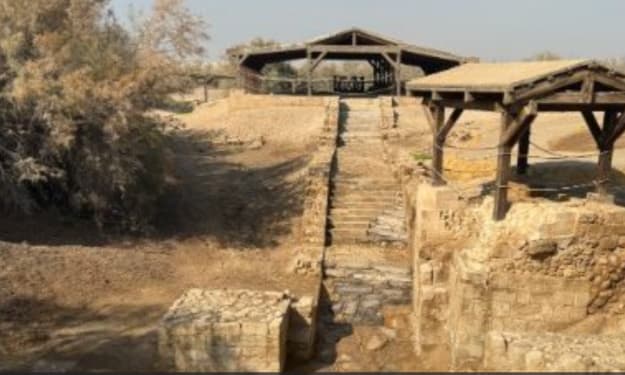
A Sacred Place Hidden in Plain Sight Along the eastern bank of the Jordan River, just a short distance from the Dead Sea, lies a place revered by millions of Christians around the world: Bethany Beyond the Jordan. Known in Arabic as Al-Maghtas, this site is widely recognized as the location where Jesus Christ was baptized by John the Baptist. Though modest in appearance, its spiritual weight is immense, making it one of the holiest places in Christianity. Unlike grand cathedrals or bustling pilgrimage cities, Bethany Beyond the Jordan offers something rare—silence, simplicity, and a powerful sense of sacred history. It is here, according to Christian tradition and strong archaeological evidence, that Jesus’ public ministry began. Biblical Roots of Bethany Beyond the Jordan The Gospel of John provides the clearest reference to this site, describing it as “Bethany beyond the Jordan, where John was baptizing.” For centuries, scholars debated the exact location of this biblical Bethany. Some believed it lay west of the river, while others argued for the eastern bank. Modern archaeology has largely settled the debate. Excavations in Jordan uncovered ancient baptism pools, churches, monasteries, and water systems dating back to the Roman and Byzantine periods—all pointing to this area as the original baptism site. Early Christian pilgrims also recorded journeys to this very location, strengthening its authenticity. John the Baptist and the Meaning of Baptism Bethany Beyond the Jordan is inseparable from the figure of John the Baptist, a prophet who preached repentance and spiritual renewal. His act of baptizing Jesus transformed baptism from a symbol of repentance into a cornerstone sacrament of Christianity. The baptism of Jesus represents humility, obedience, and divine affirmation. According to scripture, the heavens opened, the Holy Spirit descended like a dove, and a voice declared Jesus as God’s beloved Son. This moment marks the beginning of Jesus’ mission and gives the site its profound theological importance. For believers, standing near the waters of the Jordan is not just about history—it is about reconnecting with faith at its source. Archaeology That Brings Scripture to Life What sets Bethany Beyond the Jordan apart from many holy sites is the strength of its archaeological record. Researchers have uncovered: Ruins of early Christian churches built to honor the baptism site Monastic cells where early monks lived and prayed Large baptism pools used by pilgrims Ancient water channels connecting the site to the Jordan River These findings show that Christians revered this location from the earliest centuries of the faith. Rather than relying solely on tradition, Bethany Beyond the Jordan is supported by physical evidence that aligns closely with biblical descriptions. Recognition as a World Heritage Site In 2015, UNESCO officially recognized Bethany Beyond the Jordan as a World Heritage Site, citing its outstanding universal value and deep religious significance. This recognition placed the site alongside the world’s most important cultural and spiritual landmarks. Jordan’s role in preserving and promoting the site has been widely praised. Despite being located in a region often associated with conflict, Bethany Beyond the Jordan stands as a symbol of peace, coexistence, and shared heritage among Christians, Muslims, and Jews. A Place of Pilgrimage and Papal Visits Over the years, Bethany Beyond the Jordan has welcomed pilgrims from every corner of the world. Many describe their visit as deeply emotional, even transformative. The quiet landscape, combined with the slow flow of the Jordan River, creates an atmosphere of reflection rarely found at more crowded holy sites. Several popes, including Pope John Paul II, Pope Benedict XVI, and Pope Francis, have visited the site, reinforcing its importance within the global Christian community. These visits also elevated international awareness of Jordan as a custodian of Christian holy places. The Jordan River: More Than Just Water The Jordan River itself holds immense symbolic power. In the Bible, it represents transition, renewal, and divine intervention. From the Israelites crossing into the Promised Land to Jesus’ baptism, the river is a recurring setting for spiritual turning points. At Bethany Beyond the Jordan, the river becomes more than geography—it becomes theology. For many pilgrims, touching or seeing its waters is a reminder of spiritual cleansing and new beginnings, echoing the meaning of baptism itself. Interfaith Importance and Cultural Harmony While Bethany Beyond the Jordan is a Christian holy site, its significance extends beyond one faith. Jordan, a Muslim-majority country, has actively protected Christian heritage, offering a powerful example of interfaith respect. The site demonstrates how sacred spaces can unite rather than divide. In a region often portrayed through the lens of conflict, Bethany Beyond the Jordan tells a different story—one of shared history, mutual reverence, and peaceful coexistence. Visiting Bethany Beyond the Jordan Today Today, the site is carefully managed to preserve its spiritual atmosphere. Modern walkways guide visitors through ruins without disturbing the landscape. Informational signs explain both the biblical and archaeological significance, making the experience educational as well as devotional. Unlike many major pilgrimage destinations, Bethany Beyond the Jordan remains calm and uncluttered. This simplicity allows visitors to focus not on spectacle, but on meaning. Why Bethany Beyond the Jordan Still Matters In a fast-paced, modern world, Bethany Beyond the Jordan offers something timeless. It reminds believers of humility, faith, and beginnings. It reminds historians that ancient texts can align with physical evidence. And it reminds the global community that sacred heritage deserves protection, regardless of borders or beliefs. More than a historical landmark, Bethany Beyond the Jordan is a living testament to the moment when a quiet act in a river changed the course of religious history. Final Reflections Bethany Beyond the Jordan is not defined by grandeur, but by depth. It stands as a sacred bridge between scripture and soil, faith and history. For Christians, it marks the beginning of Jesus’ mission. For the world, it stands as a symbol of spiritual heritage preserved with dignity and care. In the stillness of the Jordan’s waters, the story of baptism continues to flow—inviting reflection, renewal, and reverence for generations to come
By Muhammad Hassan7 days ago in The Swamp


Comments (1)
Great work