
A 220-Meter-Deep Hole from an Old Iron Mine Is Now a Turquoise Lake with Plans to Store the Largest Clean Energy in the Country
Once a scar of industrial extraction, a flooded iron mine is being reborn as a massive clean-energy reservoir, signaling how abandoned mining sites could power the renewable future.
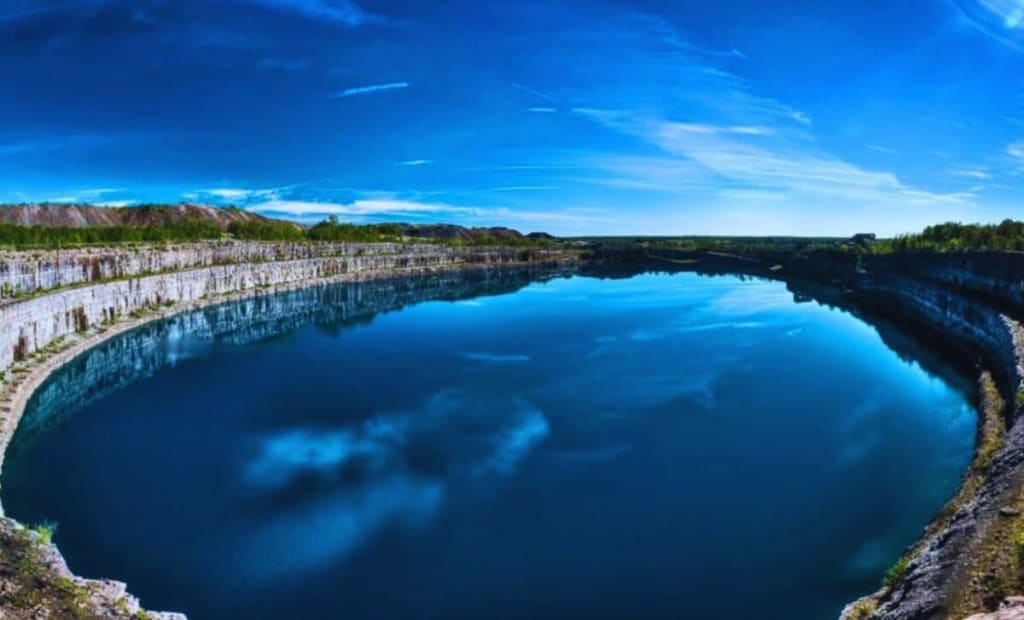
What was once a vast, echoing void carved deep into the earth by decades of iron mining has taken on a startling new identity. A 220-meter-deep pit, abandoned after the ore ran dry, is now filled with striking turquoise water—and is poised to become one of the largest clean-energy storage projects in the country. The transformation reflects a growing global trend: turning the relics of fossil-era industry into pillars of a low-carbon future.
The lake, formed naturally as groundwater and rainwater flooded the disused mine, has already become a visual symbol of renewal. But beneath its calm surface lies an ambitious plan that could reshape how renewable energy is stored and delivered at scale.
From Extraction to Energy Storage
For decades, the iron mine was a driver of local employment and industrial output, but it also left behind environmental damage and an immense open pit once operations ceased. Like many abandoned mines around the world, it posed long-term challenges: unstable geology, water contamination risks, and limited prospects for redevelopment.
Engineers and energy planners, however, saw opportunity where others saw liability. The mine’s extreme depth, stable rock walls, and existing infrastructure made it an ideal candidate for pumped-storage hydropower, a technology often described as the world’s most mature and reliable form of large-scale energy storage.
In pumped storage systems, electricity is used to pump water from a lower reservoir to a higher one when energy supply exceeds demand—typically during periods of strong wind or intense sunshine. When demand rises, the water is released back down through turbines, generating electricity. In this case, the mine pit itself would serve as the lower reservoir, while a newly constructed upper reservoir would sit hundreds of meters above.
Why a Turquoise Lake Matters
The lake’s vivid turquoise color, caused by mineral composition and light refraction, has drawn public attention, but its importance goes far beyond aesthetics. Its depth of 220 meters provides a substantial “head,” or vertical drop, which is critical for efficient hydropower generation. The greater the height difference between reservoirs, the more energy can be stored and released.
According to project planners, once fully operational the facility could store more clean energy than any other project of its kind in the country, capable of delivering electricity for hours or even days during periods of peak demand or grid stress. That makes it particularly valuable as nations expand renewable energy capacity and grapple with intermittency—the fact that the sun does not always shine and the wind does not always blow.
A Backbone for Renewable Expansion
As solar and wind power grow, energy storage has become one of the central challenges of the energy transition. Batteries work well for short durations, but they can be expensive, resource-intensive, and less practical for multi-day storage at national scale.
Pumped-storage hydropower fills that gap. It can operate for decades, store vast amounts of energy, and respond quickly to changes in grid demand. By repurposing an existing mine, developers can avoid many of the environmental and social hurdles associated with building new dams and reservoirs from scratch.
In effect, the old iron mine could become a giant green battery, stabilizing the national grid and reducing reliance on fossil-fuel-powered backup plants.
Environmental and Community Benefits
The project also promises environmental gains beyond clean electricity. Stabilizing and managing the flooded mine reduces the risk of uncontrolled water discharge, which can contaminate surrounding ecosystems. Careful monitoring and treatment systems are being designed to ensure water quality is maintained throughout operation.
For nearby communities, the transformation offers a new economic narrative. Regions that once depended on mining jobs often struggle after closure, facing unemployment and population decline. The clean-energy project brings construction work, long-term technical roles, and the chance to reposition the area as a hub of sustainable innovation.
Some proposals also include controlled public access, educational centers, or viewpoints overlooking the lake—turning a former industrial wound into a landmark of regeneration.
Technical and Safety Challenges
Despite its promise, the project is not without complexity. Engineers must ensure the mine’s rock walls remain stable under fluctuating water levels and pressure changes. Extensive geological surveys, reinforcement measures, and real-time monitoring systems are central to the design.
There are also regulatory and financial hurdles. Large infrastructure projects require long approval processes, significant upfront investment, and coordination between energy authorities, environmental agencies, and local governments. Supporters argue, however, that the long lifespan and strategic importance of the facility justify the costs.
A Model for the Future?
Around the world, thousands of deep open-pit mines sit abandoned, relics of an extractive past. If even a fraction of them can be safely converted into energy storage sites, they could collectively play a major role in decarbonizing power systems.
The turquoise lake in this former iron mine stands as a powerful metaphor: the same ground that once fueled industrial growth through extraction may now underpin a cleaner, more resilient energy system. By turning depth into strength and history into opportunity, the project suggests that the energy transition does not always require starting from scratch—sometimes, it begins by reimagining what we have already left behind.
About the Creator
Keep reading
More stories from Sadaqat Ali and writers in The Swamp and other communities.
ChatGPT Sets Silver Price for February 28, 2026
Silver has always lived a double life. It is both a precious metal prized by investors in uncertain times and a critical industrial input powering modern technologies, from solar panels to electric vehicles. As February 28, 2026 approaches, market participants are increasingly focused on where silver prices might land amid a changing global economic backdrop. Based on prevailing macroeconomic trends, supply-demand dynamics, and historical behavior, ChatGPT projects that silver is likely to trade in the range of $28 to $32 per ounce by February 28, 2026, with a midpoint target near $30 per ounce.
By Sadaqat Aliabout 14 hours ago in The Swamp
Why Black History Matters in America?
The United States of America is celebrating their 250th anniversary in 2026. I'm proud to be an American and as someone who was born here, I wouldn't imagine myself living anywhere else. This is a country where opportunities are possible. Where anyone can be successful in anything they desire to do. Equality, community, and togetherness are the backbones of what America is and should be about. However, we have an administration who wants to erase and disregard those who have made positive, meaningful impacts in our country, specifically Black figures, such as Martin Luther King, Jr., Rosa Parks, and Maya Angelou. President Trump and his administration have been constantly complaining and fighting against what they call the "Woke agenda". They use this excuse as a distraction from other issues they refuse to address, such as the high cost of living, climate change, and inflation. That equality is dividing America, when in reality, it's bringing us together. Being woke is not tied to a specific political party. No matter where you stand on the political spectrum, you can still care about other people and their plights. Compassion and empathy for others isn't tied to a political party, either. We were taught as children to treat others the way we want to be treated and not judge others because they're different from us. Caring about others isn't a personal attack on your beliefs. It doesn't make you any less of a person. People who are easily offended over African American figures, past or present, or anything related to it, are grasping at straws. Current and future generations need to know who people like Harriet Tubman and Shirley Chisholm were, especially in the classroom. Black History is part of American History. It should be recognized, not hidden or forgotten. Besides, you can't shield children from everything, just because your feelings are easily hurt.
By Mark Wesley Pritchard 7 days ago in The Swamp
Fake Apps, NFC Skimming, and Other Android Security Risks Emerging in 2026
As we enter 2026, the world of Android security is facing new and ever-evolving challenges. With the rise in smartphone usage and the increasing reliance on mobile applications for everything from banking to shopping, security threats have also escalated. Android, being the most widely used mobile operating system, continues to be a prime target for hackers, cybercriminals, and malicious entities. In this article, we’ll explore the latest Android security risks emerging in 2026, with a focus on fake apps, NFC skimming, and other security threats.
By Ayesha Lashari4 days ago in The Swamp
Writing About Writing: The Rainbow Trap
The good thing about living in modern times is that LGBTQ representation in media is increasing. Not just in niche and Independant media, either, but also in mainstream media. Books, movies, TV shows, comics... they're finally catching on that LGBTQ+ people form a significant part of their audience, and deserve to see themselves on screen and in fiction, not just as victims in documentaries and true crime shows.
By Natasja Rose5 days ago in Writers



Comments
There are no comments for this story
Be the first to respond and start the conversation.